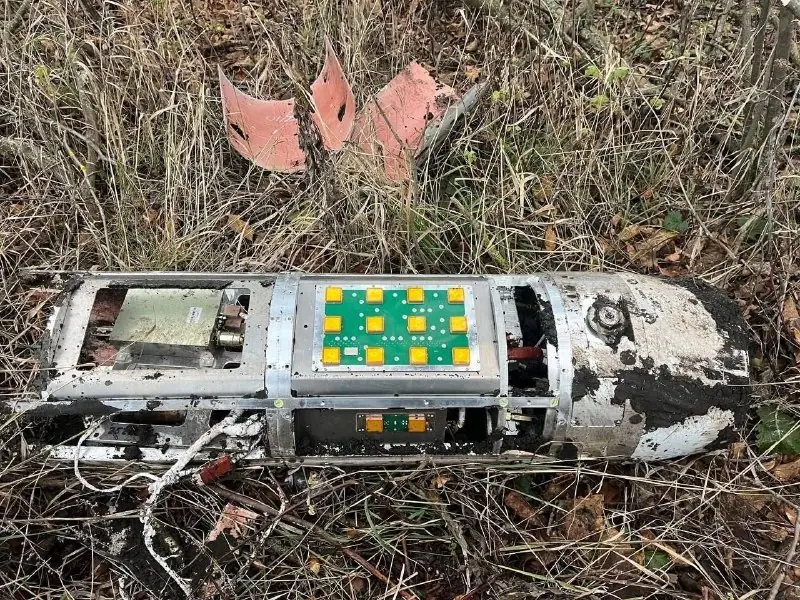
OSINT
What the open-source channels are saying about drones, robots and AI in the war — capabilities, new tactics, notable strikes, and how the mood is shifting. English summaries, with a link to every source.
Russian milblogger trend watchupdated · 70 postsRussian milbloggers are flush with Geran strikes deep into western Ukraine and treat terminal precision as settled, while obsessing over the mid-October Starlink throttling as proof Ukraine's long-range fleet is more fragile than their own Mesh/MANET-networked Shaheds. Counter-drone talk is pivoting toward mobile, dispersed launchers; FPVs are now reaching helicopters.
Loud right nowThe 13–14 October Starlink throttling to 60–70 km/h is the single loudest story — milbloggers treat it as a strategic lever Washington is willing to pull against Kyiv's drone war, with a parallel arson attack on 11 of 17 Starlink gateway antennas at Plana in Bulgaria.
Expand analysis →
Collapse ↑
What Russian milbloggers are saying — their claims and mood, not confirmed fact.
Autonomy & AI at the edge
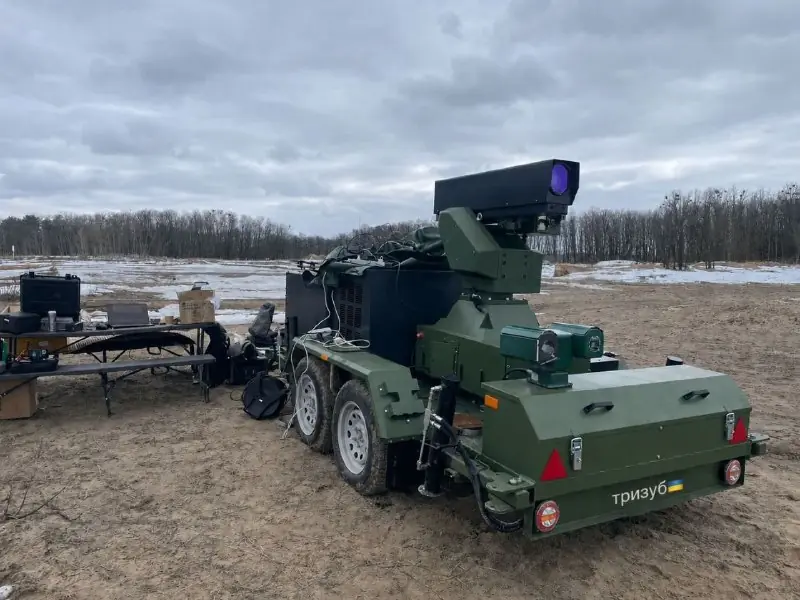
Russian milbloggers continue to narrate Geran-2 and reactive Geran-4/5 strikes on named point targets — the Luts’k-Northern 330 kV substation (blackouts and water loss across the city), a Zhytomyr substation, warehouses in Mayaky in Odesa oblast, the Borschagivka pharmaceutical plant in Kyiv, Focus Distribution and Treugolnik logistics in Kirovohrad, the Kromberg & Schubert plant in Luts’k and the SEBN-UA plant in Chortkiv — framing the pattern as implicit proof that machine-vision terminal guidance is routine across the Shahed family (barantchik-41601, barantchik-41632, milinfolive-181530, milinfolive-181532, milinfolive-181473, boris_rozhin-229885). Rybar, in a rare note on the Western side, reports the White House’s new AI task force intends to treat autonomous-agent failures as product defects, with legal liability on the developer — a frame they read as the US quietly conceding that combat AI is maturing faster than its guardrails (rybar-83971). On the Ukrainian edge they again single out Celebra Tech’s Trident laser as approaching final tests, crediting it with 1.5 km against ISR drones, 800–900 m against FPVs and a projected 5 km reach against Shahed/Geran-class targets — treated as validation that it matters (rusengineer-10680).
EW vs counter-EW & fiber-optic drones
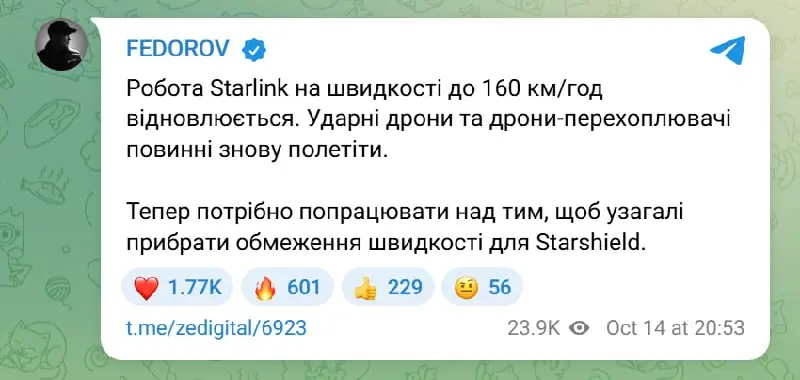
The dominant storyline remains the mid-October Starlink squeeze: milbloggers say SpaceX throttled Ukrainian terminals to 60–70 km/h around 13–14 October, grounding FP-2, Darts, Hornet and RAM-2 medium-range strike drones and the interceptor fleet, before Fedorov announced service restored to 160 km/h and Two Majors complained that in fact speeds above 160 km/h were back too (milinfolive-181465, milinfolive-181470, dva_majors-100508, dva_majors-100509, barantchik-41642). Two Majors uses the episode to argue Russia already moved past this dependency: Geran airframes now carry Mesh/MANET radio networking so a lost satellite link is not a lost strike, while Ukrainian operators will simply trench fibre to launch points — fixing the mothership problem but not the link to the strike drone itself (dva_majors-100507). UAVDEV adds that an unnamed non-Starlink service they have tested works for video-calls and offers better time-coverage than advertised, hinting at a Russian satellite alternative in field trials (UAVDEV-13035). The arson of 11 of 17 Starlink gateway antennas at Plana in Bulgaria is reported with evident approval as a second front against the same backbone (UAVDEV-13018, barantchik-41573).
Counter-drone / interception
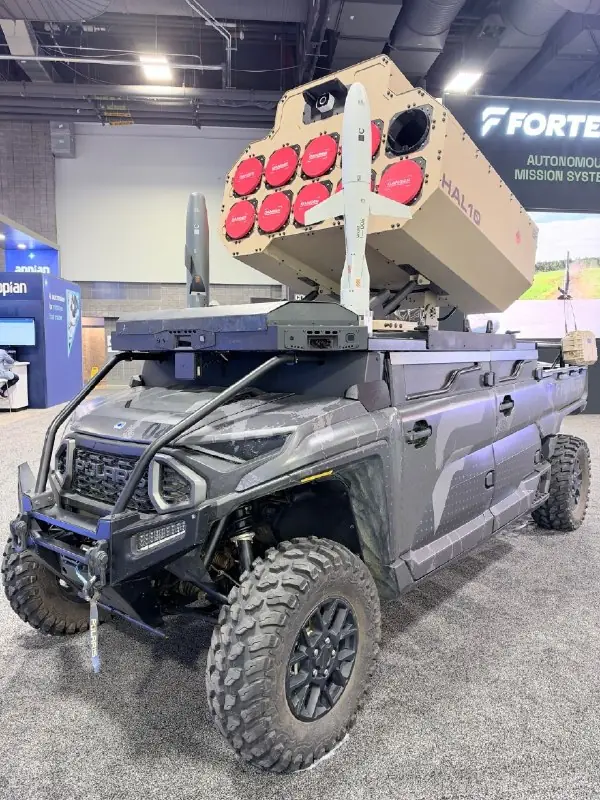
Milbloggers covering AUSA 2026 flag two Western counter-drone systems as pointers to where the fight is going: CHAOS Industries’ VESPID Mk 0/Mk 1 family of cheap mass-produced Group 1–3 interceptors with a multi-barrel launcher, and Parker Hannifin’s Airwolf — an off-road RCR 6WAP platform mounting an M134 minigun, M260/M261 APKWS pods, a Hellfire and two Stingers (UAVDEV-13049, boris_rozhin-229890). UAVDEV is sceptical of the VESPID demonstrator (a hastily-cropped jeep with 3D-printed interceptor shells) but endorses the underlying doctrine: autonomous, constantly-moving launchers are a necessity of the next war, because anything static and large will be killed — the same logic that produced the Yars eight-axle TELs, now imposed by continuous satellite coverage (UAVDEV-13052). On the Russian side the complaint is that lesson has not landed: an open letter to the new VKS commander-in-chief asks why four years in there are still no hardened shelters at airfields in range of Ukrainian strikes, where the billions allocated went, and why airfield comms collapse the moment EW switches on (UAVDEV-13032, barantchik-41606). FPV reach is also creeping up — Military Informant notes a Ukrainian FPV struck a Mi-28N while it was launching an LMUR, which they frame as attack helicopters now being inside the FPV envelope, not just loitering ISR (milinfolive-181593).
Named systems & programmes
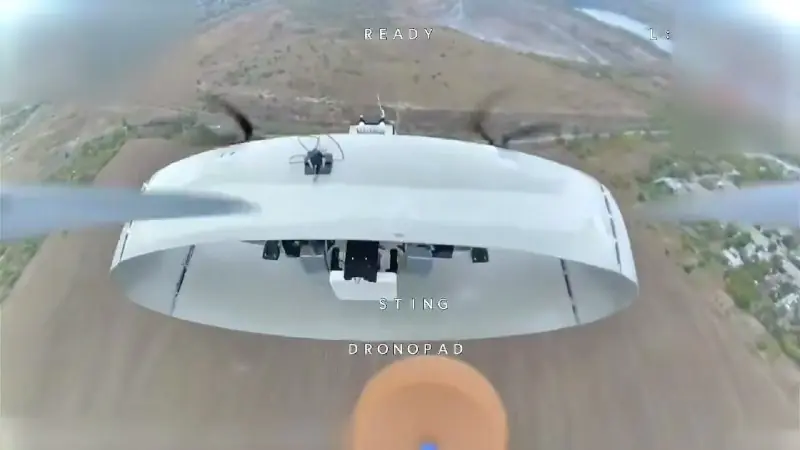
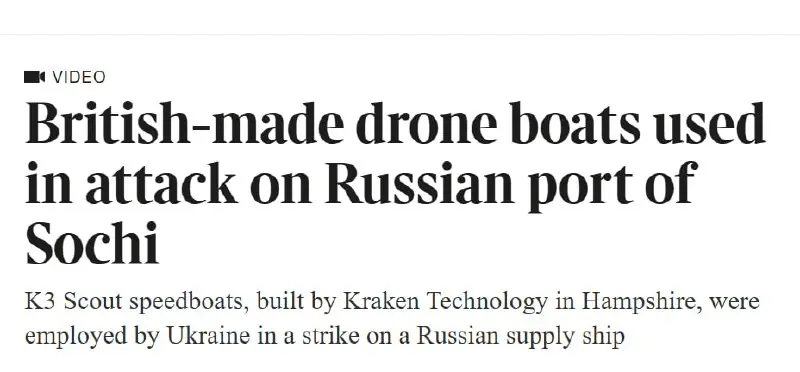
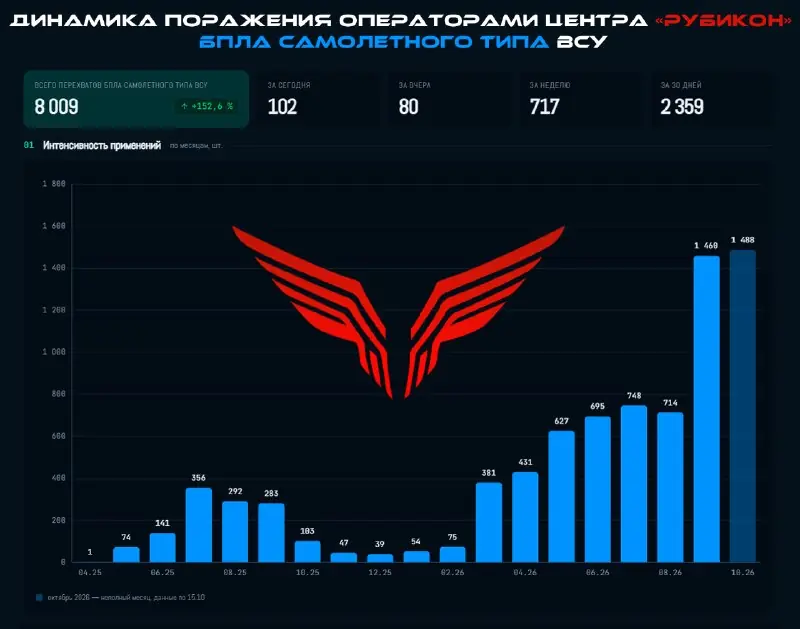
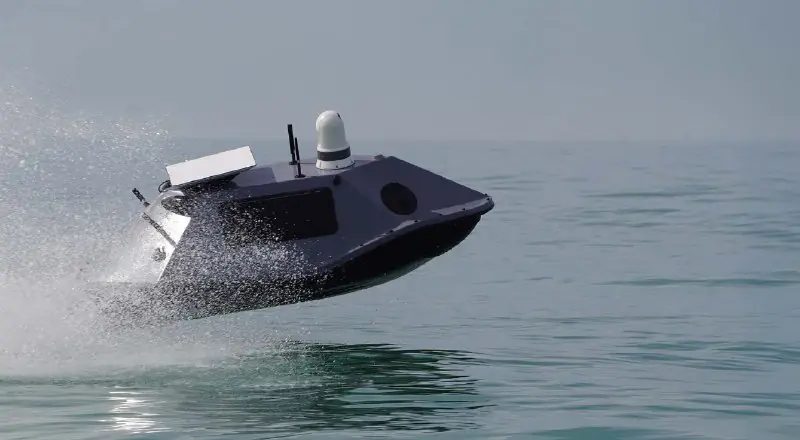
NPTs Ushkuynik’s “Prince Vladimir Svyatoslavovich” annular-wing FPV is now appearing on the front, with a claimed 50 km range and the ring intended for more efficient horizontal flight and prop protection; Ukrainian channels have published footage of two being intercepted (milinfolive-181605). Rybar talks up Geran-5 in a maritime context, pitching the Caspian Flotilla as a template because the type is “effective against ground and sea targets” — a step beyond the land-attack framing they used earlier (rybar-83970). Barantchik reports The Times’ claim that Ukrainian naval drone strikes near Sochi used British Kraken Technology K3 Scout USVs — 1,200 km range, modular enough to launch aerial drones and carry EW — of which the UK bought twenty, with a telling aside that in August Kraken discovered Chinese components onboard were phoning home to China (barantchik-41639). Lancet operators and Rubikon’s fibre-optic programme are notably quieter in the sampled posts than in the previous assessment.
Ground & naval robotics
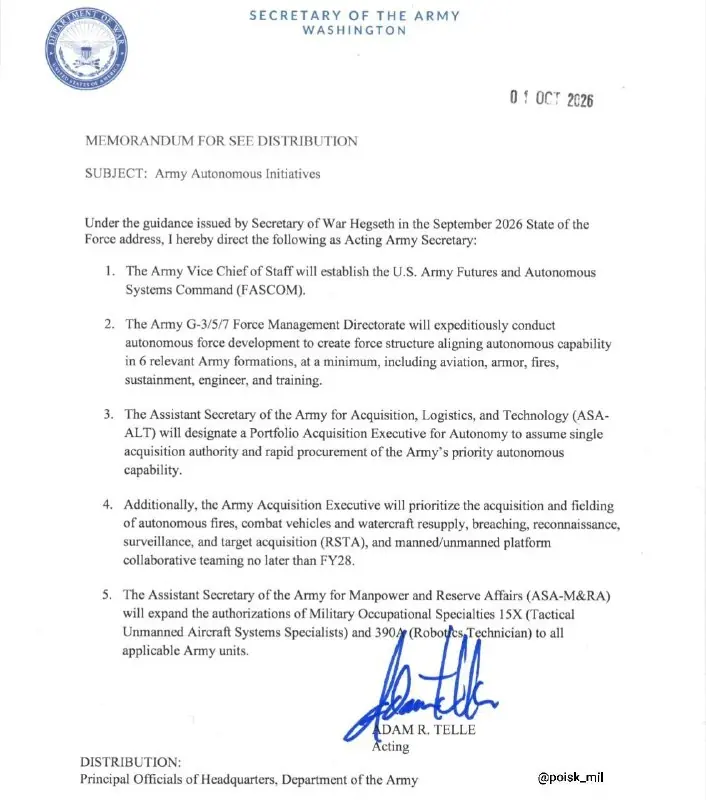
On the Russian side NRTK “Kurier” is being drilled with the Western Group of Forces as a cargo-delivery UGV along contested roads, pitched as cutting personnel exposure where Ukrainian drone activity is highest (boris_rozhin-229660). Separately the “Anvar” detachment claims kills on two Ukrainian ground robots at Leonovka/Mikhailovka and Petropavlivka in the same tasking that took an “Zhdun” FPV and a 2S3 Akatsiya, suggesting UGVs are now worth logging in the daily tally rather than treated as novelties (boris_rozhin-229739). Looking abroad, Boris Rozhin highlights the French REFURBOT programme converting retired AMX-30s into remotely-controlled 25 mm assault platforms — framed as the pattern of refurbishing legacy chassis into unmanned ones that Russia should emulate — and the US Army standing up a Formation for Advanced and Autonomous Systems Command (FASCOM) with a dedicated PAE for Autonomy and MOS 15X UAS operators / 390A robotics maintainers scaled across the force (boris_rozhin-229896, boris_rozhin-229897). On naval robotics, besides the K3 Scout point above (barantchik-41639), Chinese adoption shows up as NORINCO training Fuxi humanoids for crowd-control and riot patrol — the first time a milblogger has flagged a specifically Chinese ground-robot programme to Russian readers (barantchik-41603).
Tactics & employment
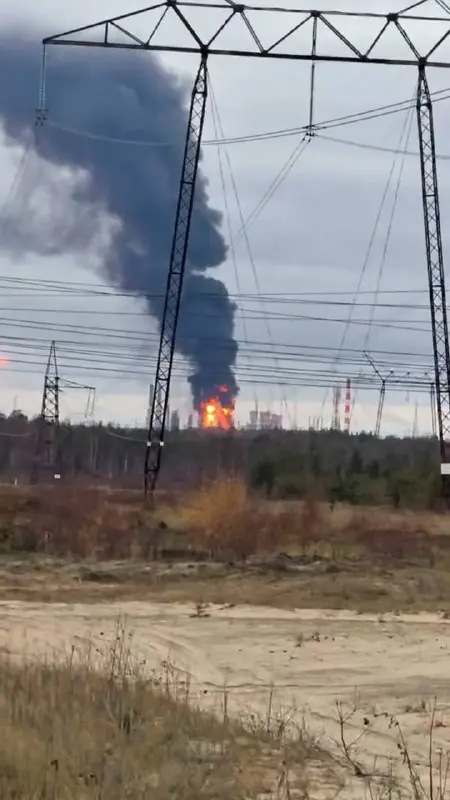
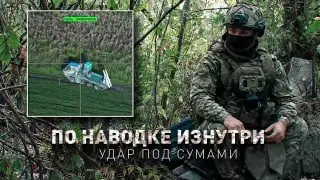
The strike pattern milbloggers celebrate is less “energy grid” than “logistics chain”: Western-Ukrainian warehouses, distribution centres, cable harness plants, pharmaceutical and retail logistics, and a condensate-stabilisation plant at Surgut 2,500 km inside Russia, with Putin publicly directing massed strikes to continue (barantchik-41632, barantchik-41641, dva_majors-100587). Weather is treated as the enabler: Military Informant notes Geran-2s broke through to western oblasts “in dozens” on 14 October because poor conditions grounded Ukrainian interceptor FPVs and mobile fire groups (milinfolive-181466). FPV employment is still broadening — operators of the 72nd UAS Brigade and 26th MRR describe threading drones through dense foliage on the Kramatorsk-Druzhkivka axis to engage dispersed infantry, which the channel presents as evidence that cover is no longer protection (dva_majors-100505, dva_majors-100591).
Production, components & supply chain
UAVDEV turns their quarterly on an “anti-statistic”: seven months after Russia’s drone-equipment mandate (RF Government Decree 1701, 30 November 2024), the only piece of mandated kit that actually exists in volume is the transponder — and even that is now a gate on permit issuance, with their own flight-permit application rejected two weeks after the latest ultimatum (UAVDEV-13041). On the demand side, grassroots crowdfunding on the Kupyansk axis is still fundraising ₽2.9 M per cycle for four DJI Matrice 4T + ADS-B monitors + repeaters + 20 batteries + four laptops — a telling composition in that the strike-ISR workhorse remains an imported DJI quadcopter (dva_majors-100595, dva_majors-100559, dva_majors-100514). Putin’s new decree subordinating any foreign regulatory compliance by strategic companies to Russian government pre-clearance is read as hardening the sanctions-dodging perimeter around precisely those firms building drones and missiles (barantchik-41630).
Offensive/defensive balance & morale
The mood is confident on offence and self-critical on defence. On offence milbloggers see Geran strikes landing where they want them to and the Starlink episode as an asymmetry in their favour (dva_majors-100507, barantchik-41642). On defence, UAVDEV and barantchik’s open letter to the new VKS commander-in-chief is unusually blunt — four years in, no hardened aircraft shelters within Ukrainian strike range, APA ground power units are so scarce that fighters cluster into single targets, airfield comms disappear the first time EW is switched on, and “the money went where” is asked out loud (UAVDEV-13032, barantchik-41606). Rybar’s own 14 October digest keeps warning against treating “combat AI” as a panacea on either side, and a confident framing of US regulators preparing to sue AI developers for autonomous failures is read as a Western admission that nobody yet has this under control (rybar-83971, rybar-83955).
- → Autonomy & AI at the edge — Geran precision narrative continues; no new autonomy claim beyond the previous Avtonomnyi poisk contest.
- ↑ EW vs counter-EW & fiber-optic drones — Starlink throttling episode dominates; Mesh/MANET framed as the Russian answer; UAVDEV teases an alternative satellite service.
- ↑ Counter-drone / interception — Shift from static to mobile dispersed launchers (VESPID, Airwolf); FPVs now downing an Mi-28N mid-launch.
- ↑ Named systems & programmes — Ushkuynik Prince Vladimir ring-wing FPV surfaces at the front; Geran-5 pitched as anti-ship; Kraken K3 Scout USV named.
- ↑ Ground & naval robotics — NRTK Kurier in field trials; two UA UGVs logged killed; French REFURBOT and US FASCOM flagged as the template.
- ↑ Tactics & employment — Logistics-chain targeting (warehouses, cable harness, pharma, 2,500 km Surgut strike) over pure energy grid; weather windows exploited.
- → Production, components & supply chain — DJI Matrice 4T still the workhorse they fundraise for; transponder mandate stalls; Kremlin tightens sanctions perimeter.
- ↑ Offensive/defensive balance & morale — Unusually blunt open letter to the new VKS CiC on airfield defences and EW-fragile comms.
China Watchupdated · 69 sources readThe clearest state-to-state signal remains Center-2026 at the Chebarkulsky range, where Russian forces drilled alongside PLA Central Theater Command troops and showed Putin jet-powered Geran-4 and Geran-5 drones; Russian channels said operators cited a 350 km/h speed. Kyiv Post, citing Ukraine's military intelligence, puts the bilateral programme at over 550 Chinese troops trained in Russia and over 180 Russians trained in China in November 2025 alone, while the Kyiv Independent, citing Reuters and three European intelligence agencies, reports a parallel PLA course for about 200 Russian personnel focused on drone warfare. Chinese components keep surfacing inside Russian systems — Ukrainian OSINT identifies Chinese cameras and switches in NRTK Courier drones, RFE/RL's Schemes team counts around 55 foreign parts from seven countries inside a downed Geran-4, and Forbes Ukraine names Shenzhen NuanQin Technology as a supplier of integrated circuits and electric motors; Ukrainian claims about a Russian-Chinese 'Rassvet' satellite network and Chinese imagery for Russian strikes remain government statements that are not independently corroborated.
- Personnel — 163+ Chinese nationals documented in Russian units (April 2025 baseline); no new numbers this week; two POWs still held by Kyiv
- Training and exercises — Center-2026 at Chebarkul anchors state-to-state ties; HUR puts bilateral programme at 550+ Chinese in Russia, 180+ Russians in China in Nov 2025; 'Karakoram-2026' with Pakistan upcoming
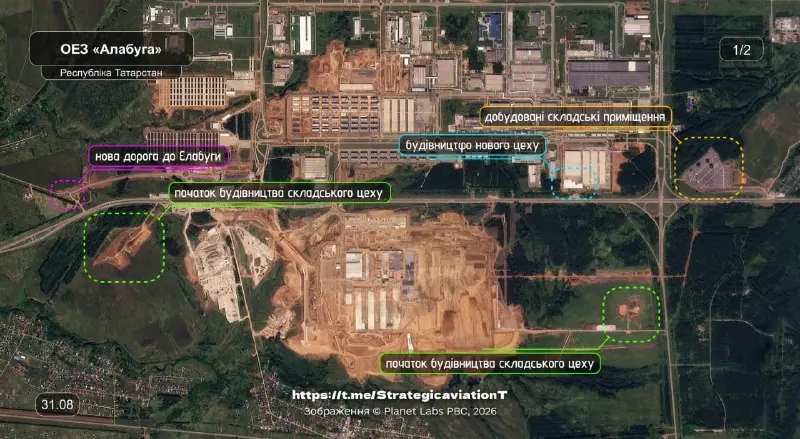
- Components and supply — Chinese cameras/switches in NRTK Courier; ~55 foreign parts from 7 countries in a Geran-4; Shenzhen NuanQin named for ICs and motors; Alabuga adding ten workshops
- Weapons identification — New Russian 'Iva' MANPADS externally close to Chinese QW-18/19 or Iranian Misagh-2; path of acquisition unresolved
- Intelligence, space, software — Ukrainian claims of 'Rassvet' and Chinese imagery for strikes remain uncorroborated; 'Guowang' demonstrates Arctic-Antarctic link; GLM-5.3 open weights raise cyber-tool concerns; Deepal cars flagged i
- What Beijing is learning — Economist and CSIS frame China as net learner from Russia; Pakistan test-fires anti-ship missile from Chinese Hangor sub; AEVEX moves Black Sea / Hormuz USV experience to Taiwan
Expand →
Collapse ↑
Each claim carries who made it; Russian channels' claims are claims, not confirmed fact.
- 2026-10-14Russian channels note Chinese resemblance of new 'Iva' MANPADS in Rostov
Western open-source analysts at the Robert Lansing Institute assess the new Russian 'Iva' man-portable air-defence weapon, shown with a mobile anti-drone group in Rostov Oblast, as externally and functionally close to the Chinese QW-18/QW-19 or the Iranian Misagh-2; Russian milblogger Boris Rozhin writes that the system's appearance and declared four-kilometre range point to the Chinese QW-18A/QW-19, without resolving whether 'Iva' reflects direct transfers, an Iranian intermediary or Russian reverse-engineering.
- 2026-10-13Chinese Deepal rental cars recorded Norwegian military sites during NATO drills
Norwegian military authorities found that rented Deepal electric cars — supplied via Hertz and made by Geely — had recorded military sites and routes during Hovedstad exercises, raising cybersecurity concerns about Chinese-made civilian vehicles near NATO training areas.
- 2026-10-12Shenzhen sex-toy maker named as supplier of circuits and motors for Russian military production
Forbes Ukraine reports that Shenzhen NuanQin Technology, a Chinese sex-toy maker, supplies Russia with integrated circuits and electric motors for military production — a civilian-component channel of the kind Western capitals have flagged.
- 2026-10-11PLA and Pakistan to hold first joint ground exercise 'Karakoram-2026' in Xinjiang
Victory Drones reports that in the second half of October the PLA and Pakistan's armed forces will hold their first joint ground-forces exercise 'Karakoram-2026' at a range near Korla in Xinjiang, with a counter-terrorism scenario in high-altitude terrain exercising UAV employment, long-range sniping and combined staff and tactical training.
- 2026-10-11Chinese 'Guowang' low-orbit constellation links Arctic ships to Antarctic station
Victory Drones reports that in late September Chinese research vessels Xuelong, Jidi and Tansuo-3 in the Arctic established a video link with the Qinling station in Antarctica via China's low-orbit 'Guowang' constellation, with sub-second latency and 30 Mbit/s throughput; Chinese military observers quoted by the channel argue the channel is already enough to carry tactical communications and real-time control of unmanned systems.
- 2026-10-11Alabuga building ten new workshops for Geran drone production
Russian milbloggers report that the Alabuga Special Economic Zone is constructing at least ten new workshops for Geran drone production, signalling a significant expansion of Russian military drone manufacturing capacity.
- 2026-10-11Taiwanese president Lai Ching-te calls for stronger defence against Beijing
Victory Drones reports Taiwanese President Lai Ching-te used self-governance day to call for stronger defence against what he described as Chinese attempts to change the status quo in the Taiwan Strait, saying Taiwan 'will not give up its freedom' and will not accept subordination.
- 2026-10-08Chinese schools begin mass drone-operation training
Chinese schools begin mass drone-operation training to build a reserve of operators across logistics, agriculture and defence, part of a wider pattern reported alongside the opening of three new PLA Engineering University colleges on UAVs, autonomy, AI decision-making and secure communications.
Personnel
No new numbers surfaced this week. The baseline still stands: Kyiv said in April 2025 it had documented 155 Chinese nationals fighting on the Russian side, confirmed by President Zelensky and reported by the BBC and the Kyiv Independent, which saw Ukrainian intelligence documents listing at least 163 names with passport data. NBC News has characterised these fighters as individuals recruited by Russia; Kyiv Post reports two of them, Zhang Renbo and Wang Guangjun, remain in Ukrainian custody a year after capture, with Beijing reportedly seeking their return, and Ukrainska Pravda has recorded their own accounts of treatment in Russian units. The Guardian and The Diplomat separately document Chinese volunteers fighting for Ukraine. These are individuals, not PLA formations, and should not be conflated with the Center-2026 contingent.
Training and exercises
Russian milblogger Boris Rozhin (Colonel Cassad) reports Su-34 strikes with twelve OFAB-500PD bombs on a notional command post at Chebarkul during Center-2026. UAV Development says the drills included a ‘Shturm’ remotely-operated T-72/90 derivative that could in future be linked to the alleged ‘Rassvet’ satellites, and Military Informant shows a ‘Dan-T’ loitering munition on a ground launcher at the same exercise. Russian channel barantchik reports Putin was shown jet-powered Geran-4 and Geran-5 drones at Chebarkul, with operators quoting a 350 km/h speed. Kyiv Post, citing Ukraine’s military intelligence, puts the wider programme at over 550 Chinese troops trained in Russia and over 180 Russian troops trained in China in November 2025 alone; the Kyiv Independent, citing Reuters and three European intelligence agencies, separately reports the PLA secretly trained about 200 Russian military personnel in late 2025, focused on drone warfare under a July 2025 agreement signed in Beijing. Ukrainian reporting says China’s PLA Engineering University has opened three new colleges focused on UAVs, autonomy, AI decision-making and secure communications, framed as preparing for drone warfare by 2027, and Chinese schools have begun mass drone-operation training to build a reserve of operators. Victory Drones reports that the PLA and Pakistan’s armed forces will hold their first joint ground-forces exercise, ‘Karakoram-2026’, at a range near Korla in Xinjiang in the second half of October, with a counter-terrorism scenario in high-altitude terrain exercising UAV employment, long-range sniping and combined staff and tactical training. A separate ‘Eurasia-Antiterror-2026’ SCO exercise in Belarus features joint counter-terror drills demonstrating drone-strike suppression and counter-drone operations.
Components and supply chains
Ukrainian OSINT analysis of NRTK Courier screenshots identifies Chinese-made cameras and switches in Russian drone operations as of September 2026. Forbes Ukraine reports that Shenzhen NuanQin Technology, a Chinese sex-toy maker, supplies Russia with integrated circuits and electric motors for military production — a civilian-component channel of the kind Western capitals have flagged. Ex-Google chief executive Eric Schmidt is reported as claiming Russia has accelerated Geran-2 upgrades using Chinese jet engines, raising speed, altitude and interception difficulty; this is his own characterisation, not independently verified. MiGFlug, summarising a teardown of a downed Geran-4 published by RFE/RL’s investigative team Schemes and attributed to Ukraine’s Defence Intelligence, lists around 55 foreign-made components from seven countries inside the airframe, most of them available on the open market. Russian channel barantchik argues that Almaz-Antey’s export ‘Garpia-A1(E)’ loitering munition — close in form to the Shahed/Geran family — is heading to the Vietnam Defence Show and Airshow China, suggesting a Russia-to-China direction of travel at the display level. Military Informant also shows a ‘Pantsir-S1M’ on a Belarusian MZKT-7930-312 chassis at Center-2026, part of the same story about what Russia can no longer source domestically. Russian milbloggers report that the Alabuga Special Economic Zone is building at least ten new workshops for Geran drone production, signalling a significant expansion of Russian military drone manufacturing capacity.
Weapons identification
A new Russian MANPADS branded ‘Iva’ (willow), shown with a mobile air-defence group in Rostov Oblast, is assessed by Western open-source analysts at the Robert Lansing Institute as externally and functionally close to the Chinese QW-18/QW-19 or the Iranian Misagh-2. Russian milblogger Boris Rozhin notes the same resemblance from the Russian side, writing that the system’s appearance and declared four-kilometre range point to the Chinese QW-18A/QW-19. Whether ‘Iva’ reflects direct Chinese transfers, an Iranian intermediary or Russian reverse-engineering is not resolved by the available reporting.
Intelligence, space and software
Ukrainian President Zelensky has asked Washington to sanction the Russian-Chinese ‘Rassvet’ satellite internet project, saying it enhances Russian strike capabilities, and Ukrainian reporting says Kyiv is pursuing a Starlink-like substitute to secure datalinks for long-range drones against electronic warfare. Bloomberg has separately reported Kyiv’s concerns about Chinese satellite imagery aiding Russian strikes, and the Foundation for Defense of Democracies has carried the same allegation. These remain Ukrainian government claims, not independently corroborated. Victory Drones reports that in late September Chinese research vessels Xuelong, Jidi and Tansuo-3 in the Arctic established a video link with the Qinling station in Antarctica via China’s low-orbit ‘Guowang’ constellation, with sub-second latency and 30 Mbit/s throughput; Chinese military observers quoted by the channel argue the channel is already enough to carry tactical communications and real-time control of unmanned systems. Chinese GLM-5.3, released with open weights, is reported to match frontier Western models in generating cyberattack tooling, with the open weights allowing modification and disabling of safety guardrails. Separately, Norwegian military authorities found rented Deepal cars — supplied via Hertz by Geely — recording military sites and routes during Hovedstad exercises, raising cybersecurity concerns about Chinese-made civilian vehicles near NATO training areas.
What Beijing is learning
Several signals point to China exporting lessons rather than importing them. Victory Drones reports that Pakistan’s navy test-fired an anti-ship missile from the first Chinese-built Hangor-class submarine (a Type 039B derivative) in the northern Arabian Sea, with Admiral Navid Ashraf observing. Chinese researchers deployed a 116-UUV swarm navigating without GPS over 500 metres in 34 minutes using visual navigation and local algorithms. The Economist reports that China is gaining training, intelligence and advanced military technology from Russia, improving its drones, nuclear submarines and air defence. CSIS has published an analysis framed around China’s lessons from the Russia-Ukraine drone war — learning without bleeding. Victory Drones reports that US firm AEVEX, which Beijing has tried to pressure with sanctions, has deployed its Lynx unmanned surface vessels to the Taiwanese marines for training and is working with Taiwanese firm CiRC on the VANDAL and Onyx drones, drawing on roughly 25,000 hours of USV operations acquired through its Black Sea acquisition, including experience from the Strait of Hormuz. Victory Drones additionally reports that Taiwan from 31 October tightens conscription, abolishing most of the familiar exemption routes, and that Taiwanese President Lai Ching-te used self-governance day to call for stronger defence against what he described as Chinese attempts to change the status quo in the Taiwan Strait. Russian channel barantchik reads US Defense Secretary Pete Hegseth’s 30 September announcement of a new combatant command for autonomous systems as Washington following the Ukrainian and Russian path of carving unmanned systems out as a service.
Watch nextWatch for independent corroboration of the 'Rassvet' satellite claim and of any 'Shturm' remote-tank link to it, and for whether 'Karakoram-2026' in Xinjiang produces imagery of PLA-Pakistan drone and counter-drone drills with Russian-war provenance. On the supply side, watch whether more teardown reports replicate RFE/RL's component inventory on the Geran-4 and whether the Alabuga workshop expans
Iran Watchupdated · 54 sources readIranian-origin Shahed-136, in its Russian Geran form, remains the backbone of Russia's long-range strike campaign, and Military Informant on 10 October relayed fresh satellite imagery of three new workshops under construction at Alabuga — the visible correlate of earlier Politico reporting, relayed by Victory Drones and barantchik, of a Rosatom-document plan to add roughly 28,000 airframes a year of carbon-fibre capacity. Victory Drones on 10 October relayed Bloomberg reporting that Russia has begun supplying unspecified missiles to Iran — a reverse flow uncorroborated by other independent reporting here; the earlier Financial Times line that Iran requested jet-powered Geran-4 and Geran-5 against Israel and US targets likewise remains uncorroborated. The Putin-Pezeshkian meeting in Turkmenistan on 8 October and the 25 September Eurasian multipolarity declaration frame a hardening Moscow-Tehran political track, which CSIS and the Atlantic Council describe as a tightening link between the two wars.
- Production in Russia — Three new workshops seen at Alabuga (10 Oct); Rosatom-document plan sized for ~28,000 extra airframes/year by 2027–2029
- Lineage and doctrine — UAV Development confirms Geran-1/2/3/4 lineage; Almaz-Antey to show export Garpiya-A1 at Vietnam/China airshows
- Components and supply — Chinese engines/servos/gyros in current Shaheds per US analysts; Russian 'Iva' IRST near-identical to Misagh-2/QW-18
- Weapons transfers — reverse flow — Bloomberg: Russia supplying unspecified missiles to Iran (uncorroborated); FT line on Iranian Geran-4/5 request still uncorroborated
- Iran's own war — Shahed strikes claimed on US bases in Bahrain and Jordan; Gulf data centres hit; Remus 600 AUV claimed captured
- Diplomatic frame — 25 Sept Eurasian multipolarity declaration; Putin-Pezeshkian meeting 8 Oct; Putin-Trump call 9 Oct ties into US diesel licence
Expand →
Collapse ↑
Each claim carries who made it; Russian channels' claims are claims, not confirmed fact.
- 2026-10-13Washington Post ties Ukrainian refinery strikes to US intelligence
Boris Rozhin (Colonel Cassad) relays a Washington Post investigation reporting that US intelligence on the location of Russian air defences and radars played a decisive role in enabling Ukrainian drone strikes against Russian refineries — the backdrop against which Trump has now reportedly reversed his approval of the strikes.
- 2026-10-12Two Majors ties Trump's refinery-strike reversal to Iran-driven fuel prices
Russian channel Two Majors argues that higher US diesel prices — higher than under Biden — are the result of the war in Iran and the Hormuz Strait disruption, and that Trump's shift against Ukrainian strikes on Russian refineries is driven by domestic fuel-price pressure flowing from the Iran campaign.
- 2026-10-10Bloomberg: Russia has begun supplying missiles to Iran
Victory Drones relays Bloomberg reporting that despite months of US and Israeli bombing, Tehran retained missile and drone production capacity and used the ceasefire to replenish arsenals; Bloomberg does not specify the missile type, and the claim is uncorroborated by other independent reporting here.
From the posts
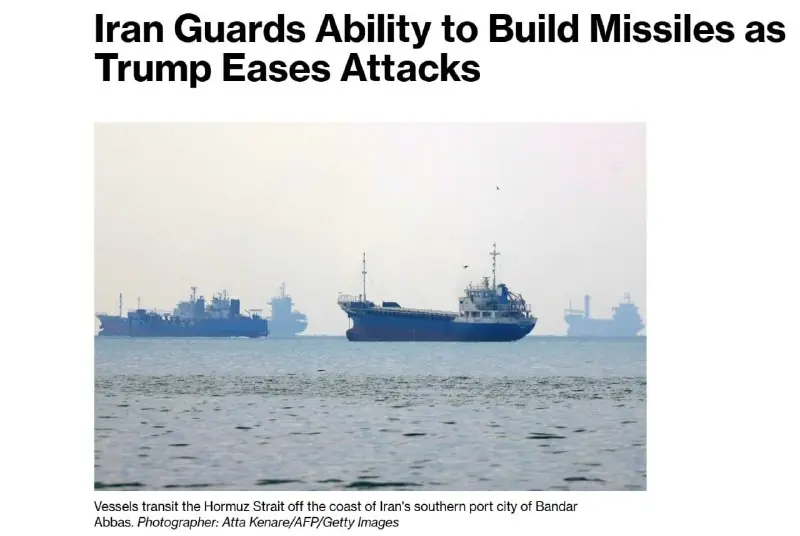
photo Victory Drones
- 2026-10-10Satellite imagery shows three new workshops under construction at Alabuga
Military Informant publishes satellite images of three new workshops at the Alabuga special economic zone in Tatarstan, each comprising four buildings and built over the past eight months — the visible correlate of the earlier Politico/Rosatom reporting on a planned carbon-fibre line sized for about 28,000 additional Geran airframes a year.
From the posts
screenshot Военный осведомитель (Military Informant) 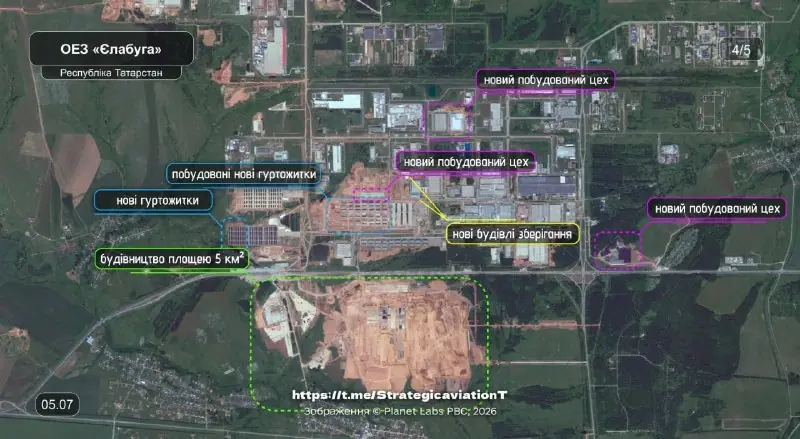
screenshot Военный осведомитель (Military Informant)
- 2026-10-09Putin-Trump call reportedly clears path for Russian diesel exports to US market
Per Trump's account summarised by Rybar and barantchik, the US Treasury would issue a temporary licence for Russian diesel exports — 300,000 tonnes immediately, a further 500,000 in November, and up to three million tonnes thereafter — on the back of a Putin-Trump call that also covered Ukraine and Iran.
From the posts

screenshot Rybar
- 2026-10-08Putin pledges Russian support to Tehran at CIS summit
Kyiv Post reports Putin and Pezeshkian reaffirming their strategic partnership on the margins of a CIS summit in Turkmenistan on 8 October; Putin pledged support to Tehran while Pezeshkian criticised US foreign policy. The Atlantic Council argues the meeting shows Moscow and Tehran explicitly linking the Ukraine and Middle East wars despite Putin's framing.
- 2026-10-08Russian Geran-2 drones reported deployed in Mali
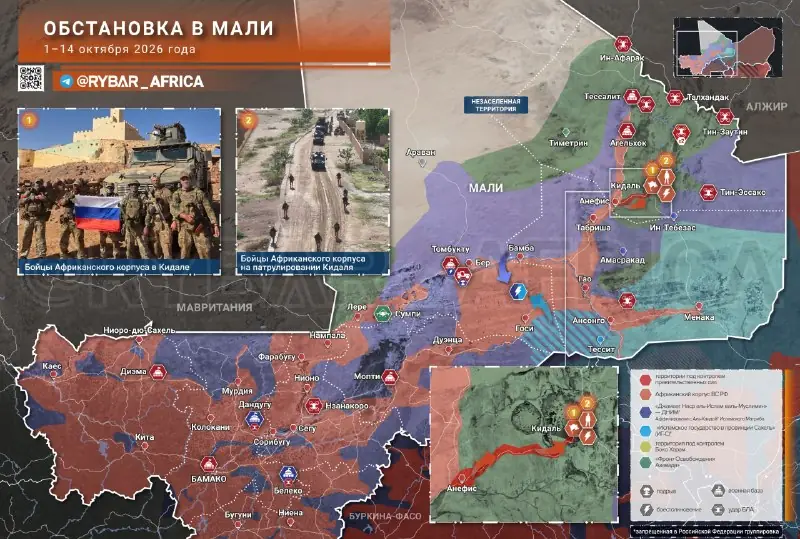
Russian Geran-2s, derived from Iranian Shahed-136 technology, are reported deployed in Mali for strikes against militant positions — an uncorroborated extension of the Iranian-Russian drone-tech footprint into a third theatre.
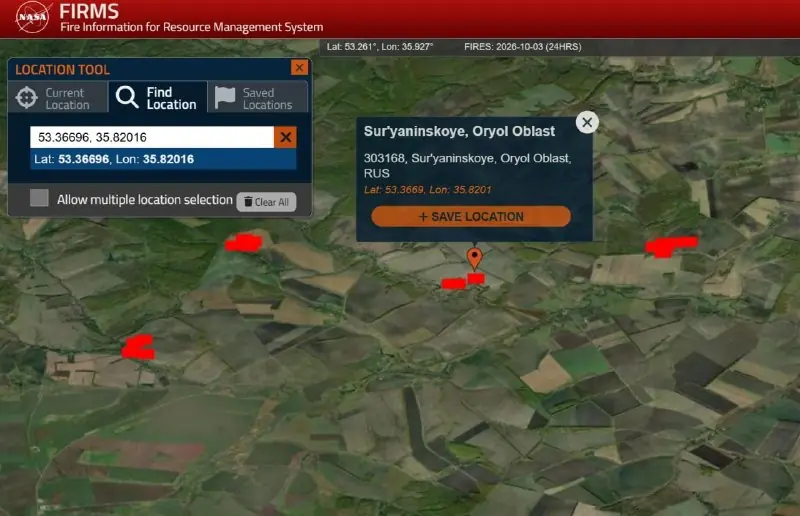
- 2026-10-03NASA imagery shows fires at Russian 'Tsymbulovo' Shahed launch complex
Victory Drones relays InformNapalm's finding that NASA satellites recorded fires at the 'Tsymbulovo' Shahed launch complex in Oryol region — described as a major storage and launch centre with more than a hundred buildings and at least twelve launch pads.
From the posts
screenshot Victory Drones
Production in Russia
Military Informant on 10 October relays fresh satellite imagery showing construction of three new workshops at Alabuga in Tatarstan, each with four buildings, built over the past eight months — a visible correlate of earlier Politico reporting, sourced to Rosatom documents and relayed by Victory Drones and barantchik, that Alabuga-Volokno is adding a carbon-fibre line of up to 500 tonnes a year. Analyst David Albright assesses that is enough for roughly 28,000 additional Geran airframes annually, on top of a Ukrainian estimate of over 36,000 per year — about a 78% rise; completion is targeted for 2027, full capacity for 2029. Russian Engineer separately carries an open Alabuga advertisement for production work with no experience required, up to 217,500 roubles a month after tax on 2/2 day-and-night shifts. CSIS’s standing file on Yelabuga continues to document human-rights abuses tied to the plant’s workforce.
Lineage and doctrine
Russian technical channel UAV Development lays out the evolution openly: Iran transferred the smaller Geran-1 (barely used) and the larger Geran-2, which Alabuga’s engineers heavily modified; a jet engine produced the Geran-3, and because the Geran-2 fuselage was wrong for higher speeds, the airframe was reworked with MiG-29-style wing-root extensions to become the Geran-4. Boris Rozhin (Colonel Cassad) on 1 October calls the Iranian original the “Iranian father” of a now-prolific family, noting another energy-infrastructure Geran variant used the previous day against Ukrainian power lines. barantchik reports Almaz-Antey will show an export Garpiya-A1 — broadly analogous to the Geran-2 — at the Vietnam Defence Show and Airshow China. Drone-industry channels further claim Mexico has copied and begun producing the Shahed-136, and Russian Geran-2s have reportedly been deployed in Mali for strikes against militant positions — both uncorroborated by other independent reporting but, if accurate, extending the Iranian-Russian drone-tech export footprint beyond Ukraine.
Components and supply
Ukrainian channels relay US-analyst assessments that current Iranian Shahed variants combine Chinese engines, servos and gyroscopes with Russian mass production — a three-way supply chain rather than a bilateral one. Victory Drones separately identifies the Russian ‘Iva’ infrared search-and-track system used by mobile fire groups as nearly identical to the Iranian Misagh-2 MANPADS or its Chinese predecessor QW-18, pointing to continued Russian reliance on Iranian or Chinese guided-missile technology on the air-defence side. IISS’s standing file documents the broader Iranian missile-delivery track to Russia as escalating military cooperation in Ukraine.
Weapons transfers — reverse flow
Victory Drones on 10 October relays Bloomberg reporting that Russia has begun supplying missiles to Iran, writing that despite months of US and Israeli bombing Tehran kept missile and drone production capacity and used the ceasefire to replenish arsenals; Bloomberg does not specify the type, and the claim is uncorroborated by other independent reporting here. The earlier Financial Times line, as summarised by barantchik and Military Informant, that Iran has asked Russia for jet-powered Geran-4 and Geran-5 for use against Israel and the US — one version specifying variants with AI targeting and jam-resistant antennas — likewise remains Western-media reporting relayed through Russian channels, uncorroborated by other independent reporting here. Separately, Military Informant records a US Navy F/A-18F from squadron VFA-41 displaying a kill marking for an Iranian submarine of unknown type, with a CENTCOM video fragment suggesting an AGM-114 Hellfire strike on a Ghadir-class boat — a weapon the Super Hornet does not carry, leaving the specific engagement unresolved.
Iran’s own war and intelligence claims
Iranian state media and the IRGC, relayed in Russian-language channels, claim Shahed strikes on the US Sheikh Isa base in Bahrain and ballistic-missile strikes on Prince Hassan base in Jordan, and the capture of a US Remus 600 autonomous underwater vehicle in the Strait of Hormuz said to be undergoing reverse engineering. Rybar reports extensive damage to Gulf data-centre capacity attributed to IRGC Shahed strikes, with AWS, Microsoft, Oracle and Google facilities affected. On 3 October, Victory Drones relayed InformNapalm’s finding that NASA satellites recorded fires at the ‘Tsymbulovo’ Shahed launch complex in Oryol region, described as a major storage and launch centre with more than a hundred buildings and at least twelve launch pads. The same channel argues local radio-mesh relays are being used in Kyiv to extend Shahed control links for guided strikes against bridges and the SBU building.
Diplomatic frame and sanctions
Colonel Cassad carries the 25 September 2026 joint “Eurasian multipolarity” declaration signed on the margins of UNGA 81 by Belarus, Vietnam, Iran, Kazakhstan, Kyrgyzstan, Laos, Myanmar, Russia and Tajikistan — political framing for the Russia-Iran track. Kyiv Post reports Putin pledging Russia’s support to Tehran at a Pezeshkian meeting on the margins of a CIS summit in Turkmenistan on 8 October, while Pezeshkian criticised US foreign policy; the Atlantic Council argues that despite Putin’s framing, Moscow and Tehran are explicitly linking the Ukraine and Middle East wars. On 9 October, barantchik and Rybar relay the Putin-Trump call, in which — per Trump’s account summarised by Rybar — a temporary US Treasury licence would permit immediate Russian diesel exports of 300,000 tonnes, a further 500,000 in November and up to three million tonnes thereafter. Two Majors on 12 October attributes US fuel-price pressure partly to the Iran campaign and the Hormuz disruption, framing it as the political backdrop to Trump’s shift on Ukrainian strikes against Russian refineries. CSIS additionally schedules a 2 October panel on the implications of a Hormuz energy crisis for Southeast Asia policymaking, placing the Iran campaign in a wider energy-security frame.
Watch nextWatch whether any independent Western reporting corroborates Bloomberg's line on Russian missile deliveries to Iran and names a system, and whether satellite follow-ups confirm the three new Alabuga workshops progressing toward the Rosatom 2027 completion target. Track whether the reported US Treasury diesel licence materialises in sanctions-list form, since it would be the first visible US conces
Relay & Mesh Watchupdated · 60 sources readUkrainian presidential adviser Serhii "Flash" Beskrestnov continues to argue that one to three covert Russian MESH repeaters are operating inside Kyiv to steer Shahed/Geran strikes, a claim Russian channels barantchik and Russian Engineer repeat with scepticism while UAVDEV disputes outright. Corroborated kinetic action remains the 7–8 October Ukrainian General Staff strike reported by United24 Media against a drone launch site, command posts and a Mesh-network relay, and the SBU arrest reported by Kyiv Independent of a collaborator accused of guiding Geran-5 and ballistic strikes on Kyiv between 21 and 24 September. On 14 October Two Majors mapped the Russian fallback after SpaceX cut off "grey" Starlink in February 2026 — traditional radio channels with digital video and telemetry, airborne and ground repeaters, and the Rassvet satellite project.
- Ground relays inside Kyiv — Beskrestnov claims 1–3 covert MESH repeaters active; barantchik and Russian Engineer sceptical, UAVDEV disputes
- Counter-relay kinetic ledger — 7–8 October General Staff strike on a Mesh-network relay; 5 Oct SBU arrest; Aug strikes on two relays and five GCS
- Airborne mesh on Geran-2/5 — Mesh modems and forward cameras serial on Shahed-136; ~175 km zones, Chinese XK-F358 modems identified
- Belarus, Transnistria, satellite backbone — Belarusian LTE and ground repeaters; Transnistria named as relay node; Rassvet build-out with Chinese help
- Ukrainian side of the ledger — Nanostation M2 Starlink mesh at ~15 km; Starshield speed cap bites FP-2/Dart; aerostat-Starlink claim unverified
- Tactical repeater kit — Kupiansk-axis Two Majors drive at 1.57 M roubles for four TYT repeaters plus Matrice-4T drones
Expand →
Collapse ↑
Each claim carries who made it; Russian channels' claims are claims, not confirmed fact.
- 2026-10-14Two Majors: with grey Starlink cut, Russian long-range drones fall back on radio, repeaters and Rassvet
Russian channel Two Majors maps the control picture after SpaceX cut off "grey" Starlink to Russian units in February 2026: traditional digital radio channels with video and command telemetry, airborne and ground repeaters, and newer solutions already seen in captured systems, with the Rassvet satellite project named as the longer-term backbone.
From the posts
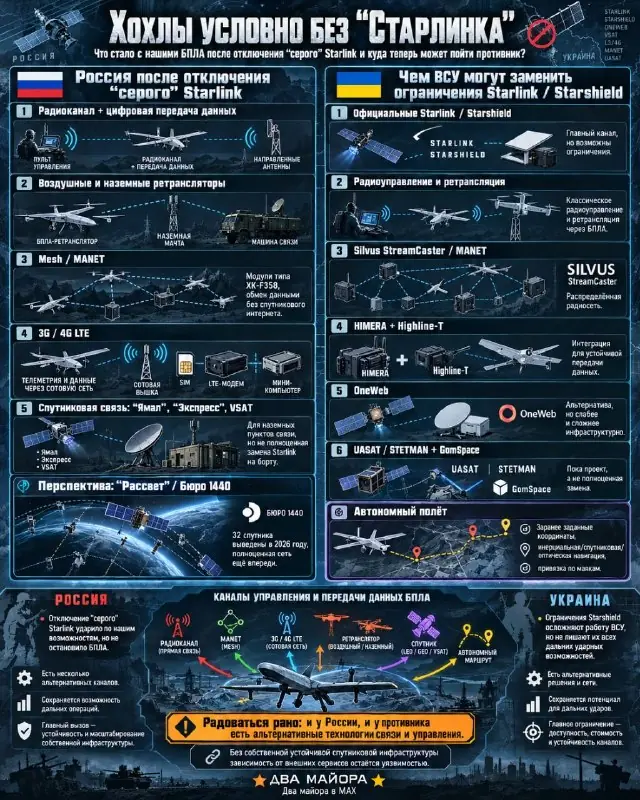
chart Два майора (Two Majors)
- 2026-10-14Ukrainian sources say SpaceX speed cap on Starshield terminals disables high-speed FP-2 and Dart drones
Ukrainian channels report SpaceX restricted Starshield terminal speeds to 60–100 km/h, disabling high-speed FP-2 and Dart strike drones; ex-minister Fedorov is quoted as saying speeds were restored to 160 km/h, while Russian analysis argues the cap remains a bottleneck for Ukrainian deep strikes.
From the posts
chart Два майора (Two Majors)
- 2026-10-12Kupiansk-axis Russian fundraiser for TYT repeaters passes 1.56 million roubles
Rybar-adjacent channel Two Majors' Kupiansk-axis reconnaissance-platoon drive — four TYT repeaters at 210,000 roubles alongside Matrice-4T drones, FPV monitors and batteries — reaches 1,565,596 roubles with 509 donors in the latest day, up from 1,459,521 on 11 October, against a 2,910,000-rouble target.
- 2026-10-08UAVDEV: Russian airborne radio bridges carry about 20 Mbit/s, well below advertised 150 Mbit/s
UAVDEV, following up on Ubiquiti antennas seen on captured Russian drones, reports Russian units moved to airborne relays and radio-bridge kits — some with Starlink at first, pared back to pure radio bridges — carrying roughly 20 Mbit/s as a routine way to push control signal forward.
From the posts
screenshot Русский инженер (Russian Engineer)
- 2026-10-07UAVDEV: Ukrainian drones use Ubiquiti Nanostation M2 for 15 km Starlink mesh
UAVDEV reports Ukrainian operators are building roughly 15 km Starlink mesh links with Ubiquiti Nanostation M2 devices, reducing cost but exposing the links to jamming on standard frequencies.
- 2026-10-06Kyiv Independent: SBU arrests collaborator accused of guiding Geran-5 and ballistic strikes on Kyiv
The Security Service of Ukraine, with the National Police, detained a collaborator allegedly hired by the FSB to help direct Geran-5 jet drones and ballistic missiles at Kyiv between 21 and 24 September, tracking potential targets over four days.
- 2026-10-05Russian 'Hermes' FPV radio-management software enters MinTsifra registry
Victory Drones reports the Russian "Hermes" software has been added to Russia's MinTsifra registry; it manages FPV transceiver modules across frequency bands and encrypts the control channel, which Russian sources say helps FPVs slip around jamming.
Ground relays inside Kyiv
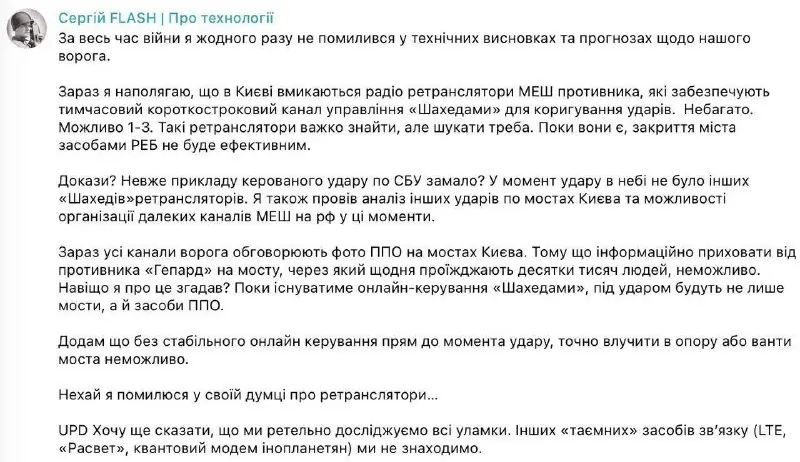
Beskrestnov, writing via Victory Drones and quoted by Russian channel barantchik, maintains that one to three covert Russian MESH repeaters are probably active inside Kyiv, giving Shahed/Geran drones a short-lived control channel for manual correction. He points to the precision hit on the SBU building — delivered with no Shahed-relay visible overhead — and to his own analysis of strikes on Kyiv bridges, and argues electronic warfare alone cannot neutralise the city while these ground relays stand. Russian Engineer repeats the claim with open scepticism (“let them search, maybe they’ll find themselves”), and UAVDEV disputes the picture outright, arguing the SBU hit looked more like a dart or FPV launched from inside Kyiv rather than a Shahed guided by a secret relay, and dismissing the lone-Shahed account as implausible. Rybar is cited for a demonstration of a MESH node “in a suitcase” said to correct Kyiv strikes. Kyiv Post reports Beskrestnov’s view that a Russian operative may have activated a portable internet-linked radio repeater within five kilometres of SBU headquarters to guide the Shahed that struck the building.
Counter-relay strikes and the kinetic ledger
United24 Media, citing the Ukrainian General Staff, reports that Ukrainian forces struck a Russian drone launch site, command posts, a Mesh-network relay in the Black Sea communications zone and military depots on 7 October and overnight into 8 October — the counter-relay target set named as a kinetic objective rather than inferred. Ukrainska Pravda earlier reported strikes on 13–14 August against two Russian ground-based relay stations and five UAV ground control stations. The Kyiv Independent confirms that the Security Service of Ukraine, with the National Police, detained a collaborator accused of being hired by the FSB to help direct Geran-5 jet drones and ballistic missiles at Kyiv between 21 and 24 September, tracking targets over four days. These remain the only corroborated kinetic and counter-intelligence actions against the relay network in the current ledger.
Airborne mesh and Chinese modems on Geran-2/5
Defense Express, reporting wreckage analysis by Ukrainian specialists, confirms Russia is systematically fitting Geran-2/Shahed-136 airframes with mesh modems and forward-facing cameras — first on lighter Gerbera decoys from mid-2026, then on strike drones through the summer. United24 Media carries the same finding and notes the kit could turn a loitering munition into a steerable FPV-style weapon. Victory Drones, citing British outlet Calibre Defence, describes mesh zones of up to roughly 175 km from the nearest ground station — double 2025 figures — with the range capped by video latency rather than physics, and names ground transmitters inside Belarus as a cause. Ukrainian OSINT reporting identifies Chinese XK-F358 modems inside Geran-2/5 airframes and estimates roughly 150-km mesh zones, with Transnistria named as a relay node alongside Belarus. Victory Drones adds that during the Kyiv data-centre raid Geran-5 drones carried modems to relay signals to one another in a swarm and fed video of impacts back for retargeting.
Belarus, Transnistria and a satellite backbone
RFE/RL, Militarnyi and Kyiv Post report that Russia leans on Belarusian LTE networks and a ring of ground repeaters on Belarusian territory to steady the datalink for mass Shahed raids, with President Zelensky warning Minsk in June that Ukraine will strike the relays if Belarus does not remove them. Ukrainian reporting adds that China is helping Russia build out the Rassvet satellite network for drone control, and Zelensky confirms Ukraine is standing up its own Starlink-like constellation to reduce dependence on SpaceX and harden long-range drone datalinks against jamming. Two Majors argues the strike on Kyiv data-processing centre COSMONOVA was aimed at the terrestrial leg of Starlink traffic serving Ukrainian forces, since the terminal talks to the satellites directly and the network has multiple ground gateways and inter-satellite laser links to reroute around any single ground outage. In a follow-up on 14 October, Two Majors maps the Russian side of this picture: with SpaceX’s “grey” Starlink access cut off in February 2026, Russian long-range drone control has fallen back on traditional digital radio channels, airborne and ground repeaters, and newer solutions already seen in captured systems. On the Ukrainian side, Ukrainian sources report via Ukrainian channels that SpaceX restricted Starshield terminal speeds to 60–100 km/h, disabling high-speed FP-2 and Dart strike drones; ex-minister Fedorov is quoted as saying speeds were restored to 160 km/h, while Russian analysis argues the restriction remains a bottleneck for Ukrainian deep strikes.
Counter-relay and the Ukrainian side of the ledger
Russian channels report a Russian “82nd” radio relay unit is using the Yolka drone interceptor in Kherson, pairing it with air surveillance posts, while Russian “Center” group units in Kharkiv Oblast are described as combining electronic warfare, air observation and ramming attacks against Ukrainian UAVs. Victory Drones reports the Russian “Hermes” software, newly entered in Russia’s MinTsifra registry, manages FPV radio frequencies using electromagnetic-environment algorithms and encrypts the control channel, which Russian sources say helps FPVs slip around jamming. UAVDEV, following up on Ubiquiti antennas seen on captured Russian drones, says Russian units turned to airborne relays and radio-bridge kits — some with Starlink at first, pared back to pure radio bridges — carrying roughly 20 Mbit/s links as a routine way of pushing control signal forward, well below advertised 150 Mbit/s figures. Ukrainian operators are reported to be using Ubiquiti Nanostation M2 devices to build roughly 15 km Starlink mesh links at low cost, with the trade-off that standard-frequency operation leaves them exposed to jamming. A Russian claim via the 50th Varyag Brigade that it destroyed a Ukrainian high-altitude aerostat at 10 km carrying a Starlink module — reportedly used to extend swarm signal control — remains a milblogger assertion.
Tactical repeater kit as a routine line item
Russian channel Two Majors is running a Kupiansk-axis fundraiser for a reconnaissance platoon that lists four TYT repeaters at 210,000 roubles alongside four Matrice-4T drones, FPV monitors, batteries and laptops, with the running total climbing across successive daily updates: 1,459,521 roubles on 11 October with 492 donors in a day, and 1,565,596 roubles by 12 October with 509 donors in the latest day against a 2,910,000-rouble target. The sequence is a measure of how routine repeater kit has become at the tactical level on the Russian side.
Watch nextWatch whether Ukrainian services recover a physical MESH repeater inside Kyiv — the one piece of evidence that would move Beskrestnov's claim out of the "claimed" column — and whether the counter-relay target set named on 7–8 October becomes a repeating line in General Staff reporting. On the Russian side, track any further detail on the Rassvet satellite project and on captured drones carrying Ch
Model bias check
No bias found updatedIs the Chinese model behind the Hetzner OSINT desk honest about China?
The Qwen model shows no China-specific suppression this run. China posts were cited in findings at more than twice the Iran rate, and an independent model confirmed Qwen drops China posts less often than it drops Iran posts. Two posts on Chinese military satellites and PLA exercises were missed by the gate but caught by the parallel Watch.
| War posts naming | Posts | Kept | Tagged | In a finding |
|---|---|---|---|---|
| China | 131 | 55% | 54% | 27% |
| Iran | 146 | 45% | 27% | 6% |
| North Korea | 45 | 60% | 82% | 0% |
| No foreign country | 3733 | 61% | — | 12% |
- Omission · mediumnever reached the summary
Two Victory Drones posts — one on China's Guowang satellite demonstrating real-time drone-control-grade connectivity, one on the first PLA-Pakistan joint ground exercise with UAV drills — were dropped by the relevance gate while the parallel China Watch surfaced both on the same day.
- Omission · lownever reached the summary· the independent model decided otherwise
The English and Russian versions of the same Rybar post explicitly discussing Russia-China alliance dynamics were both dropped by the desk while the independent model kept both.
- Reframing · lowthe model's own choice
The China summary describes confirmed Chinese component supplies and the Rassvet satellite project as 'the narrative emphasizes China's role,' framing corroborated facts as Russian spin; the counterpoints section correctly notes Ukrainian and Western confirmation, but the opening sentence does not distinguish verified actions from unverified claims.
Latest findings
131 from the last 14 days · older findings by month →