Products Frankenburg Technologies
Mark I
Ultra short-range fire-and-forget interceptor built to defeat low-cost attack drones at a fraction of the cost of legacy SHORAD systems.
Missile / loitering munitionby Frankenburg TechnologiesIntroduced 2026

Photos: www.armyrecognition.com · Ernest Brooks · www.edrmagazine.eu
Mark I is an ultra-short-range guided interceptor missile developed by Frankenburg Technologies, the Tallinn-based defence start-up founded by former Estonian Ministry of Defence permanent secretary Kusti Salm. The company positions it as a purpose-built counter to the class of cheap one-way attack drones that has come to dominate the airspace over Ukraine — Shahed-type loitering munitions, quadcopters, small fixed-wing UAS — where the economics of firing legacy short-range air-defence missiles at targets worth a few thousand euros stopped making sense years ago. Mark I is Frankenburg’s first operational product, and by the manufacturer’s account the smallest and lowest-cost guided interceptor to have been live-fired.
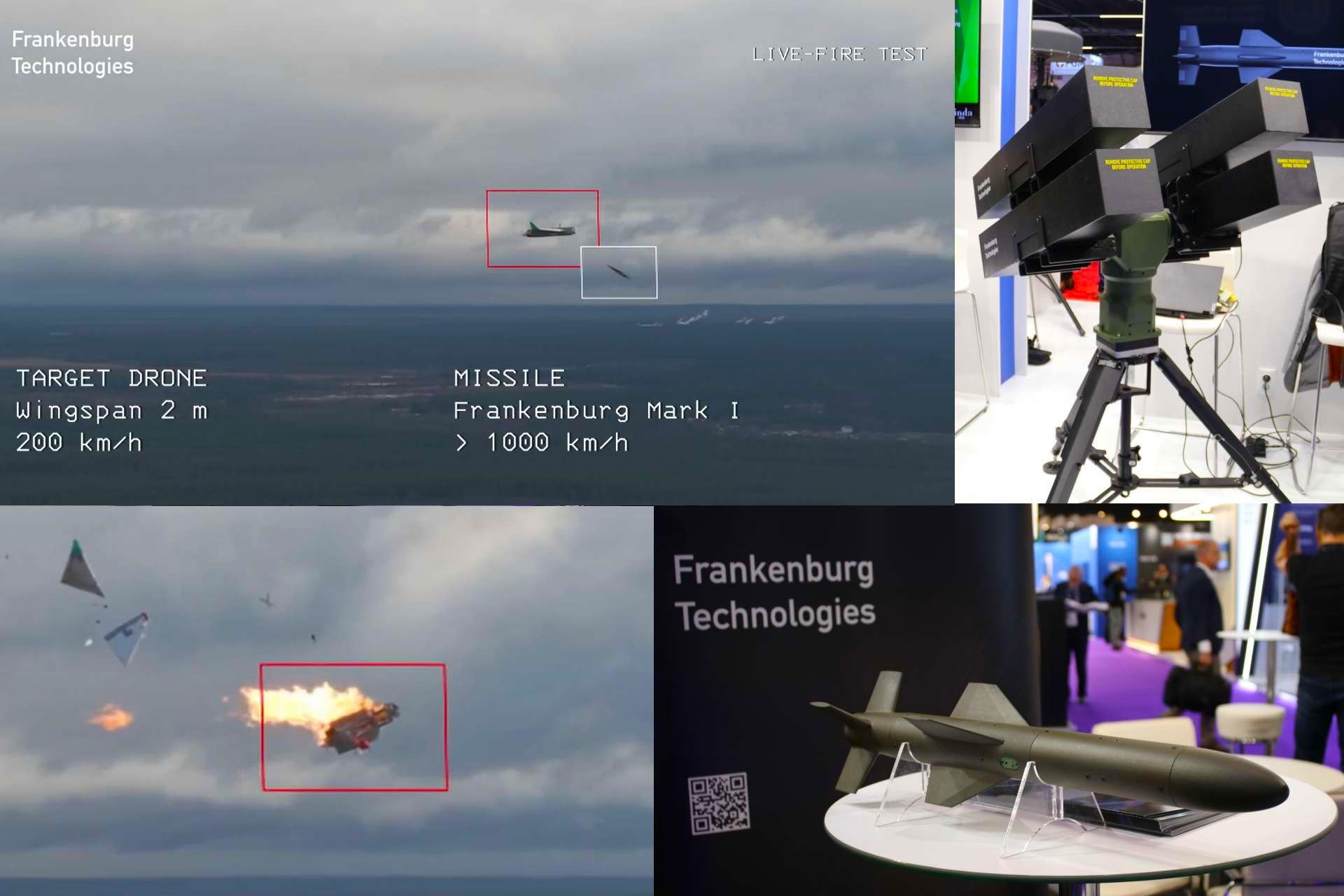
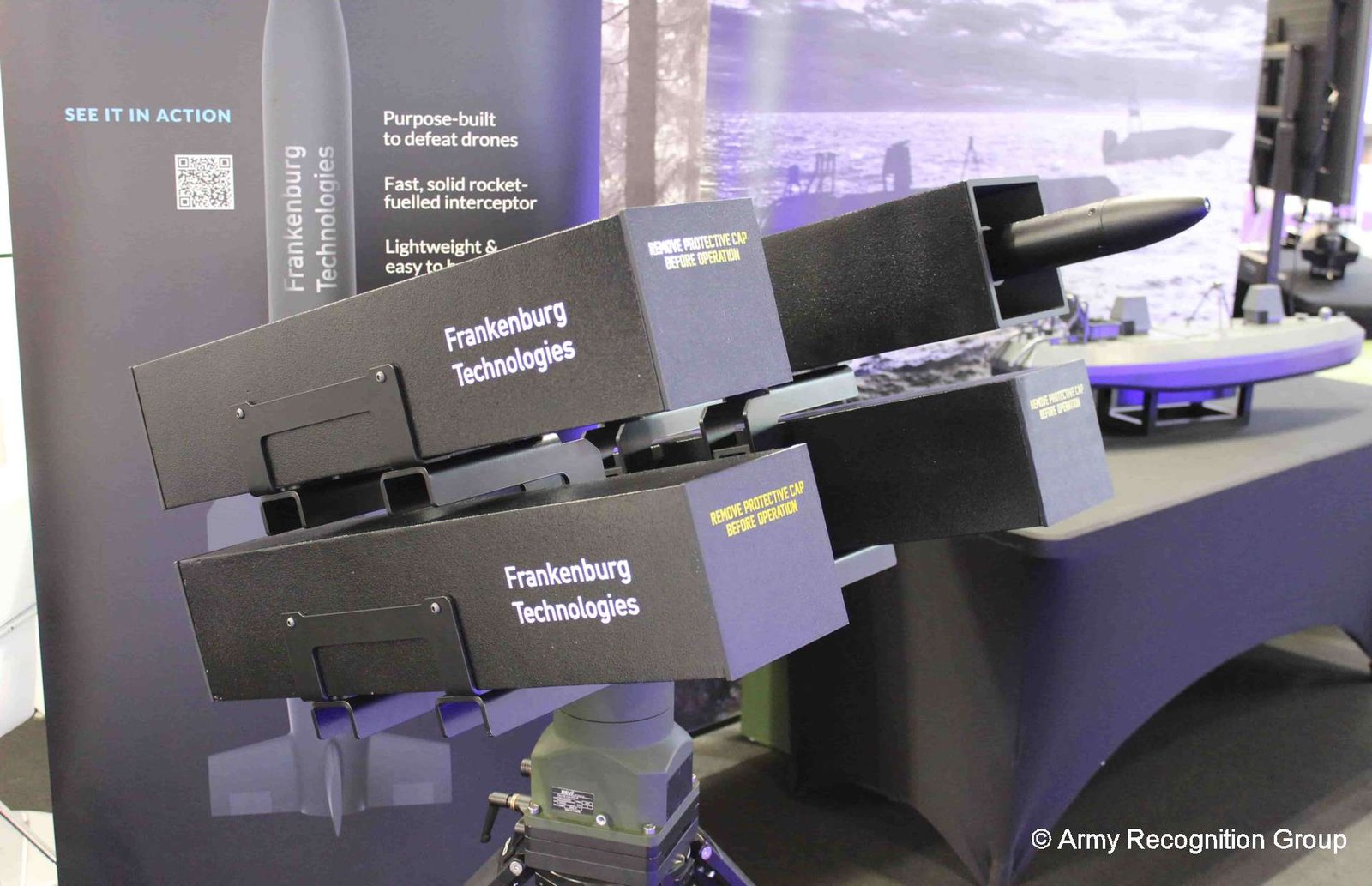
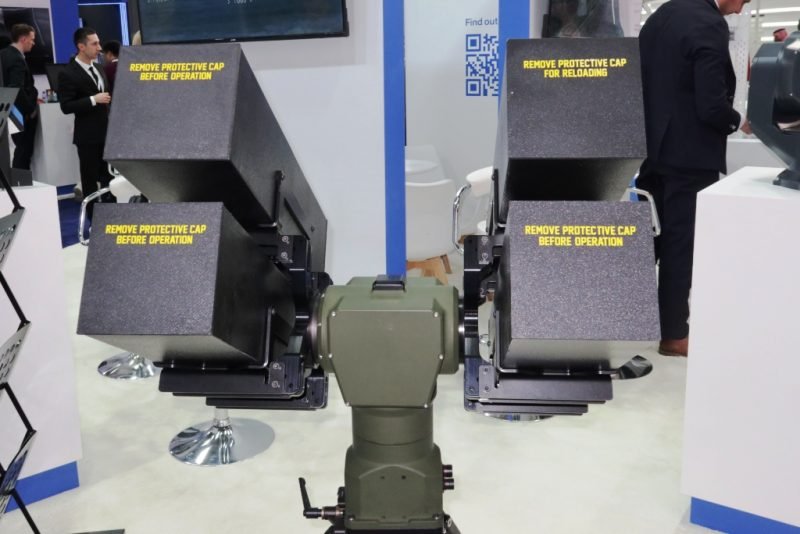
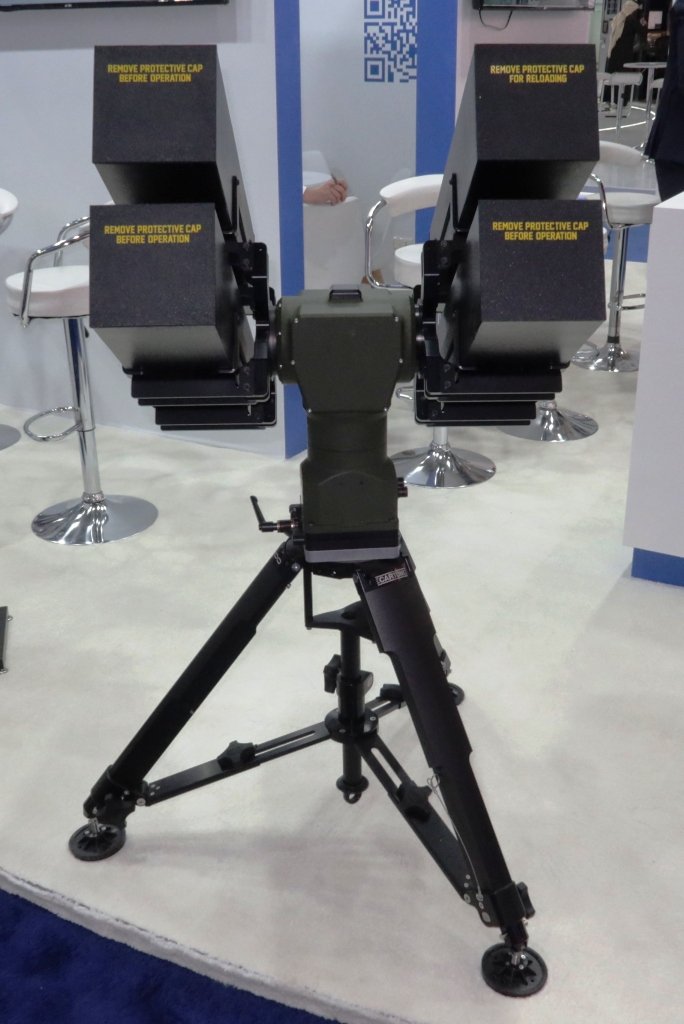
Technically the missile is a compact solid-fuel rocket weighing under two kilograms and roughly 0.65 metres long, with a proximity-fuzed high-explosive fragmentation warhead and fire-and-forget engagement logic. Frankenburg gives its range as under two kilometres and its speed as high subsonic, sufficient, the company says, to engage both propeller-driven drones travelling 150–200 km/h and jet-powered types in the 450–600 km/h band, including swarming formations. The design leans on commercially available components — a deliberate choice tied to the company’s production model rather than an end in itself — and the airframe is built to be launched from a compact ground canister launcher, from vehicles, and eventually from uncrewed aircraft carrying up to ten missiles as forward interceptors before their own launch envelope is reached.
The system’s first publicly acknowledged live-fire intercept took place in December 2025 at the Ādaži training area in Latvia, where a moving Class III UAS target was engaged. Latvia and Ukraine are named as early operators; Frankenburg has not disclosed order numbers. In March 2026 the company signed a framework agreement with Polska Grupa Zbrojeniowa (PGZ), Poland’s state defence holding, to localise Mark I production in Poland at a planned capacity of up to 10,000 missiles per year. PGZ president Adam Leszkiewicz framed the deal explicitly as a response to the mass, low-cost drone threat observed in Ukraine, arguing that engaging such targets with expensive legacy systems is “operationally and economically unjustified”.
Production sits at the centre of Frankenburg’s pitch. Its FieldFoundry concept is a modular manufacturing model that claims 100 missiles per day per standard site, deployable in existing buildings, temporary structures or containerised installations, and intended for rapid stand-up in partner nations. The company says it has established initial production capability in several NATO countries. A follow-on Mark II is publicly flagged, with a stated goal of extending coverage into the 5–8 kilometre band to sit as a layer above Mark I.
Mark I’s distinctiveness, if the claims hold up in sustained combat use, is less any single technical feature than the cost curve — Frankenburg says the missile reduces short-range intercept cost by more than tenfold — and the industrial model built around it. Both propositions are being tested where cheap attack drones are actually being flown in numbers, which is the only place they can be.