FP-2
Heavy-payload strike drone built for hardened targets, scaling the FP-1 airframe to a larger warhead.
Droneby Fire PointIntroduced 2025
Photos: firepoint.technology · dev.ua · united24media.com
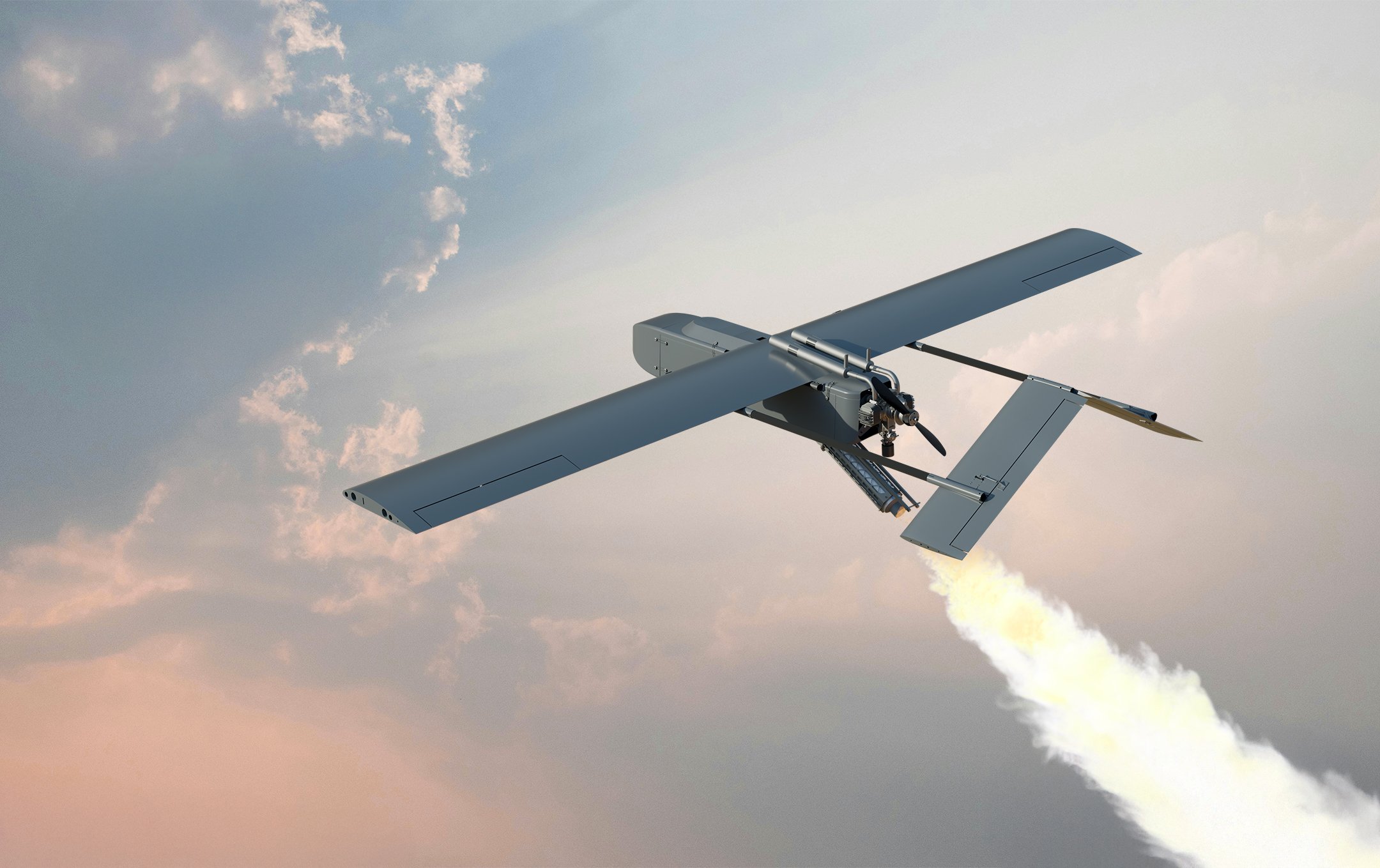
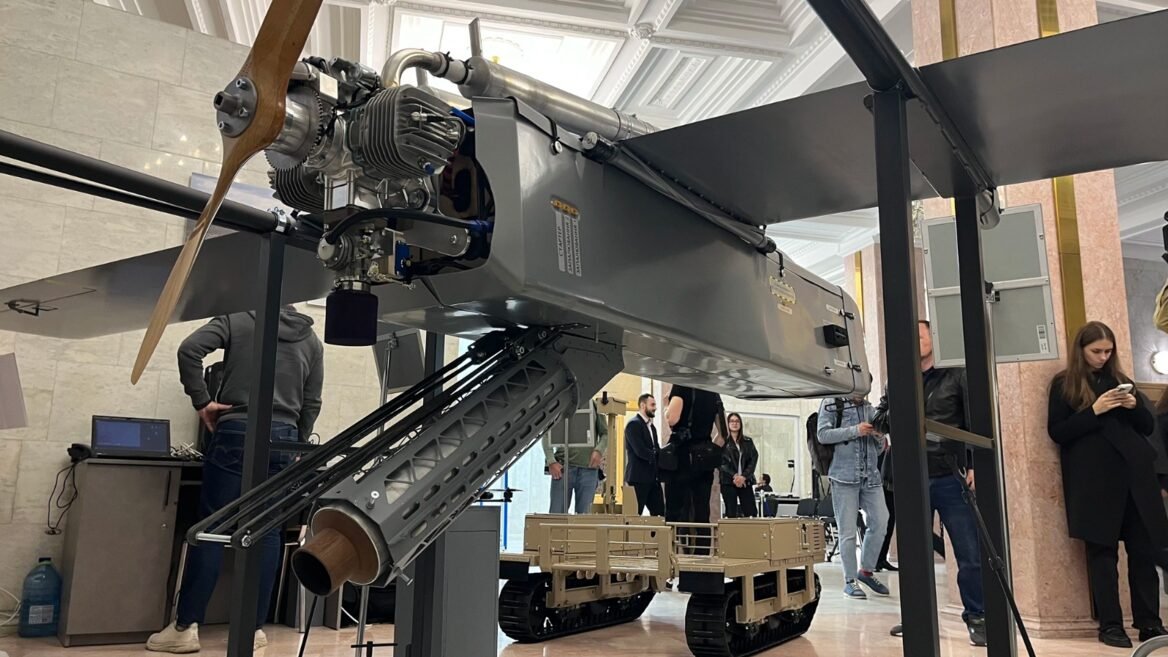
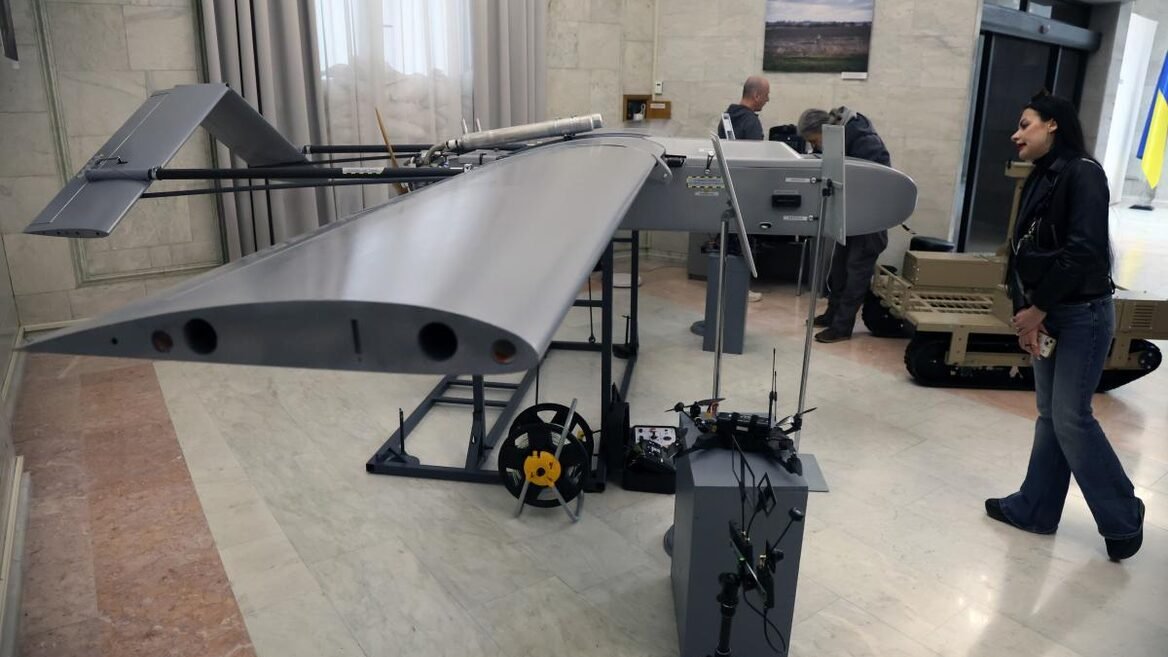
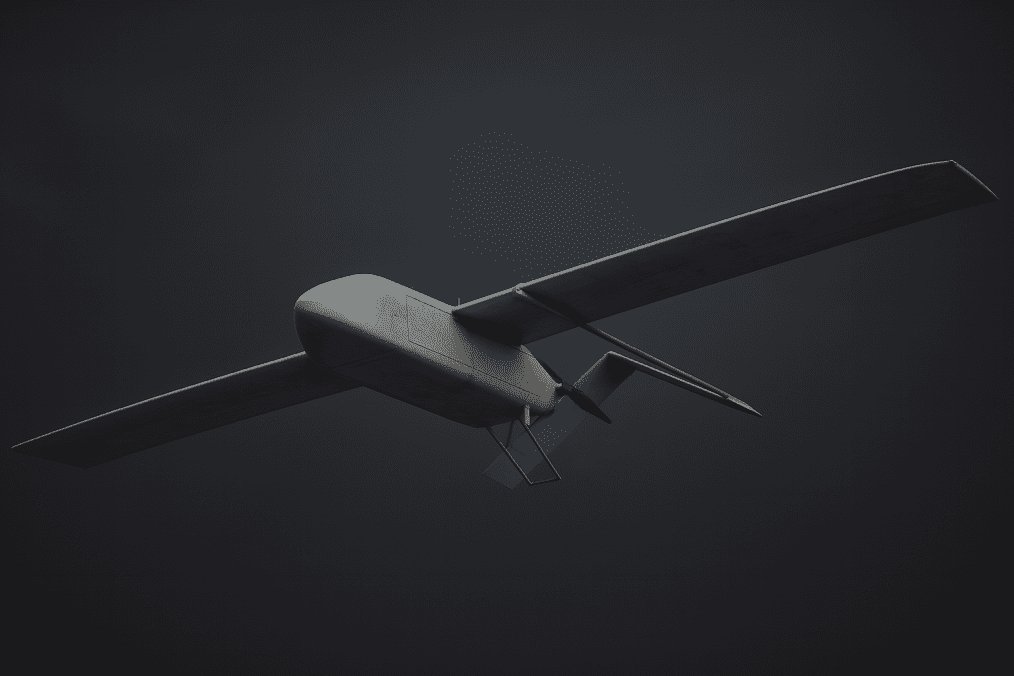
Fire Point’s FP-2 is a Ukrainian deep-strike drone unveiled in 2025 as a heavy-payload sibling to the company’s FP-1. Where the FP-1 was built to fly long — its 1,600-kilometre-class range placing refineries, ammunition depots, and airfields deep inside Russia within reach of a comparatively cheap one-way attack — the FP-2 trades distance for explosive mass. Reported warhead weight sits around 200 kilograms, several times the FP-1’s load, putting the system in the same bracket as light cruise missiles for terminal effect.
The airframe is a scaled evolution rather than a clean-sheet design. Fire Point has stuck with the FP-1 family’s basic recipe: a piston-engined, propeller-driven, fixed-wing platform with a swept tail, satellite and inertial navigation for the cruise phase, and a low unit cost relative to a missile of comparable warhead. The trade-off is bluntly physical — more weight at the nose forces either a larger wing, more fuel for the same reach, or a shorter mission radius. Fire Point has chosen the third option, accepting reduced range in exchange for a payload that can defeat hardened structures and stockpiled munitions that the FP-1 could only damage superficially.
Ukraine is the sole declared operator, and the FP-2 forms part of the same deep-strike campaign that has hit Russian refineries, fuel depots, and Black Sea Fleet logistics through 2024 and 2025. Within that mix the drone occupies a specific niche: it is the answer to targets where the FP-1’s smaller charge proved insufficient, particularly reinforced fuel infrastructure and dispersed-but-armoured rear-area sites. Production sits inside Ukraine, with Fire Point having grown from a small workshop in early 2024 to one of Kyiv’s largest deep-strike suppliers in barely eighteen months.
Development of the family has not stopped at the FP-2. Fire Point is also building the FP-5 Flamingo, a turbojet cruise missile with a 3,000-kilometre advertised range, positioning the company across the full deep-strike spectrum from cheap propeller-driven attritable drones at one end to subsonic cruise missiles at the other. Against that backdrop the FP-2 reads less as a stand-alone product than as the heavy-warhead notch in a deliberately tiered catalogue, each tier sized to a different class of Russian rear-area target.