
DJI
90% of the world's consumer drones; the Mavic family is the most widely used drone on both sides of the Ukraine front.
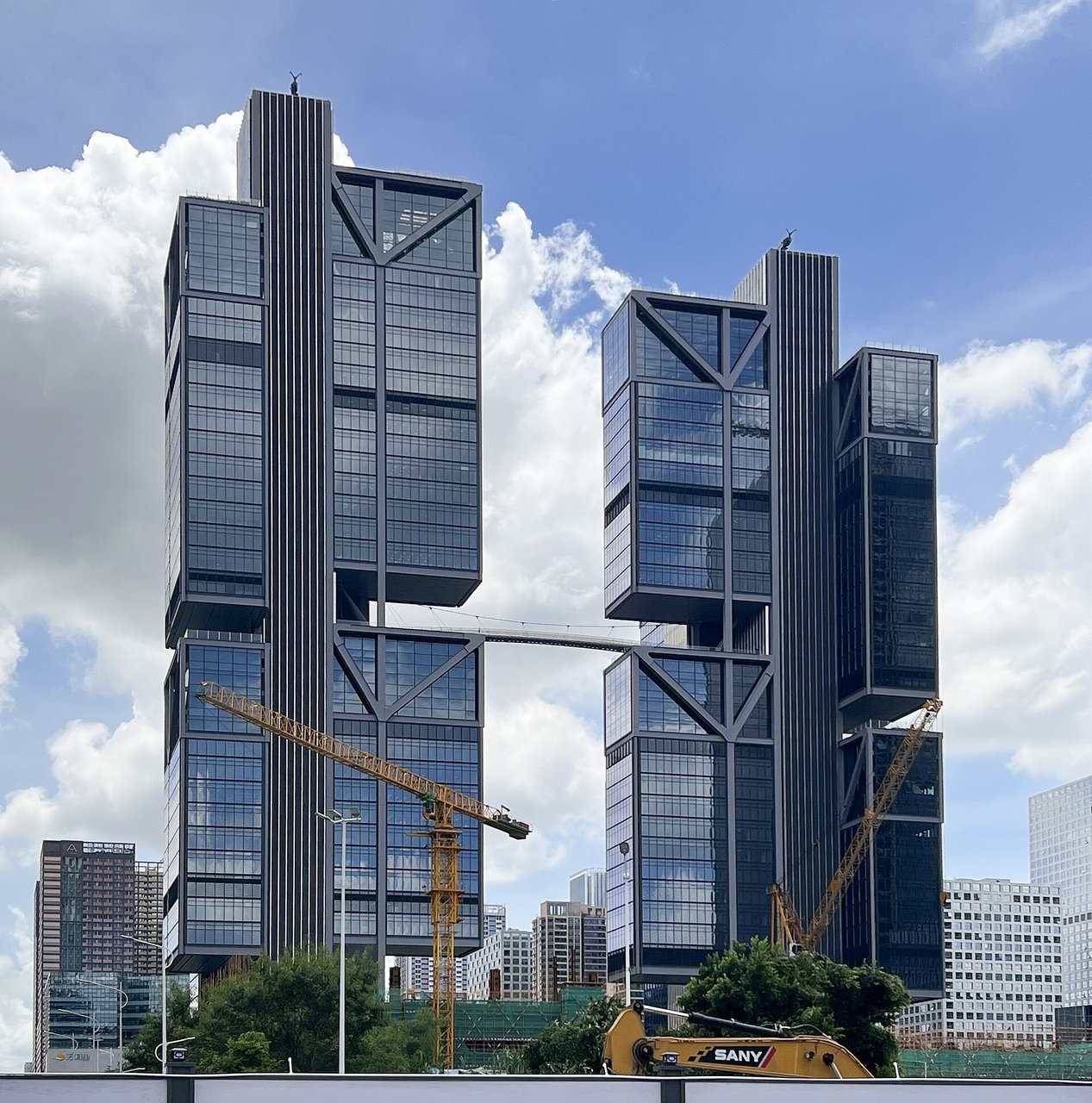
DJI was founded in 2006 by Frank Wang, a graduate student at the Hong Kong University of Science and Technology who had been building flight controllers in his dorm. The company set up in Shenzhen, plugging directly into the city’s electronics supply chain, and quickly outgrew the hobbyist market it started in. Wang, who also goes by Wang Tao, remains chief executive. He is famously reclusive — he avoids the conference circuit other Chinese tech founders cultivate, gives few interviews, and is rarely photographed. The company is still privately held and headquartered in Shenzhen’s Nanshan district.
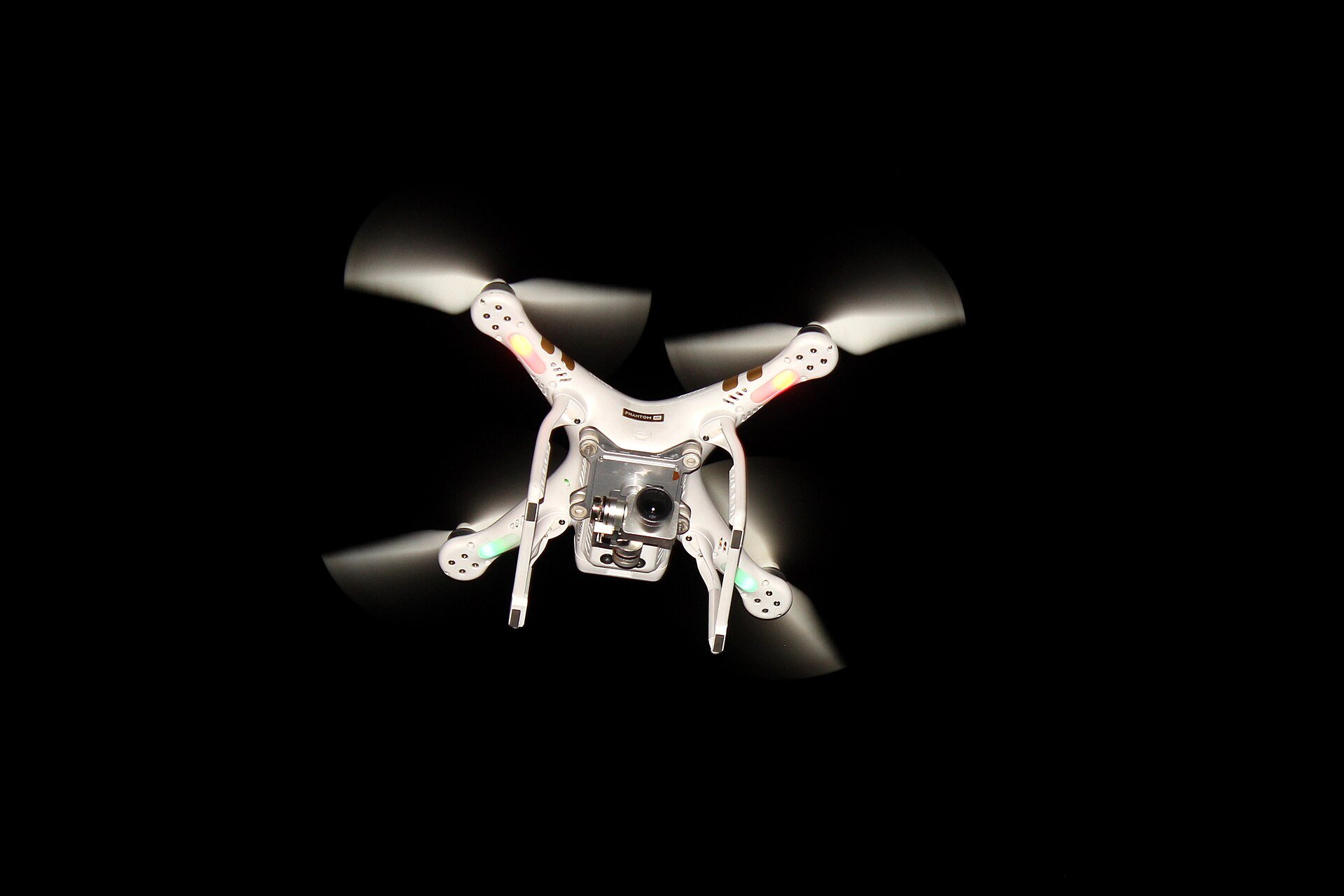
The product range is what made DJI a household name. The Phantom line opened the consumer market in the early 2010s and was, for several years, the default flying camera. The foldable Mavic series superseded it and is now the company’s volume product, with the Mavic 3 family at the top of the consumer range. The Matrice series — Matrice 30, 300, and 350 — is the industrial platform used by police, fire, search-and-rescue, and infrastructure-inspection teams. The Inspire line serves film production. The Agras line of agricultural spray drones, originally aimed at Chinese rice paddies, has become a major export. DJI also makes the underlying gimbals, flight controllers, and cameras, and licenses some of those components to other manufacturers.
DJI’s products dominate both sides of the war in Ukraine. The Mavic 3 in particular is the most widely used drone on the front, flown for reconnaissance, artillery spotting, and — bolted with a release mechanism — for dropping grenades and small munitions. Matrice and Agras airframes have been adapted for heavier munitions delivery. In April 2022 DJI announced it would suspend sales in Russia and Ukraine, citing the difficulty of ensuring its civilian products were not used militarily, but airframes continued to reach both armies through third-country distributors and grey-market channels. Ukrainian operators have also publicly complained about Aeroscope, DJI’s drone-detection system, which was used to locate Ukrainian pilots until the company disabled features in the country.
The firm reported around 14,000 employees as of 2018 and is estimated to hold somewhere between 70 and 90 percent of the global consumer drone market. Sequoia Capital China was an early backer, and secondary-market valuations have placed the company in the tens of billions of dollars, although it has never gone public. Annual revenue has been reported above three billion dollars.
DJI is one of the most heavily sanctioned Chinese technology companies. The US Department of Commerce added DJI to its Entity List in December 2020 over allegations the company’s drones had been used in surveillance of Uyghurs in Xinjiang. The Treasury added DJI to its Chinese Military-Industrial Complex Companies list in 2021, restricting US investment, and in 2024 the Department of Defense placed the company on its list of Chinese Military Companies. The Countering CCP Drones Act, which would block DJI products from operating on US communications infrastructure, has passed the House and is pending in the Senate. Multiple US federal agencies have already barred DJI airframes from procurement on data-security grounds.
The company sits in an unusual position for a consumer-electronics maker. Its civilian-grade quadcopters have become the default short-range reconnaissance and strike platform of a major European war, with both armies dependent on a Shenzhen supply chain that Beijing can throttle. That dependency, more than any single sanctions decision, is what defines DJI’s place in the field today.
Products
Drones
Mavic series
Compact consumer quadcopters; the most widely deployed drone family on both sides of the Russia-Ukraine front.
Matrice series
Industrial-grade quadcopters used by police, search and rescue, and (off-label) military operators.
Phantom series
Long-running consumer-photography quadcopter, since superseded by the Mavic line.
Agras
Agricultural-spray drone series; some variants have been adapted for grenade drops in the Russia-Ukraine war.
DJI FPV
High-speed first-person-view racing drone that became the hardware baseline for low-cost one-way attack drones in Ukraine.
Introduced 2021
Matrice 300 RTK
Enterprise quadcopter with swappable payloads (zoom, thermal, LiDAR) used for inspection, search-and-rescue, and battlefield ISR.
Introduced 2020
Matrice 30T
Ruggedised fold-flat enterprise quadrotor integrating thermal, wide, and zoom optics in a more portable form than the M300.
Introduced 2022
Matrice 350 RTK
Enterprise hex-rotor platform built for long-endurance ISR and payload missions with hot-swap batteries.
Introduced 2023
Mavic 3
Compact folding quadcopter with Hasselblad camera, used extensively by both Ukrainian and Russian forces for reconnaissance and grenade-dropping.
Introduced 2021
Mavic 3 Enterprise
Compact foldable quadrotor with interchangeable RGB, thermal, and multispectral payloads — the most widely fielded ISR drone on both sides of the Ukraine front line.
Introduced 2022
Mavic 3 Thermal
Enterprise variant of the Mavic 3 with a radiometric thermal sensor, widely used for night reconnaissance in Ukraine.
Introduced 2022
Mini 4 Pro
Sub-250 g foldable quadcopter that falls below many regulatory registration thresholds — widely used for frontline reconnaissance.
Introduced 2023
Phantom 4 Pro
Fixed-arm quadcopter that was the dominant battlefield reconnaissance platform before the Mavic 3 era.
Introduced 2016
Phantom 4 RTK
Survey-grade quadcopter with centimetre-accurate positioning, used by militaries for mapping and artillery correction.
Introduced 2018
Integrated systems
DJI Mavic
Controversies
Added to the US Commerce Department's Entity List.
The US Department of Commerce added DJI to the Bureau of Industry and Security's Entity List in December 2020, restricting US firms from doing business with the company.
Voluntary suspension of business in both Russia and Ukraine.
DJI voluntarily suspended all sales and business operations in both Russia and Ukraine, citing concerns that its consumer products were being used in combat. The company contractually forbids dealer sales for combat use, but third-party resellers have continued to deliver Mavics into both sides of the war.
Federal court rules DJI remains on the Pentagon's Section 1260H Chinese-military-companies list.
A US federal-court ruling on 26 September 2025 denied DJI's challenge and kept the company on the Pentagon's Section 1260H list of "Chinese military companies." DJI argues the listing is unfounded; the Pentagon argues the listing is supported by available reporting.
FCC bans import, marketing, and sale of new DJI and Autel drone models in the United States.
Following a security review mandated by the 2025 National Defense Authorization Act, the FCC banned the import, marketing, and sale of new DJI and Autel Robotics drone models in the US.
DJI sues the US government over the import ban.
In February 2026 DJI filed suit against the US government, challenging the FCC import ban as exceeding statutory authority and harming its US business.
Gallery

Media
Sources
- en.wikipedia.org/wiki/DJI (2026-05-02) — Encyclopedic summary citing primary reporting — confirms January 2006 founding by Frank Wang, Shenzhen HQ, the >90% consumer-drone market share, the product portfolio, the December 2020 Entity List addition, and the April 2022 suspension of Russia/Ukraine business.
- www.cnn.com/2025/12/23/business/us-ban-foreign-drones-dji-intl-hnk (2026-05-02) — CNN reporting on the December 2025 FCC ban on import / marketing / sale of new DJI and Autel models in the US.
- dronelife.com/2025/09/29/dji-to-remain-on-pentagon-list-after-u-s-court-ruling/ (2026-05-02) — Reporting on the September 2025 federal-court ruling keeping DJI on the Defense Department's Section 1260H list.
- dronedj.com/2023/04/14/dji-aeromotus-us-russia-sanctions/ (2026-05-02) — DroneDJ reporting on OFAC's April 2023 sanction of a Dubai-based former DJI reseller for Russian ties.
- dronedj.com/2022/10/07/dji-dod-drone/ (2026-05-02) — DroneDJ reporting on the 2022 DoD addition of DJI to its blacklist of Chinese military companies.