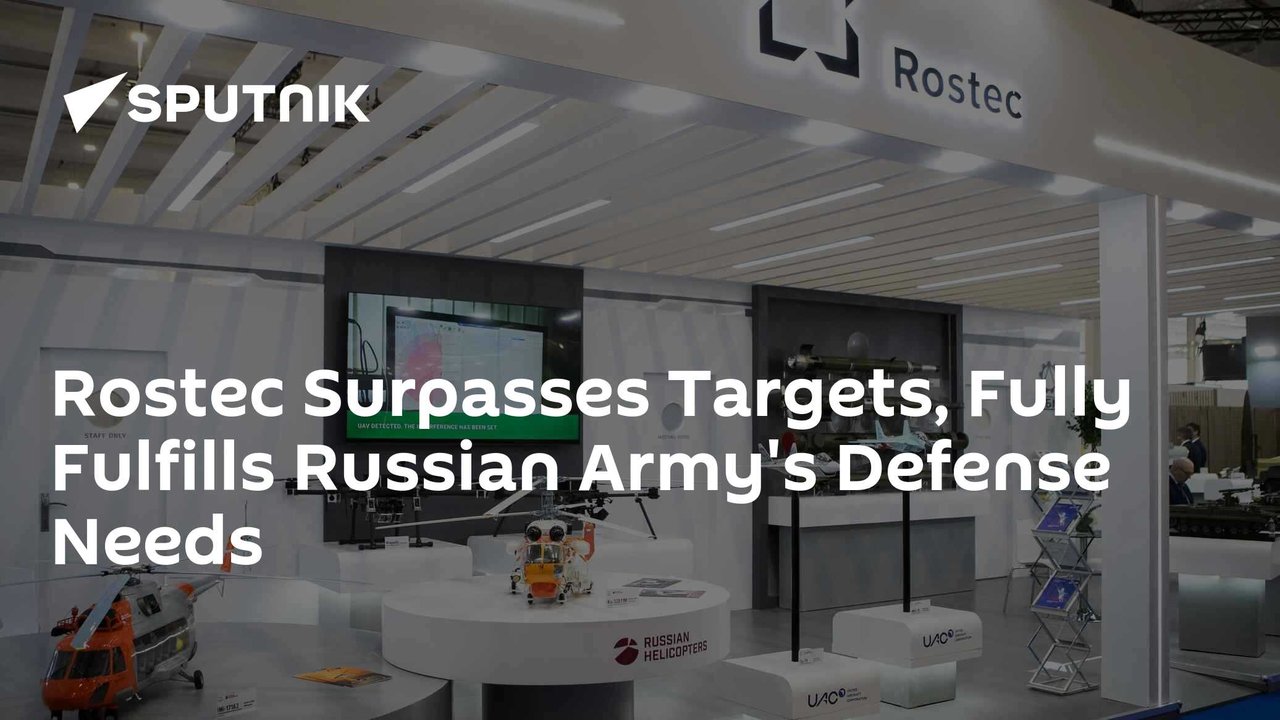
Rostec
Rostec is a Russian state-owned defence conglomerate headquartered in Moscow, created in 2007 by presidential decree as Rostekhnologii and renamed in 2012. It consolidates the bulk of the country’s military-industrial base — some 800 enterprises across aviation, radio-electronics, small arms, armour and electronic warfare — under a single corporate roof answerable to the Kremlin. Its chief executive since inception is Sergei Chemezov, a career intelligence officer who served in East Germany at the same time as Vladimir Putin and who has long been counted among the inner circle of Russian state capitalism.
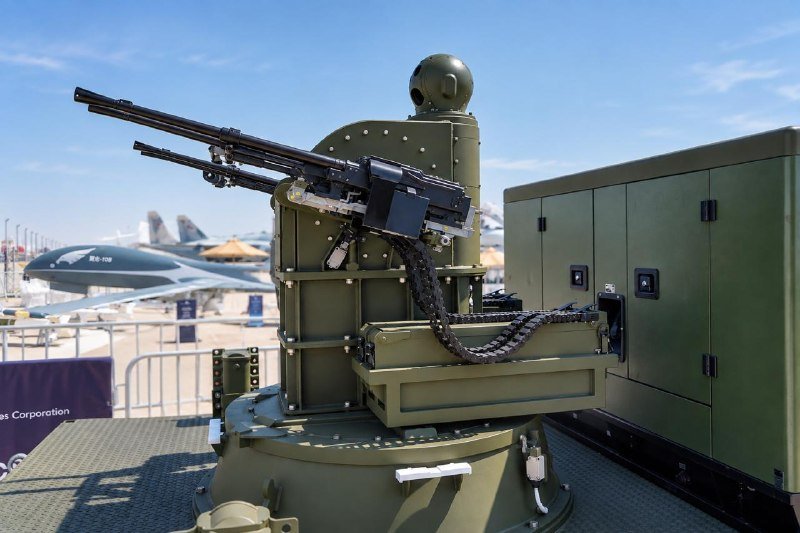
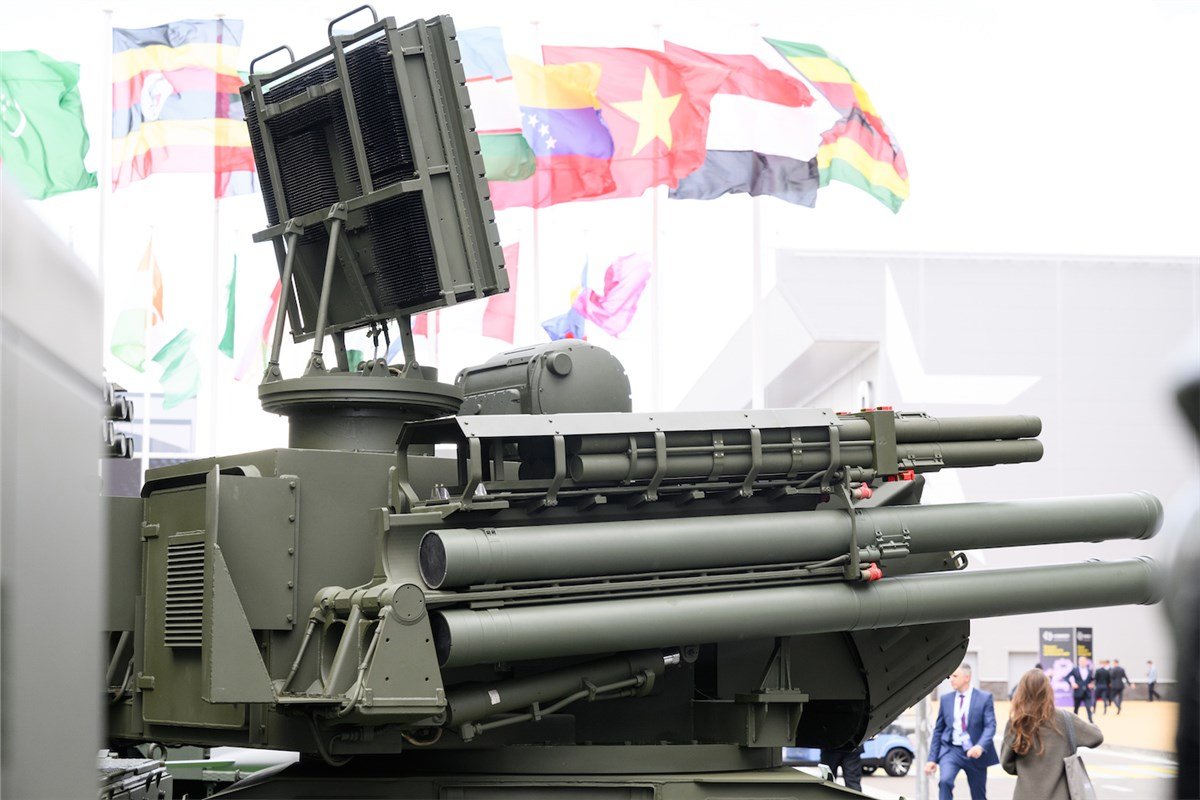
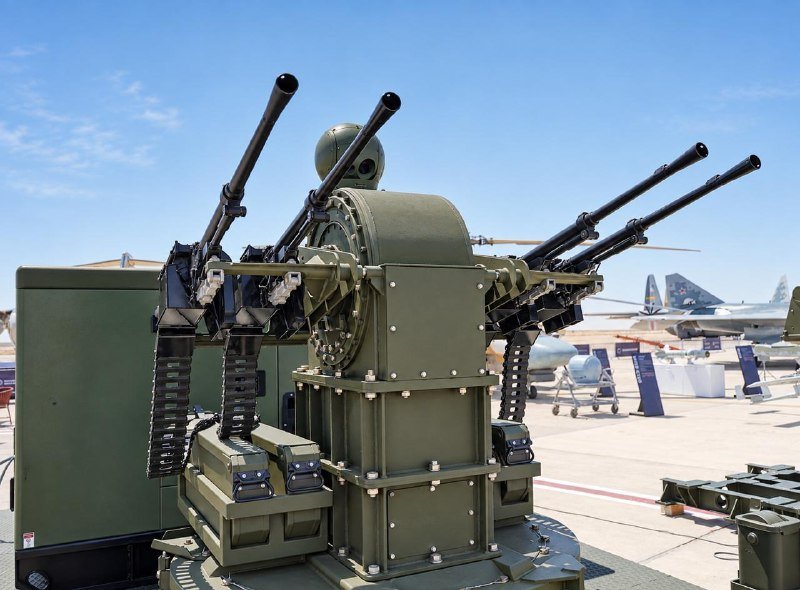
The portfolio spans the full catalogue of what the Russian state fields in battle. The United Aircraft Corporation, a Rostec holding, builds the Su-34 and Su-57 strike fighters, and is contracted to supply Aeroflot with ninety MC-21 medium-range airliners between 2029 and 2032. Kalashnikov Concern makes the AK platform and the Lancet loitering munition. High Precision Systems produces the Pantsir and Tor short-range air-defence systems, and more recently the Zubr counter-UAV station the company describes as a last line of infrastructure defence. The Rosel electronics arm covers radars, border-crossing automation and newer passive drone-detection work. Export sales are handled through Rosoboronexport, which this autumn began international marketing of the tracked Nerekhta-E combat robot, offered with small-arms, grenade-launcher or anti-tank modules.
Rostec has been under Western sanctions since 2014 and heavily expanded ones since 2022, when the US Treasury designated the corporation and its leadership for enabling the invasion of Ukraine. Chemezov himself sits on the EU, UK and US sanctions lists. Supplying the war has become the group’s core work; the drone, missile and aircraft production feeding the Ukraine front passes largely through its subsidiaries.
Russian channels close to the company have reported sustained activity in the counter-drone segment in recent weeks. Rostec says its Citadel (ZAK-30) air-defence system uses programmable 30 mm shells to intercept small UAVs more cost-effectively than conventional anti-aircraft fire. Its Rosel division has presented two passive drone-detection concepts, Ogonek and the 3D PKL, both pitched as spotting UAVs by scanning for stray video streams or reflected television and radio signals rather than emitting radar — a design argument aimed at surviving Ukrainian electronic warfare and anti-radiation strikes. These are vendor presentations rather than independently verified capabilities; none of the three systems has been documented in combat use. Separately, Rostec’s High Precision Systems division is reported to have delivered a first batch of ANT-1000PM firefighting robots to a Russian fuel company, though the customer has not been named publicly.
Beyond weapons, the conglomerate is positioning itself as a civil-industrial giant, exhibiting 3D bioprinting medical robots at Bioprom-2026, autonomous haul trucks developed with Belarus’s BelAZ under the Robleks joint venture, and modular factory-automation lines branded Robopro. The dual-use framing is longstanding Rostec policy, and in practice the civilian product lines run alongside — rather than in place of — the arms work that remains the group’s reason for existing.