DeViRo
Produces the Leleka-100 lightweight fixed-wing UAV for front-line intelligence and artillery spotting.
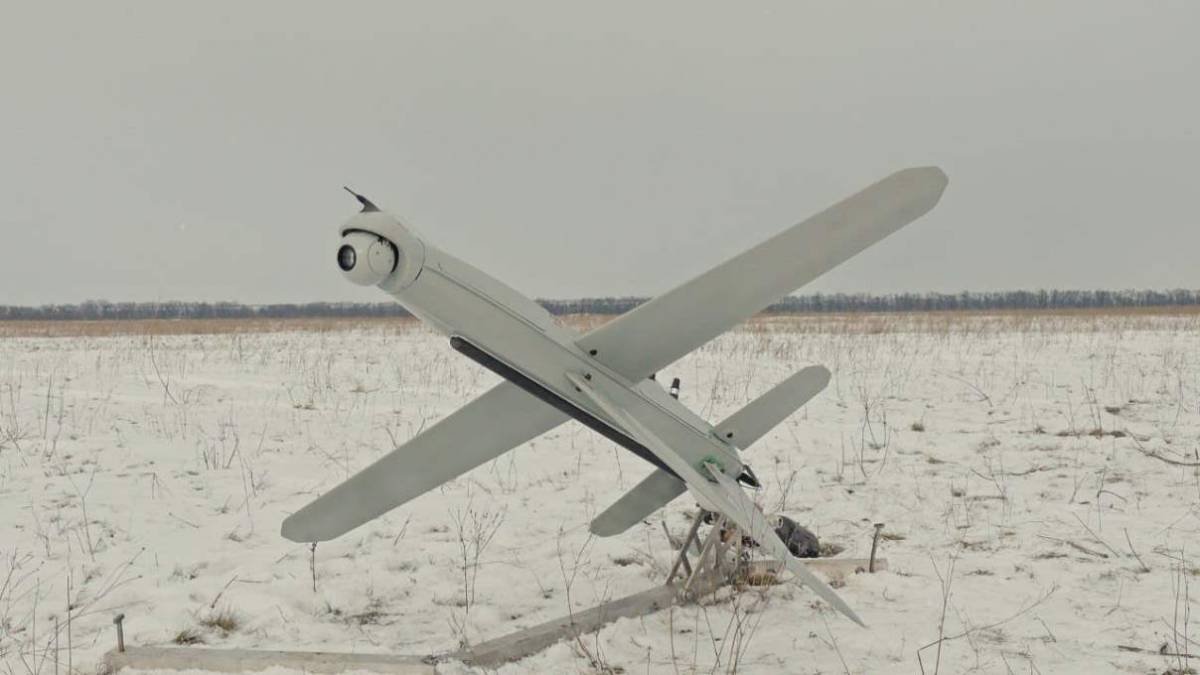
DeViRo is a Ukrainian unmanned-systems manufacturer based in Ukraine, best known for the Leleka-100 reconnaissance drone that has become one of the most widely used ISR platforms on the Ukrainian side of the war. The company has been a government contractor to the Armed Forces of Ukraine since 2016, and its own material puts it at ten years in the drone industry — a lineage that predates the full-scale invasion and covers the period from the fighting in the Donbas through the current front-line war. Its product line has since broadened from pure reconnaissance into strike, but Leleka remains the platform the firm is identified with.
The Leleka-100 is a lightweight fixed-wing UAV introduced in 2015 and built for front-line intelligence-gathering and artillery spotting. It is a hand-launched, catapult-assisted system carrying interchangeable day and night cameras, with a range the manufacturer gives as 340 km and an endurance of up to five hours. In practice the Leleka has functioned as the workhorse eyes of Ukrainian brigade-level artillery: a comparatively cheap, mass-produced airframe flown in sufficient numbers to accept losses as a normal cost of operation. DeViRo says roughly ninety per cent of Ukrainian brigades on the front line operate the type, and that it has produced around ten thousand UAVs during the war.
Alongside Leleka the company now fields Bulava, an unmanned aerial strike system carrying a 3.6 kg combat load with an 80 km combat radius, roughly fifty minutes of flight time, and day and night cameras. Bulava places DeViRo in the same broad category as several other Ukrainian firms that moved from ISR into loitering-munition and strike work as the war ground on and battlefield demand shifted. The company describes its production as full-cycle and in-house, from airframe to software, with an integrated R&D, manufacturing and 24/7 field-service operation.
DeViRo also runs what it describes as the largest modern drone-pilot school in Ukraine, certified by the State Aviation Service, and says it has trained roughly 2,500 servicemen on the Leleka-100 operator course. Training capacity of that scale matters for a system fielded across most front-line brigades: the platform is only as useful as the number of crews able to fly it, recover it, and integrate its imagery into a fire mission. In 2025 the company was among the Ukrainian manufacturers profiled at the International Investment Summit Defense Tech Valley, part of the wider effort to bring foreign capital and industrial partnerships into the country’s fast-growing drone sector.
Financial figures, ownership and headcount are not publicly disclosed, and DeViRo does not name a public chief executive on its own site. What is visible is the operational footprint — a decade of continuous service to the Ukrainian military, a reconnaissance airframe in near-universal brigade use, a strike variant in the field, and a training pipeline attached to both. In a Ukrainian drone industry now crowded with newer entrants, DeViRo’s distinguishing feature is longevity: it was there before the current war made drones the defining weapon of the conflict, and its Leleka-100 has stayed in service long enough to become part of the infrastructure of front-line fires.
Products
Drones
Leleka-100
Fixed-wing tactical reconnaissance UAV with jamming-resistant dual comms, deployed across ~90% of Ukrainian front-line brigades for ISR and artillery spotting.
Introduced 2021
Missiles & loitering munitions
Bulava
Fixed-wing loitering munition with fully autonomous kill-chain — reconnaissance, target detection, strike, and battle-damage assessment in a single platform.
Introduced 2023
RAM II
Precision loitering munition built on the Leleka-100 airframe, developed in consortium with Ukrainian defence industry partners.
Introduced 2018