The Fourth Law
Develops AI-driven terminal-guidance software that lets FPV drones lock onto targets after their video link is jammed.
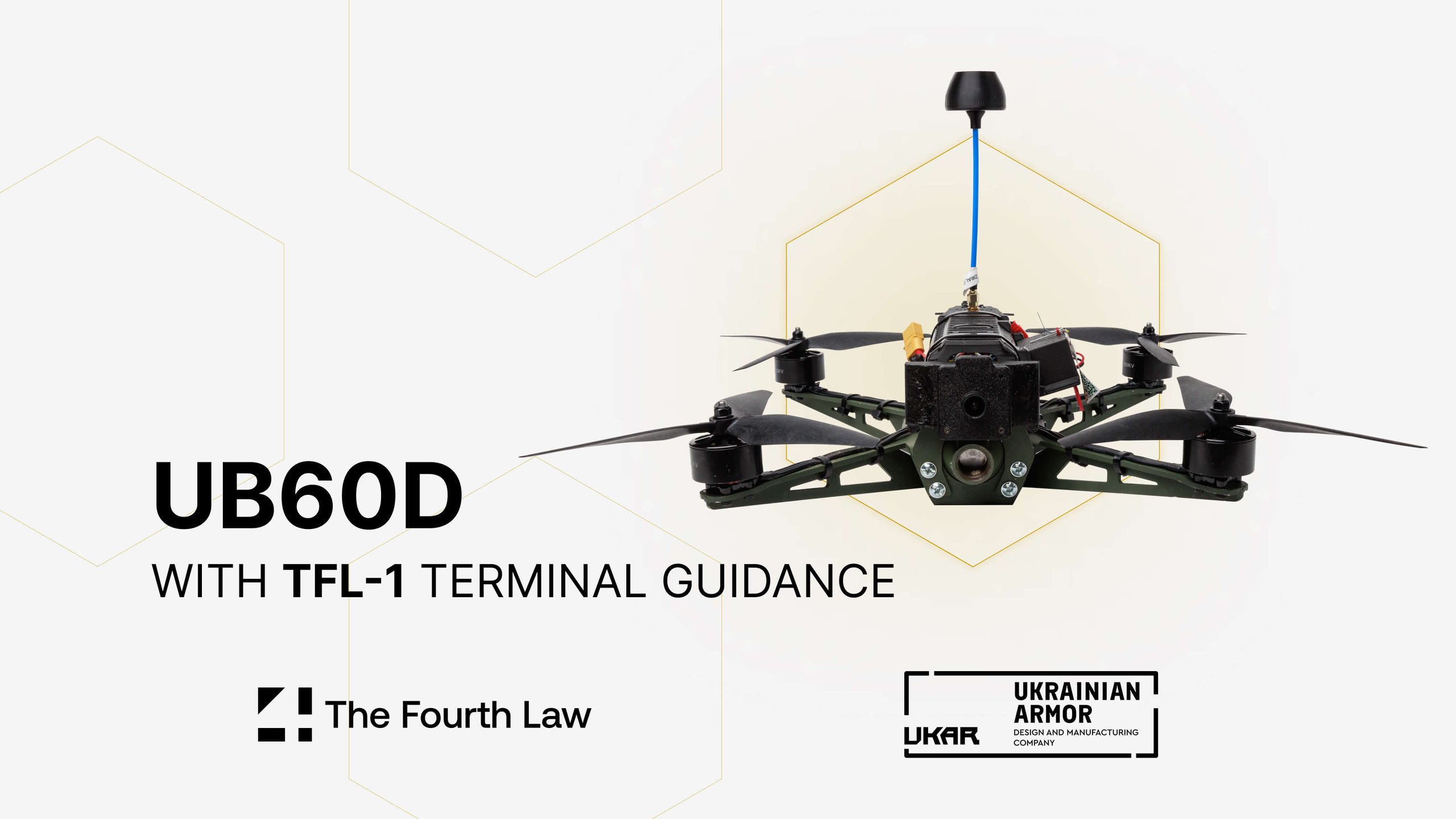
Founded in Kyiv in 2023 by Yaroslav Azhnyuk, The Fourth Law emerged from one of the most acute technical problems of Russia’s war on Ukraine: first-person-view drones being lost in large numbers to electronic warfare. Azhnyuk is best known outside the defense world as a co-founder of Petcube, the Ukrainian consumer-electronics company that built internet-connected cameras for pet owners; after February 2022 he redirected his attention to military software. The company’s name is a deliberate reference to Isaac Asimov’s three laws of robotics, framed around the idea that armed conflict requires an additional rule under which a machine may act against a hostile combatant.
The product is a piece of software, not a drone. It runs on a small companion computer mounted on an off-the-shelf FPV airframe and provides terminal guidance after a human operator has designated a target through the live video feed. The pilot flies the drone toward the target, frames it in the cross-hairs, and locks on; from that point the drone tracks the target autonomously using onboard computer vision and continues toward impact even if the radio link is jammed or the video feed cuts out. The architecture deliberately keeps the human in the targeting loop while removing the link between pilot and drone as the failure point that has cost Ukrainian units thousands of sorties.
Production is software-led. The Fourth Law sells the autonomy stack as a kit that integrates with the wide range of FPV drones already in front-line use. That fits Ukraine’s distributed manufacturing model, in which dozens of small workshops assemble airframes and the autonomy layer is a thin, upgradable component sitting on top.
Deployments have so far been with Ukrainian frontline units; the company has spoken publicly about iterating directly with operators in eastern and southern Ukraine and adjusting the targeting model against the kinds of armoured vehicles, artillery positions and dug-in infantry those units actually face. Specific contract values are not public, but the firm has been profiled in Forbes and other Western outlets as one of a small number of Ukrainian software houses pushing FPV autonomy from a manual remote-controlled weapon to a fire-and-forget one.
The Fourth Law sits in the middle of one of the most contested debates in contemporary military technology: how much of the kill chain a machine should be allowed to close on its own. By keeping target designation with a human pilot and limiting the software’s role to the final seconds of flight, the company stakes out a position that is autonomous enough to defeat jamming but stops short of full target selection. That posture is becoming the de-facto standard for AI-assisted strike drones across the Ukrainian fleet, and The Fourth Law is one of the firms most associated with it.