
Fire Point
Ukrainian deep-strike drone and missile maker — FP-1 attack drones, the FP-5 Flamingo cruise missile, and FP-7/FP-9 ballistic missiles, now reaching for low-cost air defence.
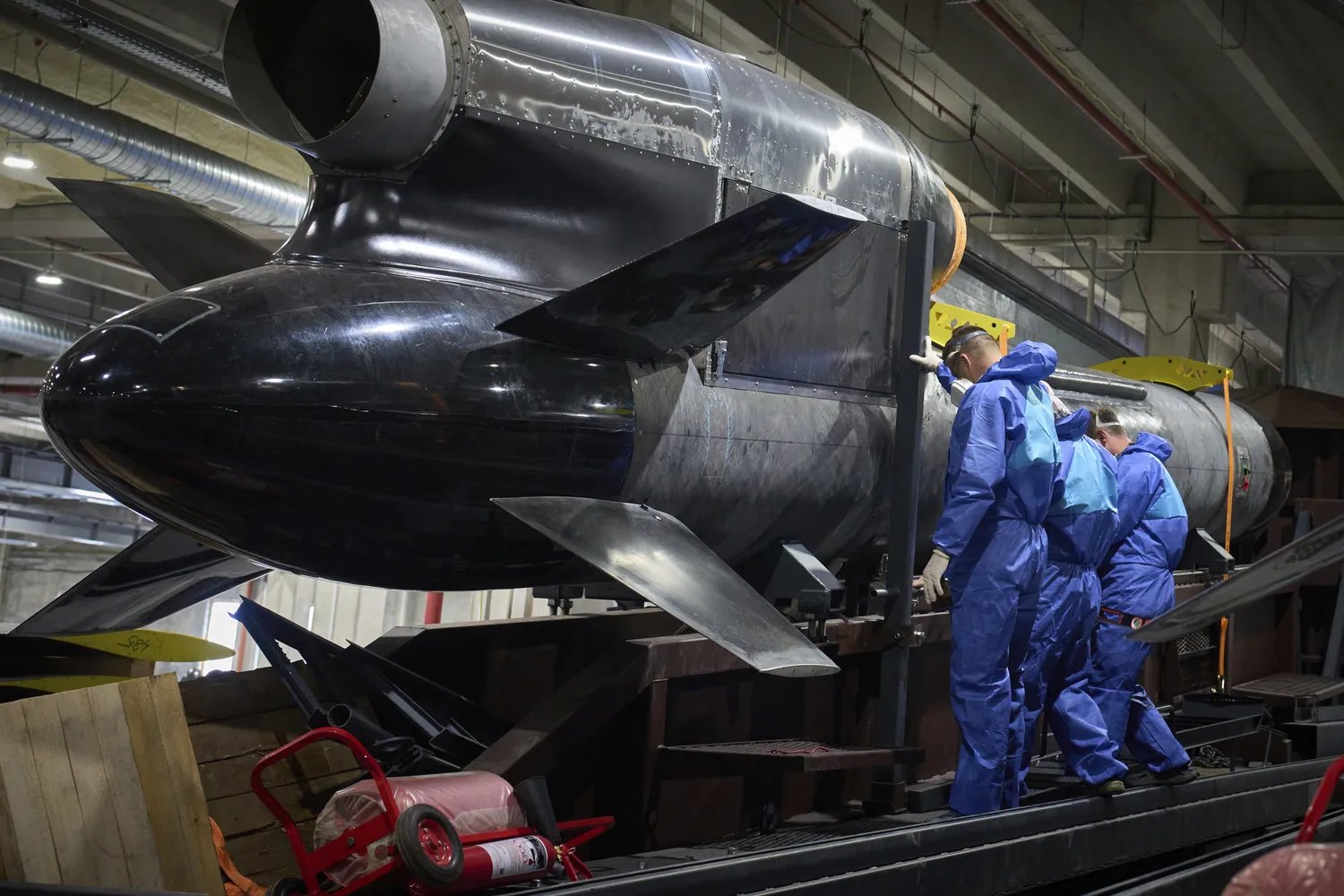
Fire Point was founded in Kyiv in 2022, in the months after Russia’s full-scale invasion of Ukraine, as one of a wave of new domestic defence firms set up to give the Armed Forces of Ukraine weapons that did not depend on permission from foreign capitals. Within three years it had become one of the country’s most important deep-strike contractors — and one of its most scrutinised. It sits in the same Kyiv-centred cluster of wartime drone and missile builders as firms such as Skyeton and the FPV-drone maker Neros, but has moved faster than almost anyone into the long-range, strategic end of the catalogue.
Products and production scale
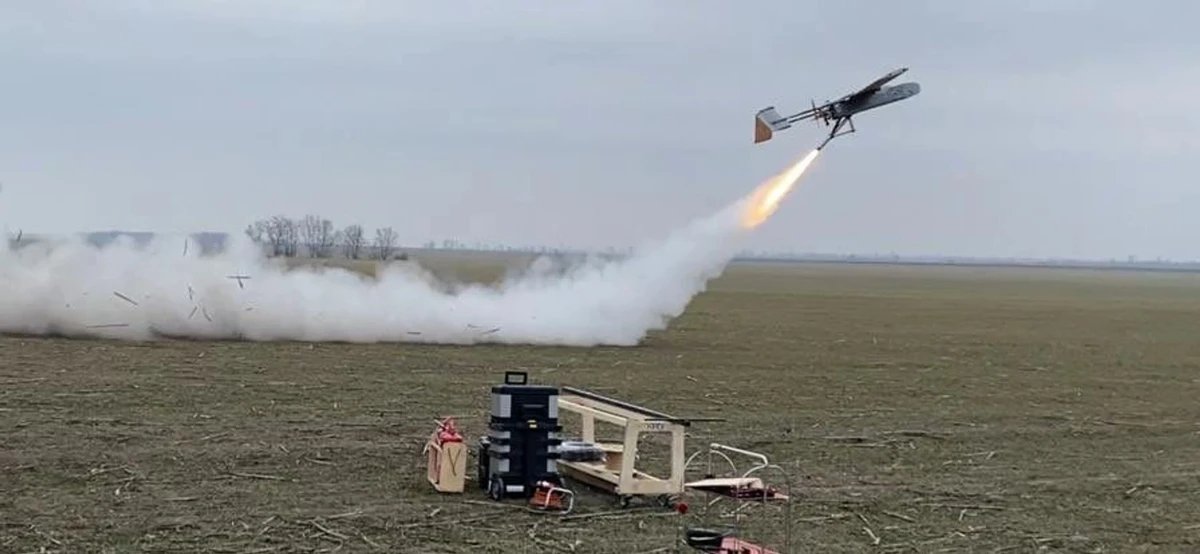
The company’s line runs from cheap, mass-produced one-way attack drones at one end to cruise and ballistic missiles at the other. The FP-1, unveiled in late 2024, is a propeller-driven deep-strike drone with a published reach of around 1,600 kilometres and a roughly 60-kilogram warhead. After a government order worth hundreds of millions of dollars at the end of 2024, Fire Point scaled FP-1 output from hundreds of airframes to tens of thousands; the company has claimed a peak rate of up to about 200 strike drones a day. Ukraine’s General Staff has described the FP-1 as the country’s single most effective long-range strike asset, attributing to it roughly half of all deep-strike drones deployed in the August–September 2025 period. The heavier FP-2 followed in 2025, trading range for a warhead reported at around 200 kilograms.
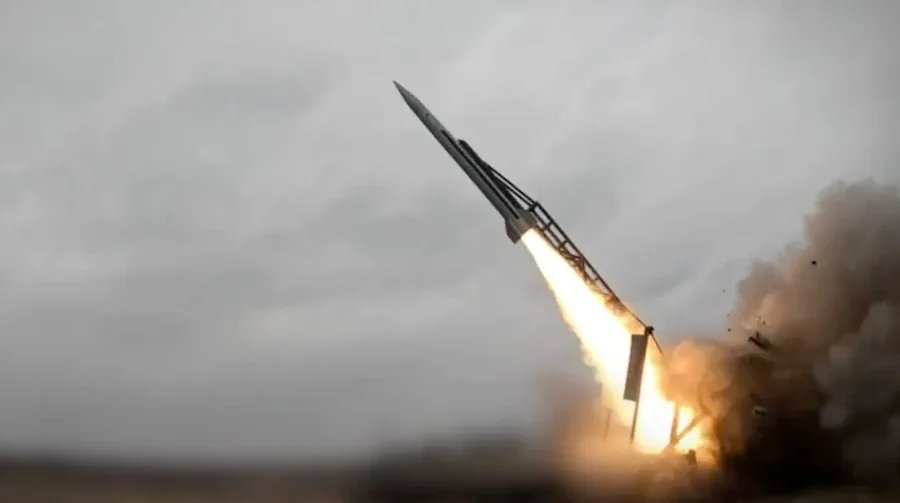
The headline system is the FP-5 Flamingo: a subsonic ground-launched cruise missile that the company says carries a 1,150-kilogram warhead to a maximum range of 3,000 kilometres at a launch weight near 6,000 kilograms — figures that would place it among the largest and longest-reaching ground-launched cruise missiles in the world. Serial production began at roughly 30 missiles a month in mid-2025, rose to about 50 a month, and reached approximately three a day by early 2026 at a reported unit cost around €600,000. Fire Point had publicly aimed for seven a day by late 2025 but, by its own account, reached three; the principal bottleneck has been engines — the Flamingo has relied on salvaged AI-25 turbofans — and the company has said it is standing up an in-house engine programme for mass production around October 2026.
At Poland’s MSPO defence exhibition in Kielce on 4 September 2025, Fire Point widened the catalogue again, unveiling two ballistic missiles: the FP-7, described as an ATACMS-class system of roughly 300-kilometre range and said to be nearing first deployment, and the longer-ranged FP-9, with a reported 800-kilogram warhead and a range cited at around 850 kilometres. Reported specifications for both vary by outlet and should be read as evolving developer figures rather than verified performance. Fire Point conducted an FP-7 test flight in June 2026.
The air-defence pivot
Through 2026 the company has positioned a low-cost air- and missile-defence interceptor — built on FP-7 / FP-7.X technology and reported under the project name “Freya” — as its next strategic bet. Co-owner Denys Shtilerman has said the goal is to intercept ballistic missiles for under one million dollars a shot, a fraction of the cost of a Patriot engagement, with a first interception targeted for the end of 2027. He has confirmed talks with European radar makers including Weibel, Hensoldt, Saab and Thales. Separately, Germany’s Diehl Defence entered negotiations in 2026 to produce the Flamingo in Germany, following an April 2026 technology agreement; Diehl’s chief executive said at the ILA Berlin air show that such a deal “could really happen.”
Ownership, financing and the people behind it
For a manufacturer whose products strike deep inside Russia, Fire Point kept an unusually opaque corporate structure. The visible leadership is a three-person team: chief executive Yehor Skalyha, a former film producer; technical director Iryna Terekh, a former architect; and Denys Shtilerman, a former IT entrepreneur who is the company’s chief designer. In November 2025, according to corporate-registry data reported by Ukrainian outlets, Skalyha transferred almost all of his shares to Shtilerman — confirming Shtilerman as the de jure owner. Terekh has said Shtilerman was kept out of public view because he had held Russian citizenship and his family lived in Russia after 2022; Shtilerman has said he was stripped of that citizenship in 2016.
Fire Point’s work for the Ukrainian armed forces is financed largely by Western partners through the so-called “Danish model,” under which other governments pay Ukrainian manufacturers directly. During 2025 Germany (about €500 million), the United Kingdom and the Netherlands (about €248–250 million) publicly confirmed funding for Ukraine’s long-range drones. The company has said it plans to build a missile-fuel plant in Denmark, near Skrydstrup Air Base, on the reasoning that such a facility inside Ukraine would be too exposed to Russian strikes. A proposed foreign investment of around $760 million for a 30% stake — valuing the company at about $2.5 billion, with the investor reported to be the UAE’s Edge Group, though Shtilerman declined to confirm the name — was filed with Ukraine’s Antimonopoly Committee at the end of December 2025 and remained under review into 2026. Former US secretary of state Mike Pompeo has taken an advisory role with the company.
Controversy
Two threads of controversy run through the company’s record. The first is procurement and ownership. The Kyiv Independent reported in 2025 that Fire Point faced a Ukrainian corruption probe over its Flamingo contracts; through 2026 the company was drawn into the wider NABU “Midas” investigation. Recordings published by Ukrainska Pravda on 29 April 2026 captured the sanctioned businessman Tymur Mindich, in a June 2025 conversation with then-defence minister Rustem Umerov, discussing the expansion of Fire Point’s state contracts and the sale of a stake to UAE investors — raising the question of whether Mindich was a de facto beneficiary, which, given his sanctioned status, could bar the firm from supplying Ukraine’s forces. A figure from the Midas tapes, Ihor Fursenko, had been employed as a Fire Point administrator. Investigative reporting has nonetheless found no direct evidence of a corrupt link between Mindich and Fire Point; the company disputes the authenticity of the edited recordings, and NABU has not publicly authenticated them.
The second thread is verifiability. Of roughly 23 publicly known Flamingo launches catalogued by open-source analysts by mid-2026, only about six were assessed to have reached their target areas and two confirmed as direct hits. Attributed strikes include the Votkinsk ballistic-missile plant some 1,400 kilometres inside Russia in February 2026 and the VNIIR-Progress electronics plant at Cheboksary, which President Zelensky said in June 2026 had been hit by Flamingos. That demonstrated reach of around 1,400 kilometres sits well short of the advertised 3,000 kilometres, and independent analysts at the IISS have noted no evidence that the missile uses advanced terrain-matching guidance such as TERCOM or DSMAC — it is assessed to rely on satellite navigation with jam-resistant antennas and the open-source ArduPilot autopilot. The recurring criticism, then, is the gap between Fire Point’s marketing figures and its demonstrated performance, in a procurement environment where the National Anti-Corruption Bureau of Ukraine has been increasingly active.
Position
Within the wartime Ukrainian defence-industrial base, Fire Point occupies a particular niche: not an FPV-drone workshop and not a legacy state design bureau, but a young private firm that went straight to strategic-range strike and is now reaching for air defence. Whether it can hold that position — as questions over its ownership are tested, as its performance claims meet independent scrutiny, and as Western missile makers compete for the same Ukrainian and European budgets — is the open question around it.
- Stack
- cruise-missile
- ballistic-missile
- long-range-strike
- satellite-inertial-navigation
- ardupilot
- Collaboration
- danish-model-funded
- western-financed
- open-to-partners
- NL link
- nl-procurement
Products
Drones
FP-1
Propeller-driven long-range one-way attack drone, ~1,600 km reach and ~60 kg warhead; scaled to tens of thousands of units and a claimed peak of ~200/day.
Introduced 2024
FP-2
Heavier deep-strike sibling of the FP-1, trading range for a warhead reported around 200 kg.
Introduced 2025
FP-1
Long-range one-way attack drone used for deep strikes against Russian energy and military infrastructure; Ukraine's main long-range strike asset.
Introduced 2024 · Updated 2026
FP-2
Heavy-payload strike drone built for hardened targets, scaling the FP-1 airframe to a larger warhead.
Introduced 2025
Missiles & loitering munitions
FP-5 Flamingo
Subsonic ground-launched cruise missile — claimed 6,000 kg launch weight, 1,150 kg warhead, 3,000 km range; ~€600k/unit, ~3/day by early 2026.
Introduced 2025
FP-7
ATACMS-class ballistic missile, ~300 km range, unveiled at MSPO 2025; test-flown June 2026. Basis for the FP-7.X interceptor.
Introduced 2025
FP-9
Longer-range ballistic missile unveiled at MSPO 2025 — reported ~850 km range and 800 kg warhead; specifications still evolving.
Introduced 2025
Freya (FP-7.X interceptor)
Low-cost air- and missile-defence interceptor in development; targets a sub-$1M ballistic-missile kill and a first interception by end of 2027.
Introduced 2026
FP-5 Flamingo
Ukrainian deep-strike cruise missile — claimed 3,000 km range and 1,150 kg warhead; demonstrated reach so far ~1,400 km.
Introduced 2024 · Updated 2026
FP-7
ATACMS-class short-range ballistic missile unveiled at MSPO 2025; basis for the FP-7.X air-defence interceptor.
Introduced 2025 · Updated 2026
FP-9
Longer-range ballistic missile unveiled at MSPO 2025 — reported ~850 km range and 800 kg warhead.
Introduced 2025 · Updated 2026
Controversies
Ukrainian corruption probe over Flamingo procurement contracts.
The Kyiv Independent reported in 2025 that Fire Point — maker of Ukraine's flagship Flamingo cruise missile — faced a Ukrainian corruption probe related to its procurement contracts. The reporting framed the probe as part of broader wartime-procurement scrutiny rather than a finding of guilt.
Fire Point drawn into the NABU "Midas" investigation.
Recordings published by Ukrainska Pravda on 29 April 2026, part of the National Anti-Corruption Bureau's "Midas" case, captured the sanctioned businessman Tymur Mindich discussing — in a June 2025 conversation with then-defence minister Rustem Umerov — the expansion of Fire Point's state contracts and the sale of a company stake to UAE investors. The exchange raised the question of whether Mindich was a de facto beneficiary of the firm; because he is under sanctions, legal confirmation of such ties could bar Fire Point from supplying Ukraine's forces. A figure from the tapes, Ihor Fursenko, had been employed as a Fire Point administrator. Investigative reporting nonetheless found no direct evidence of a corrupt link between Mindich and Fire Point. The company disputes the authenticity of the edited recordings, and NABU has not publicly authenticated them.
Gap between Flamingo marketing figures and demonstrated performance.
Independent analysts have questioned the Flamingo's advertised performance. Of roughly 23 publicly known launches catalogued by open-source analysts by mid-2026, only about six were assessed to have reached their target areas and two confirmed as direct hits. The longest attributed strike — the Votkinsk plant, about 1,400 km inside Russia in February 2026 — falls well short of the claimed 3,000 km range. The IISS reported no evidence the missile uses advanced terrain-matching guidance such as TERCOM or DSMAC, assessing it instead as reliant on satellite navigation and the open-source ArduPilot autopilot. Production-rate and unit-cost figures are company self-reported and not independently audited.
Ownership concealment and a former Russian citizenship.
For most of its existence Fire Point obscured its ultimate owner. In November 2025, per corporate-registry data reported by Ukrainian outlets, CEO Yehor Skalyha transferred almost all of his shares to chief designer Denys Shtilerman. Technical director Iryna Terekh said Shtilerman had been kept out of public view because he previously held Russian citizenship and his family lived in Russia after 2022; Shtilerman has said he was stripped of that citizenship in 2016.
Gallery
Media
Sources
- en.wikipedia.org/wiki/Fire_Point_(Ukrainian_firm) (2026-05-02) — Encyclopedic summary — confirms 2022 Kyiv founding, Yehor Skalyha as general director, Iryna Terekh and Denis Shtilerman as co-founders, the FP-1 / FP-2 / FP-5 / FP-7 product line.
- en.wikipedia.org/wiki/FP-5_Flamingo (2026-05-02) — Encyclopedic entry on the FP-5 Flamingo — confirms claimed 6,000 kg, 1,150 kg warhead, 3,000 km range; CEP and guidance caveats.
- thedefender.media/en/2025/08/fire-point-ap-report/ (2026-05-02) — The Defender / Associated Press report on the team that built the FP-1 and FP-5.
- united24media.com/war-in-ukraine/from-fp-1-to-fp-7-how-ukraines-drone-and-missile-program-went-ballistic-16841 (2026-05-02) — United24 Media — covers the FP-1 → FP-7 progression.
- kyivindependent.com/exclusive-maker-of-ukraines-prized-flamingo-cruise-missile-facing-corruption-probe/ (2026-05-02) — Kyiv Independent — Ukrainian corruption-probe coverage.
- www.pravda.com.ua/eng/articles/2026/01/09/8015369/ (2026-06-19) — Ukrainska Pravda long-form investigation — Skalyha transferred ~100% of shares to Shtilerman (Nov 2025, per YouControl); Shtilerman's former Russian citizenship; Danish-model financing; FP-1 scaling to tens of thousands; no direct corrupt Mindich link found.
- nako.org.ua/en/bez-katehorii-en/the-midas-case-and-its-defence-angle-what-s-new/ (2026-06-19) — NAKO (Transparency International-affiliated watchdog) — Midas-case defence angle; 30 June 2025 Mindich–Umerov conversation on expanding Fire Point contracts and a UAE stake sale; planned-vs-achieved Flamingo output (7/day target, ~3/day achieved).
- www.iiss.org/online-analysis/missile-dialogue-initiative/2025/09/ukraines-flamingos-take-to-the-skies/ (2026-06-19) — IISS Missile Dialogue Initiative — claimed Flamingo specs; no evidence of TERCOM/DSMAC, assessed as satellite-nav + jam-resistant antennas + ArduPilot.
- www.defensenews.com/industry/techwatch/2026/04/06/ukraine-missile-maker-targets-game-changer-air-defense-system-by-2027/ (2026-06-19) — Defense News — Shtilerman on the sub-$1M interceptor (first kill targeted end-2027), radar talks (Weibel, Hensoldt, SAAB, Thales), FP-7 (~300 km, ATACMS-class) and FP-9 (~850 km, 800 kg), ~3 Flamingos/day at ~€600k, ~$760M/30% stake at $2.5B valuation, AMCU review.
- united24media.com/latest-news/ukraines-fire-point-unveils-fp-7-and-fp-9-ballistic-missiles-building-on-flamingo-success-11381 (2026-06-19) — United24 Media — FP-7 and FP-9 ballistic missiles unveiled at MSPO 2025 (Kielce, 4 Sept 2025). Precise spec figures vary by outlet.
- www.euronews.com/my-europe/2026/06/10/kyiv-hit-russian-military-plant-using-ukrainian-made-flamingo-missile-zelenskyy-says (2026-06-19) — Euronews — Zelensky said Flamingos struck the VNIIR-Progress plant at Cheboksary (~1,000 km from the border); FP-7 June 2026 test flight; FP-7.X interceptor framing.
- www.armyrecognition.com/news/army-news/2026/diehl-defence-ukraine-fp5-flamingo-cruise-missile-germany (2026-06-19) — Army Recognition (citing FT) — Diehl Defence in talks to produce Flamingo in Germany after an April 2026 tech agreement; Denmark missile-fuel plant near Skrydstrup; ~23 launches / 6 reached / 2 confirmed hits tally; Votkinsk strike ~1,400 km.
- militarnyi.com/en/news/fire-point-to-launch-rocket-fuel-production-in-denmark-in-2026/ (2026-06-19) — Militarnyi — Fire Point's planned rocket-fuel production in Denmark.
- kyivindependent.com/denmark-denies-put-on-ice-claims-made-by-fire-point-majority-owner/ (2026-06-19) — Kyiv Independent — Denmark denied that the Fire Point project there had been frozen; included for balance on the offshore-production thread.
- www.news-gazette.com/news/nation-world/mike-pompeo-becomes-adviser-to-scrutinized-ukraine-defense-company-thats-looking-to-boost-missiles/article_6c1eb525-a73d-584c-92b7-bf4965fc78fe.html (2026-06-19) — Associated Press (via The News-Gazette) — Mike Pompeo becomes an adviser to Fire Point.
Sources (9)
- en.wikipedia.org/wiki/Fire_Point_(Ukrainian_firm)
- www.wikidata.org/wiki/Q135991328
- firepoint.technology/
- en.wikipedia.org/wiki/Fire_Point_(Ukrainian_firm)
- en.wikipedia.org/wiki/Fire_Point_(Ukrainian_firm)
- en.wikipedia.org/wiki/Fire_Point_(Ukrainian_firm)
- en.wikipedia.org/wiki/Fire_Point_(Ukrainian_firm)
- en.wikipedia.org/wiki/Fire_Point_(Ukrainian_firm) rate limited
- en.wikipedia.org/wiki/Fire_Point_(Ukrainian_firm)