
Northrop Grumman
US prime — RQ-4 Global Hawk and MQ-4C Triton high-altitude long-endurance UAVs, B-21 Raider stealth bomber.
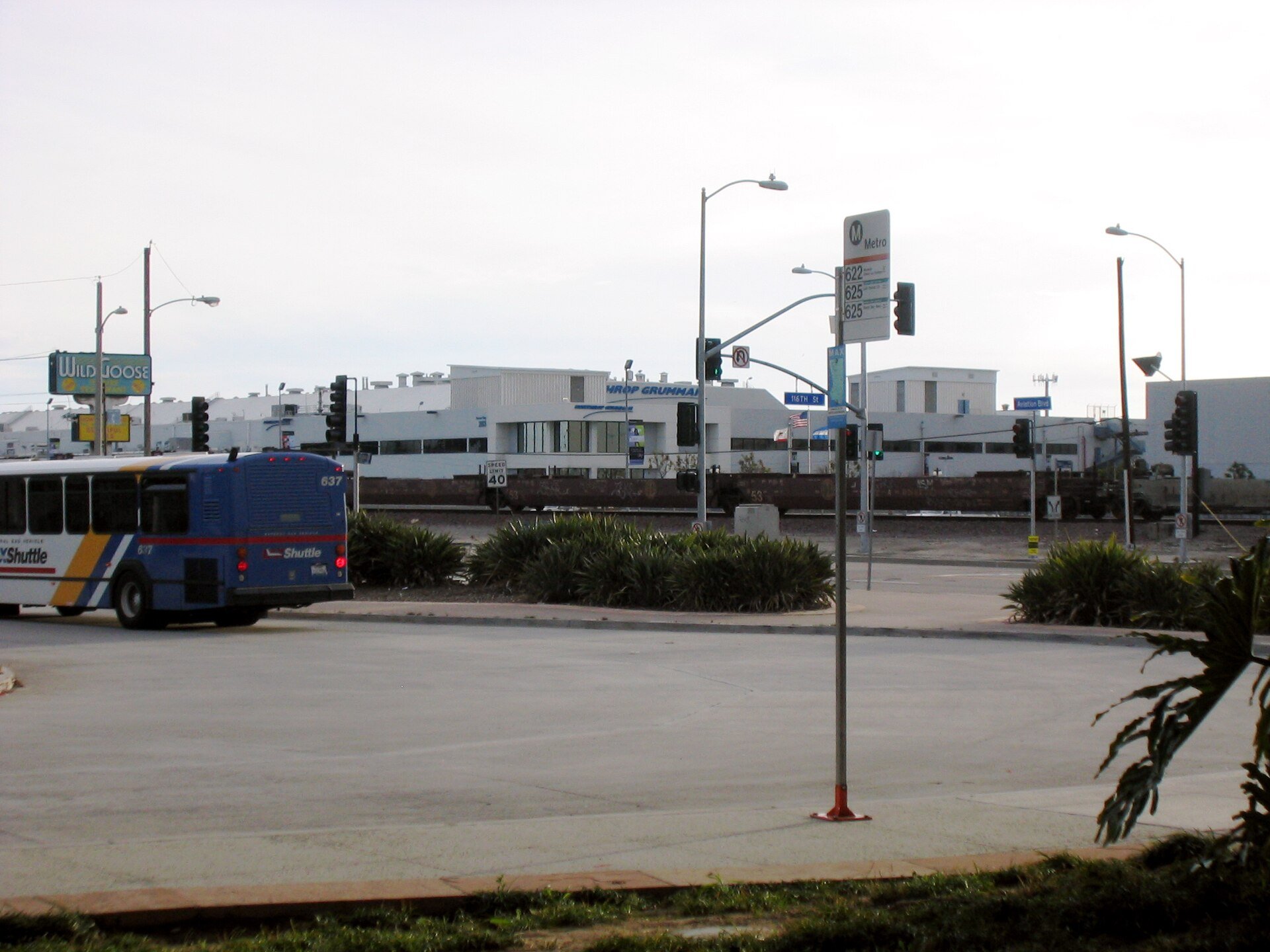
Northrop Grumman was formed in 1994 from the merger of Northrop Corporation and Grumman Aerospace, two firms with deep aviation lineages — Northrop’s reaching back to Jack Northrop’s flying-wing experiments of the 1940s, Grumman’s to the carrier fighters of the Pacific war. The combined company is headquartered in Falls Church, Virginia, and run by Kathy Warden, who took over as chief executive in 2019 and added the chair role the following year. It trades on the NYSE under the ticker NOC and ranks consistently among the five largest contractors to the US federal government.
The company’s autonomous-aviation portfolio is anchored by two high-altitude long-endurance platforms. The RQ-4 Global Hawk, in service with the US Air Force since 2001, set the template for the Western HALE drone — a turbofan-powered, sensor-laden aircraft that loiters above 60,000 feet for more than a day at a time. Its maritime sibling, the MQ-4C Triton, flies for the US Navy and the Royal Australian Air Force, with endurance exceeding 24 hours, range above 7,400 nautical miles, and a semi-autonomous control model in which operators assign an area, altitude, and objective rather than fly the aircraft directly. Both airframes have been exported in derivative form, including the NATO Alliance Ground Surveillance fleet based at Sigonella, Italy, and the South Korean and Japanese Global Hawk fleets.
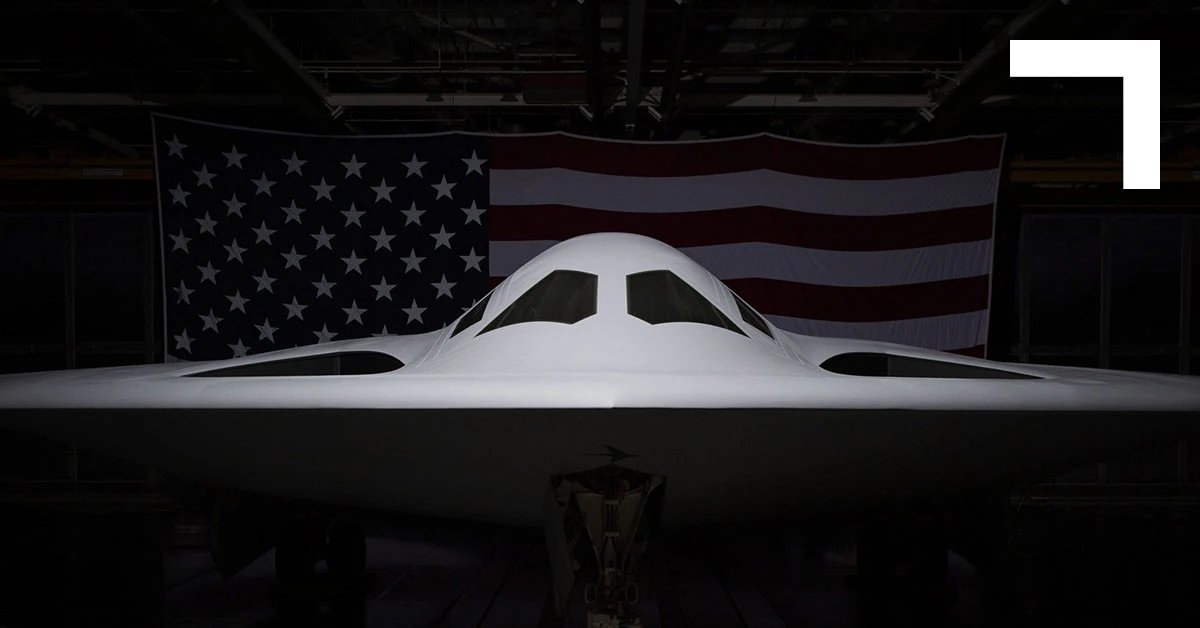
Beyond the drones, Northrop Grumman is the prime contractor for the B-21 Raider, the US Air Force’s sixth-generation stealth bomber, which made its first flight from Palmdale in November 2023 and is intended to fly alongside Collaborative Combat Aircraft as part of a wider family of systems. The company also builds the Triton’s mission systems, the E-2D Hawkeye carrier-based airborne early-warning aircraft, the MQ-8 Fire Scout unmanned helicopter, and the Sentinel intercontinental ballistic missile that is replacing the ageing Minuteman III. Its space segment, expanded by the 2018 acquisition of Orbital ATK, supplies launch vehicles, satellite buses, and the solid rocket boosters for NASA’s Space Launch System.
Financially the firm is in the upper tier of the global defence industry, with annual revenue around forty billion dollars and roughly 100,000 employees across the United States, Australia, the United Kingdom, and continental Europe. Sentinel and B-21 are the two programmes that most directly shape its medium-term trajectory: Sentinel has drawn scrutiny for cost overruns that triggered a Nunn-McCurdy breach in 2024, while B-21’s fixed-price early production lots have weighed on margins even as the airframe itself is reported to be performing on schedule.
The company occupies a distinctive niche among the US primes. Lockheed Martin owns the manned fighter franchise; General Atomics owns the medium-altitude armed-drone market with the MQ-9 family. Northrop Grumman’s territory is the high end of the unmanned spectrum — strategic-altitude ISR, stealth penetration, and the nuclear-bomber leg of the triad — together with the space and missile work that surrounds them. The bets it has placed on B-21 and on autonomous teaming with sixth-generation aircraft will define what kind of prime it is in the 2030s.
Products
Drones
RQ-4 Global Hawk
High-altitude long-endurance ISR UAV operated by the US Air Force; introduced 2001; the canonical Western HALE platform.
MQ-4C Triton
Maritime-surveillance HALE UAV operated by the US Navy and Royal Australian Air Force. Above 50,000 ft, 24+ hour endurance, 7,400 nautical mile range. Semi-autonomous — operators set area, speed, altitude, and objective rather than fly the aircraft.
MQ-4C Triton
Maritime-patrol variant of the Global Hawk built for broad-area ocean surveillance.
Introduced 2018
MQ-8 Fire Scout
Unmanned helicopter for shipborne ISR, mine countermeasures and over-the-horizon targeting.
Introduced 2009
MQ-8C Fire Scout
Autonomous shipboard rotary-wing UAV for ISR and targeting from Navy surface combatants.
Introduced 2015
RQ-4 Global Hawk
High-altitude long-endurance ISR UAV that pioneered persistent strategic surveillance from 60,000 feet.
Introduced 2001
RQ-4 Global Hawk
High-altitude long-endurance UAV providing persistent broad-area ISR for up to 34 hours at 60,000 ft.
Introduced 2001
X-47B
Tailless stealth UCAV demonstrator that proved autonomous catapult launch, recovery and aerial refueling on a US carrier.
Introduced 2011
Aircraft
B-21 Raider
Sixth-generation stealth bomber under development for the US Air Force; expected to operate alongside the wider Family of Systems with CCAs.
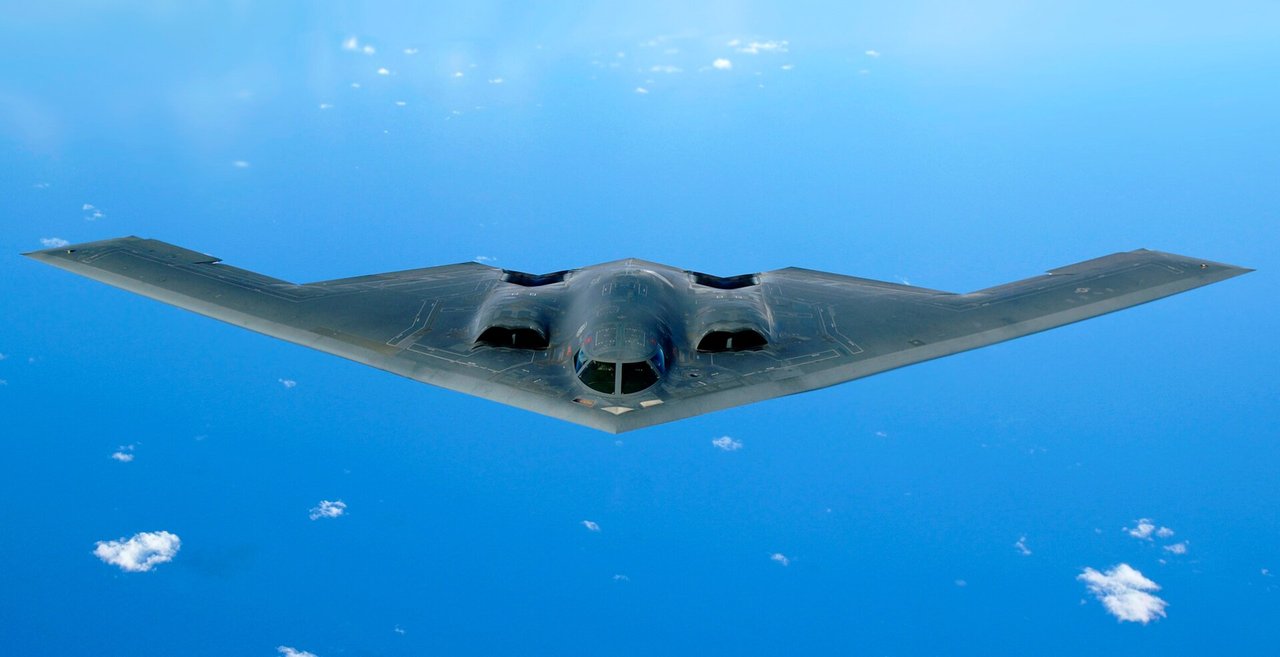
B-2 Spirit
Flying-wing stealth bomber still in front-line service four decades after first flight.
Introduced 1997
B-2 Spirit
Flying-wing stealth strategic bomber capable of delivering conventional and nuclear munitions from the continental US to any target worldwide.
Introduced 1997
B-21 Raider
Next-generation stealth bomber designed as a digital, optionally-manned, networked penetrating strike platform.
Introduced 2023
B-21 Raider
Next-generation stealth strategic bomber built on an open architecture designed for AI-assisted mission systems and optional unmanned operation.
Introduced 2023
E-2D Advanced Hawkeye
Carrier-based airborne early warning aircraft with advanced battle-management and fusion capabilities.
Introduced 2014
Integrated systems
Bushmaster Chain Gun
M230LF Dual Feed
YFQ-48A Talon Blue
Gallery
Photos: Alistair McMillan from Glasgow, Scotland · Northrop Grumman · Staff Sgt. Bennie J. Davis III
Sources
- en.wikipedia.org/wiki/Northrop_Grumman_RQ-4_Global_Hawk (2026-05-02) — RQ-4 Global Hawk — introduced 2001, USAF HALE ISR platform.
- en.wikipedia.org/wiki/Northrop_Grumman_MQ-4C_Triton (2026-05-02) — MQ-4C Triton — BAMS programme, US Navy + RAAF, ISR platform.
- www.northropgrumman.com/what-we-do/aircraft/triton (2026-05-02) — Northrop Grumman Triton product page.
- news.northropgrumman.com/triton/unmatched-maritime-surveillance-what-you-need-to-know-about-the-mq-4c-triton (2026-05-02) — Northrop Grumman press — Triton specs and semi-autonomous operation.
Sources (10)
- en.wikipedia.org/wiki/Northrop_Grumman
- www.wikidata.org/wiki/Q329953
- en.wikipedia.org/wiki/Northrop_Grumman
- en.wikipedia.org/wiki/Northrop_Grumman
- en.wikipedia.org/wiki/Northrop_Grumman rate limited
- en.wikipedia.org/wiki/Northrop_Grumman
- en.wikipedia.org/wiki/Northrop_Grumman rate limited
- en.wikipedia.org/wiki/Northrop_Grumman
- en.wikipedia.org/wiki/Northrop_Grumman
- en.wikipedia.org/wiki/Northrop_Grumman rate limited