MQ-4C Triton
Maritime-patrol variant of the Global Hawk built for broad-area ocean surveillance.
Droneby Northrop GrummanIntroduced 2018
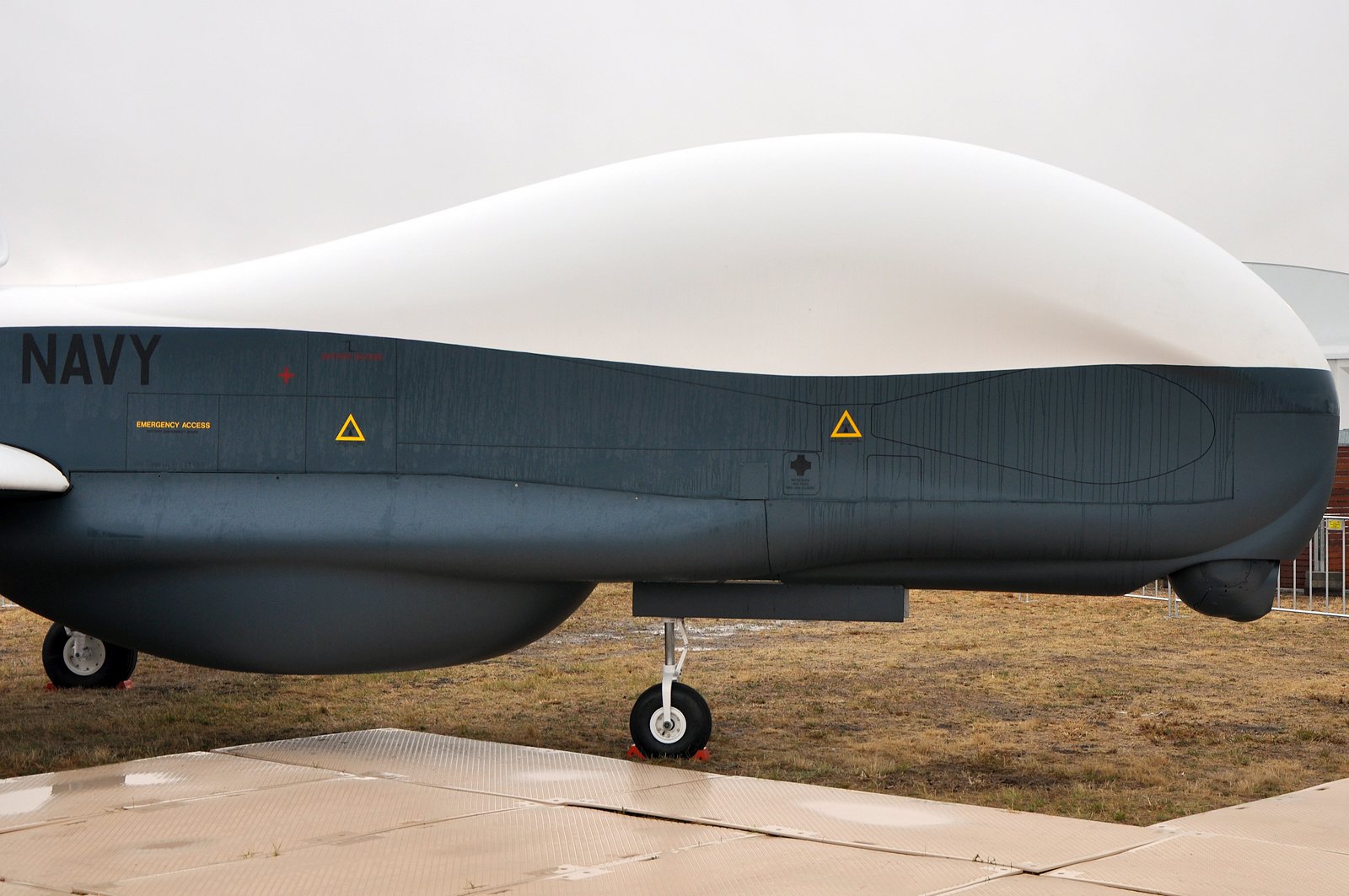
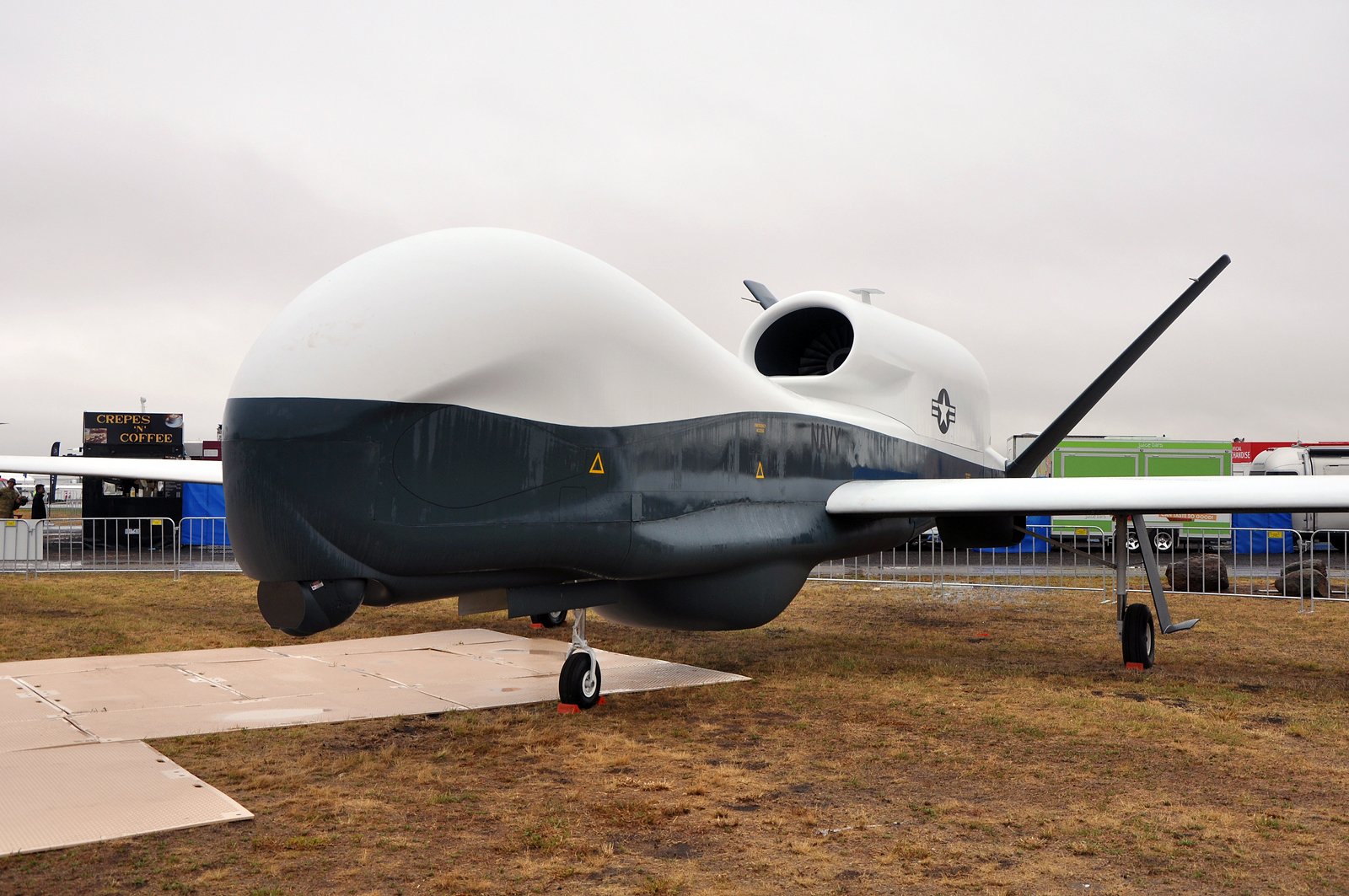
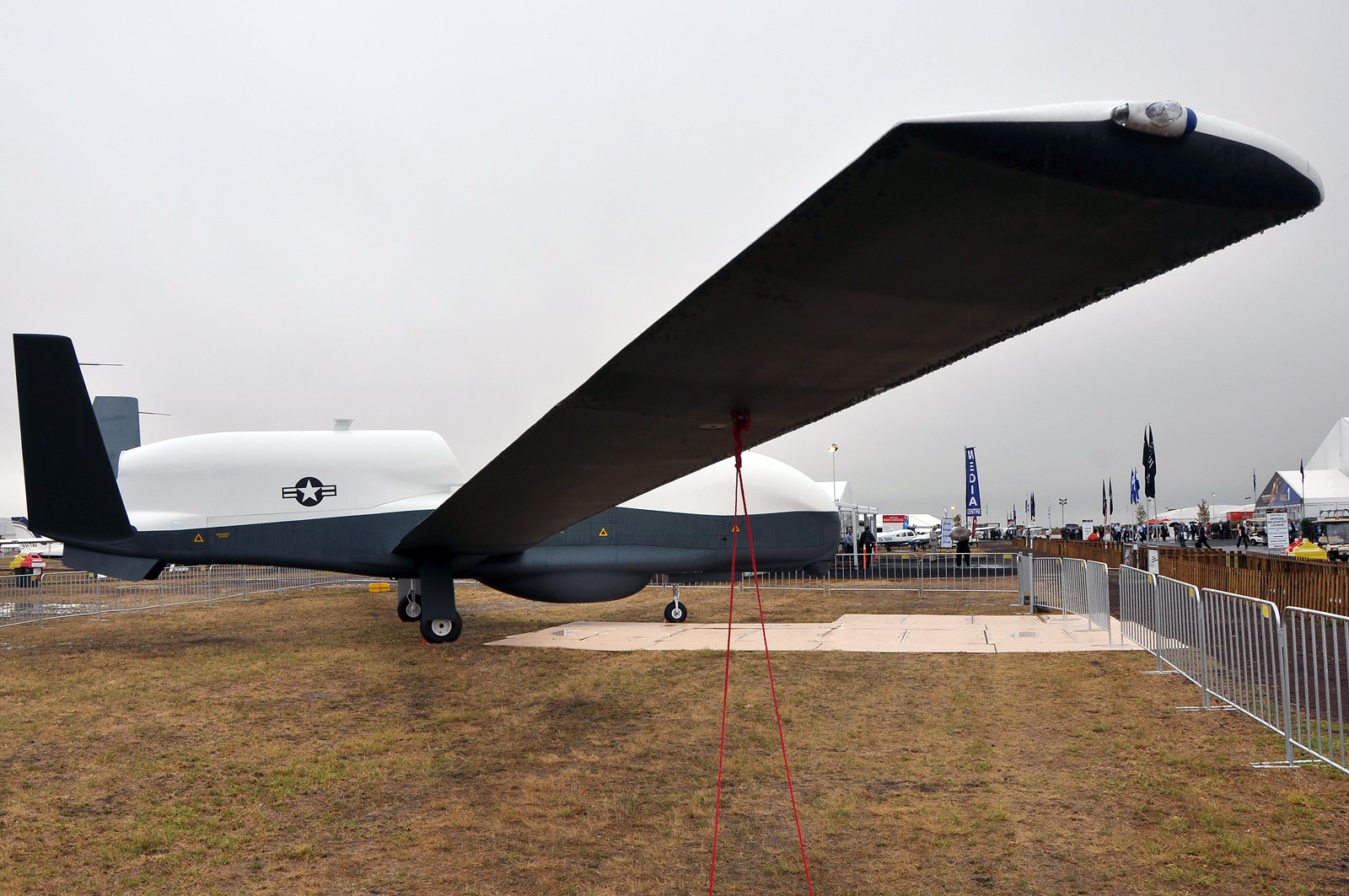
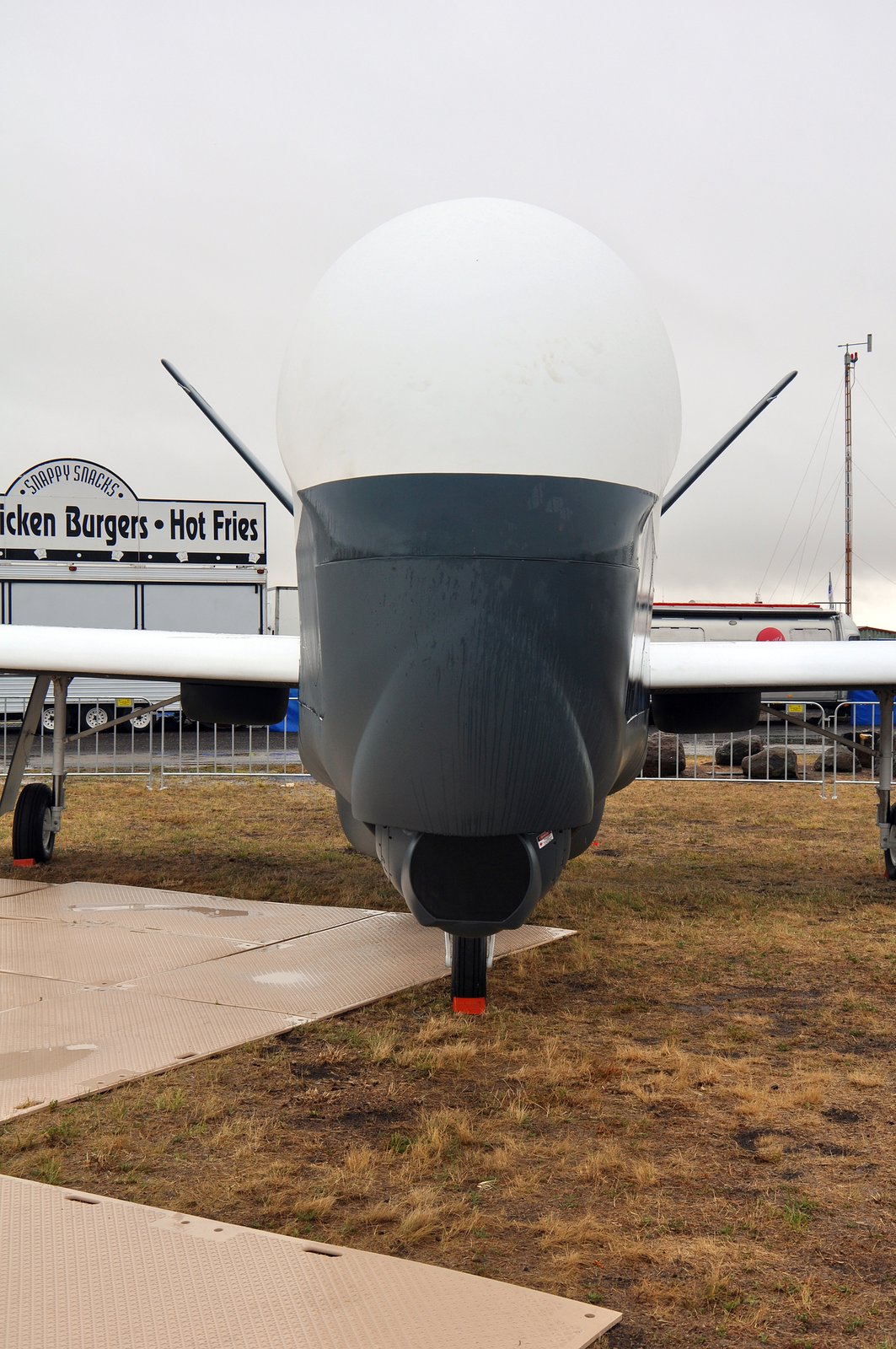
Photos: Robert Frola · Northrop Grumman
The MQ-4C Triton is a high-altitude, long-endurance maritime surveillance drone built by Northrop Grumman for the United States Navy. Derived from the RQ-4 Global Hawk, it entered service in 2018 as the Navy’s contribution to the Broad Area Maritime Surveillance programme, designed to fly at altitudes above 50,000 feet for nearly 24 hours and watch ocean expanses that surface ships and shorter-ranged patrol aircraft cannot cover. Its role is persistent intelligence, surveillance, and reconnaissance over open water, complementing the manned P-8 Poseidon by handing off contacts and freeing the P-8s for prosecution missions.
At the heart of the Triton is the AN/ZPY-3 Multi-Function Active Sensor, a 360-degree active electronically scanned array radar developed by Northrop Grumman specifically for maritime search. It can sweep an area roughly the size of the continental United States in a single 24-hour sortie, classifying surface contacts in inverse synthetic aperture radar mode and tracking them across the open ocean. The aircraft also carries the MTS-B electro-optical/infrared sensor for visual identification, an automatic identification system receiver to correlate radar tracks with self-reporting vessels, and a signals-intelligence package. A reinforced fuselage, de-icing systems, and lightning protection let it descend through weather to identify contacts at lower altitude, a capability the Global Hawk lacks. Crews fly it from ground stations rather than aboard the aircraft, with autonomous take-off, transit, and landing handled by the flight management system.
The United States Navy is the primary operator, fielding the type from Naval Air Station Jacksonville and forward-deploying detachments to Andersen Air Force Base in Guam and Naval Air Facility Misawa in Japan, where Tritons have flown surveillance sorties over the Western Pacific and around the contested South China Sea since 2020. The Royal Australian Air Force is the only export customer, with an initial commitment for four aircraft operating from RAAF Base Tindal in cooperation with the US fleet under a cooperative development arrangement that has run since 2018. The Navy’s programme of record stands at 27 airframes, though that number has been adjusted across budget cycles.
Development has centred on the IFC-4 (Integrated Functional Capability) configuration, which folded in the signals-intelligence mission inherited from the retiring EP-3E Aries II and brought the Triton up to its current multi-intelligence standard. Earlier IFC-3 aircraft are being upgraded to the same baseline. Germany, an early prospect for a SIGINT-focused variant called the MQ-4C Triton Quadriga, walked away from the programme in 2020 over cost and certification concerns, leaving Australia as the sole foreign buyer for now.
Among large maritime surveillance drones, the Triton occupies a specific niche: very high altitude, very long endurance, optimised for blue-water search rather than the littoral, counter-narcotics, or strike roles that draw operators toward General Atomics’ MQ-9B SeaGuardian. That positioning, alongside the P-8, has made it a fixture of US and allied Pacific surveillance architecture.