RQ-4 Global Hawk
High-altitude long-endurance UAV providing persistent broad-area ISR for up to 34 hours at 60,000 ft.
Droneby Northrop GrummanIntroduced 2001
Photos: fity.club · wallpapercave.com · www.unmannedsystemstechnology.com · en.topcor.ru · Northrop Grumman
The RQ-4 Global Hawk is a high-altitude long-endurance unmanned aircraft built by Northrop Grumman for strategic intelligence, surveillance, and reconnaissance. It entered service with the United States Air Force in 2001 and was designed to take over the broad-area ISR mission long flown by the U-2, loitering at around 60,000 feet for up to 34 hours on a single sortie. With a range exceeding 18,000 kilometres, it operates well above commercial traffic and most weather, providing persistent imagery and signals coverage over theatre-sized areas from a single orbit.
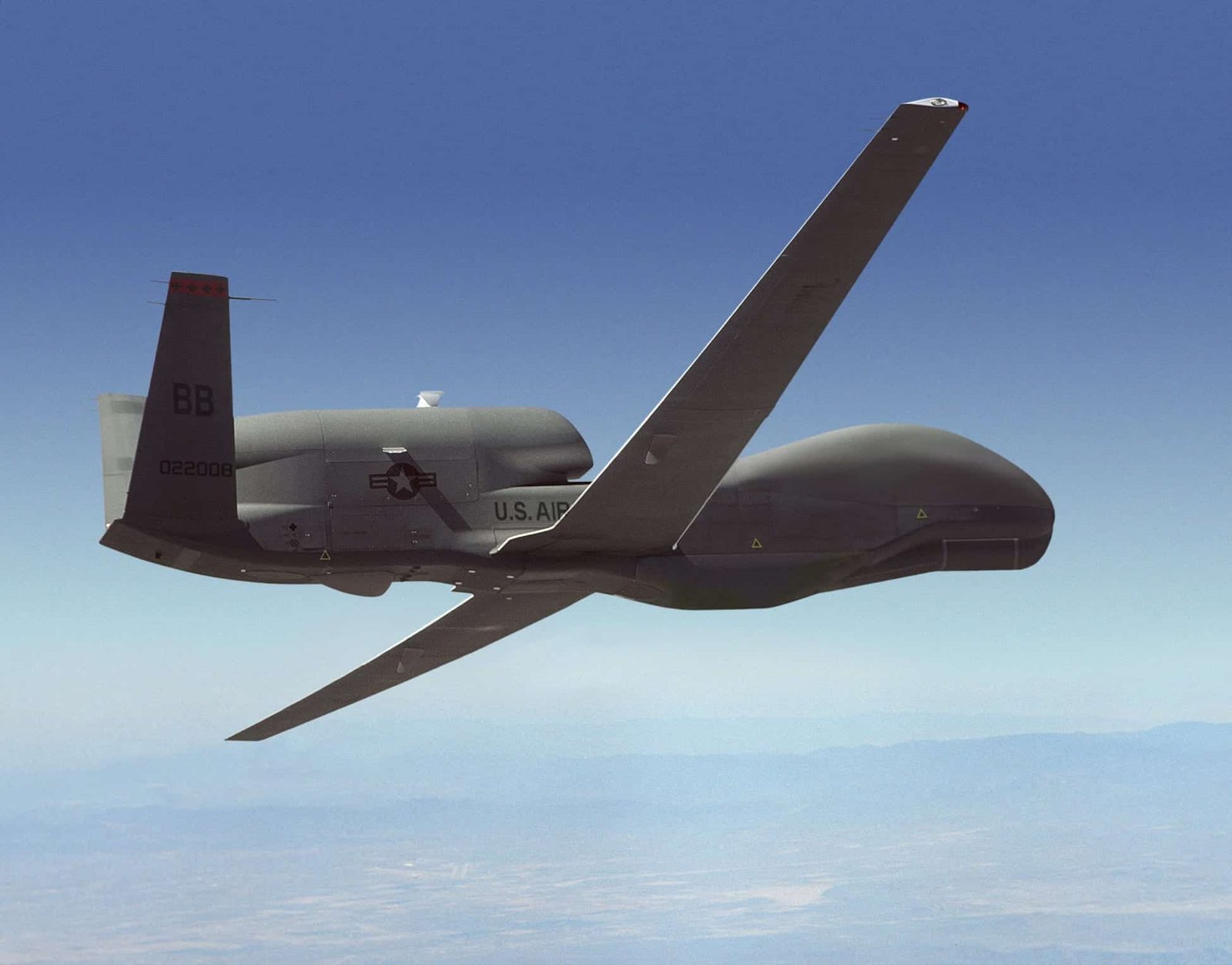
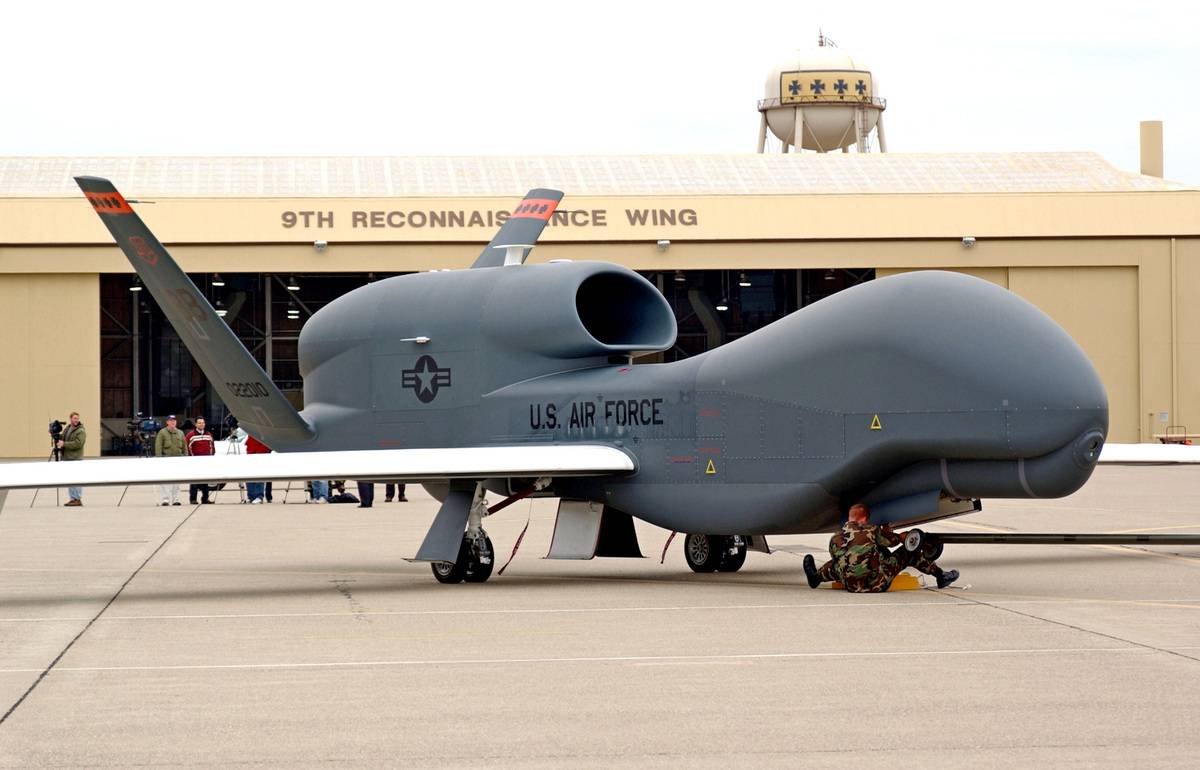
The aircraft is recognisable by its long, slender wings — roughly 40 metres across in the later Block 30 and Block 40 variants — and its bulbous forward fuselage housing the satellite communications antenna that links it to ground stations. Sensor fit varies by block. The Block 30 carries the Enhanced Integrated Sensor Suite, combining electro-optical and infrared cameras with a synthetic aperture radar capable of spot and strip imaging through cloud, paired with the Airborne Signals Intelligence Payload for SIGINT collection. Block 40 swapped this for the MP-RTIP active electronically scanned array radar, optimised for ground-moving-target indication. A single Rolls-Royce AE 3007H turbofan provides the thrust, and the aircraft taxis, takes off, flies its mission, and lands autonomously, with the ground crew managing tasking rather than stick-and-rudder control.
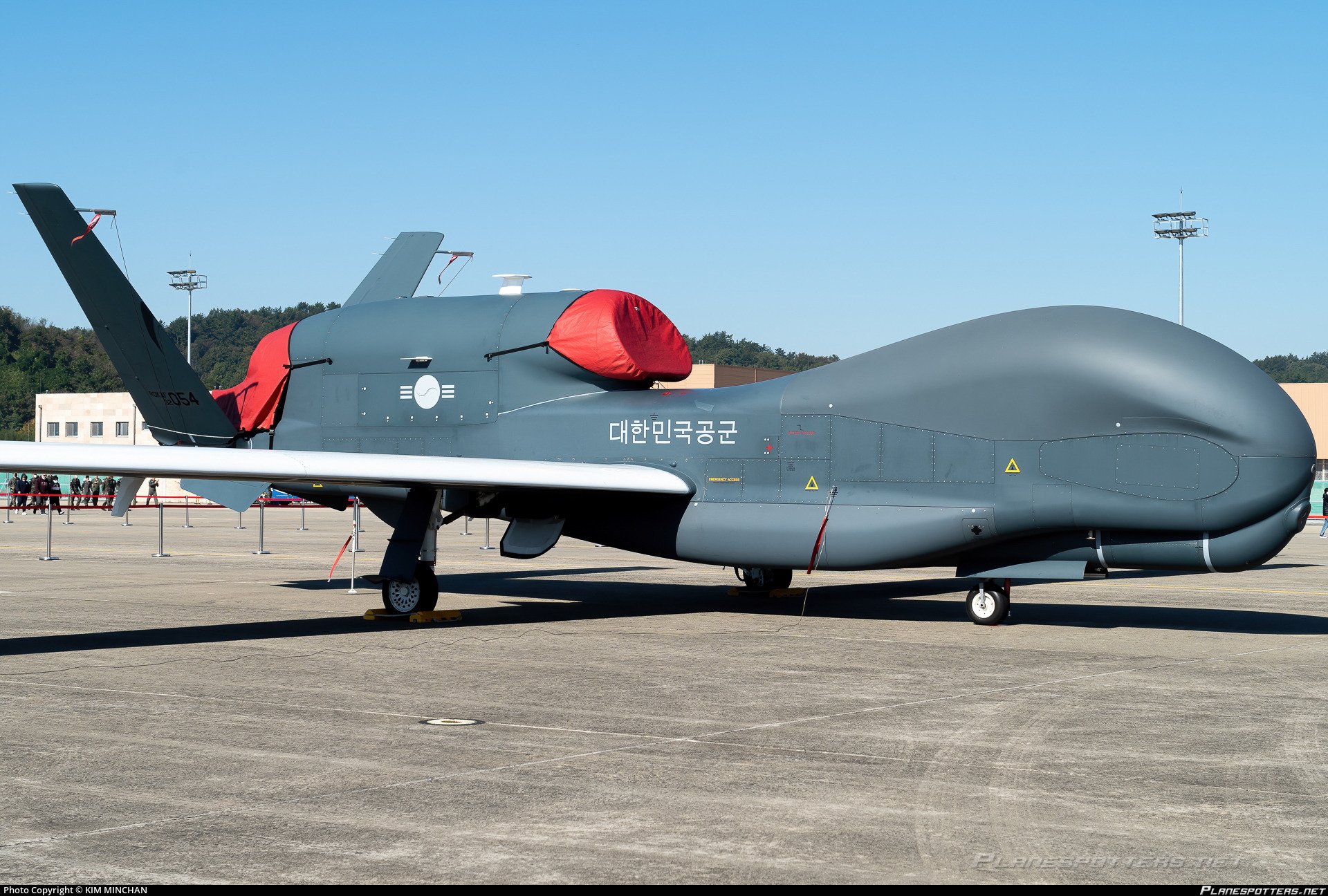
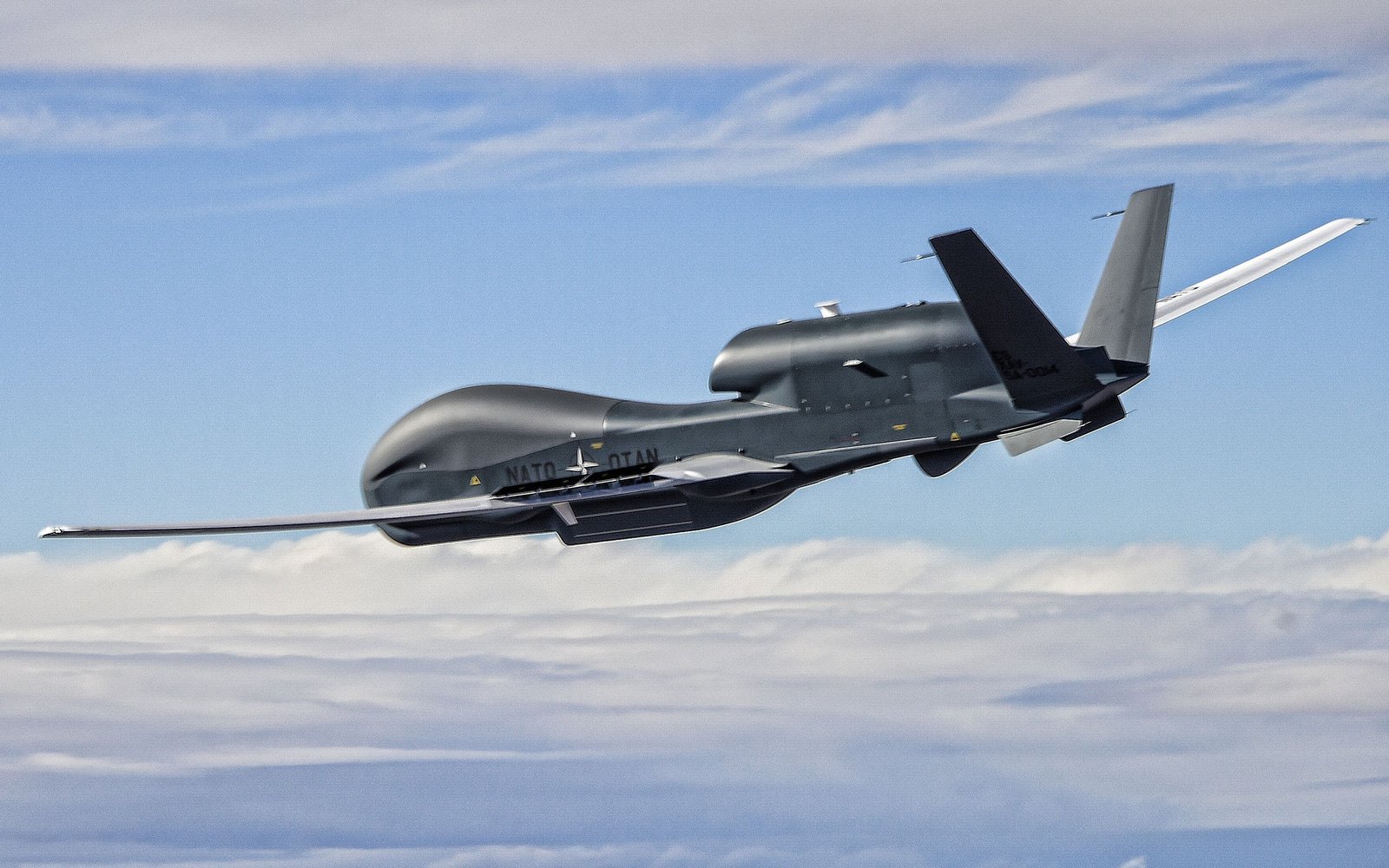
Operationally, Global Hawks have flown over Afghanistan, Iraq, Libya, Syria, and across the western Pacific. The U.S. Air Force has been the primary operator since the early 2000s; Block 30 aircraft are progressively being retired, with the Block 40 fleet and the navalised MQ-4C Triton carrying forward the mission. Germany ordered the Euro Hawk variant in the late 2000s but cancelled the programme in 2013 after the airframe failed to meet European airworthiness certification for flight in unsegregated airspace; the prototype now sits in a museum. Japan declared its first Global Hawks operational at Misawa Air Base in 2022, fielding three Block 30 aircraft for ISR coverage of the East China Sea and the Korean peninsula, and South Korea took delivery of four aircraft between 2019 and 2020. NATO operates a five-aircraft variant designated RQ-4D Phoenix from Sigonella as part of the Alliance Ground Surveillance system.
In a field increasingly crowded by medium-altitude platforms like the MQ-9 Reaper and by emerging high-altitude pseudo-satellites, the Global Hawk remains the workhorse for sustained broad-area collection where bandwidth, endurance, and altitude matter more than weapons. Its retirement timetable in the United States has been pushed back several times as no directly comparable replacement has yet entered service.