RQ-4 Global Hawk
High-altitude long-endurance ISR UAV that pioneered persistent strategic surveillance from 60,000 feet.
Droneby Northrop GrummanIntroduced 2001
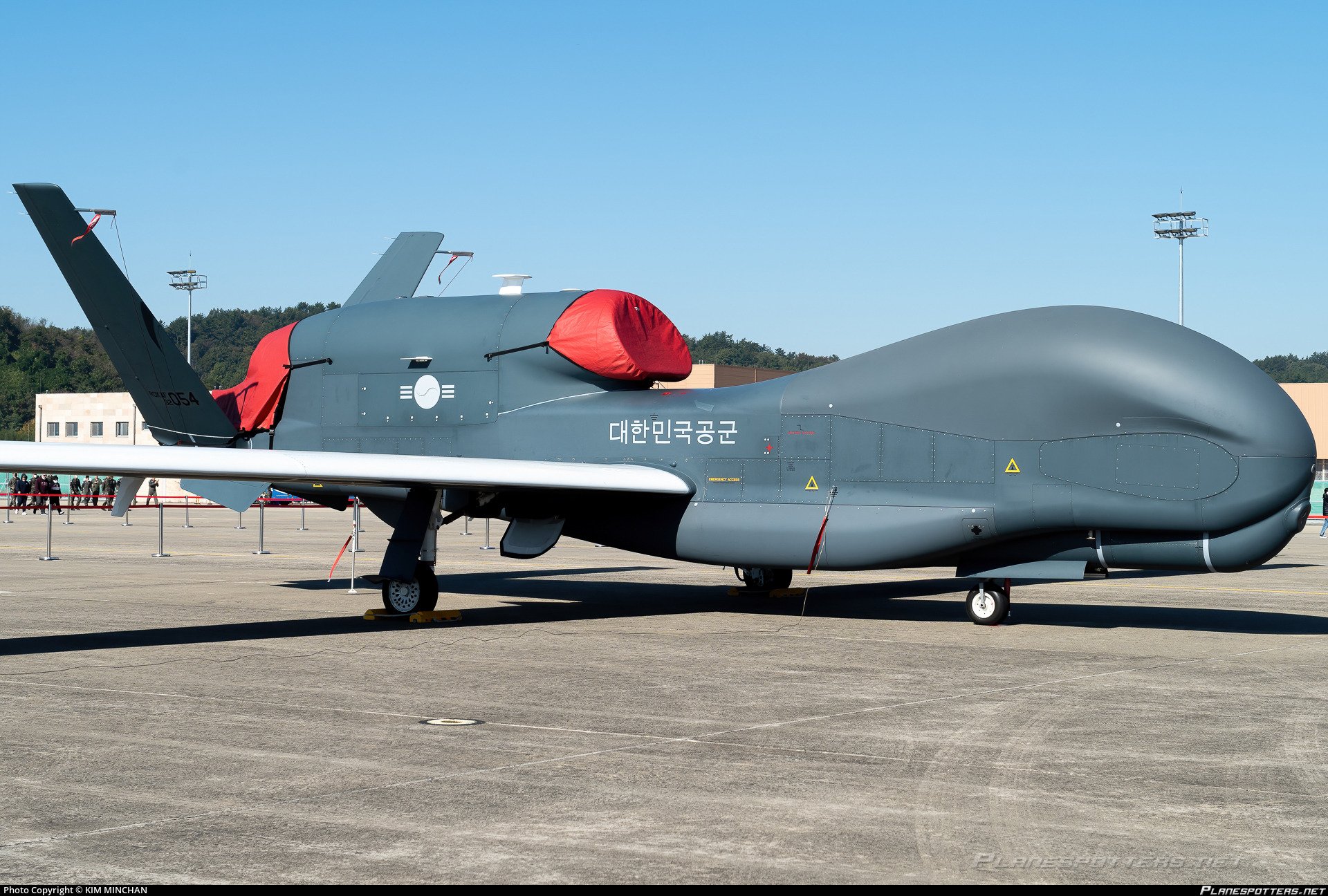
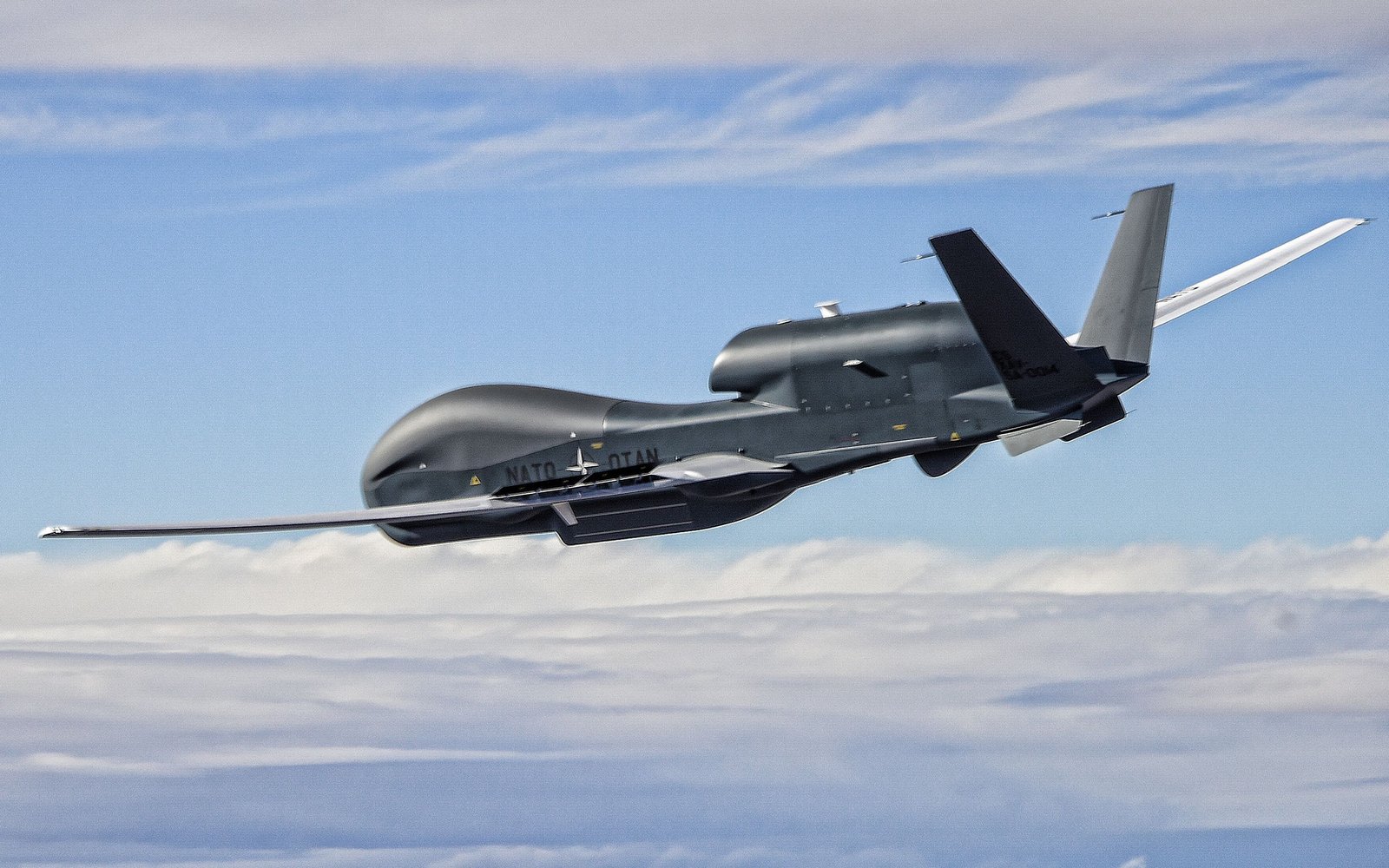
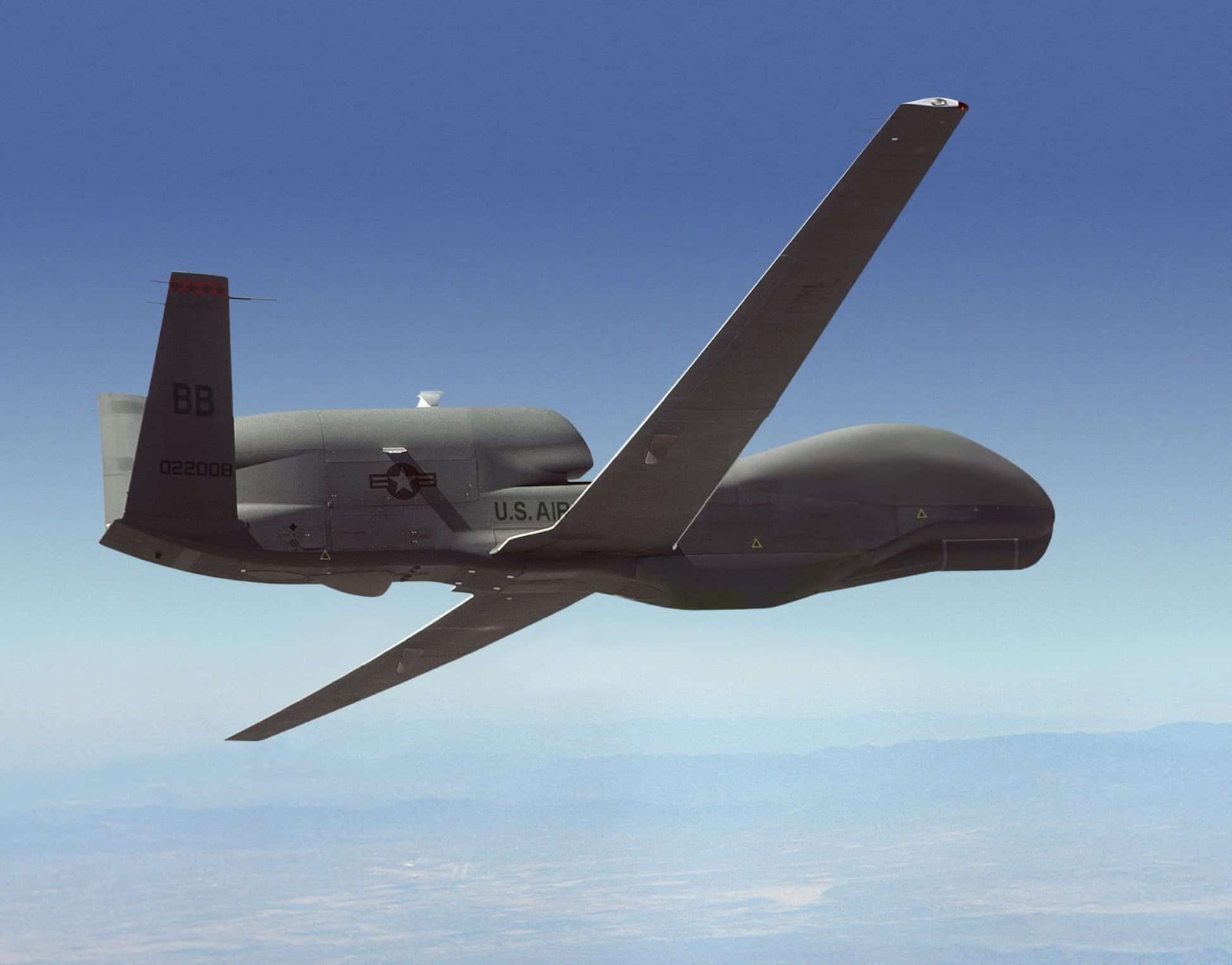
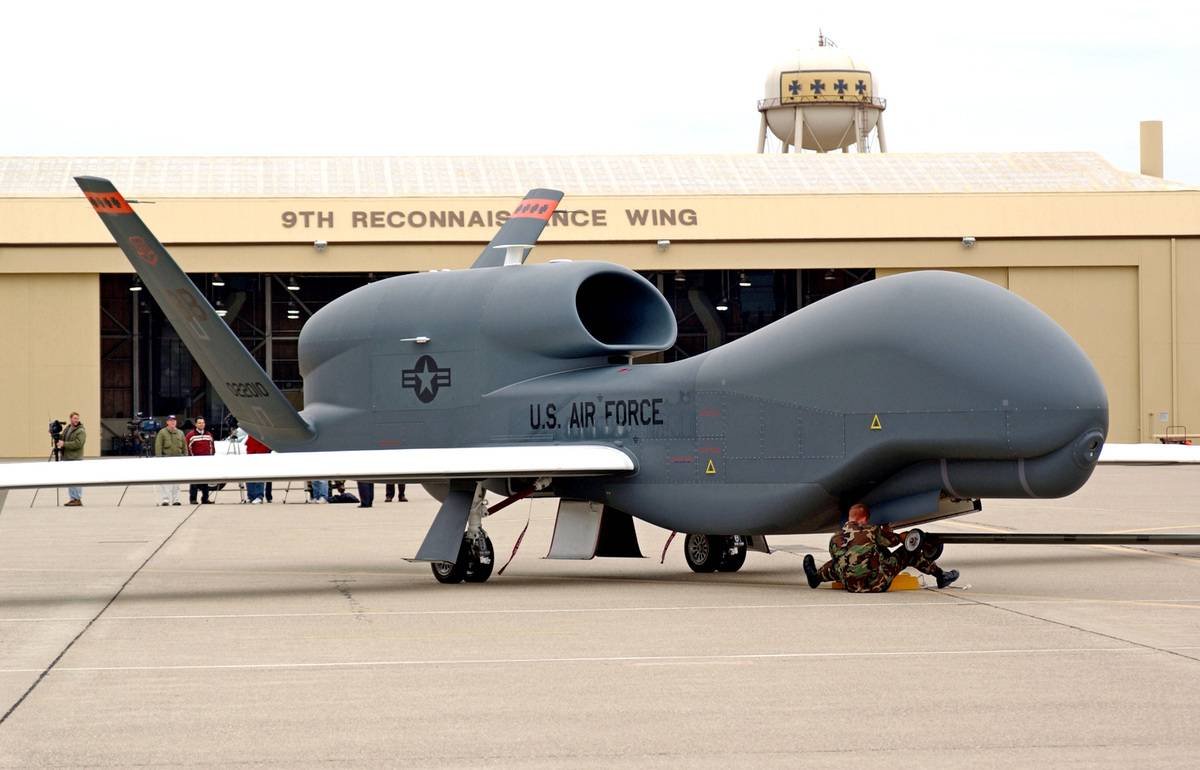
Photos: fity.club · wallpapercave.com · www.unmannedsystemstechnology.com · en.topcor.ru · Northrop Grumman
The RQ-4 Global Hawk is a high-altitude, long-endurance unmanned aircraft built by Northrop Grumman for strategic intelligence, surveillance and reconnaissance. It entered operational service with the US Air Force in 2001 after a development programme that began under DARPA in the mid-1990s, and it became the first unmanned aircraft cleared by the FAA to file its own flight plans through US civil airspace. Cruising above 60,000 feet for more than thirty hours at a stretch, the Global Hawk was conceived to do persistently from the stratosphere what the U-2 had done in shorter sorties — stare at a country, or an ocean, for an entire watch.
Sensor payload is the point of the airframe. Production blocks have carried the Hughes Integrated Surveillance and Reconnaissance suite of synthetic-aperture radar, electro-optical and infrared cameras; later Block 40 aircraft fly the Multi-Platform Radar Technology Insertion Programme (MP-RTIP) ground-moving-target radar developed jointly by Northrop Grumman and Raytheon. Block 30 variants add a signals-intelligence package, the Airborne Signals Intelligence Payload, that cues other collection assets. The aircraft itself is largely autonomous in flight: ground crews task it through mission plans rather than fly it stick-and-rudder, with two operators per orbit handling launch-and-recovery and sensor management from separated ground stations. A Rolls-Royce AE 3007H turbofan and a 130-foot composite wing give it the range — roughly 12,300 kilometres — to reach almost any theatre from a handful of forward bases.
Beyond the US Air Force, which fields the type from Beale Air Force Base and forward locations including Andersen on Guam and Sigonella in Sicily, operators include the Republic of Korea Air Force, Japan’s Air Self-Defence Force and NATO’s Alliance Ground Surveillance wing, also based at Sigonella. The aircraft has flown ISR sorties over Afghanistan, Iraq, Libya and the Korean peninsula, and Open Skies-style orbits over the Black Sea since 2022 supporting Ukraine. In June 2019 an Iranian Revolutionary Guard surface-to-air missile destroyed a US Navy-operated MQ-4C derivative over the Strait of Hormuz, the most public combat loss of the family.
The Global Hawk lineage is now bifurcating. The US Air Force has been retiring older Block 20 and 30 airframes as the RQ-180 and space-based collection take on parts of the mission, while Block 40 ground-surveillance jets remain in service. The maritime MQ-4C Triton, with reinforced wings and a 360-degree multi-function active sensor, continues to enter US Navy and Royal Australian Air Force service. Among Western HALE platforms it remains the benchmark for altitude and endurance, with no equivalent fielded in numbers by any peer competitor.