MQ-8 Fire Scout
Unmanned helicopter for shipborne ISR, mine countermeasures and over-the-horizon targeting.
Droneby Northrop GrummanIntroduced 2009
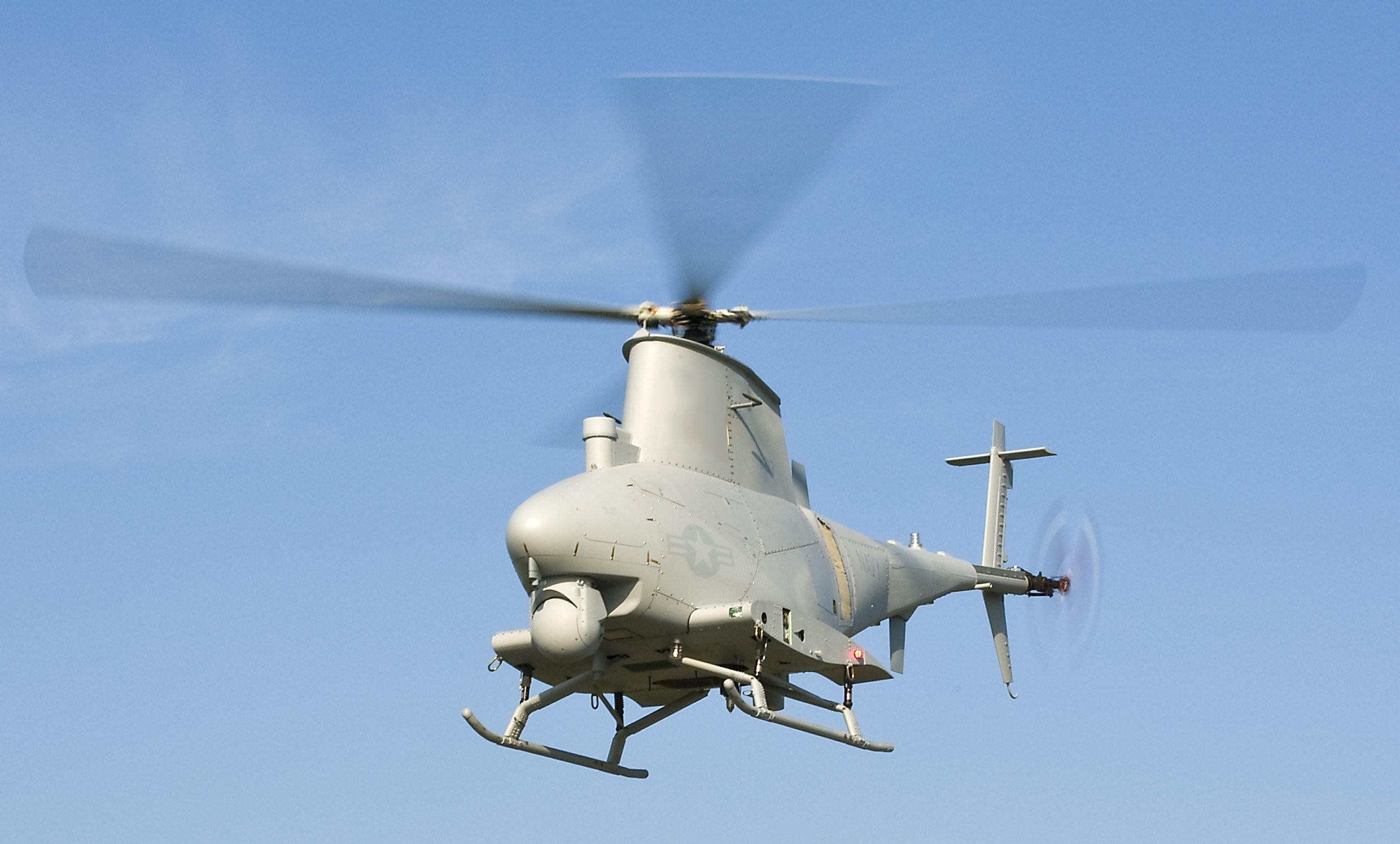
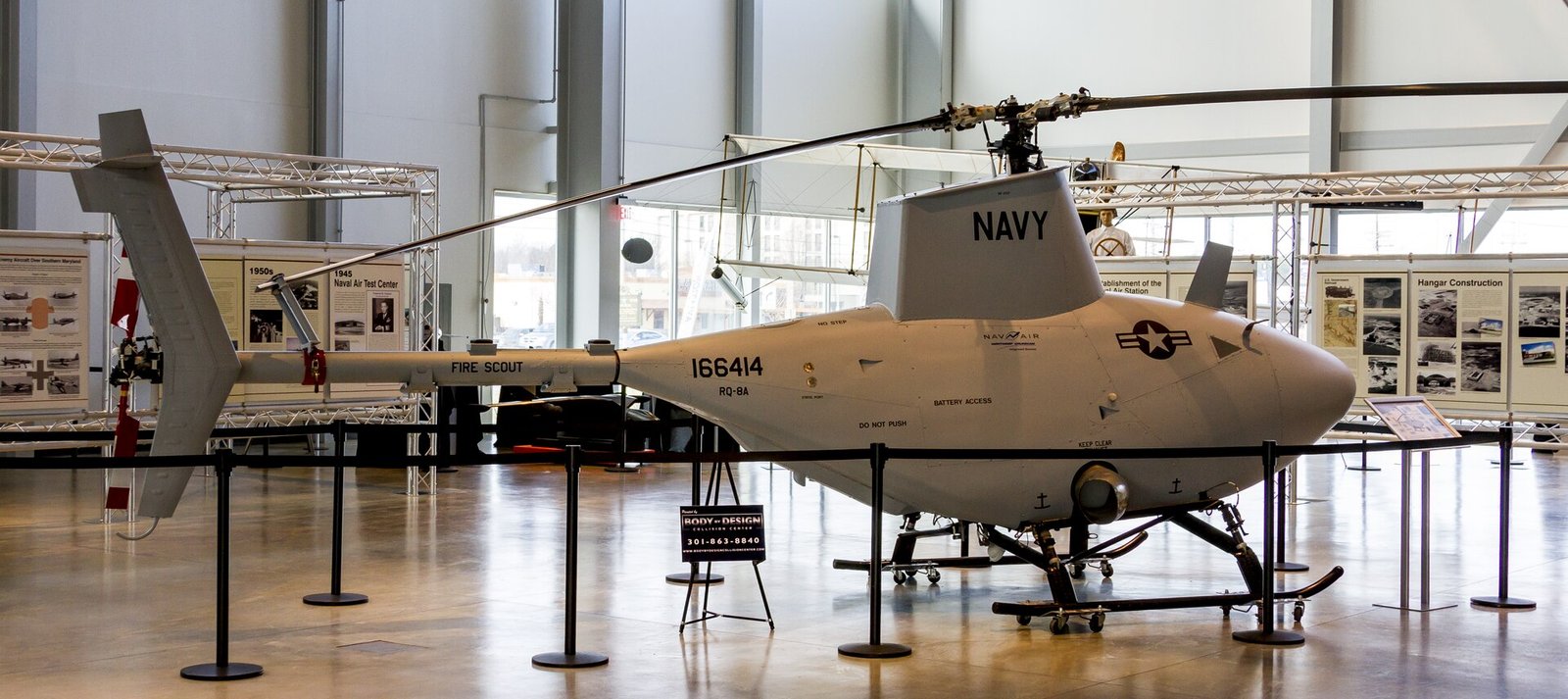
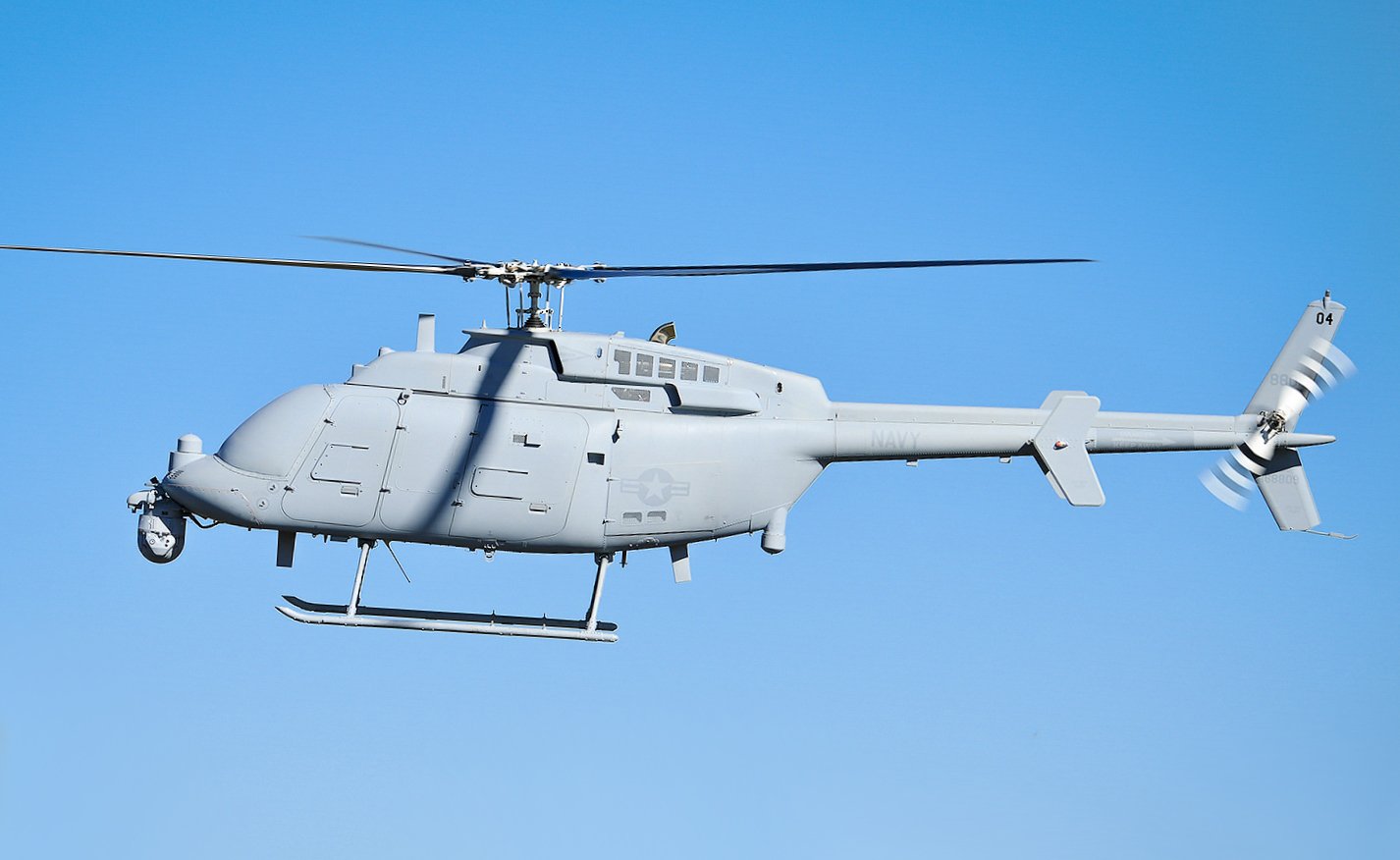
Photos: Wikipedia · Balon Greyjoy · Northrop Grumman · US Navy
The MQ-8 Fire Scout is an unmanned helicopter built by Northrop Grumman for the United States Navy, designed to fly intelligence, surveillance and reconnaissance missions from the deck of a warship without a pilot on board. The programme reached initial operating capability in 2009 with the MQ-8B, a Schweizer 333-derived airframe, and matured into the MQ-8C, a larger Bell 407-based variant with roughly twice the endurance and payload. Its assigned role is to extend the eyes and weapons reach of surface combatants — frigates, littoral combat ships, and now Constellation-class frigates — beyond the line of sight of their own sensors.
At the heart of the MQ-8C is a navalised flight-control system that lets the aircraft launch, recover and land autonomously on a moving deck, including in sea states that would challenge a manned helicopter. The current sensor fit centres on the Leonardo Osprey AESA radar, which gives a 360-degree maritime search capability without a rotating antenna, paired with electro-optical and infrared turrets and an automatic identification system receiver for tracking surface contacts. The Fire Scout has been integrated with the AN/DVS-1 Coastal Battlefield Reconnaissance and Analysis system for mine-countermeasures work, and tested as a relay node for over-the-horizon targeting data feeding back to the launching ship and to networked partners.
The United States Navy is the sole operator. Around 30 MQ-8Cs are planned to replace the earlier MQ-8B fleet, with the type declared operationally capable in 2019 and first deploying aboard USS Milwaukee in 2021. Fire Scouts have flown from littoral combat ships in the Pacific, supporting US Fourth Fleet counter-narcotics patrols in the Caribbean and Seventh Fleet operations in the South China Sea. Earlier MQ-8B variants saw combat-zone employment from US Navy frigates off Libya in 2011, where one was shot down, and later detachments operated from forward-deployed ships in the Mediterranean and Indo-Pacific.
Development continues around mission systems rather than the airframe. Northrop Grumman has demonstrated the Link 16 tactical data link on the type, integrated the Osprey radar across the fleet, and trialled launching small munitions and expendable decoys. The Navy has examined the Fire Scout as a sensor truck for the new Constellation-class frigate and as a partner for manned MH-60R Seahawks under a hunter-killer concept for anti-submarine warfare.
Among Western shipborne unmanned aircraft the Fire Scout is unusual in being a full-size rotorcraft rather than a tilt-rotor, fixed-wing or vertical-takeoff drone of more modest size. That choice gives it endurance and payload comparable to a manned naval helicopter, at the cost of the deck footprint of one — a trade the US Navy has accepted as it works the type into routine carrier-strike-group and surface-action-group operations.