X-47B
Tailless stealth UCAV demonstrator that proved autonomous catapult launch, recovery and aerial refueling on a US carrier.
Droneby Northrop GrummanIntroduced 2011
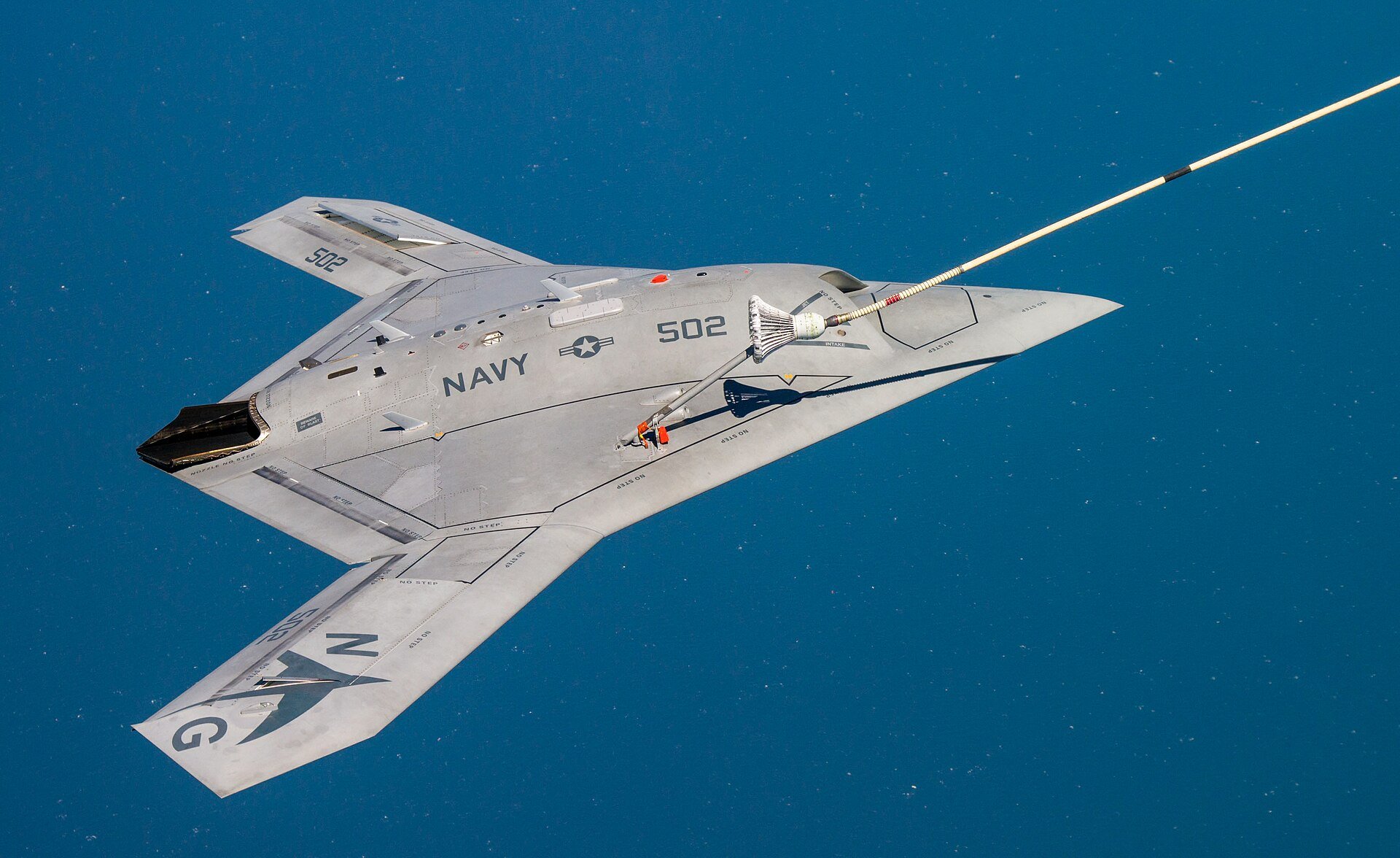
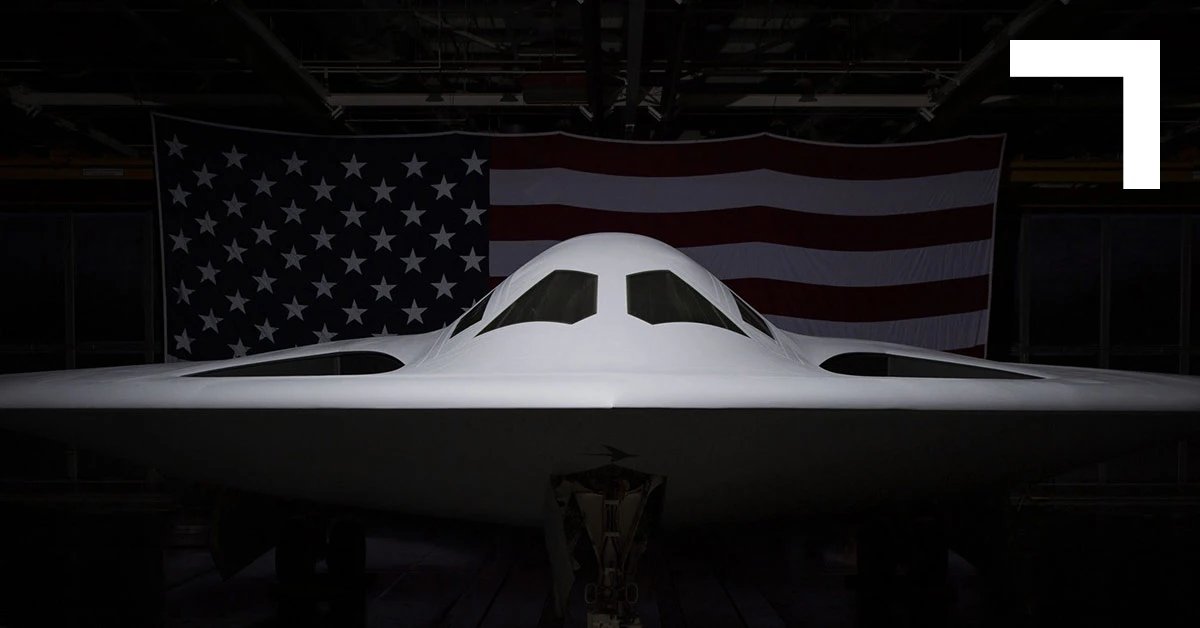
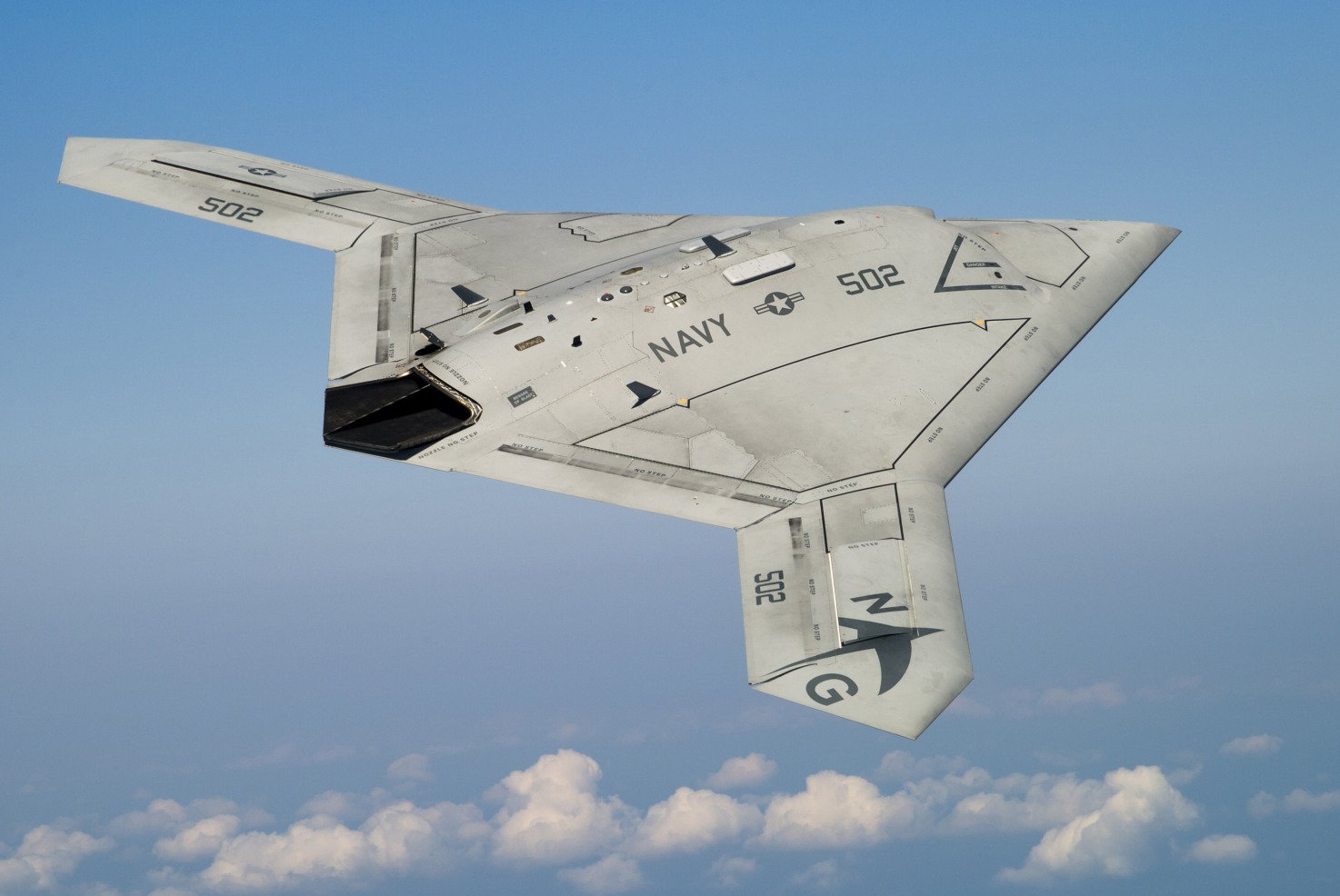
Photos: US Navy · Northrop Grumman · U.S. Navy
The X-47B is a tailless, jet-powered unmanned combat air system demonstrator built by Northrop Grumman for the US Navy. Two airframes were produced under the Unmanned Combat Air System Carrier Demonstration (UCAS-D) programme, with the first flight at Edwards Air Force Base in February 2011. Its purpose was never to enter service as a fielded weapon. It existed to prove that a stealthy, carrier-capable jet could operate from the deck of a nuclear aircraft carrier without a pilot — and in doing so, to settle a question that had hung over naval aviation for two decades.
Aerodynamically the aircraft is a cranked kite flying wing with no vertical surfaces, a layout chosen for low radar observability. It is powered by a single Pratt & Whitney F100-220U turbofan and spans roughly 62 feet, with wings that fold to about 31 feet for hangar stowage. The airframe carries two internal weapons bays sized for a notional 4,500-pound payload, though no munitions were ever integrated. The defining work was in the flight-control and mission software: the X-47B was commanded by mouse-clicks and pre-loaded mission files rather than a stick-and-throttle remote pilot, and the carrier-deck choreography — taxi, alignment with the catapult, launch, recovery into the wires, and folding clear of the landing area — was executed by the aircraft itself, supervised rather than flown.
The milestones came in a tight sequence. In May 2013 an X-47B was launched from the catapult of USS George H.W. Bush off the Virginia coast, the first time an unmanned aircraft had been shot from a carrier. Two months later the same airframe completed an arrested landing back aboard, a first in naval aviation. In April 2015 the X-47B refuelled in flight from an Omega Air Boeing 707 tanker, demonstrating autonomous aerial refuelling for an unmanned jet. With those boxes ticked, the Navy ended active flight testing.
What followed was less tidy. The Navy had originally framed UCAS-D as a stepping stone to UCLASS, a stealthy carrier-based reconnaissance-strike drone. UCLASS was reshaped, then cancelled, and the requirement that survived was for an unmanned tanker — the MQ-25 Stingray, awarded to Boeing in 2018. Northrop Grumman’s two X-47Bs were sent to long-term storage rather than to a squadron, and one was later moved to public display.
The aircraft’s legacy is the demonstration itself. Carrier-deck autonomy and unmanned aerial refuelling are no longer open questions, and the work done on the X-47B sits underneath every subsequent US carrier-drone programme.