E-2D Advanced Hawkeye
Carrier-based airborne early warning aircraft with advanced battle-management and fusion capabilities.
Aircraftby Northrop GrummanIntroduced 2014
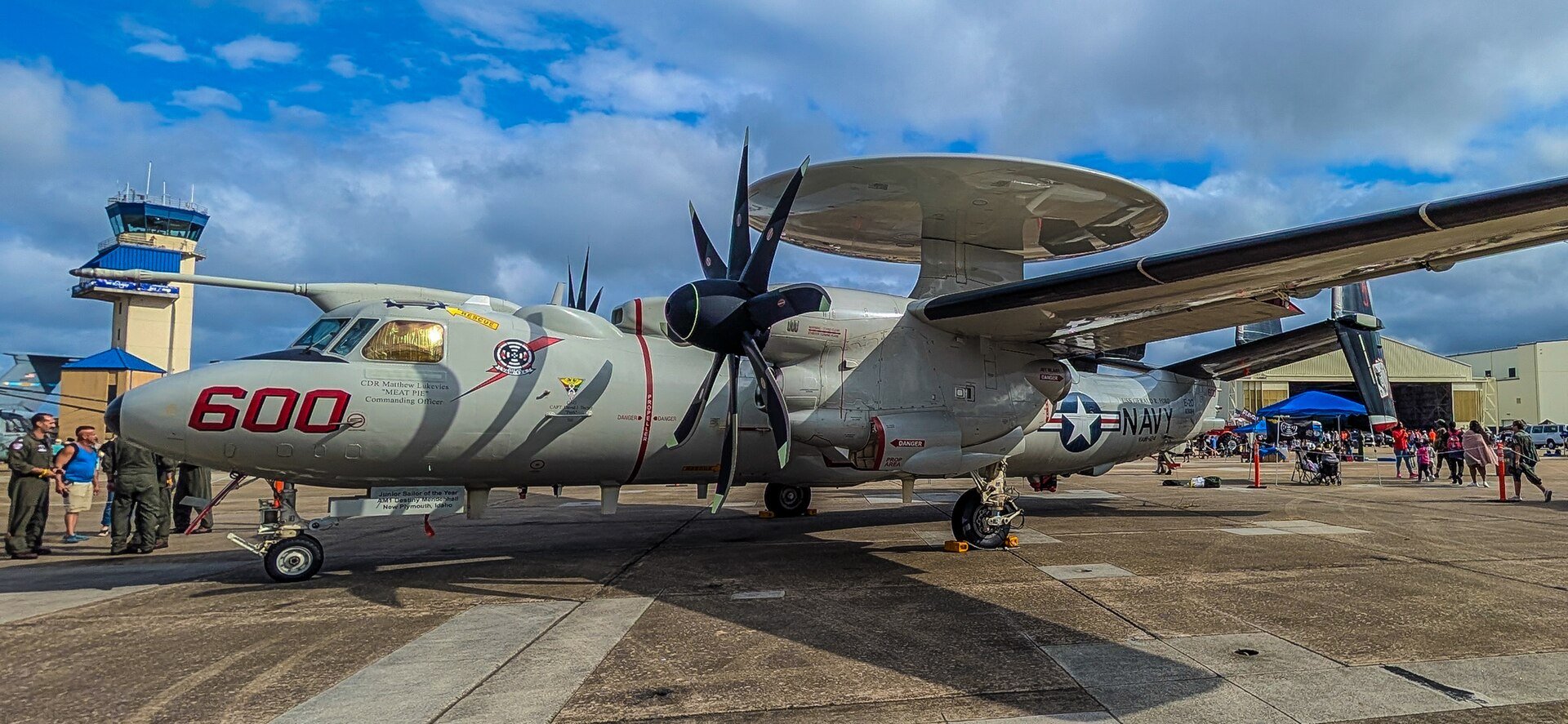
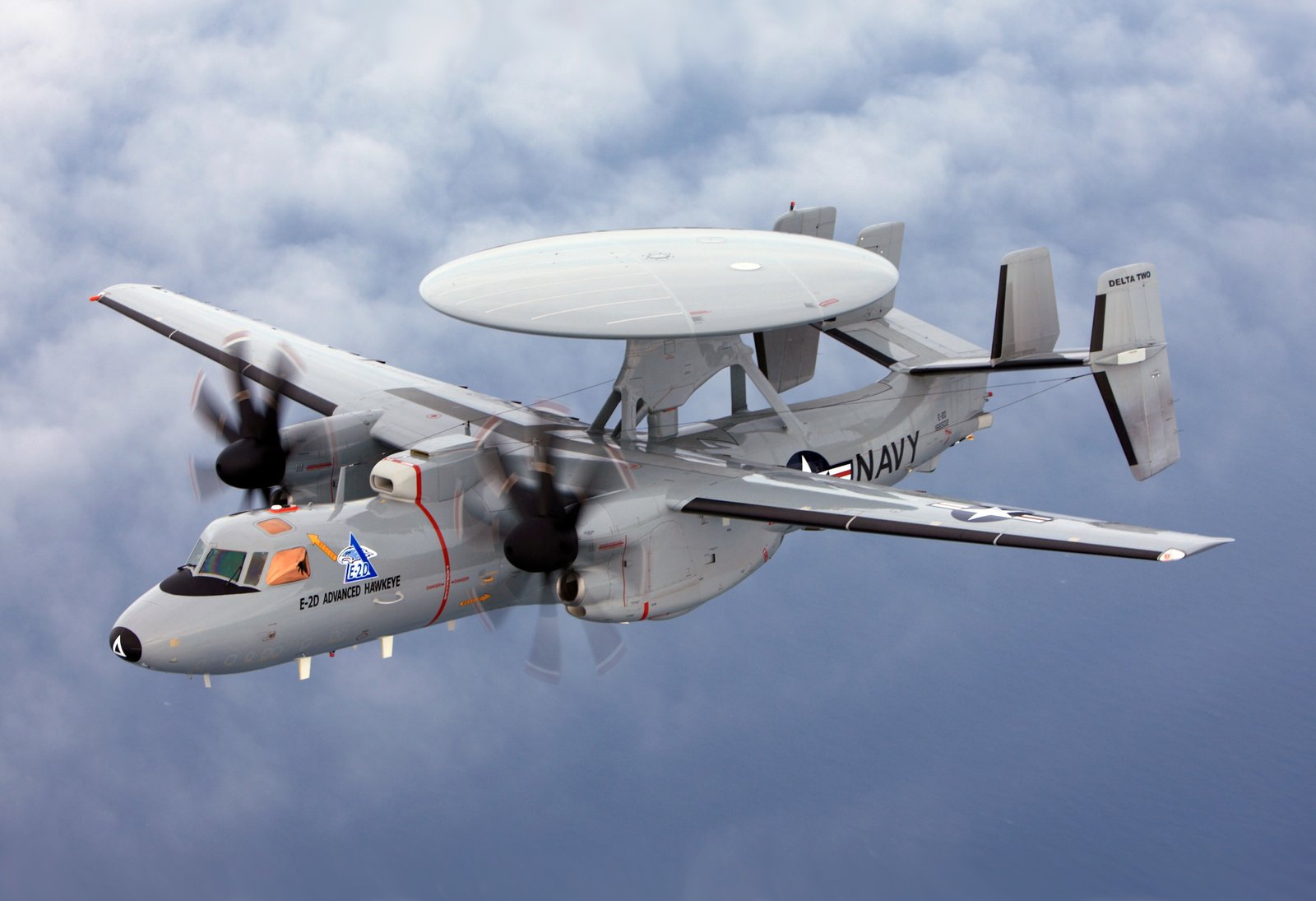
Photos: Tomás Del Coro from Fabulous Las Vegas, Nevada, USA · Wikipedia · Northrop Grumman
The E-2D Advanced Hawkeye is a carrier-based airborne early warning and command and control aircraft developed by Northrop Grumman. Introduced into service in 2014, it serves as the primary aerial sensor and battle management node for the United States Navy’s carrier strike groups, replacing the legacy E-2C Hawkeye. The system is designed to provide decision dominance over air, land, and sea domains, functioning as a force multiplier that enhances the effectiveness of allied air and missile defense systems.
The aircraft’s core capability stems from its integration of the AN/APS-145 radar system and the Cooperative Engagement Capability (CEC) network. The E-2D utilizes an Active Electronically Scanned Array (AESA) radar, specifically the Northrop Grumman ADS-18, which provides continuous 360-degree coverage and all-weather detection capabilities. According to manufacturer specifications, the radar can simultaneously track more than 3,000 targets with a detection range exceeding 700 kilometers. This sensor data is fused with information from other fleet assets via CEC, creating a high-capacity, real-time common operating picture that allows for coordinated engagement of threats across vast distances. The platform also features an open-architecture central mission computer that supports significant data throughput and operator interface upgrades, including Advanced Control Indicator Sets (ACIS) for enhanced situational awareness.
The United States Navy is the primary operator of the E-2D, with the aircraft ranked among the service’s top five acquisition programs as of 2023. International operators include Japan, France, and Egypt, with Taiwan operating the preceding E-2C variant. The aircraft has demonstrated combat-tested status, having supported various operational phases including humanitarian aid, disaster relief, and border security. Its deployment extends to the Indo-Pacific region, where it has been utilized in exercises designed to counter evolving regional threats. The system’s architecture allows for continuous modernization based on real-time operational feedback, ensuring it remains interoperable with U.S. and NATO forces.
Development of the E-2D began with test flights in 2007, evolving from the E-2C Hawkeye 2000 baseline. The Advanced Hawkeye incorporates significant enhancements in data management, connectivity, and electronic support measures compared to its predecessor. It is capable of operating from both land and sea, offering logistical flexibility with a smaller footprint than other airborne command and control platforms. The aircraft’s ability to manage air and surface border security, combined with its role in theater air and missile defense, positions it as a critical component in modern naval warfare strategy.