Microflown AVISA
Acoustic vector sensors for gunshot localisation and small-UAV detection used by NATO ground forces.
Microflown AVISA was set up in 2007 in Arnhem as the defence and security arm of a small Dutch group of companies built around an unusual acoustic sensor invented in the 1990s at the University of Twente. The underlying device, developed by Hans-Elias de Bree and colleagues, measures the velocity of air particles rather than their pressure, which is the property a conventional microphone records. AVISA carries that technology into military and law-enforcement applications, while the parent firm, Microflown Technologies, licenses it for industrial acoustics and automotive noise-vibration-harshness work.
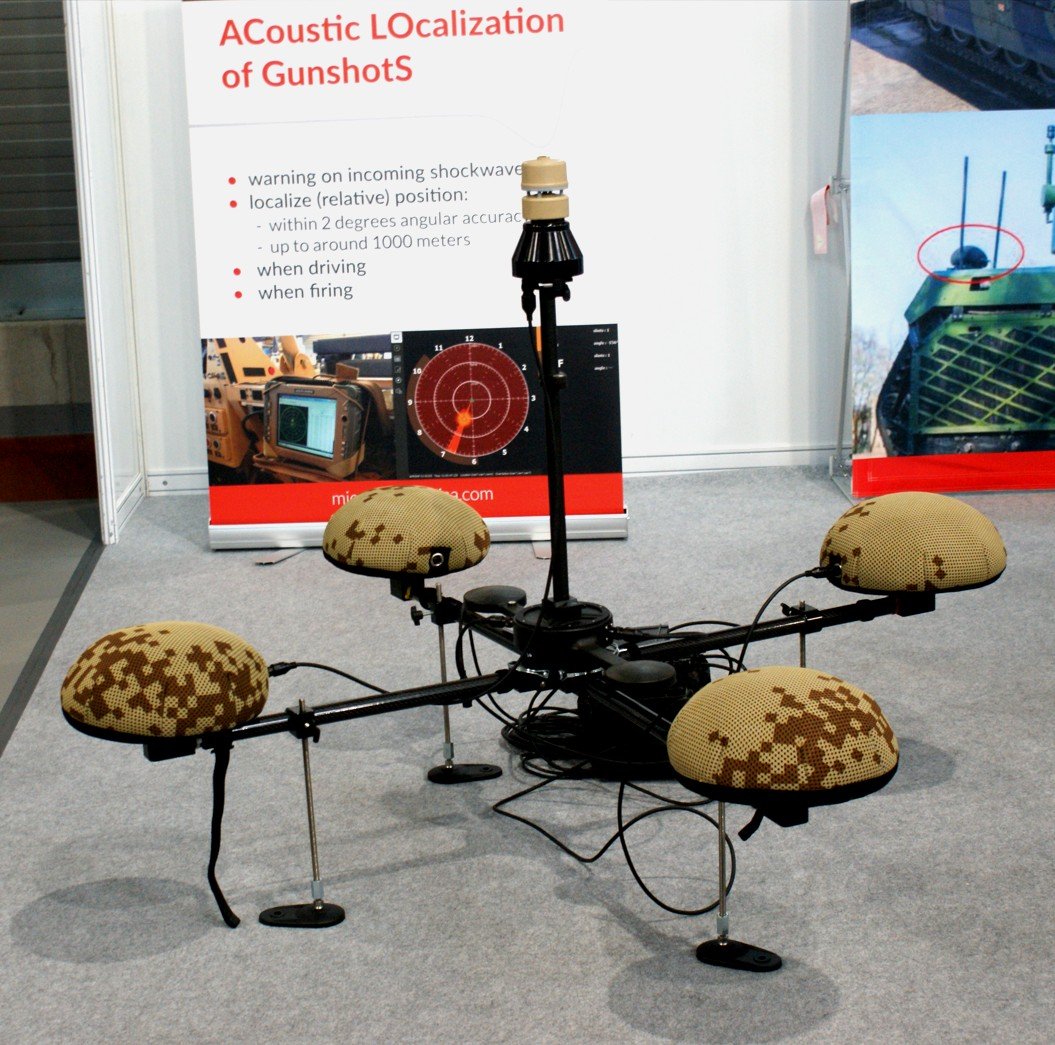
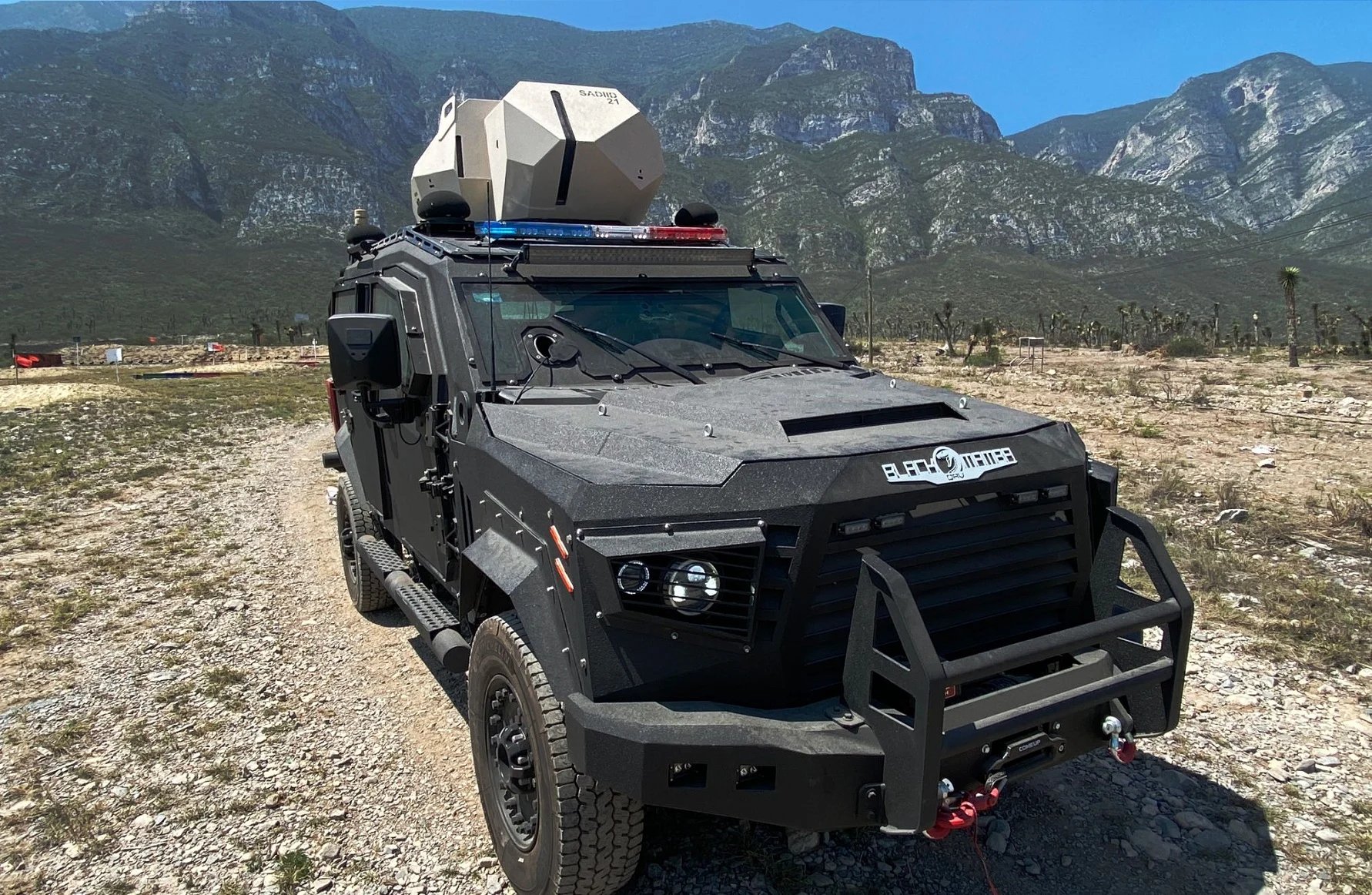
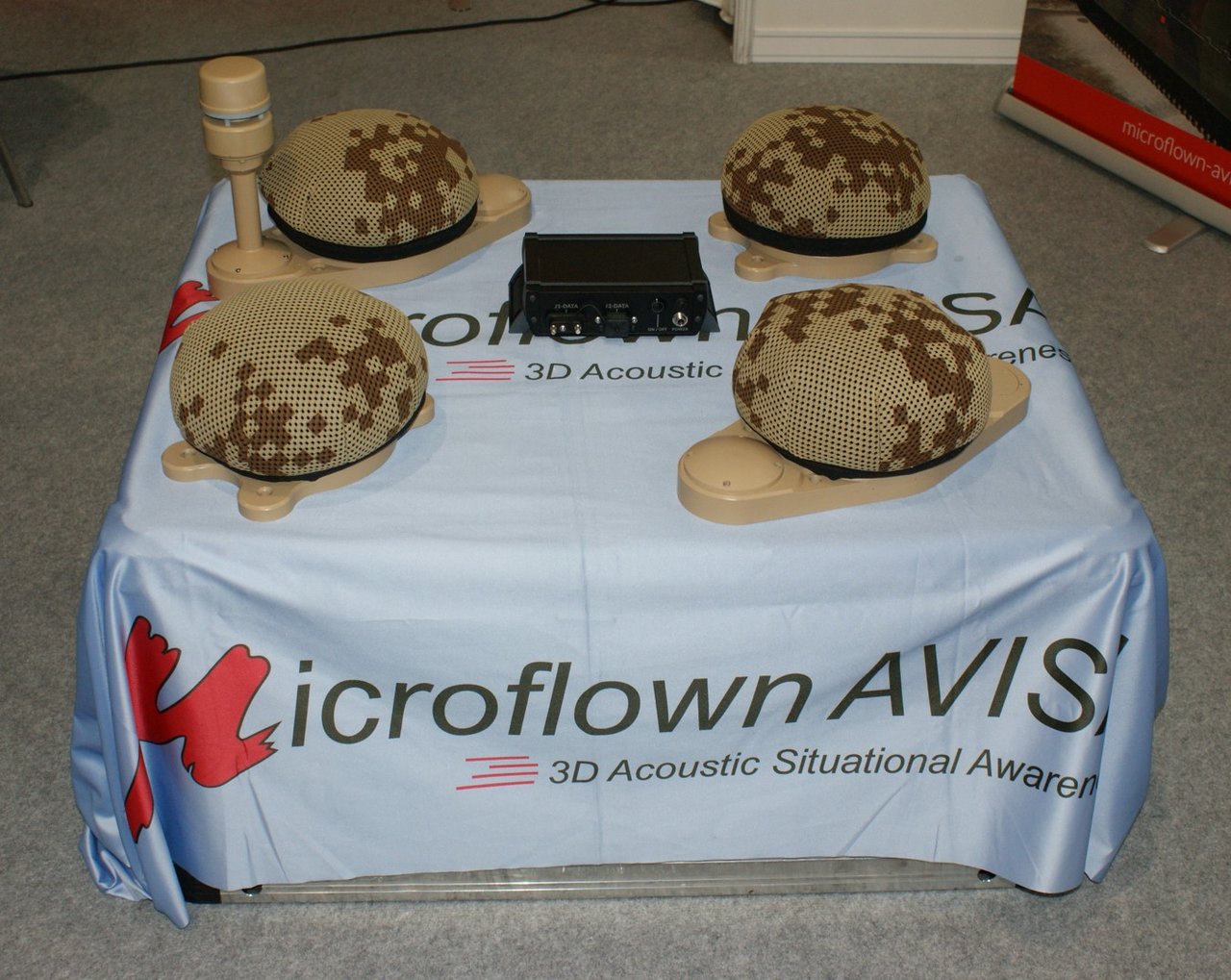
The company’s acoustic vector sensor is small enough to sit on a fingertip and gives a direction of arrival from a single point, where conventional gunshot localisation needs a multi-microphone array to triangulate. That difference shapes the product line. The Acoustic Multi-Mission Sensor, marketed as AMMS, is a vehicle-mounted unit that detects and bearings small-arms fire, mortars, and rocket launches in real time, presenting azimuth and elevation to the crew. A wearable variant puts the sensor on a soldier’s shoulder for dismounted patrols. More recently the same physics has been applied to small UAVs: AVISA sells passive acoustic detection nodes that pick up the rotor signature of consumer-class drones at ranges where radar struggles with their tiny cross-section, and which give nothing away because they only listen.
Microflown’s gunshot-localisation kit has been demonstrated at NATO live-fire trials and integrated onto vehicles by several European ground forces. The Dutch armed forces have been a long-running customer, which is unsurprising given the company’s location, and the technology has been evaluated by allied armies for counter-sniper roles in Iraq and Afghanistan. The counter-drone nodes are a newer line, pitched at base protection where a passive layer is wanted alongside radar and RF detection — an obvious match for the small-drone problem that has dominated the war in Ukraine and the recent airspace incidents over European bases.
The firm is privately held and small, with staff numbers in the dozens, and remains tightly coupled to Microflown Technologies and the wider holding. It does not publish revenue figures, and there is no institutional venture-capital story to tell — AVISA has grown on programme work rather than on funding rounds.
Acoustic counter-drone has moved from a niche curiosity to something European armies are willing to spend on, and AVISA sits at a useful point in the kill chain: telling soldiers where a threat is, in time to do something about it. Whether passive acoustics scales to wide-area surveillance, rather than point defence around fixed assets, is the open technical question the company is now repeatedly asked.
Products
Hardware
ACULAB
Acoustic vector sensor array for real-time gunshot localisation and sniper detection on dismounted and vehicle-mounted platforms.
Introduced 2010
AMMS
Acoustic Multi-Mission Sensor that localises gunshots, RPGs and artillery using acoustic vector sensing on a single mast or vehicle mount.
Introduced 2014
AVISA Counter-UAS Acoustic Sensor
Passive acoustic vector sensor array that detects and classifies small UAVs by their motor-and-rotor acoustic signature.
Introduced 2017
Acoustic Vector Sensor (AVS)
Core particle-velocity microphone technology that measures sound direction in 3-D without an array of spatially separated microphones.
Introduced 2003
EARS
Passive acoustic array that detects, localises, and classifies vehicles, low-flying aircraft, and UAVs by their acoustic signature.
Introduced 2010
Gunshot Detector
Acoustic vector sensor array that localises the source of small-arms fire in three dimensions within seconds.
Introduced 2008
Helicopter Hostile Fire Indication System (HFIS)
Rotary-wing variant of the acoustic vector sensor suite; detects and cues crew to incoming fire while airborne.
Introduced 2012
Vehicle Hostile Fire Indication System (HFIS)
Acoustic vector sensor array mounted on armoured vehicles that pinpoints the direction and range of incoming gunfire and RPGs in under a second.
Introduced 2008
MVSS
Microflown Vehicle Sensor System — vehicle-mounted acoustic array combining gunshot localisation and UAV detection in one ruggedised unit.
Introduced 2014
Scout
Passive acoustic sensor system for detecting and classifying small UAVs by their rotor-noise signature.
Introduced 2016
Sky Sentry
Acoustic vector-sensor array for passive detection, classification and tracking of small UAVs at low altitude.
Introduced 2019
Integrated systems
AVISA Sense
Integrated acoustic sensor platform fusing gunshot detection and UAV detection into a single persistent surveillance node.
Introduced 2019
UAV Acoustic Detection System
Passive acoustic sensor array that detects, classifies, and localises small UAVs by their rotor noise signature.
Introduced 2017