EARS
Passive acoustic array that detects, localises, and classifies vehicles, low-flying aircraft, and UAVs by their acoustic signature.
Hardwareby Microflown AVISAIntroduced 2010
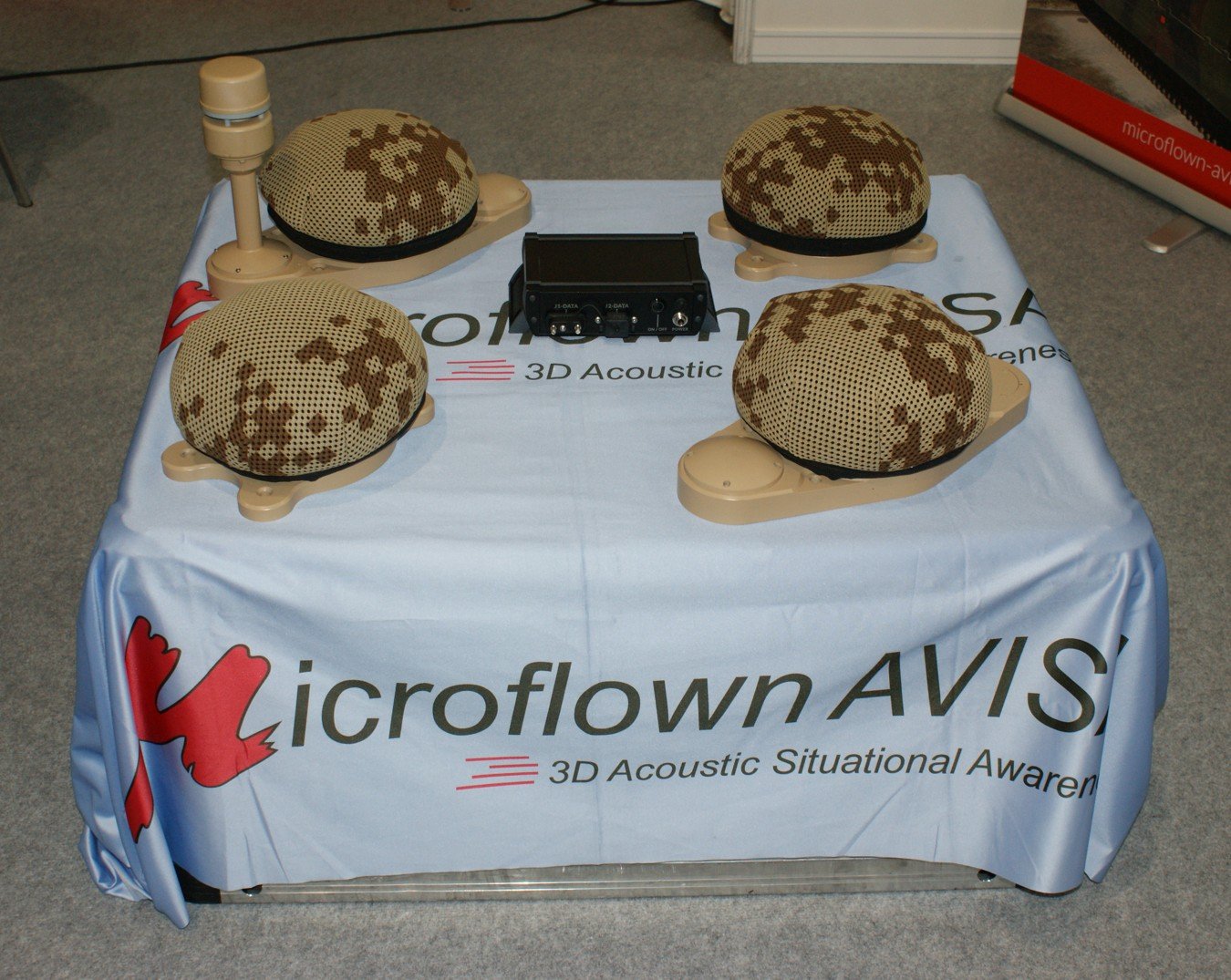


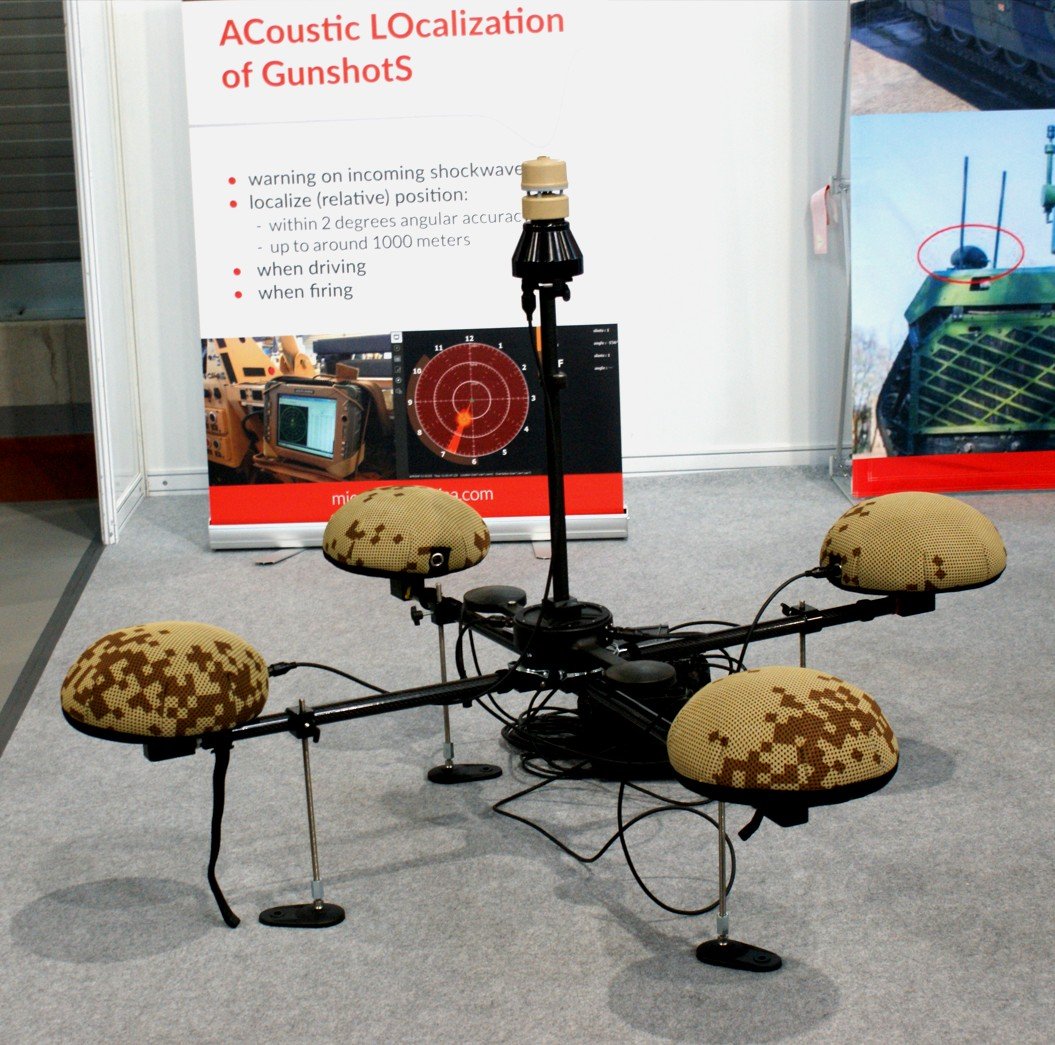

Photos: www.armedconflicts.com · Microflown AVISA · www.microflown-avisa.com · www.valka.cz · www.linkedin.com
The EARS (Electronic Acoustic Reconnaissance System) is a passive acoustic array developed by the Dutch firm Microflown AVISA, designed to detect, localize, and classify ground vehicles, low-flying aircraft, and unmanned aerial vehicles (UAVs) by their acoustic signatures. Introduced in 2010, the system operates without emitting radio frequency signals, making it difficult for adversaries to detect or jam through electronic warfare tactics. It is primarily utilized for force protection and counter-drone operations, providing 360-degree azimuth coverage to monitor airspace and ground perimeters.
The core technology relies on Microflown’s proprietary acoustic vector sensors, specifically the Acoustic Multi Mission Sensors (AMMS) that form the CASTLE hardware platform. Unlike traditional microphones that measure sound pressure, these sensors detect particle velocity, allowing for precise directional determination across the entire acoustic bandwidth. The CASTLE system typically consists of four spatially distributed AMMS units connected to an Acoustic Master Receiver (AMR) and a weather station. This configuration enables high-level local signal processing, which minimizes the data bandwidth required for network transmission. The system is often supplemented by satellite receiving units to establish precise position and heading, with optional anti-jamming and anti-spoofing integrations. By analyzing the unique acoustic fingerprints of engines and rotors, EARS can distinguish between different types of vehicles and aircraft, offering situational awareness in all-weather conditions and without line-of-sight constraints.
EARS has been fielded by several NATO member states, including the Netherlands, the United States, and Germany. Its deployment history includes combat-tested environments, where it has been employed to enhance the security of forward operating bases and military installations. The system’s ability to operate passively makes it particularly valuable in scenarios where electronic silence is required or where traditional radar systems might be compromised by clutter or stealth technologies. While specific deployment numbers and contract values are not publicly disclosed, its adoption by major Western militaries underscores its role in modern defensive infrastructure.
The system represents a specialized niche in the broader counter-UAS and force-protection market, competing with radar and electro-optical systems by offering a complementary sensor modality. Its reliance on acoustic data provides a layer of detection that is resilient to visual obscurants like smoke or fog, and it does not reveal its own position to hostile electronic surveillance. As drone threats continue to evolve, systems like EARS provide a persistent, low-signature monitoring capability that integrates into larger defensive networks.