AVISA Counter-UAS Acoustic Sensor
Passive acoustic vector sensor array that detects and classifies small UAVs by their motor-and-rotor acoustic signature.
Hardwareby Microflown AVISAIntroduced 2017
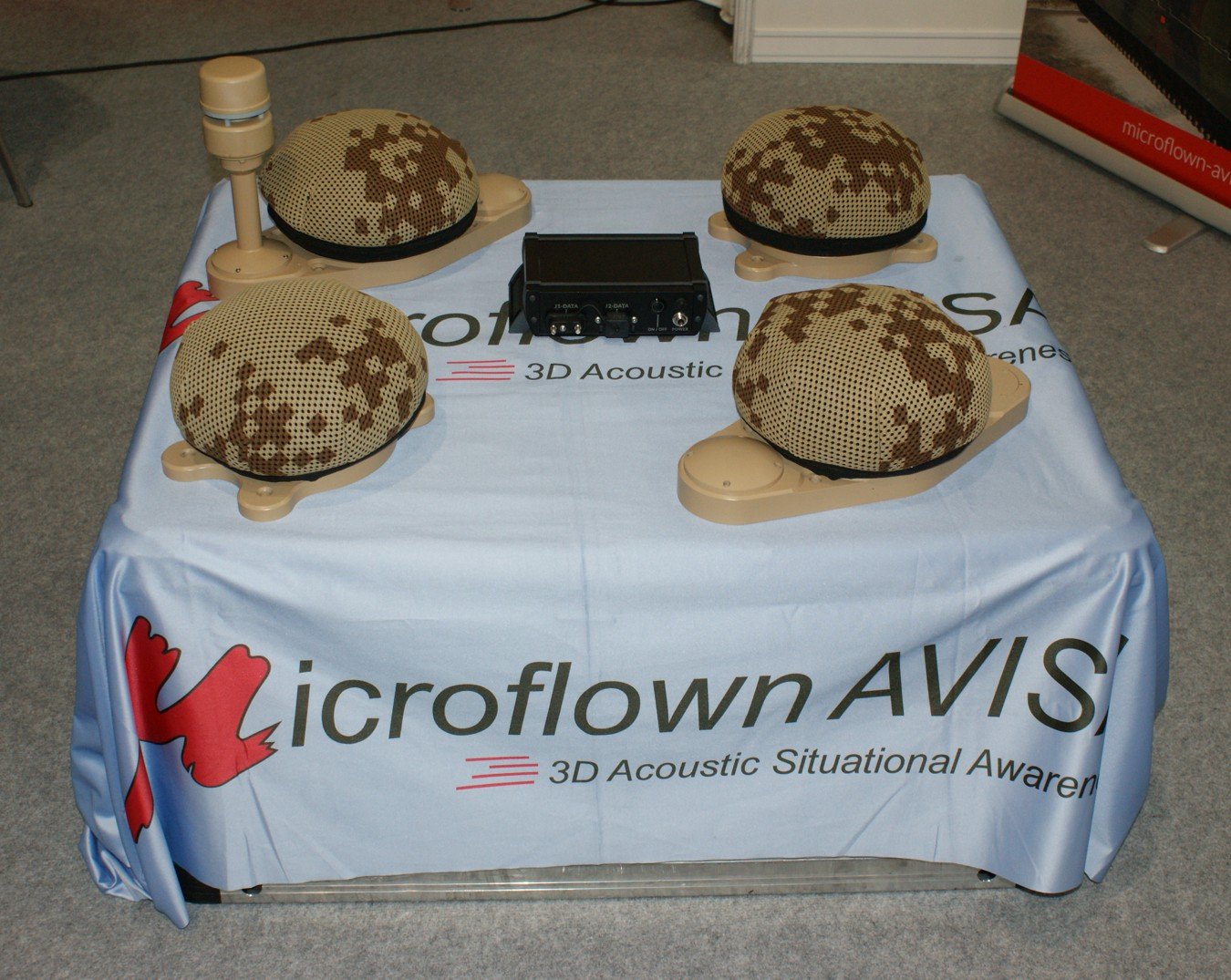

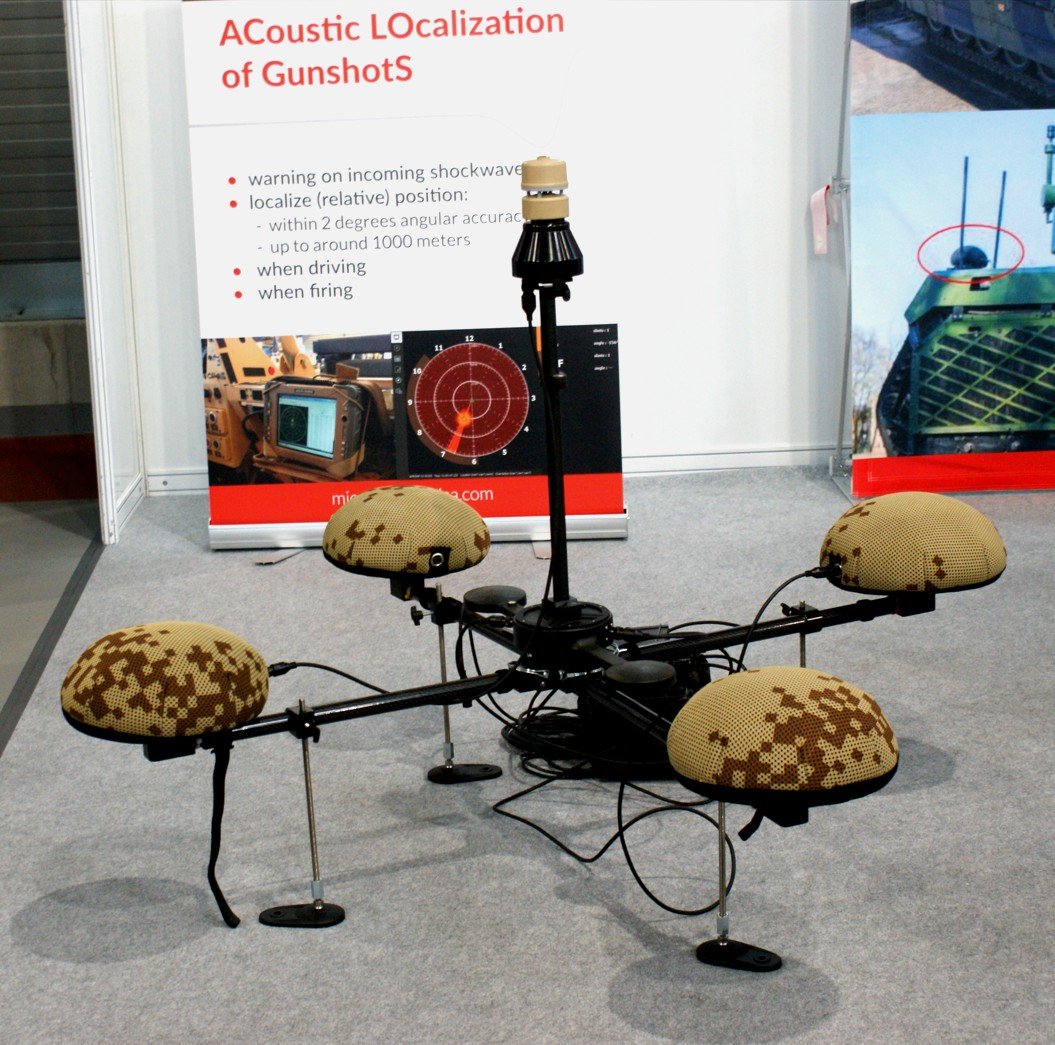
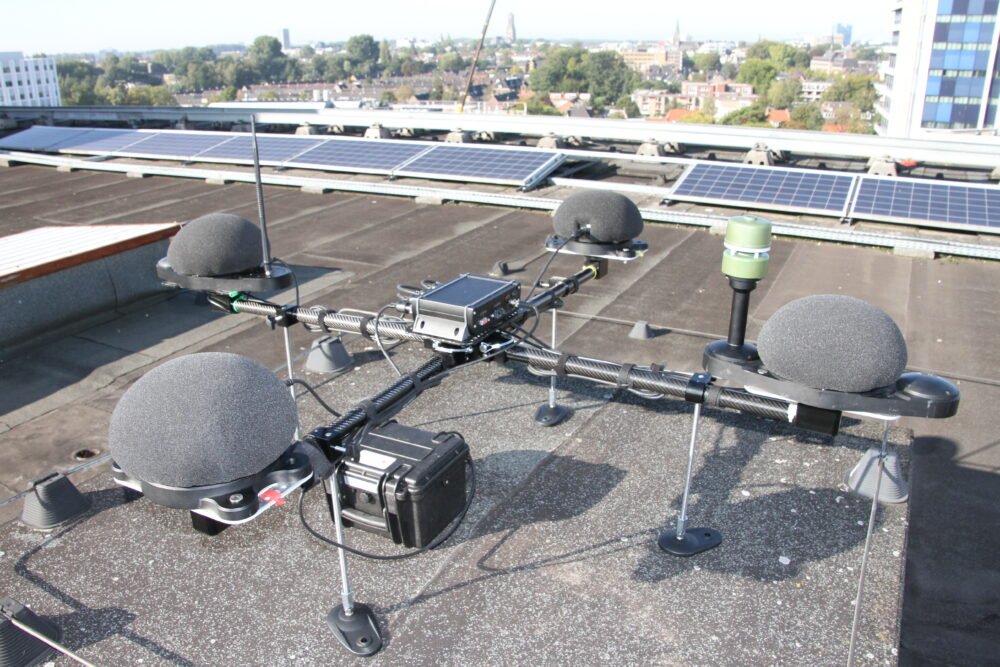
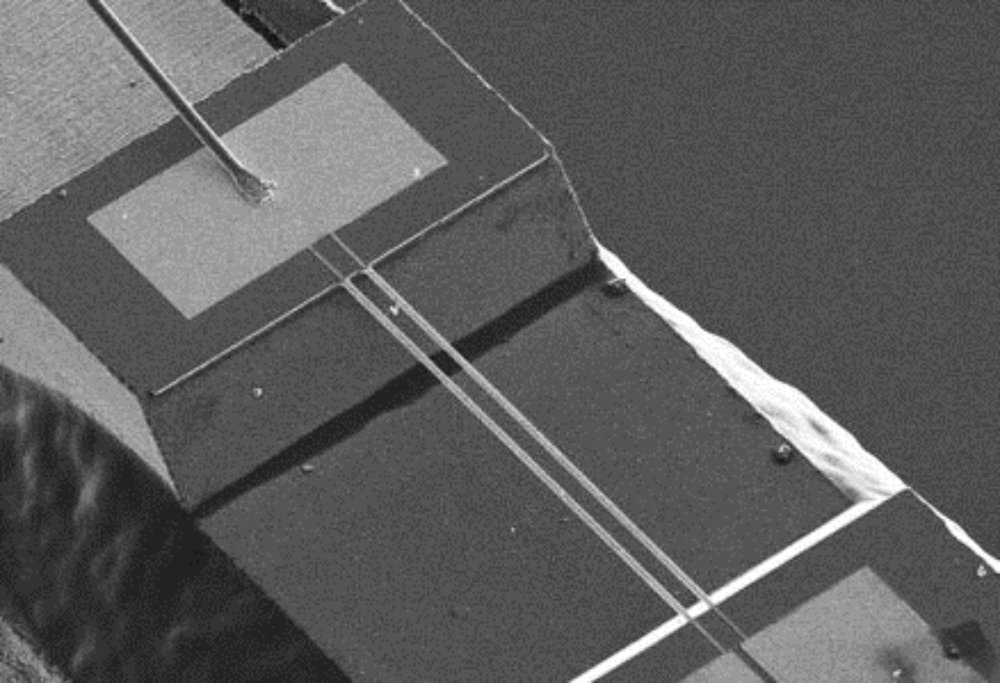
Photos: www.armedconflicts.com · Microflown AVISA · www.microflown-avisa.com
The AVISA Counter-UAS Acoustic Sensor, marketed under the SKYSENTRY brand, is a passive detection system developed by the Dutch firm Microflown AVISA. Introduced in 2017, the system addresses the limitations of conventional radar in detecting low, slow, and small unmanned aerial vehicles (UAS), particularly in urban environments or during peer-to-peer conflicts where active radar emissions are problematic. The technology relies on acoustic vector sensors to detect, localize, and classify airborne threats by their motor and rotor signatures, providing 3D situational awareness without emitting any signals.
The core hardware consists of the CASTLE sensor post, a compact unit designed for both static unattended deployment and mounting on manned or unmanned platforms. The system is acoustically broadband, capturing the entire audio spectrum to identify a wide range of threats, from multi-copter drones and fixed-wing aircraft to manned helicopters. The SKYSENTRY firmware processes these acoustic signals by dividing the frequency spectrum into bins to determine the Direction of Arrival for potential threats. When multiple CASTLE nodes are networked, they create a continuous acoustic bubble in space and time, allowing for the tracking of aircraft with both wide-band signatures (such as jet engines) and tonal signatures (such as propeller-driven aircraft). The system is designed to be all-weather capable, operating day and night, and can be deployed by a single person in under ten minutes.
Detection ranges vary significantly based on the type of drone, environmental noise, and weather conditions, particularly wind speed and direction. Initial tests conducted by the manufacturer have demonstrated detection capabilities up to 250 meters for small quadcopters weighing approximately 2 kg, and up to 1 kilometer for small fixed-wing drones of similar mass. Manned helicopters have been detected at ranges up to 10 kilometers. The system does not engage targets but provides bearing and elevation data to cue other sensors or defensive effects, integrating into broader multi-sensor Counter-UAS architectures.
Microflown AVISA, headquartered in Arnhem, Netherlands, has positioned the AVISA system for use by NATO ground forces and for the protection of critical infrastructure. The Netherlands and Germany are listed as key operators of the technology. The system’s low size, weight, and power (SWaP) profile makes it suitable for integration into vehicle survivability suites and for the permanent protection of sites such as oil refineries or public squares, where the covert nature of passive acoustic detection is advantageous. The company continues to investigate and test the precise detection ranges and localization accuracy of the CASTLE sensor nodes as the threat landscape evolves.