AMMS
Acoustic Multi-Mission Sensor that localises gunshots, RPGs and artillery using acoustic vector sensing on a single mast or vehicle mount.
Hardwareby Microflown AVISAIntroduced 2014
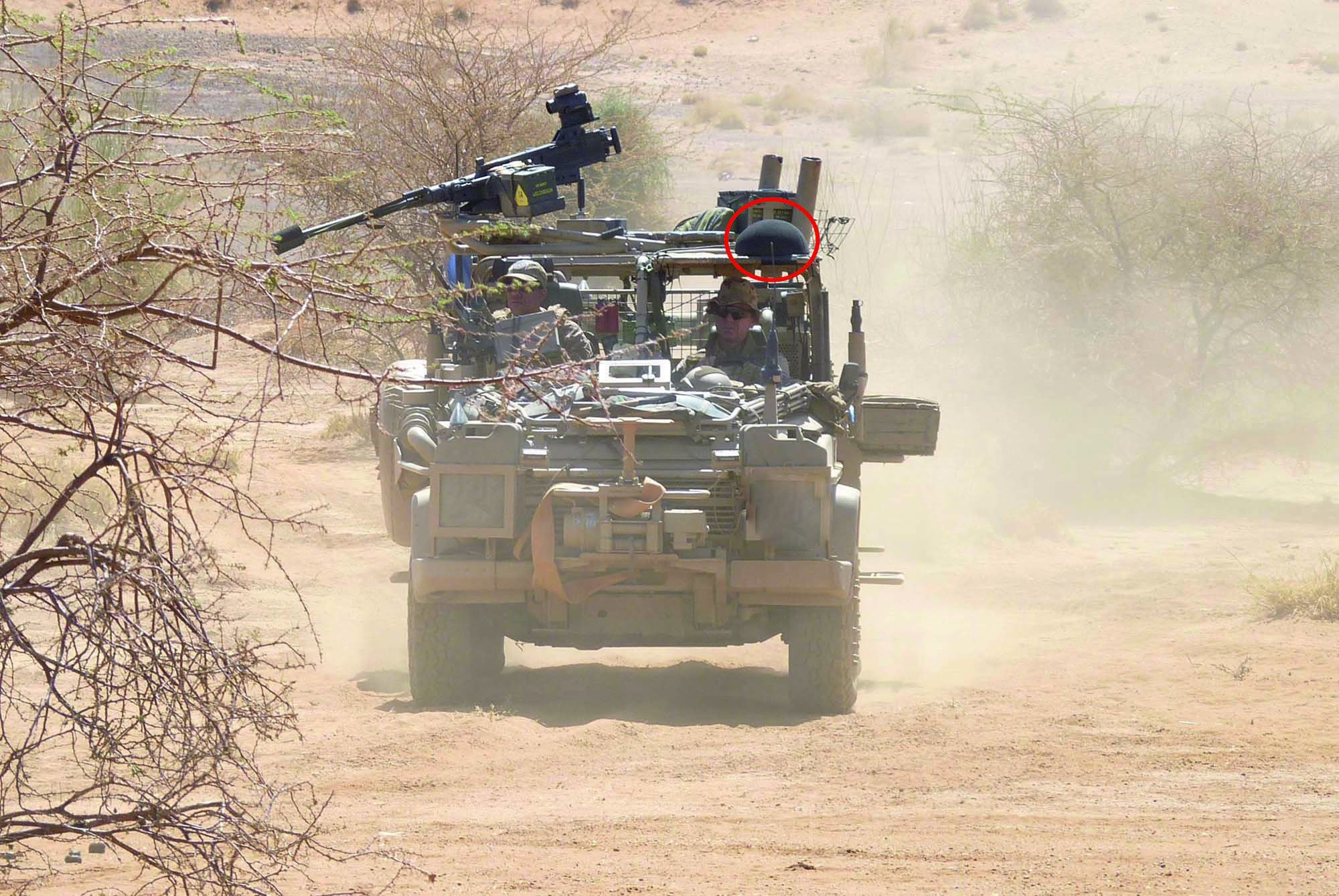
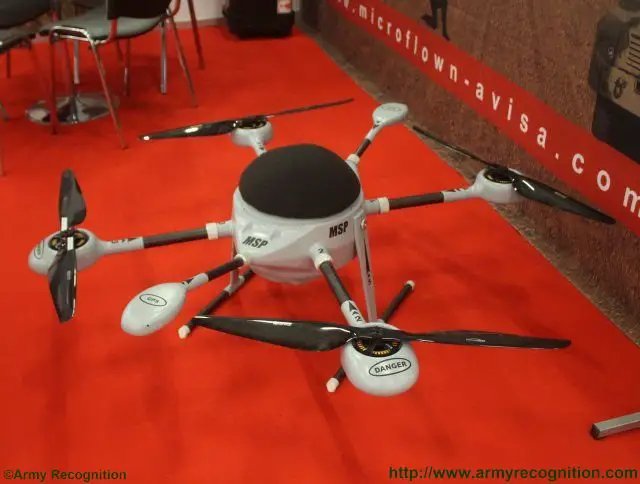
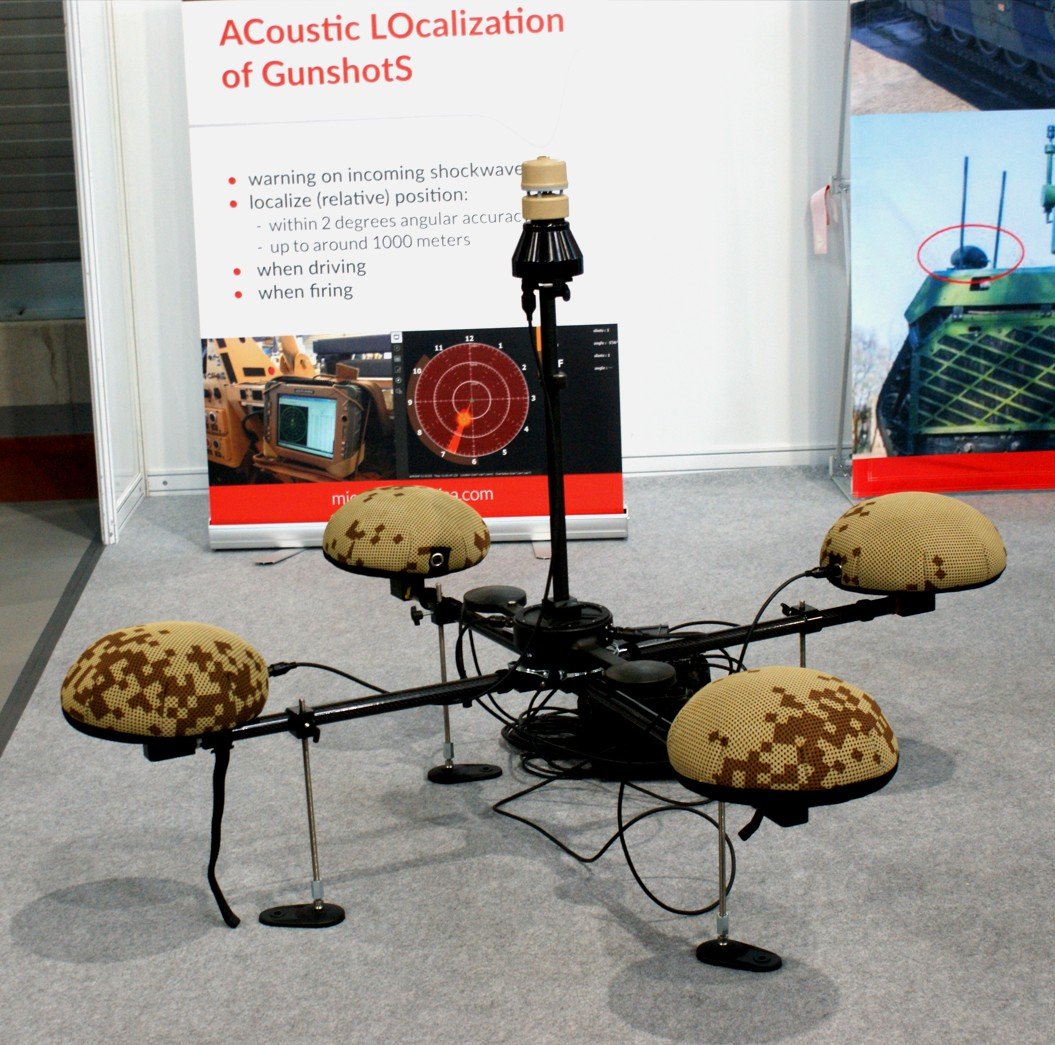
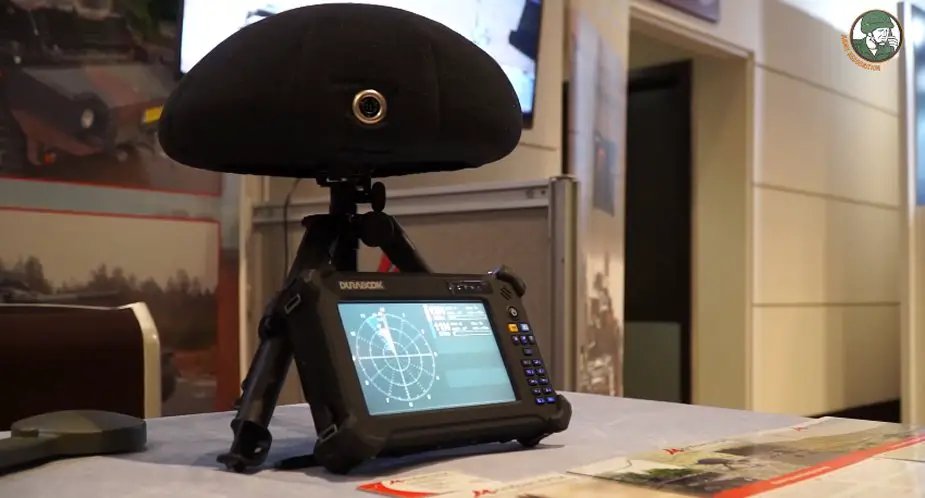
Photos: www.acoustic-location.alibaba.sk · www.armyrecognition.com · www.valka.cz · www.janes.com
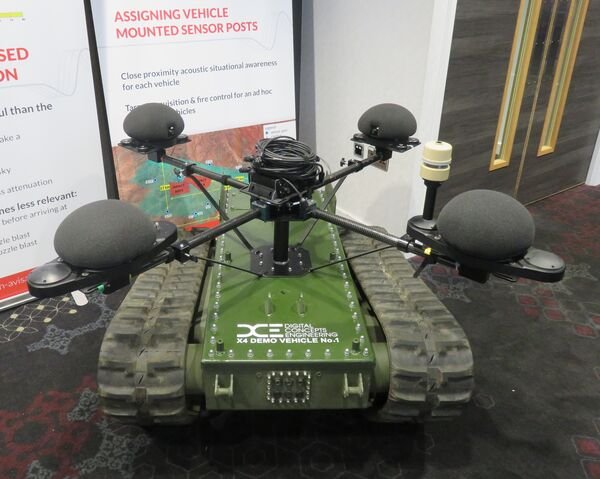
AMMS, the Acoustic Multi-Mission Sensor built by Microflown AVISA, is a hostile-fire detection unit designed to give a single mounting point — a vehicle roof, a forward-operating-base mast, a fixed installation — full 360-degree awareness of incoming small-arms fire, rocket-propelled grenades, mortars and artillery. The Dutch firm fielded the system from around 2014, growing out of more than a decade of work on acoustic vector sensing originally developed at the University of Twente. By the mid-2010s it had been adopted by ground forces in the Netherlands, the United States and Germany.
The technology that makes the sensor unusual is the Microflown itself — a MEMS-based transducer that measures acoustic particle velocity rather than pressure. Conventional gunshot-detection systems require an array of microphones spaced apart so the system can triangulate a shooter from time-of-arrival differences across the array. AMMS does not. A small cluster of co-located Microflown elements, each sensitive to motion in a single axis, resolves the direction of an acoustic event from a single point in space. That collapses the hardware footprint to a unit compact enough to fit on a patrol vehicle or a slim mast, and it allows both azimuth and elevation to be reported in real time. Onboard classification distinguishes the muzzle-blast and supersonic shockwave signatures of small arms from the lower-frequency reports of RPGs, recoilless rifles, mortars and artillery, and pushes range and weapon class to a vehicle commander or operations cell within fractions of a second.
Operationally the sensor has appeared in Dutch and allied deployments since the closing phase of the ISAF mission in Afghanistan, where earlier vehicle-mounted prototypes were trialled on patrol vehicles, and on a series of NATO base-protection installations in the years that followed. The Royal Netherlands Army integrated it into force-protection upgrades for forward bases, and the US Army and elements of the Bundeswehr have run it in evaluation and operational roles. The company has not published deployment counts, and most contract values remain commercially confidential, but the unit is now a recurring fixture at NATO infantry-protection demonstrations and has been quietly delivered to a wider set of European customers than the public list suggests.
Microflown AVISA has continued to develop its acoustic vector sensor family alongside AMMS, applying the same particle-velocity principle to counter-UAS detection — turned on the low-frequency hum of a small quadcopter rather than the sharp transient of a rifle shot. Within counter-sniper and hostile-fire detection AMMS competes with array-based systems such as Raytheon BBN’s Boomerang and QinetiQ’s EARS, and distinguishes itself primarily through that single-point form factor: one small unit, one cable, one place to mount it.