
BAE Systems
UK prime — Type 26 frigates, Tempest sixth-gen fighter, Falconworks autonomous systems, naval drone defensive escorts.
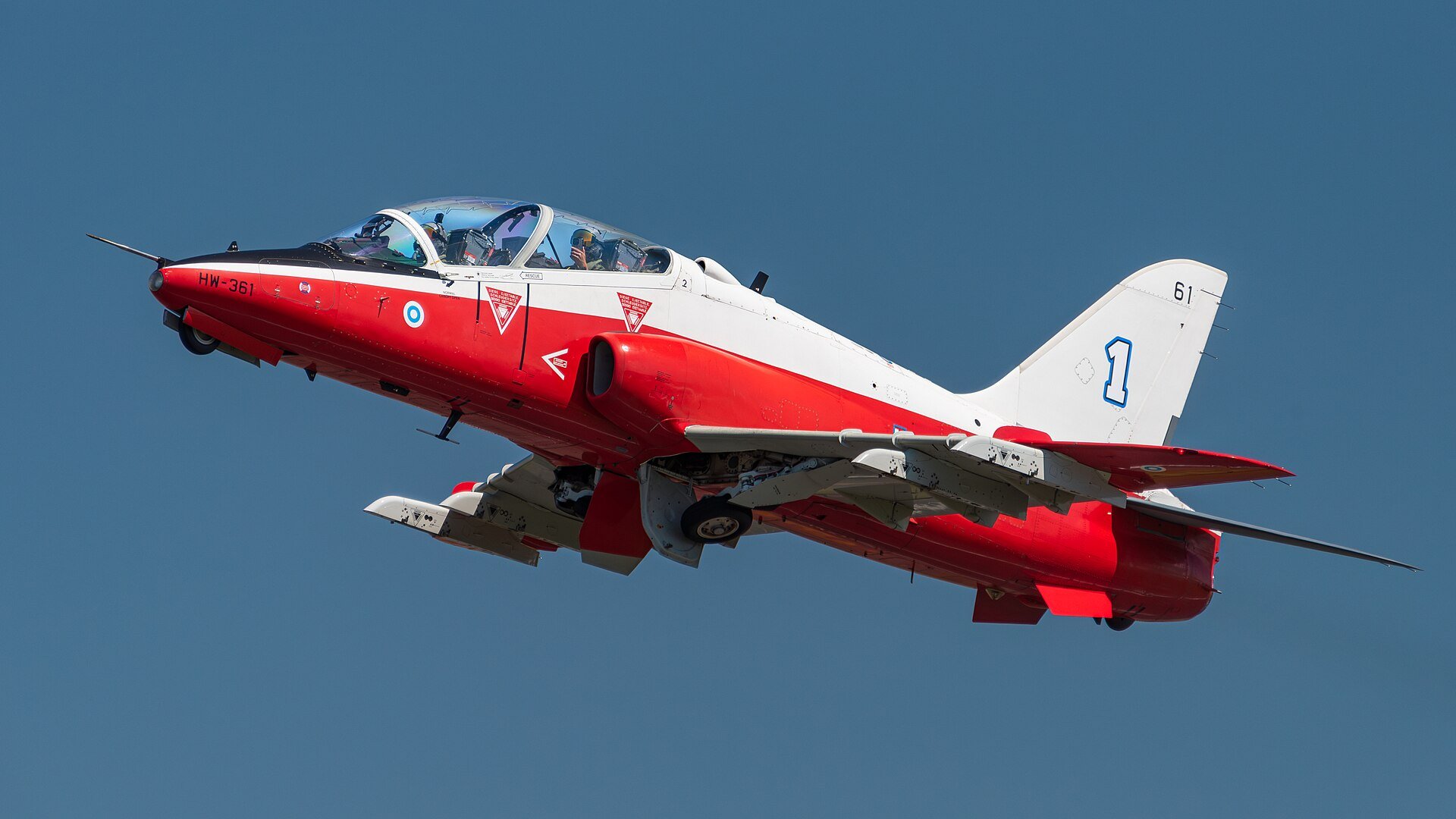
BAE Systems took its current shape on 30 November 1999, when British Aerospace absorbed Marconi Electronic Systems — the defence electronics and naval shipbuilding arm of GEC — in a £7.7 billion merger. The combined group is headquartered in London and chaired by Cressida Hogg; the chief executive since 2017 is Charles Woodburn, a former Schlumberger engineer who came in as COO the year before. The company employs around 100,000 people worldwide and trades as BA. on the London Stock Exchange. Its largest footprints sit in the United Kingdom and the United States, where the BAE Systems Inc. subsidiary is one of the six biggest suppliers to the US Department of Defense; Saudi Arabia and Australia round out the top customer markets.
The product line spans every domain. At sea, BAE is building the Type 26 anti-submarine frigate — known as the City class in Royal Navy service, the Hunter class in Australia, and the River class in Canada — at its Govan and Scotstoun yards on the Clyde. The Type 26’s mission bay is large enough to carry uncrewed surface vessels alongside boats and helicopters, which is shaping how the Royal Navy intends to deploy USVs as forward sensors and defensive escorts. Falconworks, BAE’s air-sector advanced projects unit, is working on a family of these unmanned escorts armed with electronic warfare payloads or the Bofors 40 MK4 cannon for shooting down attacking drones.
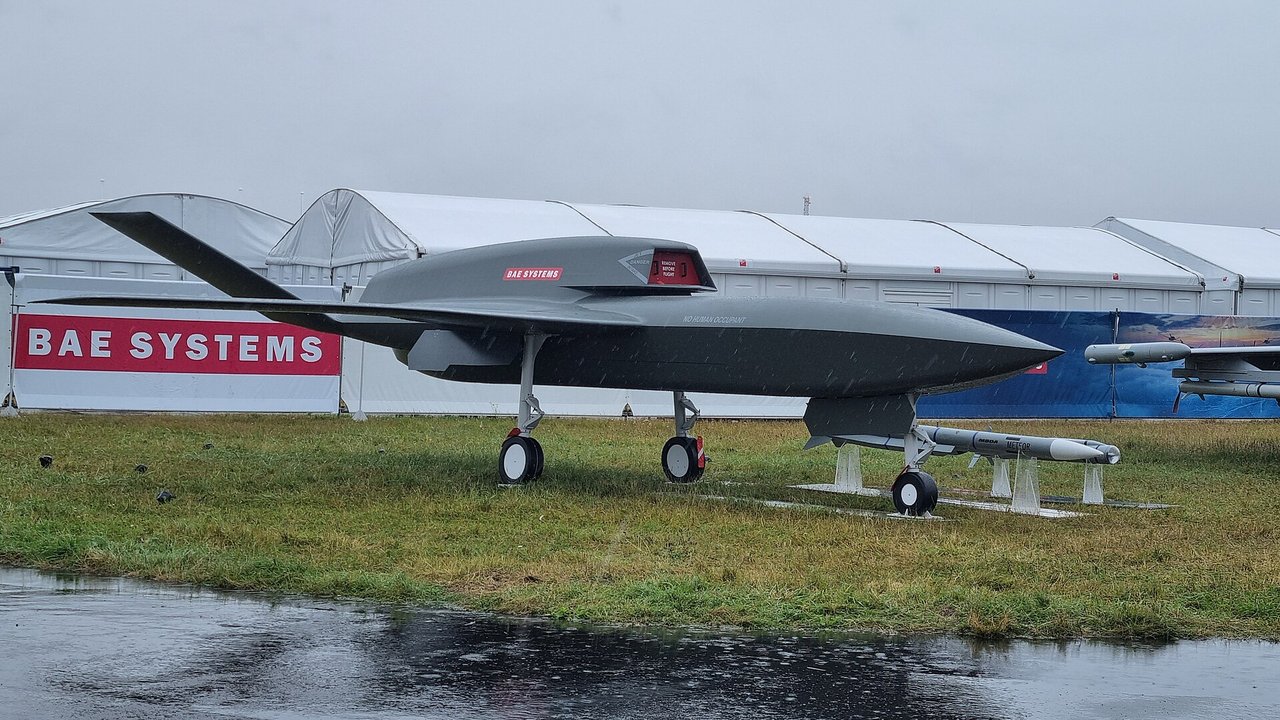
In the air, BAE leads the British share of the Global Combat Air Programme, the trilateral effort with Italy’s Leonardo and Japan Aircraft Industrial Enhancement Co. to deliver a sixth-generation fighter — known in the UK as Tempest — by 2035. The Tempest is being designed from the start to fly alongside Collaborative Combat Aircraft, the autonomous loyal-wingman class the US, UK and Australia are all racing to field. With Lockheed Martin Skunk Works, BAE is also developing the Adaptable Multi-Effect Unmanned System, a modular drone family that can be air-launched, ramp-dropped from a transport aircraft, or fired from a ship.
The order book reflects the spread. The Type 26 programme alone is worth roughly £8 billion to BAE in the UK; the Hunter-class deal with Australia is around AUD 35 billion across nine ships, although Canberra has cut the purchase to six. BAE owns 37.5 per cent of MBDA, the European missile house, and builds the M777 howitzer, the AMPV armoured vehicle for the US Army, and the propulsion systems for the F-35. Group revenue for 2024 came in at £28.3 billion, with an order backlog above £77 billion after a year that included the AUKUS Pillar 1 submarine work — BAE is delivering the SSN-AUKUS attack boat with Rolls-Royce — and a string of European top-ups after Russia’s full-scale invasion of Ukraine.
Controversy has tracked the firm throughout its history. The Al Yamamah arms deals with Saudi Arabia drew a Serious Fraud Office investigation that was halted in 2006 on national-security grounds; BAE later paid roughly $400 million to settle related charges with the US Department of Justice in 2010. More recent scrutiny has focused on its continuing supply of components for Royal Saudi Air Force Typhoons used in Yemen, and on the Bundestag’s reluctance to clear German-made parts for onward export. The company’s position — that export licensing is a matter for governments — has not satisfied campaigners.
What sets BAE apart from its European peers is breadth. Airbus is stronger in transport and helicopters, Leonardo in rotorcraft and electronics, Thales in sensors; BAE is the only firm on the continent that builds frigates, fighters, missiles, armoured vehicles and submarines under one roof, and the only one with a US subsidiary large enough to win prime contracts from the Pentagon. That dual identity — British prime at home, top-six US supplier across the Atlantic — is the spine of the company.
Products
Drones
Adaptable Multi-Effect Unmanned System (with Lockheed)
Modular drone family being developed with Lockheed Martin Skunk Works — air-launched, ramp-dropped, or maritime-launched.
Project Mosquito
Uncrewed loyal wingman demonstrator designed to fly alongside Typhoon and Tempest, performing ISR, electronic warfare, and strike tasks autonomously.
Introduced 2023
PHASA-35
Solar-electric high-altitude pseudo-satellite UAV designed for months-long persistent surveillance and communications relay.
Introduced 2020
Taranis
Stealth autonomous UCAV demonstrator with intercontinental range — BAE's proof of concept for fully autonomous combat air operations.
Introduced 2013
Sea drones
Falconworks USV concepts
Forward-deployed unmanned surface vessels armed with electronic warfare or drone-killing cannon, intended as defensive escorts for warships.
Missiles & loitering munitions
Aircraft
Tempest / GCAP
Sixth-generation fighter under development with Italy and Japan. Designed to operate alongside Collaborative Combat Aircraft.
Eurofighter Typhoon
Twin-engine multirole fighter built by the BAE-Airbus-Leonardo consortium, the workhorse of several European air forces.
Introduced 2003
F-35 Lightning II (rear fuselage and systems)
BAE Systems is the second-largest industrial partner on the F-35 programme, building the rear fuselage and active inceptor systems.
Introduced 2015
GCAP (Global Combat Air Programme)
Sixth-generation stealth fighter led by BAE Systems for the UK, Italy, and Japan — targeting entry into service in 2035.
Introduced 2022
Tempest
Sixth-generation stealth fighter under the UK-led Global Combat Air Programme, designed to operate alongside autonomous loyal-wingman drones.
Introduced 2035
Eurofighter Typhoon
4.5-generation multi-role combat aircraft built by a four-nation European consortium — backbone of the RAF, Luftwaffe, and several allied air forces.
Introduced 2003
Hardware
STRIKER II
Helmet-mounted display for Typhoon and F-35 pilots — fuses targeting symbology with integrated night vision for off-boresight engagement.
Introduced 2016
Integrated systems
Naval
Astute-class submarine
Royal Navy nuclear-powered attack submarine built at BAE's Barrow-in-Furness yard.
Introduced 2010
Type 26 Frigate
Anti-submarine-warfare frigate sold to the UK, Australia (Hunter class) and Canada (River class), built around quiet acoustics and mission-bay flexibility.
Introduced 2027
Type 31 Frigate
Lower-cost general-purpose frigate for the Royal Navy, with mission-bay capacity for unmanned systems.
Introduced 2027
Type 45 Daring-class Destroyer
Royal Navy area air-defence destroyer built around the Sampson AESA radar and Sea Viper missile system.
Introduced 2009
Gallery
Sources
- en.wikipedia.org/wiki/BAE_Systems (2026-05-02) — Encyclopedic entry — confirms 1999 formation, ~100k workforce.
- en.wikipedia.org/wiki/Charles_Woodburn (2026-05-02) — Charles Woodburn — CEO since July 2017.
- www.defensenews.com/global/europe/2025/09/11/bae-sees-forward-deployed-naval-drones-doing-air-defense-for-warships/ (2026-05-02) — Defense News — BAE's naval drone defensive-escort concept.
- www.twz.com/air/lockheed-martin-joins-forces-with-bae-systems-on-new-ultra-adaptable-drone (2026-05-02) — TWZ — Lockheed/BAE adaptable unmanned-system partnership.
Books
Sources (9)
- en.wikipedia.org/wiki/BAE_Systems
- www.wikidata.org/wiki/Q739416
- en.wikipedia.org/wiki/BAE_Systems
- en.wikipedia.org/wiki/BAE_Systems
- en.wikipedia.org/wiki/BAE_Systems rate limited
- en.wikipedia.org/wiki/BAE_Systems
- en.wikipedia.org/wiki/BAE_Systems rate limited
- en.wikipedia.org/wiki/BAE_Systems rate limited
- en.wikipedia.org/wiki/BAE_Systems