GCAP (Global Combat Air Programme)
Sixth-generation stealth fighter led by BAE Systems for the UK, Italy, and Japan — targeting entry into service in 2035.
Aircraftby BAE SystemsIntroduced 2022
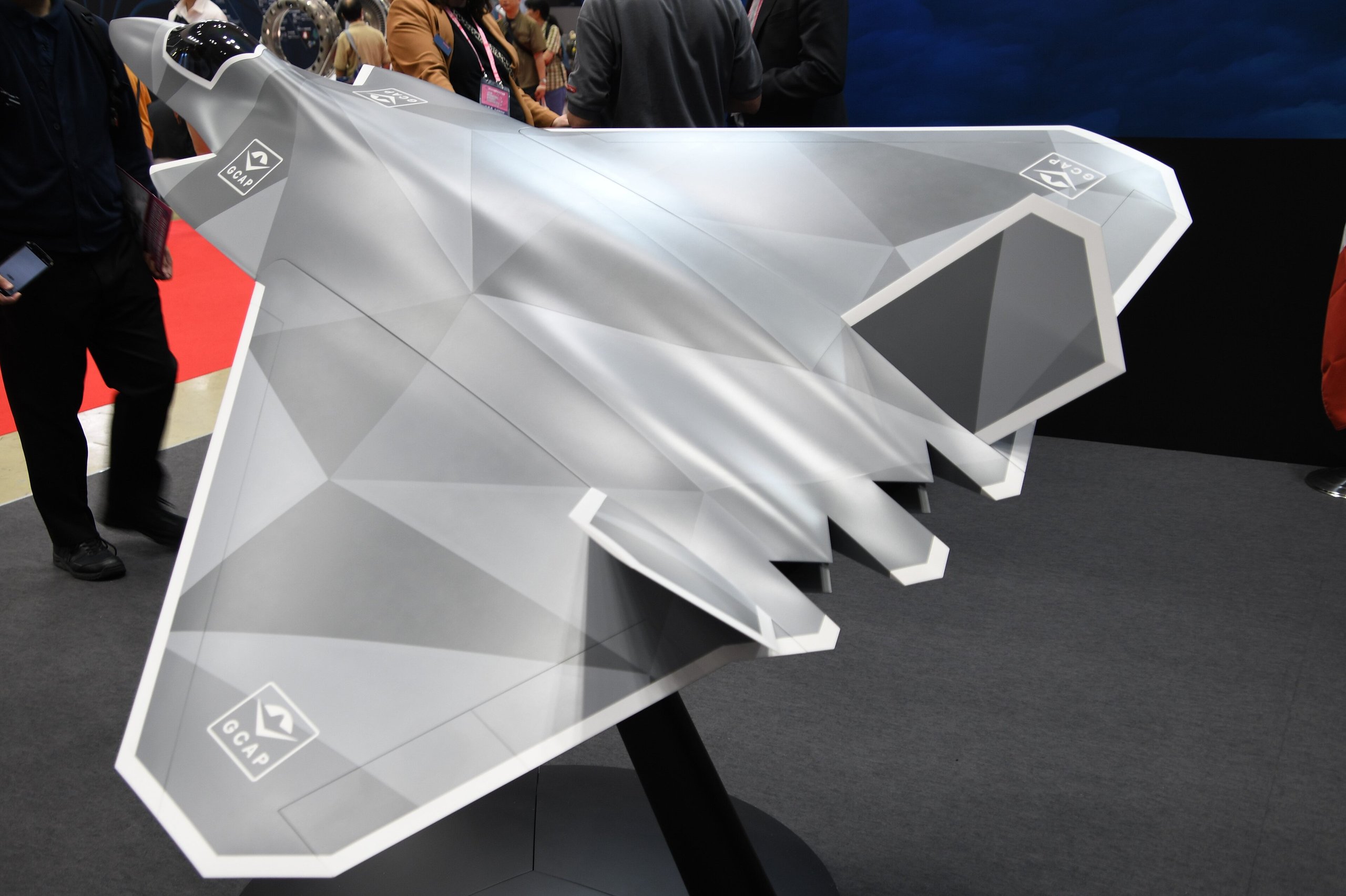
Photo: Wikipedia
The Global Combat Air Programme, known as GCAP, is a sixth-generation crewed combat aircraft development jointly undertaken by the United Kingdom, Italy, and Japan. The trilateral partnership was formalised in Tokyo in December 2022, merging the UK-Italy Tempest concept with Japan’s F-X programme, and its stated aim is to field a next-generation fighter to replace the Eurofighter Typhoon in British and Italian service and the Mitsubishi F-2 in Japanese service by 2035. Industrial leadership rests with BAE Systems in the UK, Leonardo in Italy, and Japan Aircraft Industrial Enhancement Co (JAIEC), which represents Mitsubishi Heavy Industries and other Japanese primes. In December 2023 the three governments signed a treaty establishing the GCAP International Government Organisation (GIGO), headquartered in the United Kingdom, and the industrial partners have since set up Edgewing as the joint venture that will act as prime contractor.
The design targets a twin-engine, low-observable airframe optimised for long range and heavy internal payload — priorities that reflect both the Indo-Pacific distances Japan is planning for and the European air-defence role the UK and Italy expect. Rolls-Royce, Avio Aero and IHI Corporation are developing the propulsion system, which the partners say will generate substantially more electrical power than current fighter engines to feed sensors, directed-energy effectors and cooling loads. Leonardo leads the Integrated Sensing and Non-Kinetic Effects (ISANKE) and Integrated Communications System (ICS) — a multifunction radio-frequency suite that combines an AESA radar, electronic warfare and secure networking through a shared array. The cockpit is being built around AI-assisted decision aids and sensor fusion intended to reduce pilot workload, and the aircraft is designed to command “loyal wingman” uncrewed platforms as a networked package rather than fly alone. Manufacturer briefings describe design targets including a Mach 2-plus top speed and an internal weapons bay; those figures are stated capabilities of the concept rather than measured performance of a flying aircraft.
Only the three partner nations are announced customers at this stage. Saudi Arabia has publicly expressed interest in joining, and Australia, Sweden and Canada have been discussed in defence press as possible partners; the UK has said further members must not delay the 2035 in-service target, a condition that has slowed those talks. Contract values are substantial but distributed across the three nations, and UK budget documents have cited figures in the region of £12 billion for the current development phase, with the total programme cost expected to run considerably higher.
A full-scale flying demonstrator, being assembled by BAE Systems at Warton in Lancashire, is planned to fly before the end of the decade to de-risk the airframe, systems integration and the digital engineering tooling being built alongside the aircraft itself. GCAP sits in the same generational bracket as the US Air Force’s Next Generation Air Dominance programme and the Franco-German-Spanish Future Combat Air System, and its partners have positioned it as the sixth-generation option for nations that want an alternative to either bloc.