PHASA-35
Solar-electric high-altitude pseudo-satellite UAV designed for months-long persistent surveillance and communications relay.
Droneby BAE SystemsIntroduced 2020
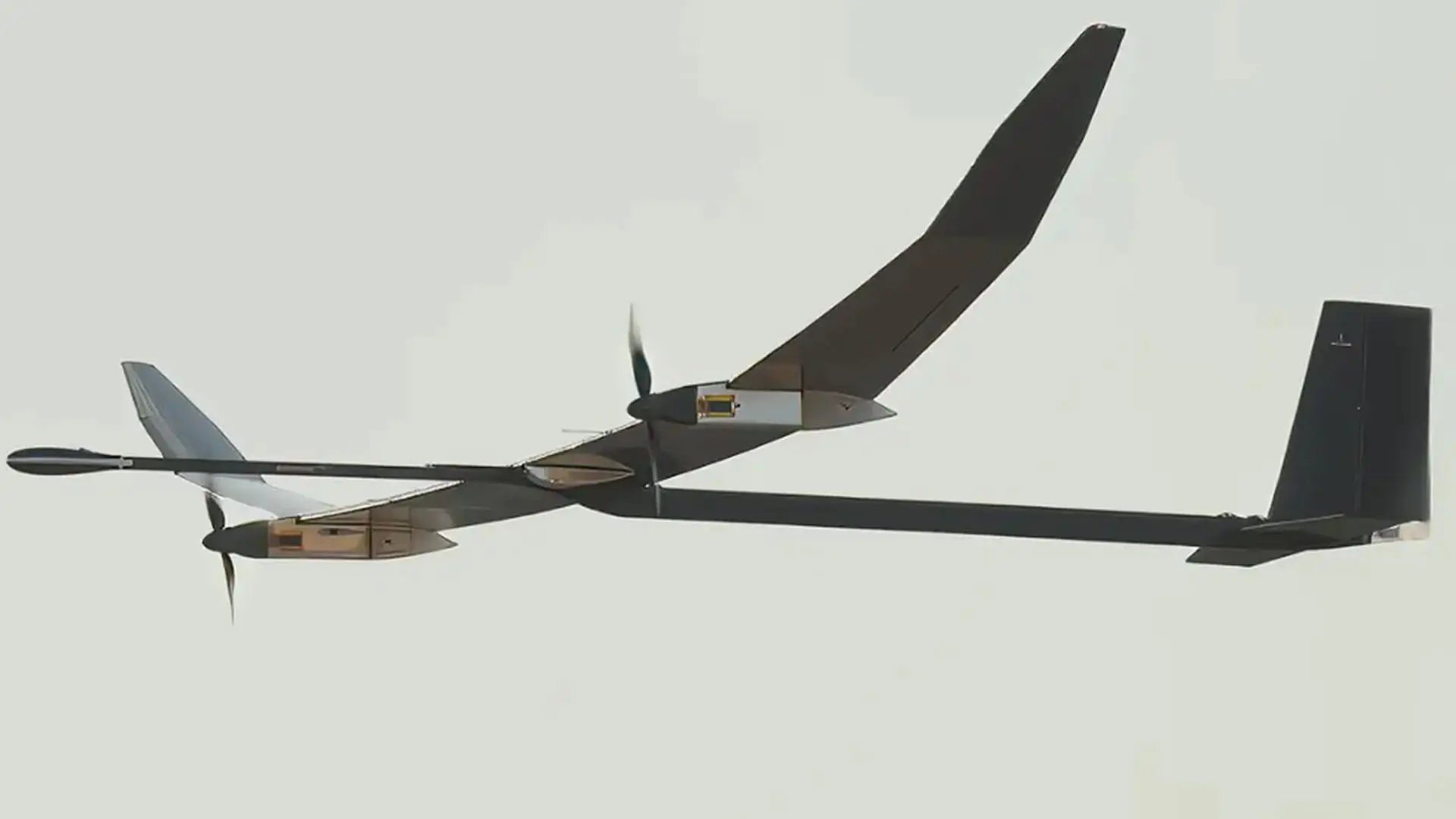
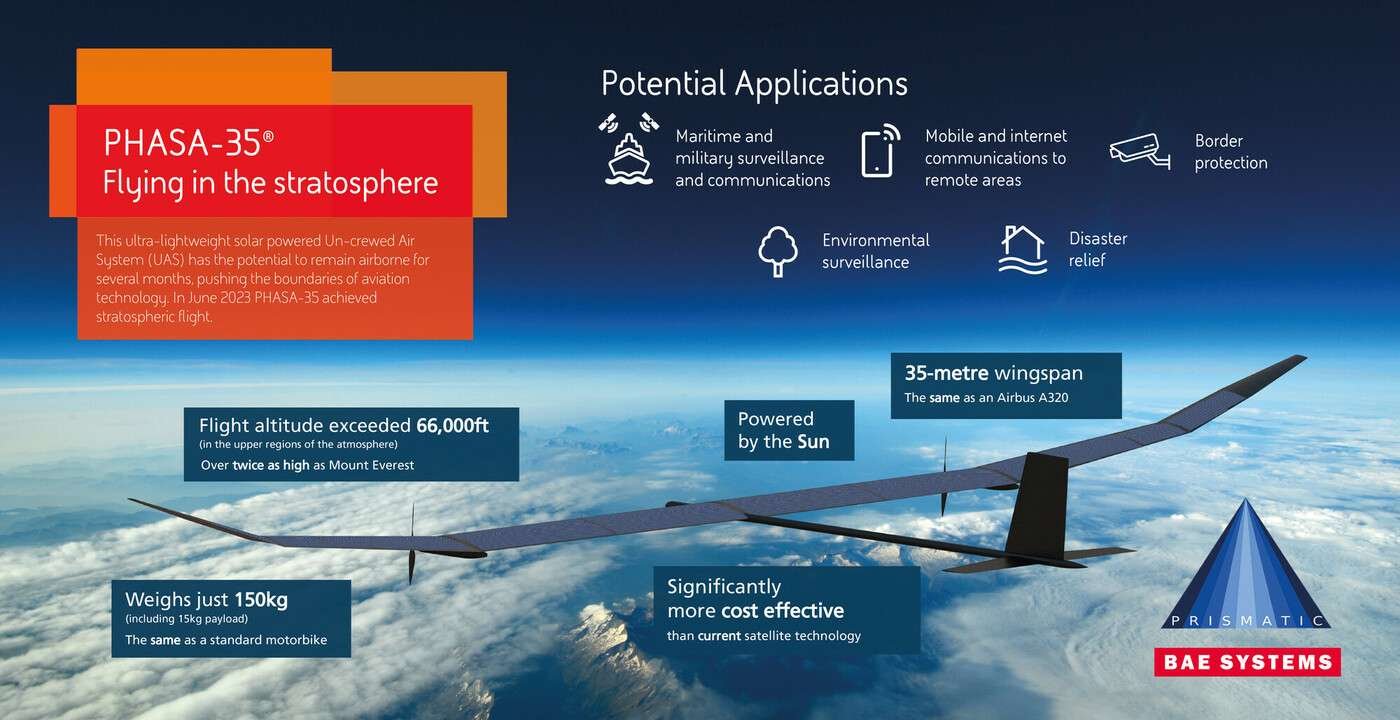
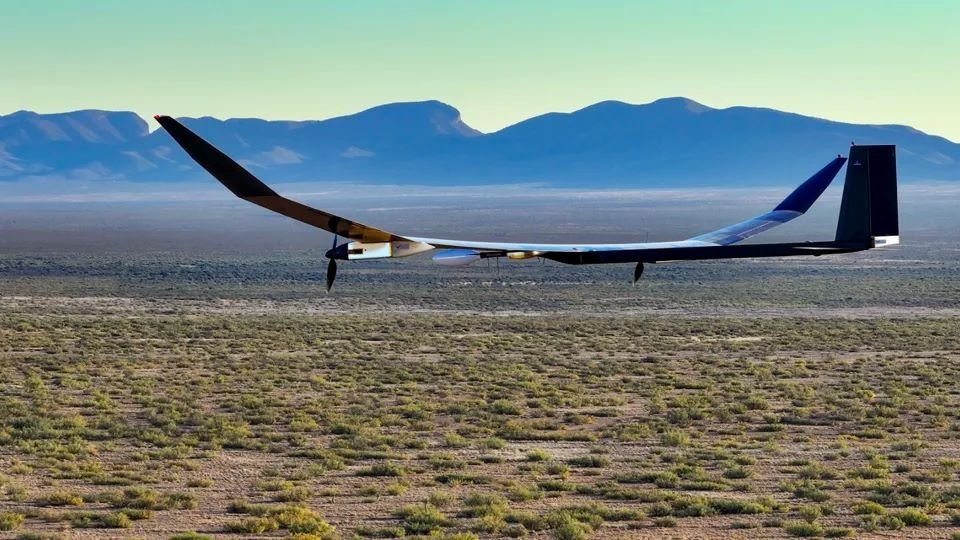
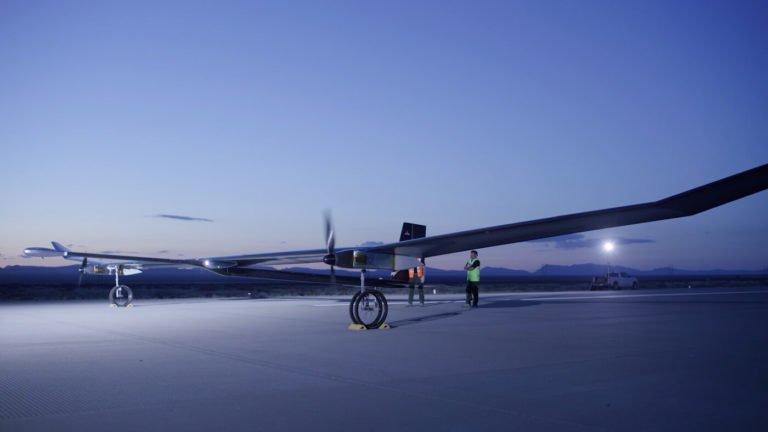
Photos: interestingengineering.com · english.defensearabia.com · www.aerospacetestinginternational.com · www.armyrecognition.com
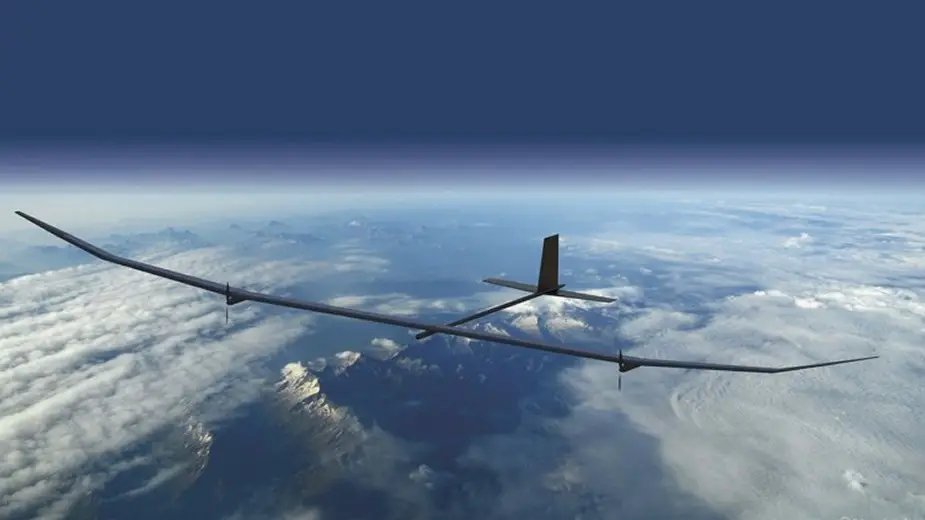
PHASA-35 is a solar-electric high-altitude pseudo-satellite developed by BAE Systems and its subsidiary Prismatic, the small Hampshire-based firm that led the aircraft’s early design and was acquired outright by BAE in 2019. The name refers to Persistent High Altitude Solar Aircraft and to the wing, which spans 35 metres yet carries a dry mass of only around 150 kilograms. It made its first flight in February 2020 at the Royal Australian Air Force’s Woomera Test Range and is intended to loiter in the stratosphere for months at a time, filling the operational gap between conventional aircraft and low-Earth-orbit satellites.
Structurally the aircraft is a long, high aspect-ratio flying wing built from carbon-fibre composite, driven by two small electric motors mounted on the trailing edge. BAE has described the design as using gallium arsenide solar cells across the upper wing surface, charging onboard lithium-ion batteries through the day to sustain flight overnight. Its cruise altitude is stated at roughly 21 kilometres — above weather, commercial air traffic and most jet-stream turbulence, and close to the atmospheric maximum for solar irradiance. The manufacturer quotes a payload capacity of up to 35 kilograms, and the announced mission fits include electro-optical and infrared imagery, signals intelligence, maritime domain awareness, and use as a stratospheric communications relay — a “cell tower in the sky” role BAE has emphasised for both defence and civil connectivity across areas without ground infrastructure.
Development has been iterative and largely funded through a mix of BAE internal investment and UK Ministry of Defence contracts, with the Defence Science and Technology Laboratory named as a partner on early trials. In June 2023 the aircraft completed its first stratospheric test flight from Spaceport America in New Mexico, a milestone BAE said validated the airframe’s ability to reach and operate at design altitude. A further campaign in 2024 pushed the flight envelope and payload trials, and the company has publicly cited interest from the UK, US and allied militaries, though no operational fleet has been announced. It has not been reported in combat.
PHASA-35 sits in a small field of high-altitude pseudo-satellites alongside Airbus’s Zephyr — the platform that held the fixed-wing endurance record until the Zephyr 8’s 64-day flight in 2022 ended in a crash over Arizona — and a handful of Chinese and American programmes at varying levels of maturity. Its distinctive claim is scale: a larger wing and heavier stated payload than Zephyr, which BAE argues opens up more useful sensor and relay fits, at the cost of a more demanding airframe to keep aloft for the months that make the concept worthwhile in the first place.