Infozahyst
Develops radio-monitoring, SIGINT, and electronic-warfare systems including the Plastun signals-intelligence suite.
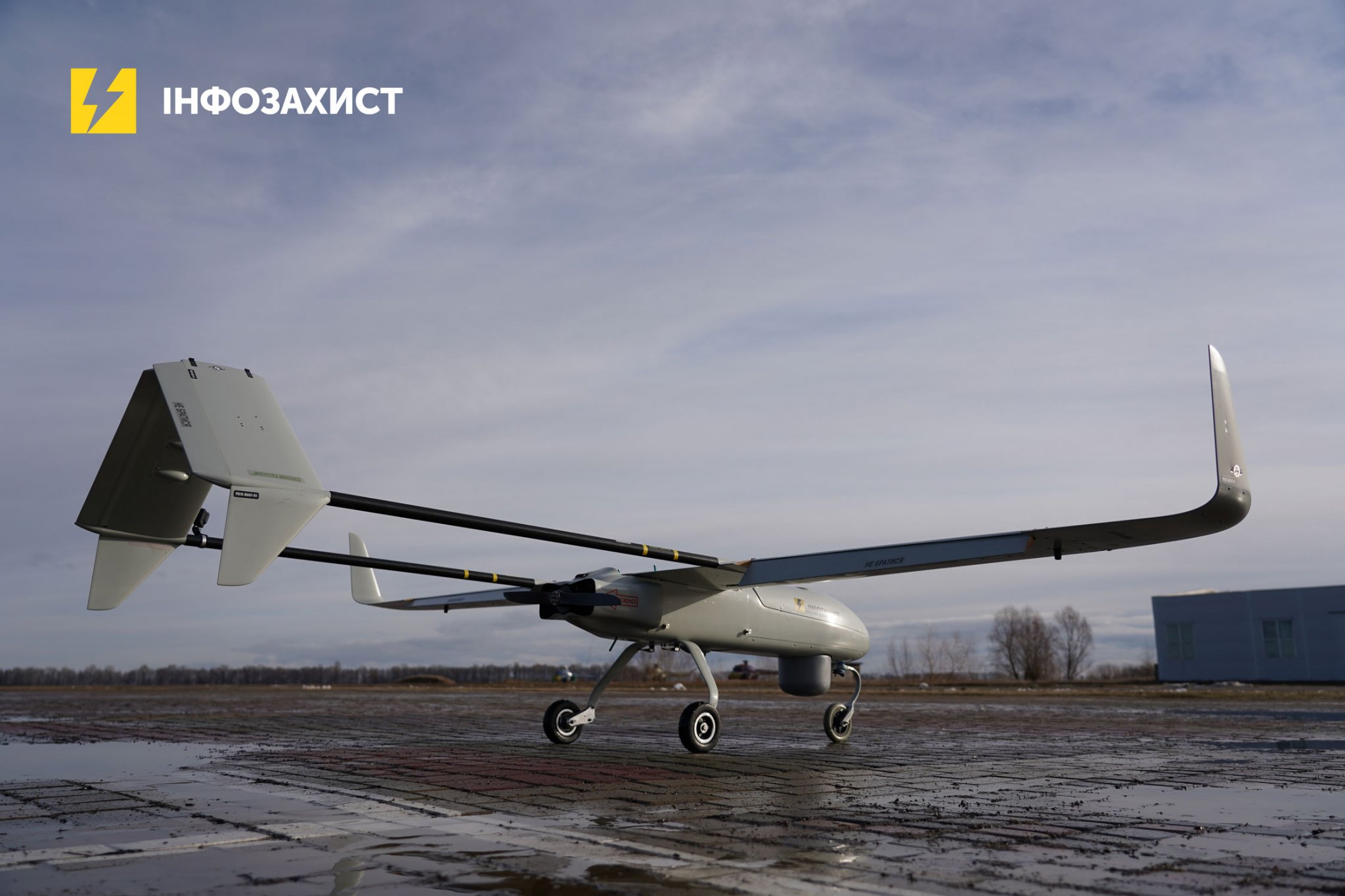
Infozahyst was founded in 2007 in Kyiv as a specialist supplier of radio-monitoring and signals-intelligence hardware to Ukraine’s defence and security services. For more than a decade it worked as a quiet domestic vendor, serving a small state-customer base rather than chasing commercial markets. Russia’s seizure of Crimea in 2014 and the war in Donbas that followed pushed the firm’s work to the centre of Ukrainian battlefield needs; the full-scale invasion of 2022 turned it into one of the recognised names in Ukraine’s wartime electronic-warfare industry.
The company’s flagship product is the Plastun family of signals-intelligence stations. Plastun receivers capture radio traffic across the HF, VHF and UHF bands, identify emitters by their fingerprints, and locate them with direction-finding antennas that can be mounted on vehicles, masts or fixed sites. Operators stitch bearings from multiple Plastun nodes together to build a moving picture of enemy radios, drone control links and command-post communications. Around the Plastun line Infozahyst sells radio-monitoring receivers, direction-finding complexes and software that fuses the take from these sensors into a single situational picture. Counter-drone work has become a growing line: the same wideband receivers that pick up Russian field radios also pick up the control links of Shahed-style loitering munitions and reconnaissance quadcopters, and the firm has positioned its sensors as a layer feeding Ukrainian air-defence and counter-UAS operations.
The Ukrainian Armed Forces and the State Border Guard Service are the company’s anchor customers, with Plastun and related kit fielded across the front from Kharkiv to the south. Western governments have studied the systems closely; Ukrainian SIGINT teams have shared detection data with NATO partners during the war, and Infozahyst’s hardware sits at the intersection of an export interest that has grown sharply as European militaries try to close their own electronic-warfare gaps after watching the Russia-Ukraine fight. The firm is privately held and does not publish revenue, headcount or shareholder figures.
The company’s profile sits inside a wider story about Ukraine’s wartime defence economy. Before 2022 the Ukrainian SIGINT sector was small and underfunded; the war accelerated procurement, opened state budgets to faster contracting and pulled in Western technology partners and venture money. Infozahyst has used that environment to push from a domestic specialist into a vendor that other militaries — particularly in central and northern Europe — now visit when they want a working answer to Russian electronic-warfare doctrine rather than a slide-deck capability. What it builds next is shaped less by trade-show roadmaps than by the daily feedback loop of a country at war with the largest electronic-warfare force on the continent.
Products
Hardware
APELLA
Automated multifunctional COMINT complex assessing the electromagnetic environment and recording radio emissions across 25–6000 MHz with up to four independent channels.
Introduced 2021
Bukovel-AD
Mobile multi-band electronic warfare system that detects and jams UAV control links and GNSS navigation signals to suppress enemy drone operations.
Introduced 2022
PLUTON
Passive drone-detection ESM system that identifies approaching UAVs by scanning 500–6000 MHz and matching emissions against a signature database at up to 70 km range.
Introduced 2024
RP-377UV1
Portable backpack-form electronic jammer for suppressing UAV uplink and downlink frequencies in the field.
Introduced 2019
Integrated systems
Khortytsia-M
Battle-management and EW situational-awareness system fusing SIGINT feeds for commanders.
Introduced 2020
Plastun
Mobile signals-intelligence and radio-monitoring complex used to detect, locate, and classify enemy emitters across HF/VHF/UHF.
Introduced 2015
Plastun-RCS
Radio-control reconnaissance station for detecting and locating drone command links and tactical radios.
Introduced 2018
RP-377LA Nota
Mobile vehicle-mounted electronic-warfare jammer for suppressing enemy radio communications and drone control channels.
Introduced 2017