
AeroVironment
Switchblade loitering munitions, Puma and Raven UAVs, plus the BlueHalo space and electronic-warfare stack.
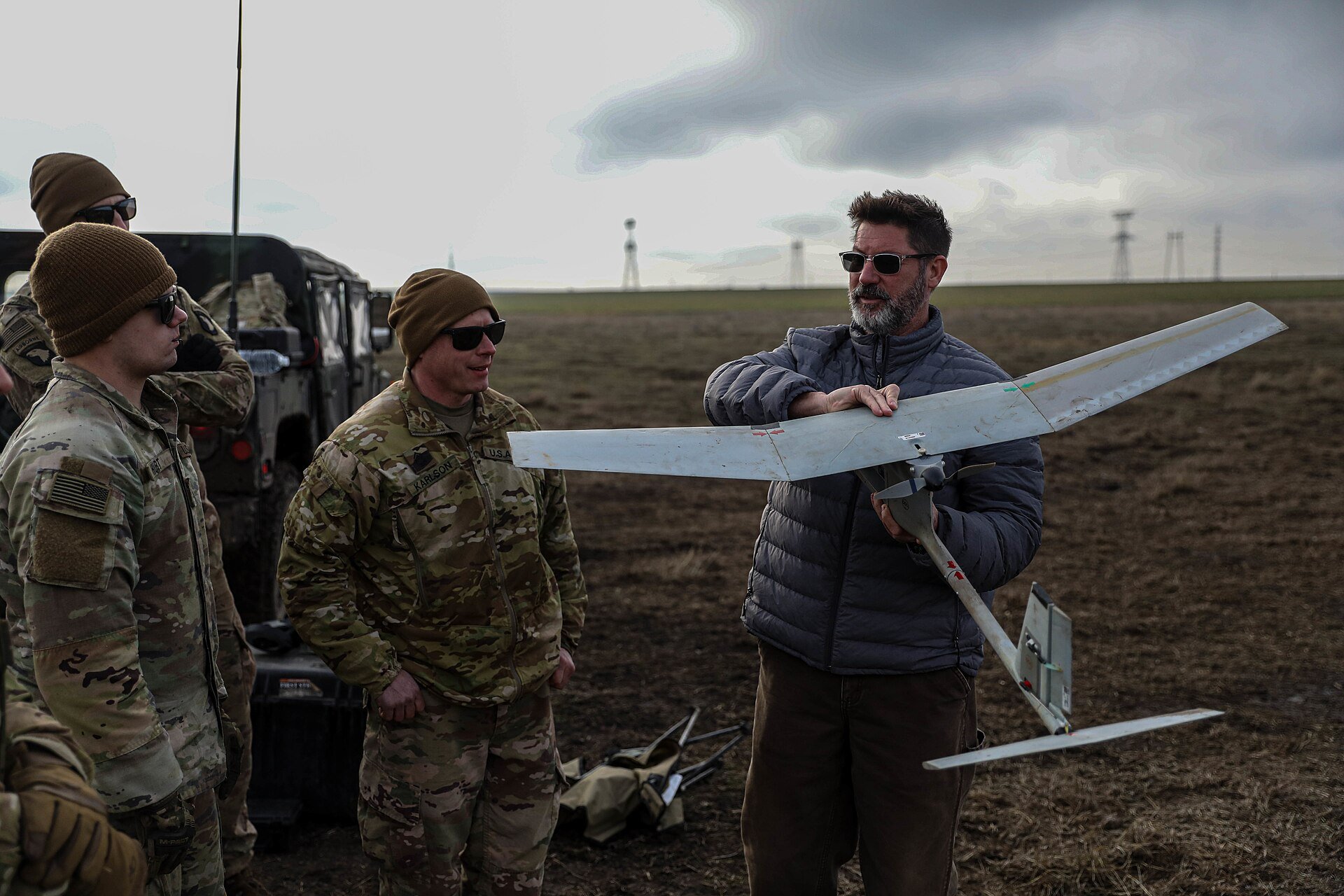
AeroVironment, which now brands itself simply as AV, is a publicly traded US defence-technology company (Nasdaq: AVAV) headquartered in Arlington, Virginia and run by Wahid Nawabi. Founded in 1971 by Paul MacCready, the Caltech engineer behind the first sustained human-powered aircraft, the firm spent decades on solar planes and research craft before becoming one of the Pentagon’s mainstay drone suppliers — a niche it now defends against newer entrants like Anduril.
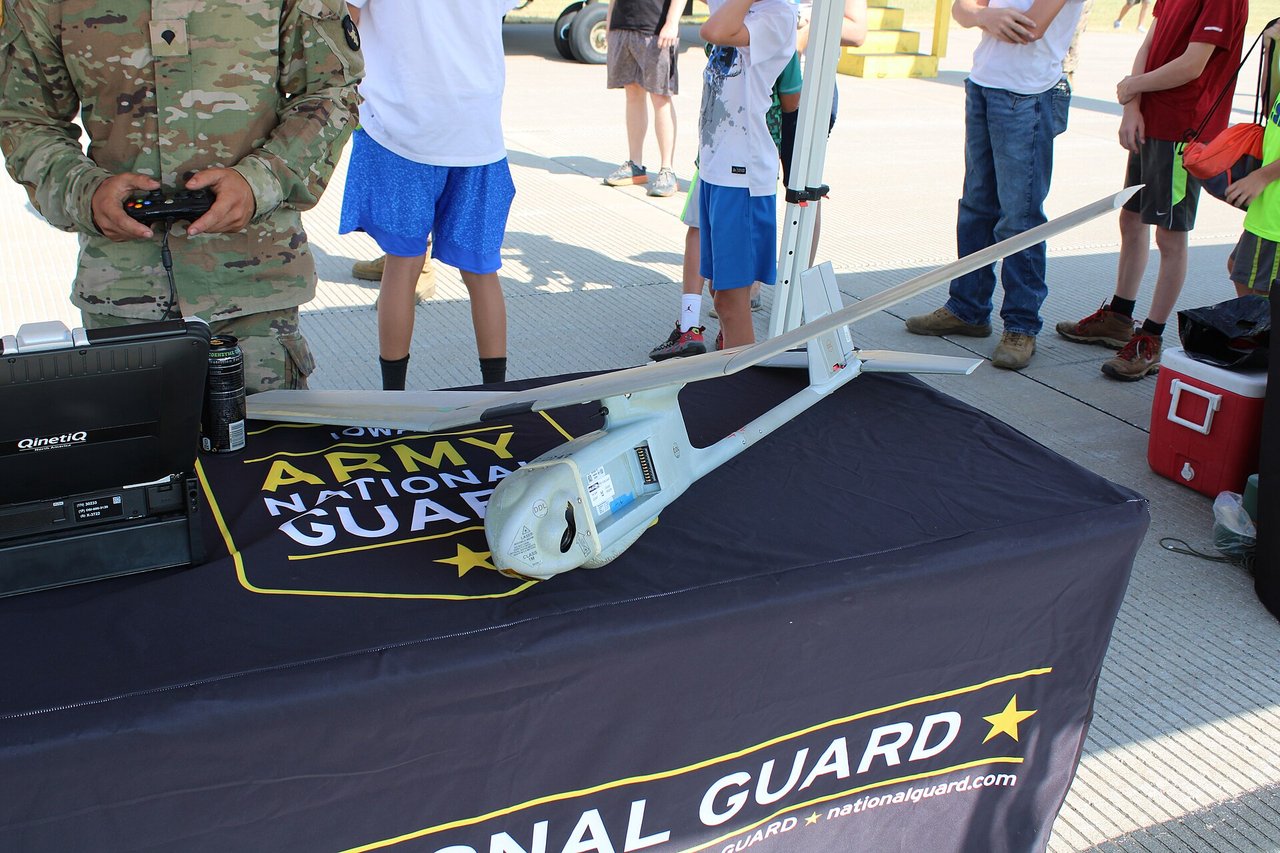
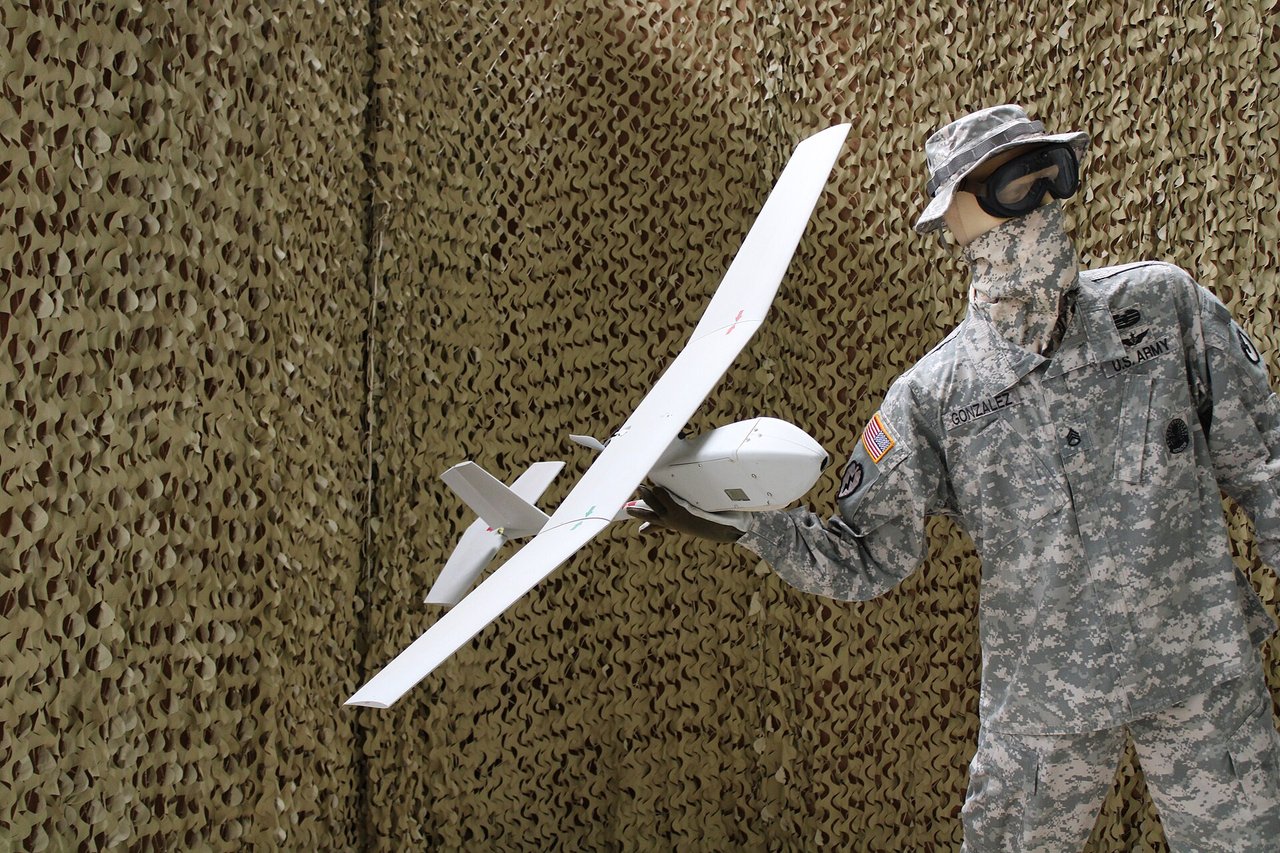
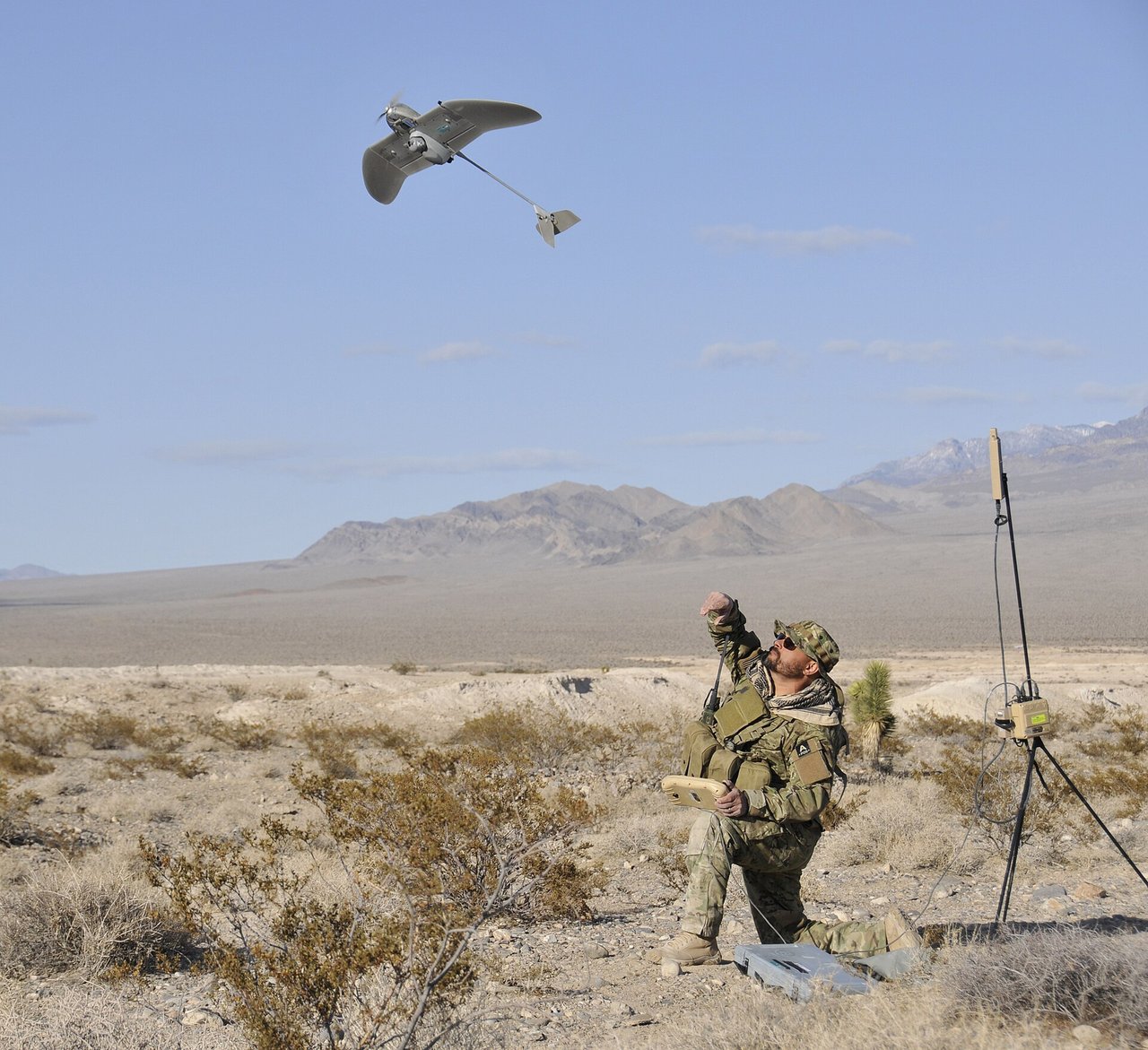
Its product line splits between reconnaissance drones and loitering munitions. The hand-launched RQ-11 Raven is the most-fielded small UAV in US Army history; the larger RQ-20 Puma — fitted with a GPS-denied autonomy kit shaped by Ukrainian front-line feedback on Russian jamming — handles longer-range ISR, alongside the miniature Wasp III and the Group-3 vertical-takeoff JUMP 20. On the strike side sits the Switchblade family: the backpack-portable Switchblade 300 and the heavier, anti-armour Switchblade 600, with roughly 6,000 units deployed across 55 customer countries. The US has supplied Switchblades to Ukraine in growing tranches since spring 2022, and that war has both validated and stress-tested the design against electronic warfare.
The company’s recent push is autonomy. The Switchblade 600 Block 2 adds onboard AI/ML automatic target recognition with EO/IR sensors, and in February 2026 the Army placed a $186 million order under a $990 million contract. Red Dragon, unveiled in May 2025, goes further: a software-defined, fully-autonomous-capable one-way attack drone with a 400-plus-kilometre range that needs neither continuous operator input nor satellite navigation, picked up by the Army in March 2026.
The defining shift came on 1 May 2025, when AV closed its roughly $4.1 billion all-stock acquisition of BlueHalo, a firm built on directed-energy weapons, space communications, counter-UAS and electronic warfare. The deal turned a small-drone house into an “all-domain” defence company of more than 3,750 staff, and lifted fiscal-2026 revenue guidance toward $2 billion.
- Stack
- ai-ml-target-recognition
- edge-autonomy
- gps-denied-navigation
- counter-uas
- directed-energy
Products
Drones
RQ-20 Puma
Hand-launched fixed-wing UAV; a new autonomy retrofit kit uses terrain mapping to navigate to target without GPS, developed in response to Ukraine front-line feedback.
RQ-11 Raven
Small reconnaissance UAV; the most-fielded military drone in the US Army's small-UAS history.
Wasp III
Miniature reconnaissance UAV.
JUMP-20
Group-3 VTOL fixed-wing UAS acquired through Arcturus UAV (2021).
JUMP 20
Medium-class fixed-wing VTOL UAV with 14-hour endurance for persistent ISR.
Introduced 2018
RQ-20 Puma
All-environment hand-launched ISR UAV with maritime and long-endurance variants.
Introduced 2008
Puma 3 AE
Hand-launched all-environment tactical UAV for persistent ISR at company and battalion level.
Introduced 2008
RQ-11 Raven
Hand-launched small ISR UAV — the most-produced military drone in the world.
Introduced 2003
Raven B
Lightweight hand-launched micro-UAV providing squad-level situational awareness without logistics overhead.
Introduced 2003
Wasp AE
Micro UAV for squad-level reconnaissance, optimised for low-acoustic signature and maritime ops.
Introduced 2012
Missiles & loitering munitions
Switchblade 300
Backpack-launched loitering munition; the original tube-launched lethal small UAS, used in volume by US forces and supplied to Ukraine since 2022.
Switchblade 600
Heavier loitering munition designed against armoured targets; ~6,000 deployed across 55 customer countries. The Block 2 variant adds onboard AI/ML automatic target recognition with EO/IR sensors and a maritime-rated airframe.
Red Dragon
Software-defined, fully-autonomous-capable one-way attack drone unveiled May 2025; 400-plus-km range, no reliance on continuous operator input or satellite navigation. The US Army placed a procurement order in March 2026.
ALTIUS-600
Multi-mission air-launched tube UAV that can carry ISR, EW, or strike payloads and operate as an Air-Launched Effect.
Introduced 2019
Switchblade 300
Backpackable tube-launched loitering munition with on-board electro-optical guidance for anti-personnel strikes.
Introduced 2012
Switchblade 600
Anti-armor loitering munition with extended range and a tandem-shaped-charge warhead.
Introduced 2020
Switchblade 900
Large-class vehicle-launched loitering munition combining Switchblade guidance with a heavy anti-armor warhead for extended-range precision strike.
Introduced 2023
Integrated systems
Gallery
Media
Sources
- en.wikipedia.org/wiki/AeroVironment (2026-06-22) — Encyclopedic summary — 1971 founding by Paul B. MacCready Jr., Arlington VA HQ, Nasdaq AVAV listing, Switchblade / Raven / Puma / Wasp III / JUMP 20 product line, Wahid Nawabi as CEO.
- www.defensenews.com/pentagon/2024/11/19/aerovironment-to-acquire-bluehalo-known-for-drone-swarm-tech-for-4b/ (2026-06-22) — Defense News (Nov 19 2024) — the ~$4.1B all-stock BlueHalo acquisition (directed energy, space, counter-UAS, EW, drone swarm), "all-domain" framing, Nawabi to lead the combined company.
- bluehalo.com/aerovironment-and-bluehalo-complete-transaction-creating-a-global-defense-technology/ (2026-06-22) — AV/BlueHalo close announcement — deal closed May 1 2025, combined company of more than 3,750 employees operating across 40+ states, headquartered in Arlington VA.
- www.sec.gov/Archives/edgar/data/0001368622/000110465925119660/avav-20251209xex99d1.htm (2026-06-22) — AV Form 8-K (FY2026 Q2) — record quarterly revenue $472.5M, Autonomous Systems and Space/Cyber/Directed-Energy segment split, raised FY2026 revenue guidance toward ~$2B.
- www.twz.com/air/red-dragon-highly-autonomous-one-way-attack-drone-unveiled (2026-06-22) — TWZ — Red Dragon unveiled May 2025 as a software-defined, highly/fully-autonomous-capable one-way attack drone; 400-plus-km range, no reliance on operator input or satnav.
- defensescoop.com/2026/03/23/army-buys-red-dragon-drones-aerovironment/ (2026-06-22) — DefenseScoop (March 2026) — US Army procurement order for Red Dragon long-range attack drones.
- www.avinc.com/lms/switchblade-600-block2 (2026-06-22) — AV product page — Switchblade 600 Block 2 onboard AI/ML automatic target recognition, EO/IR gimbaled sensors, longer endurance and maritime (IP67) rating.