JUMP 20
Medium-class fixed-wing VTOL UAV with 14-hour endurance for persistent ISR.
Droneby AeroVironmentIntroduced 2018


Photos: www.navalnews.com · www.edrmagazine.eu · The U.S. Army · AeroVironment
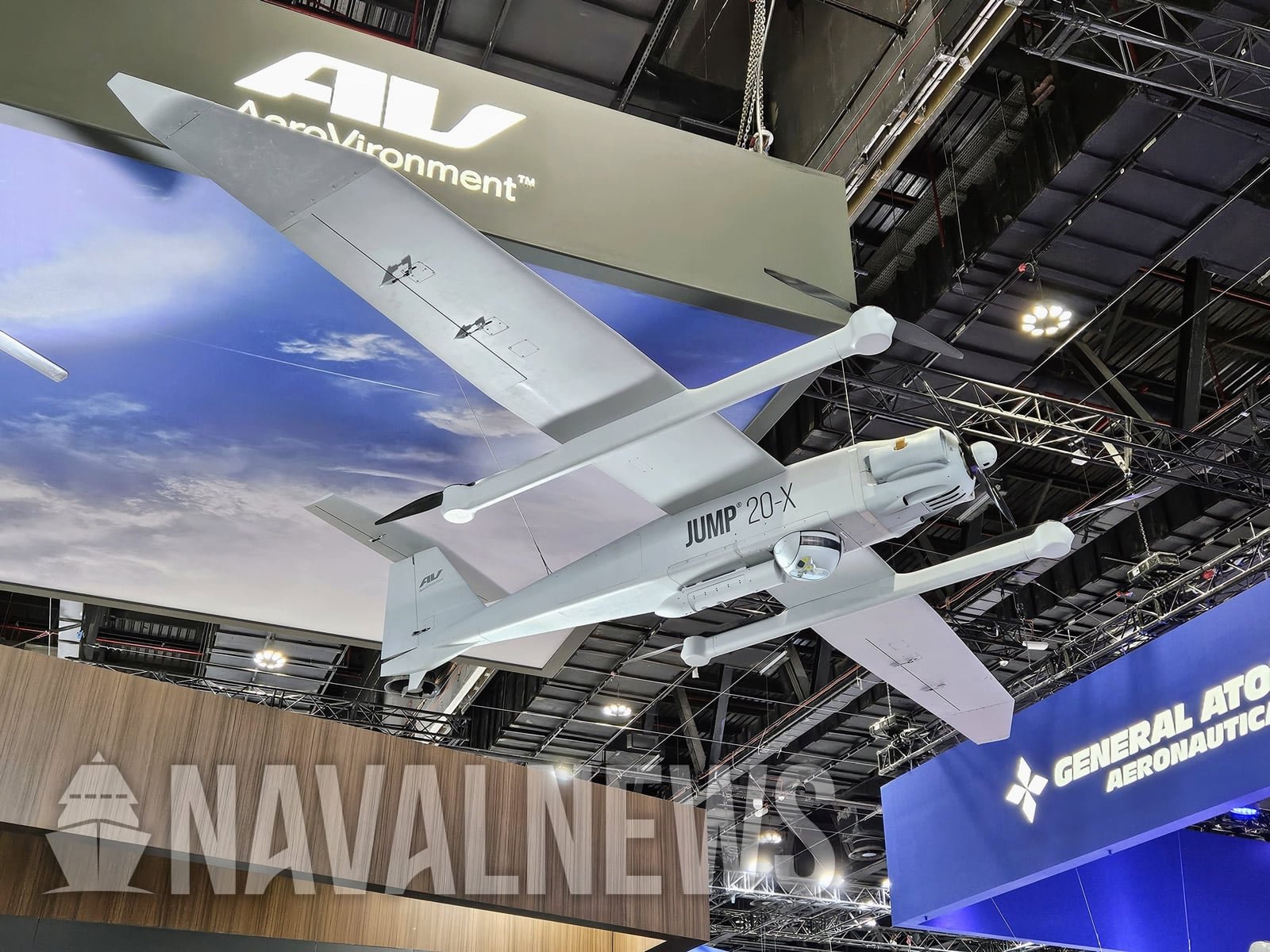
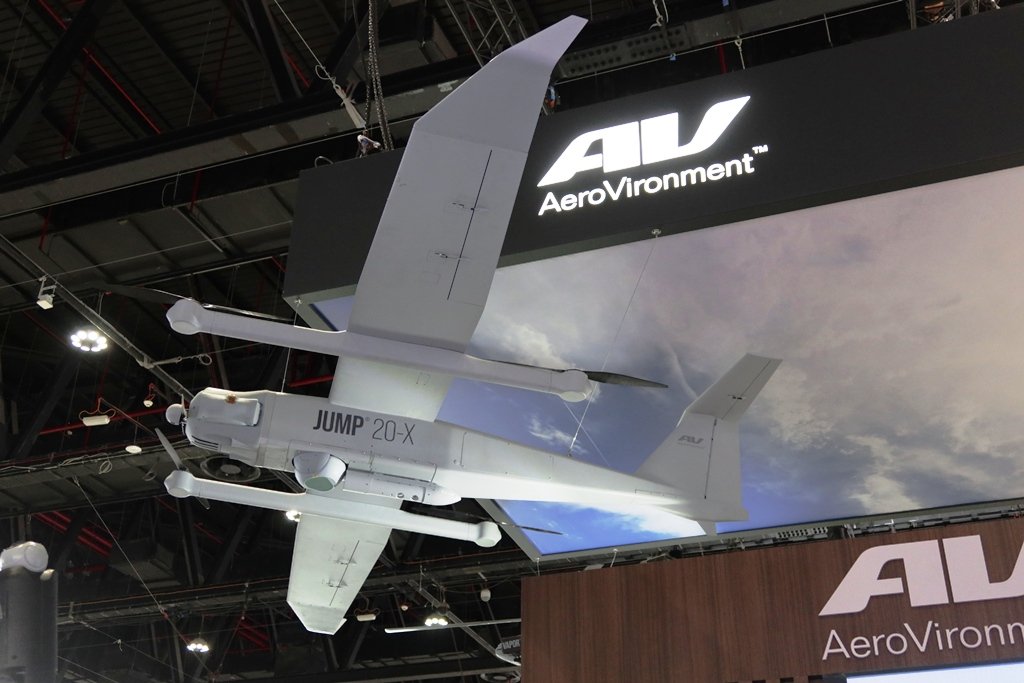
The JUMP 20 is a medium-class fixed-wing unmanned aerial vehicle with vertical takeoff and landing, manufactured by AeroVironment and originally developed by Arcturus UAV before AeroVironment acquired the company in 2021. Entering operational service in 2018, it occupies the gap between hand-launched tactical drones and larger Group 4 platforms — a runway-independent ISR aircraft that can be deployed from confined sites and recovered without nets, parachutes, or arresting gear. Its design brief is persistent overwatch: long endurance, modular payloads, and a launch-recovery footprint small enough for forward operating bases.
The aircraft transitions from quad-rotor lift to fixed-wing cruise after takeoff, folding the vertical-flight propellers out of the airstream once forward thrust takes over. That arrangement gives it roughly 14 hours of endurance and a 185-kilometre operational range while carrying up to 13 kilograms of payload across hardpoints in the nose, fuselage, and wings. The standard payload is a stabilised electro-optical/infrared turret, but the open architecture accommodates synthetic-aperture radar, signals-intelligence packages, and communications relays. Autonomy is handled by AeroVironment’s AVACS ground control software, which runs route planning, sensor cueing, and multi-aircraft coordination from a single operator station; the platform was designed from the outset for a two-person team to launch, fly, and recover without specialised infrastructure.
The United States Army has been the marquee customer, fielding the JUMP 20 under the Future Tactical Unmanned Aircraft System programme after selecting AeroVironment in August 2022 for an initial production contract reported at around 8 million dollars, with a programme ceiling that grew substantially as Brigade Combat Teams began transitioning off the legacy RQ-7 Shadow. The system has also been delivered to Ukraine, where Western-supplied tactical UAVs have been pressed into deep reconnaissance and artillery-spotting roles against Russian forces, and to a number of allied militaries that AeroVironment has not publicly named. Earlier deployments under Arcturus UAV ownership saw the aircraft used by US special operations elements and by partner forces in counter-terrorism roles across the Middle East and Africa.
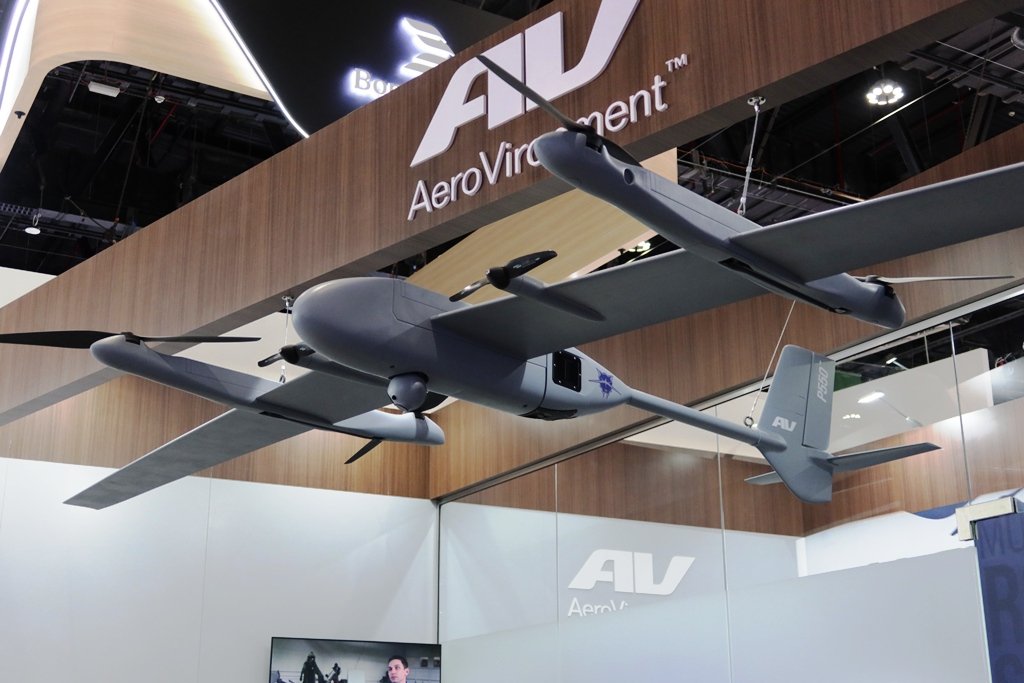
Development has continued under AeroVironment’s family-of-systems approach, with the JUMP 20 sitting alongside the smaller JUMP 20-X and the larger T-20 in a common operator ecosystem. Software updates have focused on AI-assisted target detection, automated pattern-of-life analysis on the EO/IR feed, and resilience to GPS denial — capabilities driven directly by lessons from Ukraine, where electronic-warfare pressure has forced rapid iteration across every Western tactical UAV in theatre.
Among Group 3 VTOL platforms, the JUMP 20 competes with systems like the Insitu ScanEagle and the Textron Aerosonde, but its runway-independent profile and endurance class have made it the US Army’s chosen replacement for Shadow — a position that has, in turn, made it one of the more widely fielded tactical reconnaissance drones in the Western inventory.