
Thales Nederland
Dutch radar and combat-system maker — SMART-L, GM200, SQUIRE, plus deep-learning sensor research.
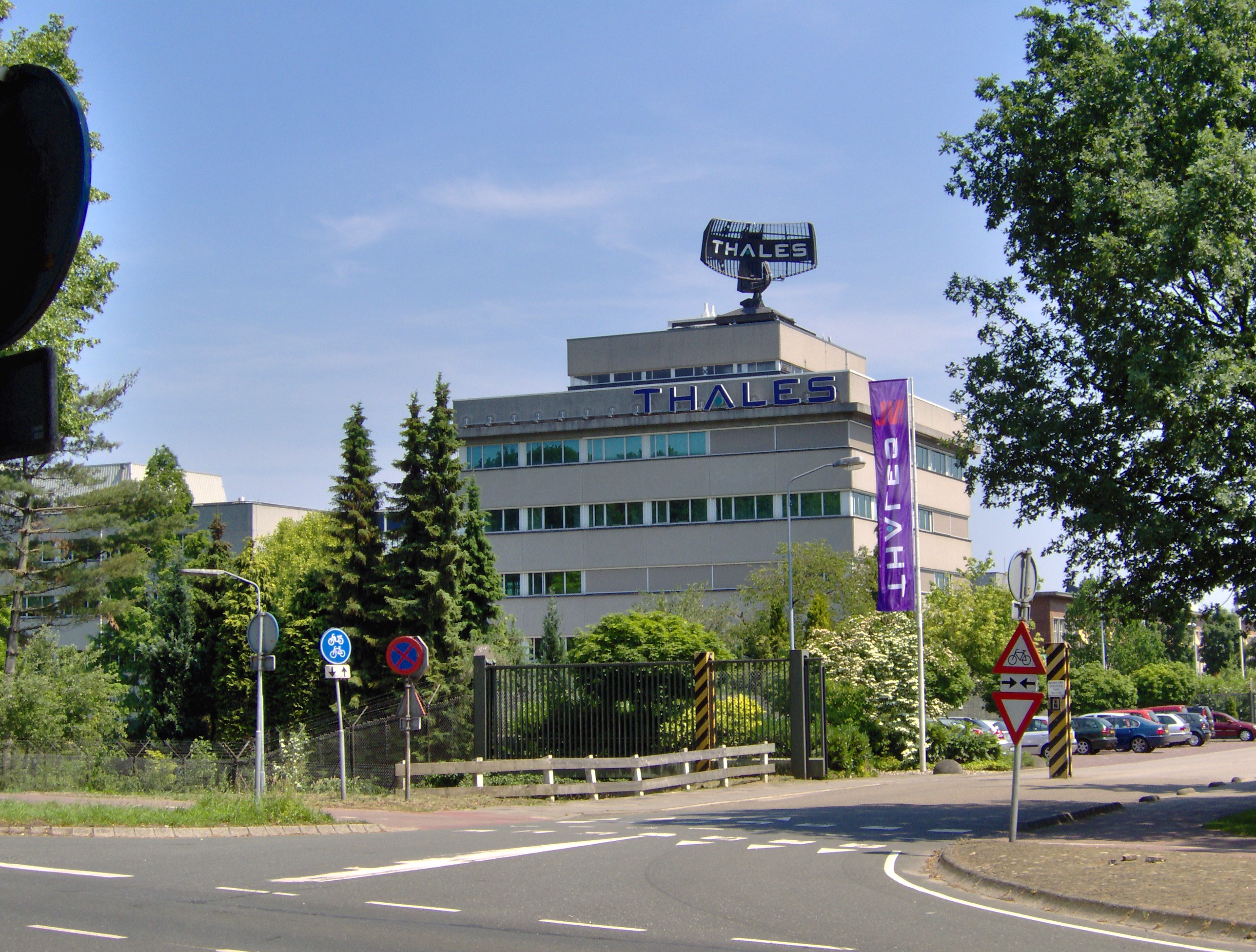
Thales Nederland traces its roots to 1922, when the Hazemeyer firm in Hengelo began building fire-control gear for the Royal Netherlands Navy. Through successive owners — Signaal, Hollandse Signaalapparaten, Thomson-CSF — the Hengelo site stayed in the same business: radars and combat-management systems for warships, and the sensors that feed them. Today it operates as a Dutch subsidiary of the Paris-listed Thales Group, with its main plant still in Hengelo and additional sites in Huizen, Delft and Eindhoven. The Dutch state retains a special share in the company, a legacy of the firm’s strategic role in national naval programmes.
The product line is built around radar. At sea, the SMART-L family of long-range air-and-surface surveillance radars equips the Royal Netherlands Navy’s De Zeven Provinciën-class air-defence frigates, the Royal Navy’s Type 45 destroyers, the German F124 frigates and Denmark’s Iver Huitfeldt class; the upgraded SMART-L MM/N variant has been selected for the new Dutch–Belgian anti-submarine warfare frigates that will replace the M-class. On land, the Ground Master series — GM200, GM400, and the multi-mission GM200 MM/C handed over to the Royal Netherlands Army in February 2024 — covers medium- and long-range air defence, with the MM/C variant designed explicitly to track small drones alongside conventional aircraft. The SQUIRE ground-surveillance radar, originally a perimeter and battlefield sensor, has been updated with drone detection and classification modes that respond to the same threat picture Ukraine has made unavoidable. Above all of these sits the company’s combat management system, used on most of the warships it equips.
Thales Nederland also runs a substantial research effort on machine learning applied to sensor data. Public work from its Delft research group has demonstrated radar-based gait identification — picking individuals out of a group of fifty using the micro-Doppler signature of how they walk — and similar deep-learning techniques to separate drones from birds, classify vehicles by their radar return, and fuse multiple sensors into a single track picture. That work flows back into the Ground Master and SMART-L roadmaps rather than living as a standalone product.
Customers cover most of NATO. Beyond the Dutch and British navies, SMART-L variants are at sea with Germany, Denmark, France, South Korea and Canada; Ground Master radars have been sold to France, Germany, Estonia, Finland, Slovenia and the Baltic states. The Dutch government’s 2024 defence budget rebuild — driven by the war in Ukraine and the NATO 2 percent floor — has translated directly into Hengelo orders, including a multi-year frame contract for additional GM200 systems for the Army.
The Hengelo site employs roughly two thousand five hundred people and remains one of the larger industrial defence employers in the eastern Netherlands. Within the wider Thales Group, it is the centre of competence for naval radar and combat systems, a position that has hardened as European navies recapitalise and as the line between counter-drone radar and traditional air-defence radar continues to blur.
Products
Software
Deep-learning radar enhancement (research)
Public deep-learning research demonstrating identification of individuals out of a group of fifty by gait, on top of standard radar returns.
TACTICOS
Open-architecture naval combat management system fusing sensors, weapons, and datalinks into a single automated tactical picture.
Introduced 1994
Hardware
SMART-L MM/N
Naval long-range air-and-surface surveillance radar — used on the new Dutch–Belgian ASW frigates and the Royal Netherlands Navy's air-defence ships.
Ground Master 200 MM/C (GM200 MM/C)
Multi-mission medium-range ground-based air-defence radar; first unit handed over to the Royal Netherlands Army on 14 February 2024.
Introduced 2024
SQUIRE
Lightweight ground-surveillance radar with drone detection and classification functionality added in recent updates.
APAR
Active phased-array multi-function naval radar combining surveillance, tracking, and missile guidance in one face-fixed array.
Introduced 2004
GATEKEEPER
Electro-optic distributed-aperture system providing 360-degree automated threat detection and classification for surface combatants.
Introduced 2015
MIRADOR
Electro-optic fire control system with automated target tracking for naval close-in and medium-range engagements.
Introduced 2003
NS Family (NS50 / NS100 / NS200)
Modular AESA naval surveillance radars scaled from offshore patrol vessels to frigates.
Introduced 2017
Sea Master 400
Long-range naval volume-search AESA aimed at the next generation of European frigates.
Introduced 2020
SMART-L
Long-range naval volume-search radar with ballistic-missile-defence variant fitted to European frigates and destroyers.
Introduced 2001
SMART-S Mk2
Medium-range 3D shipborne surveillance radar for coastal navies needing compact air and surface search.
Introduced 2004
SQUIRE
Man-portable ground surveillance radar for forward bases and border posts.
Introduced 2003
STIR
Pencil-beam tracking and missile-illumination radar for naval fire-control.
Introduced 1985
Sources
- en.wikipedia.org/wiki/Thales_Nederland (2026-05-02) — Encyclopedic summary — confirms 1922 Hengelo founding, the Hollandse Signaalapparaten heritage, and the SMART-L / GM200 / SQUIRE radar families.
- www.thalesgroup.com/en/worldwide/netherlands (2026-05-02) — Official Thales Netherlands page.
- www.janes.com/osint-insights/defence-news/c4isr/thales-nederland-triples-radar-production (2026-05-02) — Janes coverage of the GM200 MM/C handover and tripled radar production.
- www.shephardmedia.com/news/digital-battlespace/thales-nederland-details-radar-advancements/ (2026-05-02) — Shephard Media on Thales Nederland's deep-learning radar advancements and the SQUIRE drone-classification update.