
Helsing
AI-driven battlefield software, strike drones, and autonomous combat systems for European militaries.
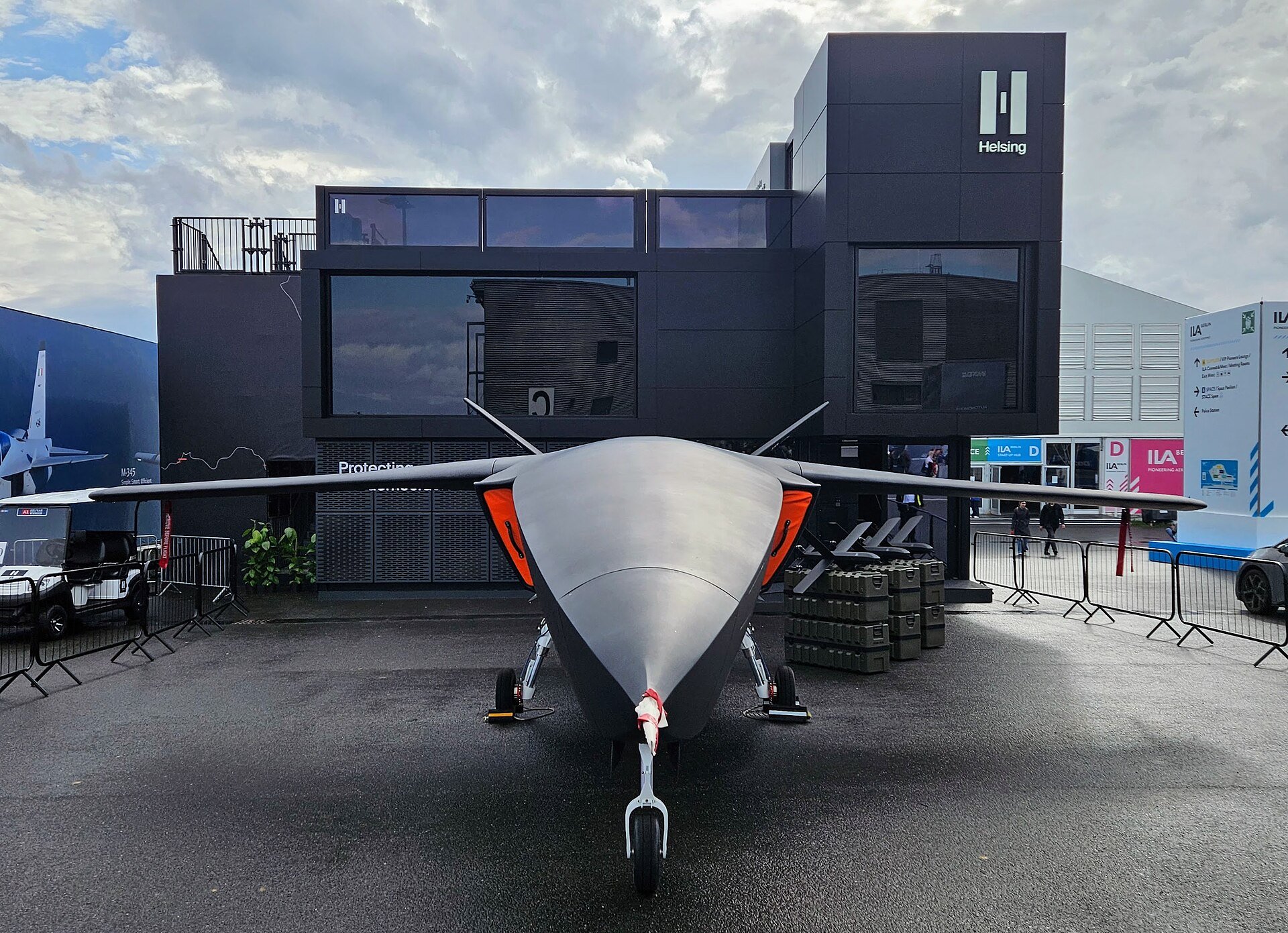
Helsing was founded in Munich in 2021 by Torsten Reil, Gundbert Scherf, and Niklas Köhler. Reil, a former video-game executive who built the AI animation studio NaturalMotion before selling it to Zynga, and Scherf, a former partner at McKinsey who had earlier served as a special adviser at the German defence ministry working on procurement reform, lead the company as co-chief executives. Köhler, a machine-learning researcher, rounds out the founding trio. The firm registered as a European company (SE) and has grown to roughly 900 employees across offices in Munich, Berlin, London, Paris and a manufacturing site in southern Germany, with additional presence in the United States.
The product line spans software, air, and sea. At the foundation sits Altra, a battlefield-AI suite that fuses signals, electro-optical, and radar feeds into target nominations for reconnaissance-strike loops. Cirra extends the same approach to the electromagnetic spectrum, automating detection and classification of hostile emitters. Centaur is the company’s autonomous fighter-pilot stack; in 2025 it flew Saab’s Gripen E in beyond-visual-range engagements against a human-piloted Gripen D, a milestone Saab and Helsing publicised jointly. The hardware portfolio centres on the HX-2, a quadcopter strike drone with a 5 kg warhead, top speed of 250 km/h, and a roughly 100 km range, and the cheaper plywood-fuselage HF-1 loitering munition, of which 4,000 units were delivered to Ukraine in early 2025. In development are the CA-1 Europa, a four-tonne autonomous combat air vehicle aiming for first flight in 2027, and the SG-1 Fathom, an underwater drone designed for 90-day submerged endurance for persistent maritime surveillance.
Helsing’s customer base sits firmly inside European defence ministries. The German Bundeswehr is the anchor buyer, contracting Helsing for AI integration on the Eurofighter electronic-warfare upgrade and for thousands of HX-2 strike drones, large tranches of which are being routed onward to Ukraine. The company has signed framework agreements with the British Ministry of Defence and is working with French and Estonian forces, and its Saab partnership extends beyond Centaur into broader Gripen software work. Ukraine has become both a customer and a proving ground: Helsing has a permanent presence in the country, and its drones have been used in combat against Russian forces, giving the firm operational feedback loops that few European defence companies can match.
Funding has scaled to match the ambition. After early backing from Spotify founder Daniel Ek’s Prima Materia, Helsing raised a $223 million Series B in 2023 led by General Catalyst, then a €450 million Series C in 2024 valuing the company at roughly €5 billion, and a €600 million Series D in 2025 that pushed the valuation past €12 billion. The investor list includes Lightspeed, Accel, Saab, and Plural, alongside Prima Materia and General Catalyst.
The company has drawn its share of public friction. Lithuanian sculptor Andrius Labašauskas accused Helsing of using a likeness of his work in branding, prompting a redesign. German press has scrutinised the speed of contract awards and the political access of Scherf in particular, given his ministry background. Inside the European tech scene, Helsing’s rapid rise has reopened a long-running argument over whether venture capital should fund lethal hardware at all — a debate the firm has largely answered by leaning into it, casting itself as the European answer to American primes and to Palantir’s data-layer dominance, and pitching directly to governments worried that without a domestic AI-defence champion they will end up dependent on Washington and Silicon Valley.
Products
Drones
CA-1 Europa
4-tonne autonomous combat air vehicle in development; first flight targeted 2027.
SG-1 Fathom
Autonomous underwater glider for persistent maritime surveillance and submarine detection.
Introduced 2025
Sea drones
SG-1 Fathom
Underwater drone designed for 90-day submerged endurance.
Missiles & loitering munitions
HX-2
Quadcopter strike drone — 250 km/h top speed, 5 kg warhead, 100 km range.
HF-1
Cheaper plywood-fuselage loitering munition; 4,000 delivered to Ukraine in early 2025.
HF-1
First-generation strike drone built with Ukrainian partner Terminal Autonomy for combat use against Russian forces.
Introduced 2024
HX-2
AI-enabled electric strike drone designed for mass production and resilience against electronic warfare.
Introduced 2024
Software
Altra
AI software for reconnaissance-strike integration — fuses sensor feeds into target nominations.
Cirra
AI-driven electronic-warfare suite.
Centaur
Autonomous fighter-pilot stack; flew Saab's Gripen E in BVR engagements against a human-piloted Gripen D in 2025.
Air Guardian
AI co-pilot providing real-time decision support for Eurofighter Typhoon aircrew in beyond-visual-range and close air combat.
Introduced 2023
Altra
AI-powered battlefield situational awareness and electronic warfare platform that fuses sensor data into a real-time tactical picture.
Introduced 2021
Centaur
AI pilot for combat aircraft, trained in simulation to fly and fight alongside human pilots.
Introduced 2024
Cirra
Electronic warfare AI that detects, classifies, and counters enemy radar and communications signals in real time.
Introduced 2023
Lur
AI-powered passive sonar analytics for submarine detection, processing acoustic signatures in real time aboard naval vessels.
Introduced 2024
SG-1 Fuse
Real-time AI sensor fusion and targeting platform that integrates multi-domain battlefield data for faster operator decisions.
Introduced 2022
Controversies
Bloomberg report — pricing and software-reliability concerns from former employees, investors, and military experts.
A Bloomberg investigation in April 2025 raised allegations that Helsing's drones were overpriced and that software glitches had been observed in the field. The story drew on former employees, investors, and military experts.
Ukraine and Germany pause further HX-2 orders after technical issues in field trials.
Following technical problems identified during field trials, Ukraine and Germany suspended further orders of Helsing's HX-2 loitering munitions. Reporting describes the freeze as a setback for Europe's largest defence-AI scale-up and notes that the existing contract had been for up to 6,000 HX-2 units.
Gallery
Media
Sources
- en.wikipedia.org/wiki/Helsing_(company) (2026-05-02) — Encyclopedic summary citing multiple primary reports — confirms March 2021 founding, the three co-founders, Munich HQ, ~900 employees, €600M / €12B June 2025 round, total €1.37B raised, the HX-2 / HF-1 / CA-1 Europa / SG-1 Fathom product line, and the Grob and Blue Ocean acquisitions.
- breakingdefense.com/2025/02/ukraine-orders-6000-loitering-munitions-from-germanys-helsing/ (2026-05-02) — Breaking Defense coverage of the 6,000 HX-2 order for Ukraine.
- thedefensepost.com/2026/01/20/ukraine-pause-helsing-hx2/ (2026-05-02) — The Defense Post — Ukraine and Germany pausing further HX-2 orders following technical issues in field trials.
- www.kyivpost.com/post/68341 (2026-05-02) — Kyiv Post on Ukrainian-side reservations about the HX-2.
- en.defence-ua.com/weapon_and_tech/the_controversy_surrounding_the_supply_of_german_hx_2_loitering_munitions_to_ukraine_stakeholder_positions-17224.html (2026-05-02) — Defense Express compilation of stakeholder positions on the HX-2 controversy.