Roadrunner
Reusable, twin-turbojet vertical-takeoff air vehicle that recovers and re-launches if it is not committed to a target.
Missile / loitering munitionby Anduril IndustriesIntroduced 2023 · Updated 2025
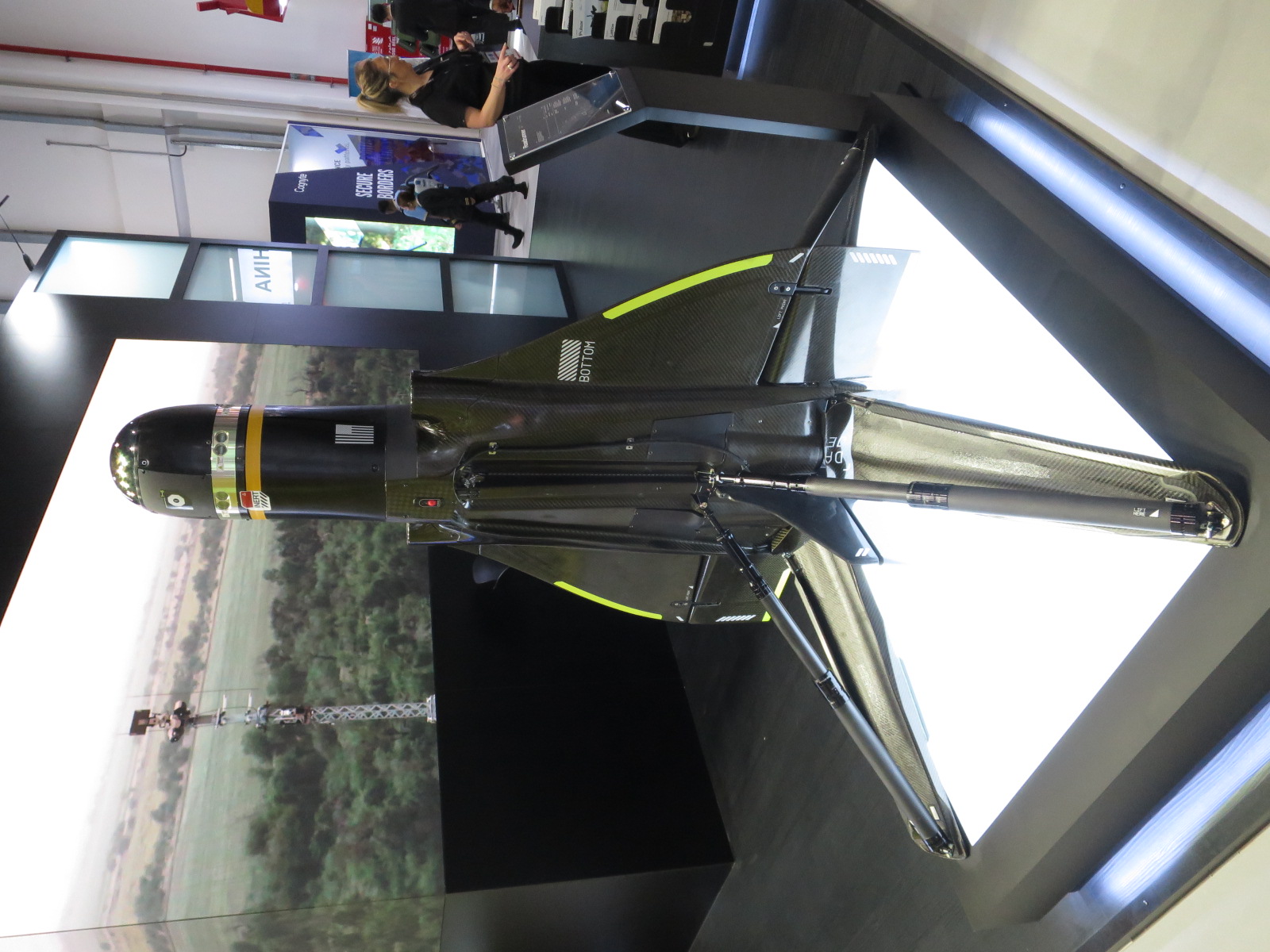
Photo: Mztourist, CC BY 4.0 (Wikimedia Commons).
Videos

Roadrunner is a reusable jet-powered interceptor built by Anduril Industries, unveiled in December 2023 as the company’s answer to the cost imbalance between cheap one-way attack drones and the multi-million-dollar surface-to-air missiles fielded against them. The system launches vertically from a containerised “nest”, climbs under twin turbojet power, and either prosecutes its target or, if not committed, returns to the nest and lands vertically for refuelling and reuse. Anduril offers two configurations: a baseline Roadrunner for testing and recoverable missions, and the Roadrunner-M, which carries an explosive warhead and is expended on intercept.
Propulsion comes from two small turbojet engines, giving the airframe a flight envelope Anduril describes as high-subsonic to supersonic, with the thrust margin and manoeuvrability needed to chase agile targets at altitude. The interceptor is cued and steered by Lattice, Anduril’s command-and-control software, which fuses tracks from third-party radars and electro-optical sensors and hands an intercept solution to the airframe. A single nest holds multiple rounds; an operator authorises a launch, but the mid-course guidance and terminal phase run autonomously. The threat set Anduril emphasises is Group 2 and Group 3 unmanned aircraft and one-way attack drones — Iranian-pattern Shahed-136 loitering munitions, Russian Lancets, and the subsonic cruise missiles that have come to define the air picture over Ukraine and the Red Sea.
The first disclosed customer is the United States. Anduril announced at unveiling that Roadrunner was already under contract with a US government customer it declined to name, and subsequent reporting linked the system to US Special Operations Command and to the base-defence requirements that hardened after the wave of drone attacks on American forces in Iraq, Syria, and Jordan in early 2024. The Pentagon’s interest is in part economic: a Roadrunner round is meant to cost a fraction of the AIM-120 or Patriot interceptors currently being expended against $20,000 Shahed airframes, and the recoverable variant offers a near-zero marginal cost per training shot, an unusual property for a kinetic interceptor.
Roadrunner sits inside a wider Anduril counter-drone family that includes the Anvil quadcopter interceptor for smaller targets and the Pulsar electronic-warfare line for non-kinetic effects, all stitched together through Lattice. Its closest fielded competitor is the Raytheon Coyote Block 2 already in US Army service, alongside several Israeli and European interceptors entering production against the same threat class. What is distinctive about Roadrunner is the recoverability — most kinetic counter-drone systems are single-use, and a jet that can be flown, fuelled, and flown again reshapes the cost arithmetic of defending fixed sites against attritable threats.
Sources
- breakingdefense.com/2023/12/anduril-unveils-vtol-roadrunner-munition-to-counter-drones-cruise-missiles/ (2026-06-22) — Breaking Defense on the December 2023 unveiling — reusable VTOL air vehicle, containerised nest, cost figures and SOCOM budget evidence.
- www.designation-systems.net/dusrm/app4/roadrunner.html (2026-06-22) — Roadrunner specs reference; notes the range/speed figures are classified, confirms twin thrust-vectoring turbojets and delta-wing layout.
- www.sandboxx.us/news/andurils-roadrunner-is-a-unique-reusable-missile-interceptor/ (2026-06-22) — Sandboxx analysis of the propulsion and reusable recovery concept.
- en.wikipedia.org/wiki/Anduril_Industries (2026-06-22) — Consolidated dates and configuration details.