Shahed Aviation Industries
Iranian designer of the Shahed-136 — license-built in Russia as the Geran-2 and launched against Ukraine in volume.
Shahed Aviation Industries Research Center is an Iranian aerospace firm tied to the Islamic Revolutionary Guard Corps Aerospace Force and to Iran Aircraft Manufacturing Industries Corporation (HESA). The bureau sits inside the country’s defence-industrial complex rather than operating as a standalone commercial entity, which is why public details about its leadership, headcount, and revenue are scarce. It is best known outside Iran for a single product line — the Shahed family of one-way attack drones — that has reshaped the economics of long-range strike since 2022.
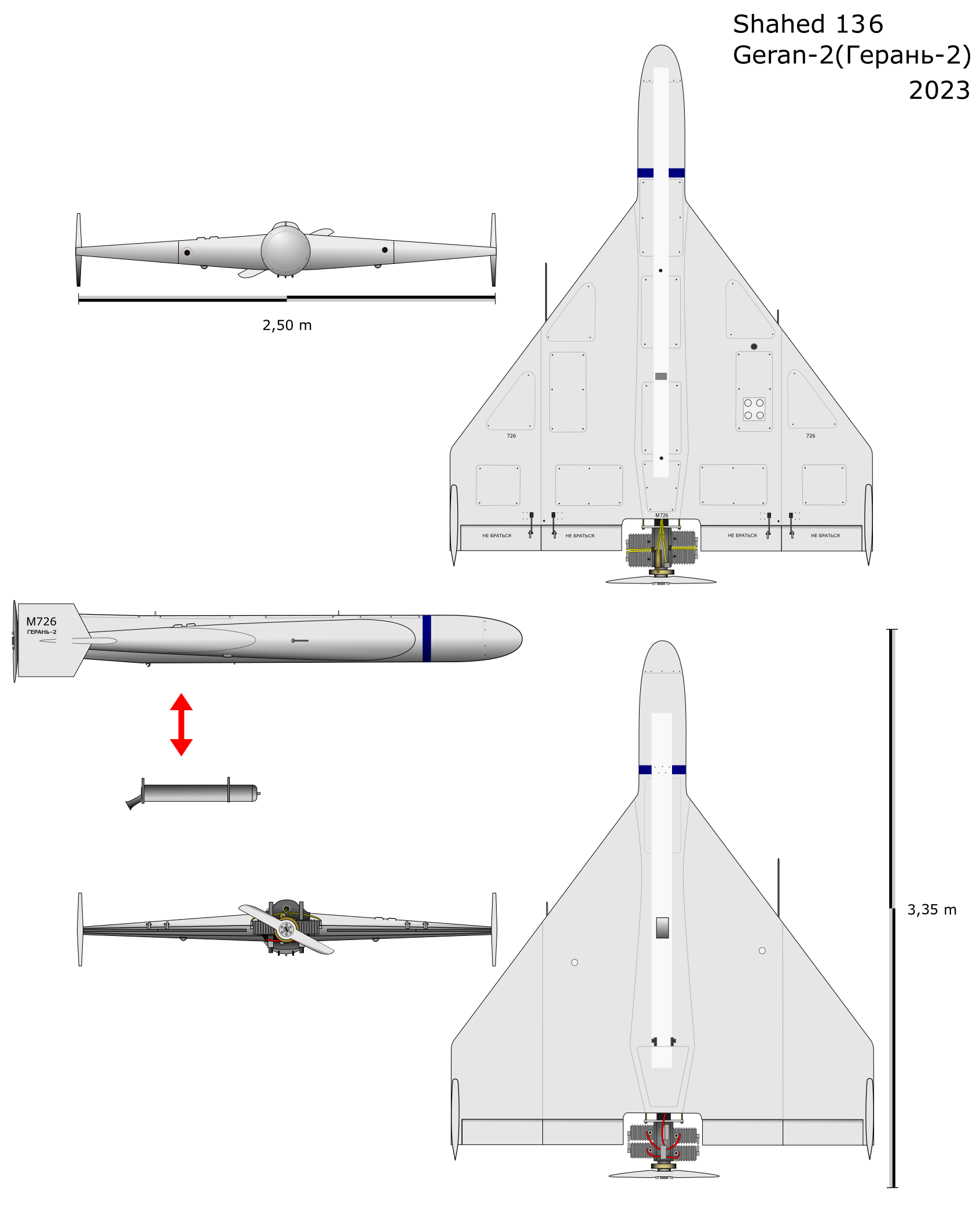
The headline system is the Shahed-136, a delta-winged loitering munition introduced in 2021 with a quoted range of around 2,500 km, a warhead in the 50 kg class, and a cruise speed near 185 km/h. It weighs roughly 200 kg at launch and is powered by an MD-550 piston engine reverse-engineered from a German Limbach L550E. The airframe is intentionally cheap: plywood and composite construction, commercial-grade avionics, and GPS/GLONASS guidance. A jet-powered derivative, the Shahed-238, has been introduced for higher speed and shorter response times. Older platforms in the catalogue include the Shahed-129, a medium-altitude armed UAV used by Iran in operations over Yemen, Syria, and Iraq, and the Shahed-149 Gaza, a long-endurance armed UAV unveiled in May 2021 that draws visibly on captured intelligence about the US RQ-170 and MQ-9.
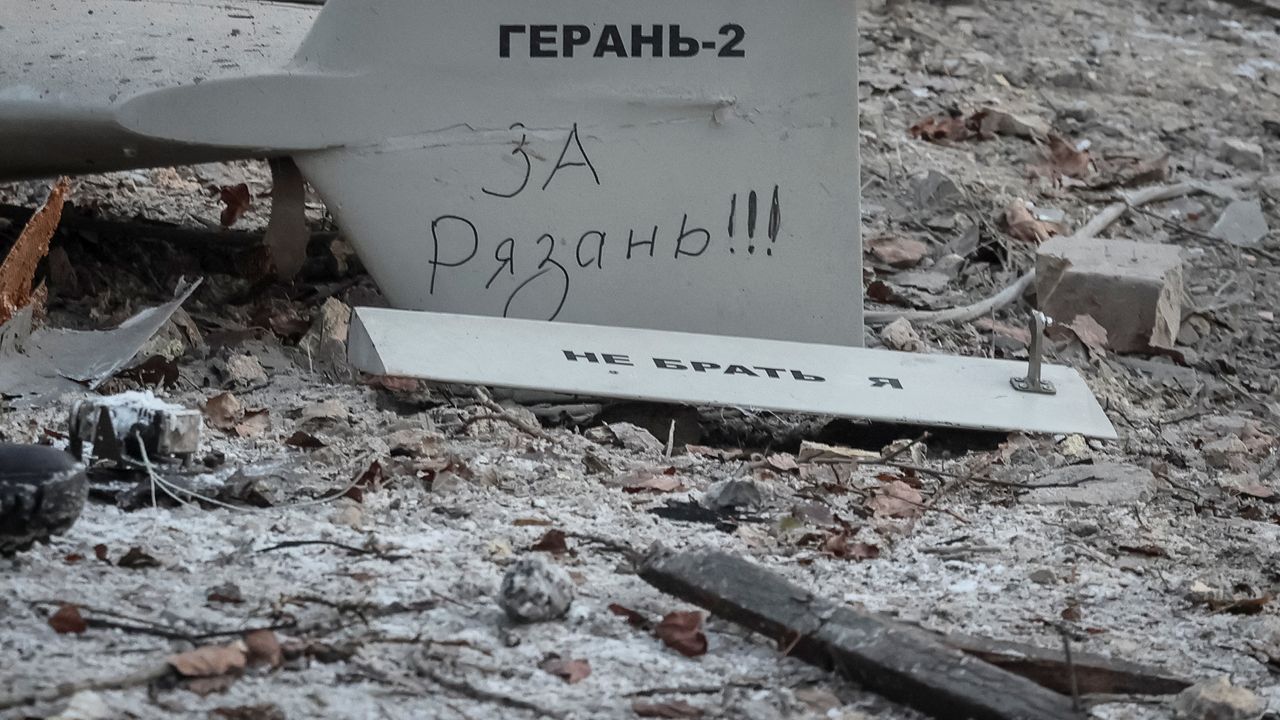
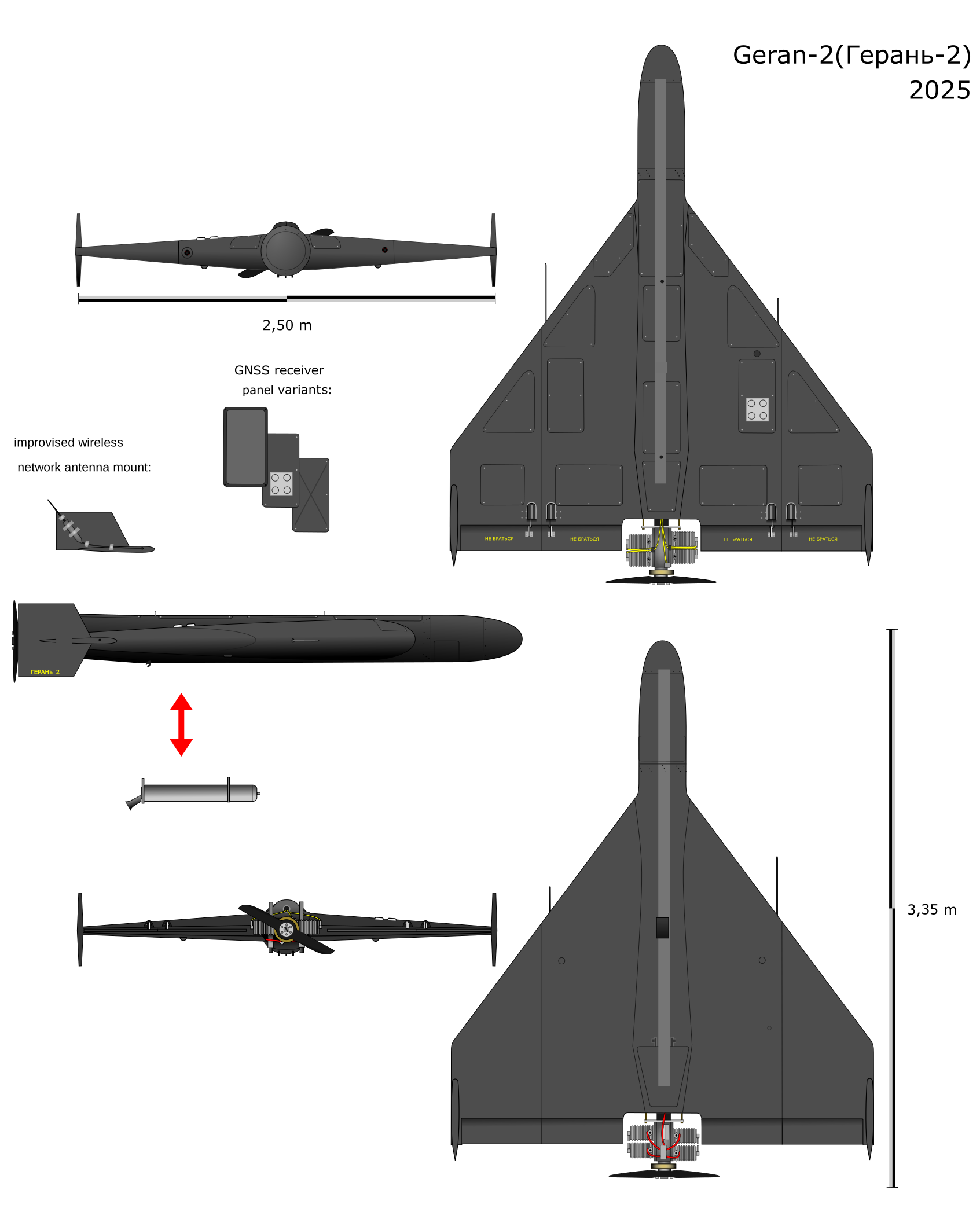
Operationally, the Shahed-136 is the system that matters. Iran transferred the design to Russia in 2022, where it is produced under licence as the Geran-2 at the Alabuga Special Economic Zone in Tatarstan. Russia has launched the type against Ukraine in steadily growing volumes — from dozens per month in late 2022 to several thousand per month by 2025 — typically in saturation salvos aimed at electrical infrastructure, port facilities, and air-defence sites. The drone has also been recovered in Yemen, where Houthi forces have used variants against shipping in the Red Sea and against targets in Saudi Arabia and the United Arab Emirates.
The company and its leadership sit on overlapping sanctions lists. The United States, the United Kingdom, the European Union, and Canada have designated Shahed Aviation Industries and several affiliated officials over the supply of Shahed-series drones to Russia and to non-state actors. Investigations by Western governments and open-source researchers have documented the company’s reliance on imported Western microelectronics — servos, microcontrollers, GPS modules — that reach Iran through a network of front companies in the Gulf and East Asia, and Ukrainian battlefield teardowns regularly catalogue the Western parts found inside intercepted airframes.
What makes Shahed Aviation Industries distinctive is less engineering ambition than industrial logic. The Shahed-136 is not a sophisticated weapon by Western standards; its significance lies in cost — reportedly tens of thousands of dollars per unit against air-defence interceptors that cost orders of magnitude more — and in the fact that the design has been successfully exported, licence-produced abroad, and fielded at scale in active wars. That combination has made the bureau a reference point for any state or non-state actor looking to build mass long-range strike capability without a domestic aerospace tradition of its own.
Products
Drones
Shahed-129
Earlier MALE armed UAV used by Iran in operations across Yemen, Syria, and Iraq.
Shahed-149 Gaza
Long-endurance armed UAV unveiled May 2021, modelled on captured intelligence about US RQ-170 / MQ-9 platforms.
Shahed-129
MALE-class armed UAV in the Predator/Reaper bracket, Iran's first domestically built strike drone in regular service.
Introduced 2012
Shahed-149 Gaza
Large turboprop UCAV with long endurance — Iran's most capable publicly revealed armed drone, able to carry multiple precision weapons.
Introduced 2021
Shahed-149 Gaza
Larger MALE UAV unveiled in 2021, designed for longer endurance and a heavier weapons load than the Shahed-129.
Introduced 2021
Shahed-191
Flying-wing stealth UAV reverse-engineered from the RQ-170 Sentinel captured in 2011, capable of carrying small precision munitions.
Introduced 2018
Missiles & loitering munitions
Shahed-136
Long-range one-way attack drone; 2,500 km range, ~50 kg warhead, ~185 km/h cruise speed; ~200 kg total weight, MD-550 piston engine reverse-engineered from a German Limbach L550E.
Introduced 2021 · Updated 2026
Shahed-238
Jet-powered Shahed-136 derivative for higher speed and reduced response time.
Shahed-101
Miniature loitering munition optimised for precision strikes on soft targets and personnel.
Introduced 2022
Shahed-131
Smaller, shorter-range predecessor to the Shahed-136, launched from truck-mounted racks against Ukrainian and Saudi targets.
Introduced 2020
Shahed-238
Jet-powered evolution of the Shahed-136, unveiled in 2023 with substantially higher cruise speed and reduced engagement window for air defences.
Introduced 2023
Controversies
US Treasury sanctions sixteen Iranian individuals and two companies linked to the drone programme.
Coordinated US sanctions on entities tied to Iran's UAV production network — explicitly targeting Shahed-136 manufacturing and procurement. Further sanctions packages targeting the Iran-Russia drone supply chain followed through 2024 and 2025.
Iranian Shahed-136s, designated Geran-2 by Russia, begin striking Ukrainian infrastructure at scale.
Russia's adoption of the Shahed-136 as its primary long-range one-way attack drone has driven sustained, large-volume strikes on Ukrainian power generation, transmission, and civilian infrastructure since autumn 2022. Ukrainian air-defence reporting and OSINT have logged thousands of Shahed-pattern launches; intercept rates have varied from below 50% in the early months to above 80% by mid-2024 as Ukrainian counter-UAS capability matured.
Gallery
Sources
- en.wikipedia.org/wiki/HESA_Shahed_136 (2026-05-02) — Encyclopedic entry on the Shahed-136 — confirms SAIRC subordination to IRGC ASF, HESA co-manufacturing, the December 2021 public unveiling, the 2,500 km / 50 kg / 185 km/h specs, the MD-550 engine origin, the Alabuga SEZ Geran-2 licence production with 6,000-airframe target, the ~170/day spring-2025 production rate, the 2,628 Shahed launches against Ukraine logged by May 2024 with 80% intercept rate, the $193,000 export and $30-80K Russian production cost estimates, and the 18 April 2024 US sanctions package.