Products Shahed Aviation Industries
Shahed-238
Jet-powered evolution of the Shahed-136, unveiled in 2023 with substantially higher cruise speed and reduced engagement window for air defences.
Missile / loitering munitionAdversary capabilityby Shahed Aviation IndustriesIntroduced 2023
Photos: dronexl.co · interestingengineering.com · www.yahoo.com · U.S. Defense Intelligence Agency · M. Sadegh Nikgostar
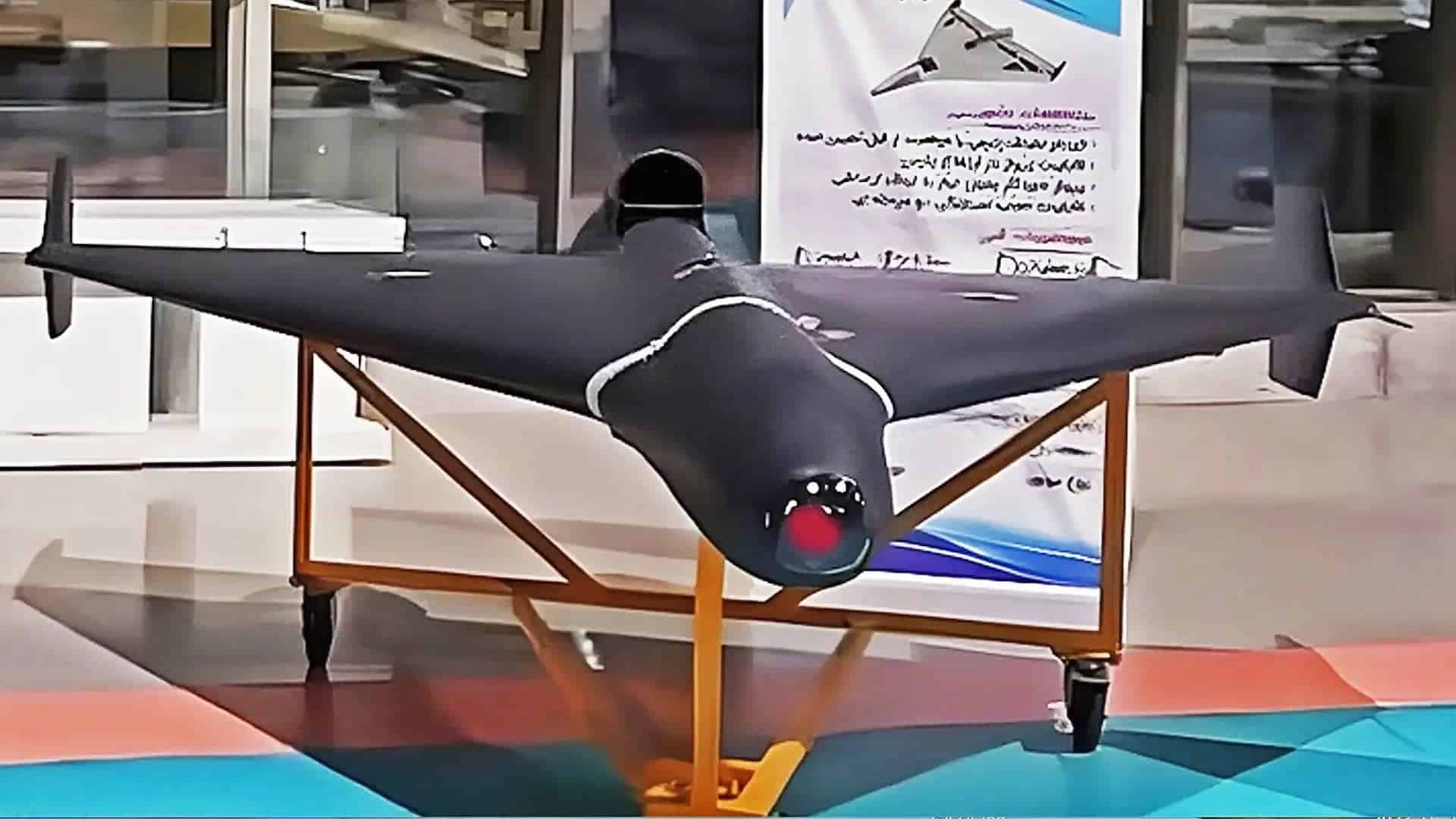
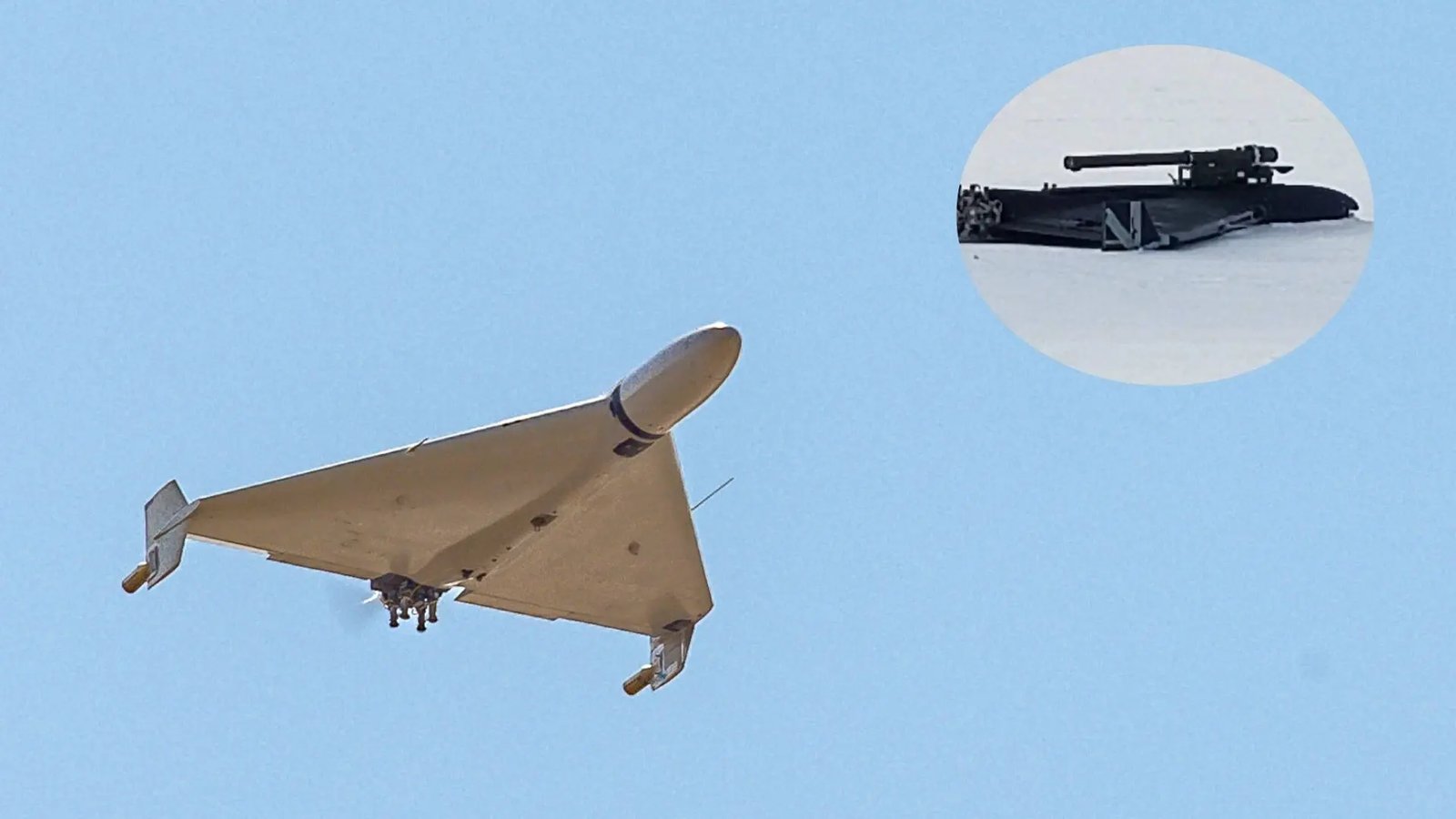
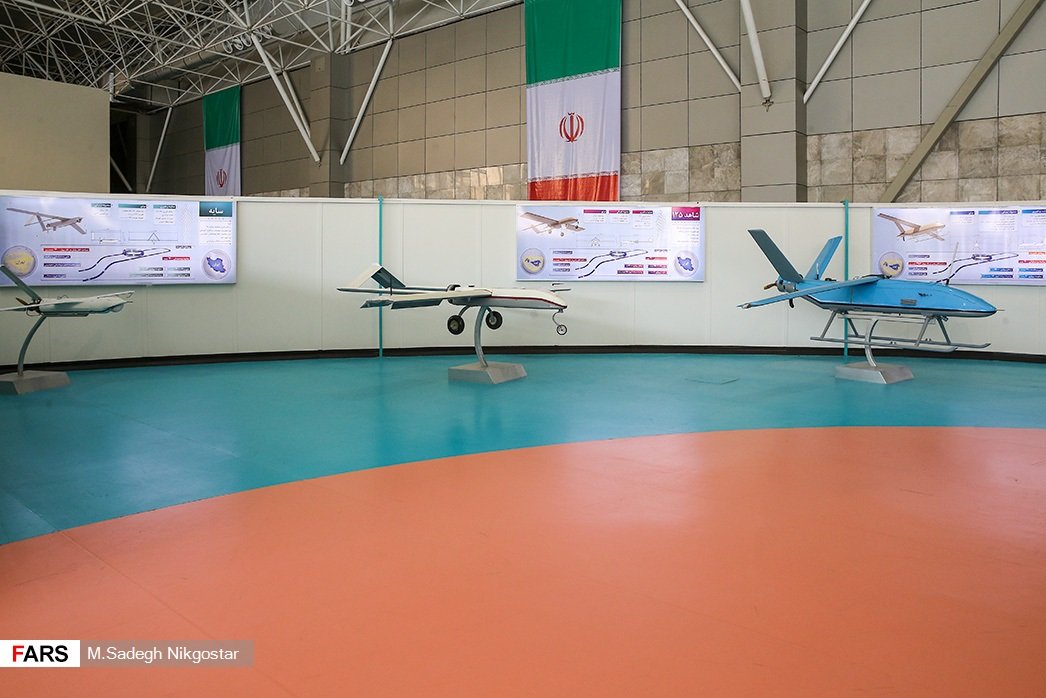
Shahed Aviation Industries unveiled the Shahed-238 in November 2023 at a defence exhibition in Tehran, presenting it as a jet-powered evolution of the Shahed-136 one-way attack drone that has dominated Russia’s standoff strike campaign against Ukraine. Where the Shahed-136 cruises on a noisy piston engine at roughly 180 km/h, the Shahed-238 swaps in a small turbojet, lifting cruise speed into the 500–600 km/h class and collapsing the engagement window available to short-range air defences. The airframe, delta wing, and warhead-forward layout otherwise carry over largely unchanged from the Geran-2 family already in mass production in Tatarstan.
Iranian state media displayed three variants at the launch: a baseline model relying on satellite-aided inertial navigation, a passive anti-radiation seeker version intended for radar-emitter targets, and an electro-optical/infrared homing variant for terminal guidance against fixed objects. The warhead is reported to be similar in mass to the Shahed-136’s roughly 50 kg fragmentation charge, though jet propulsion trims the system’s range relative to the piston-engined parent. Higher speed materially complicates interception by the autocannon and machine-gun mobile teams Ukraine has used to bring down Geran-2s at low cost — engagements that work against a drone closing at 50 m/s become marginal against one closing at 150 m/s, and acoustic early warning, the cue Ukrainian crews rely on, is degraded by the jet’s different signature.
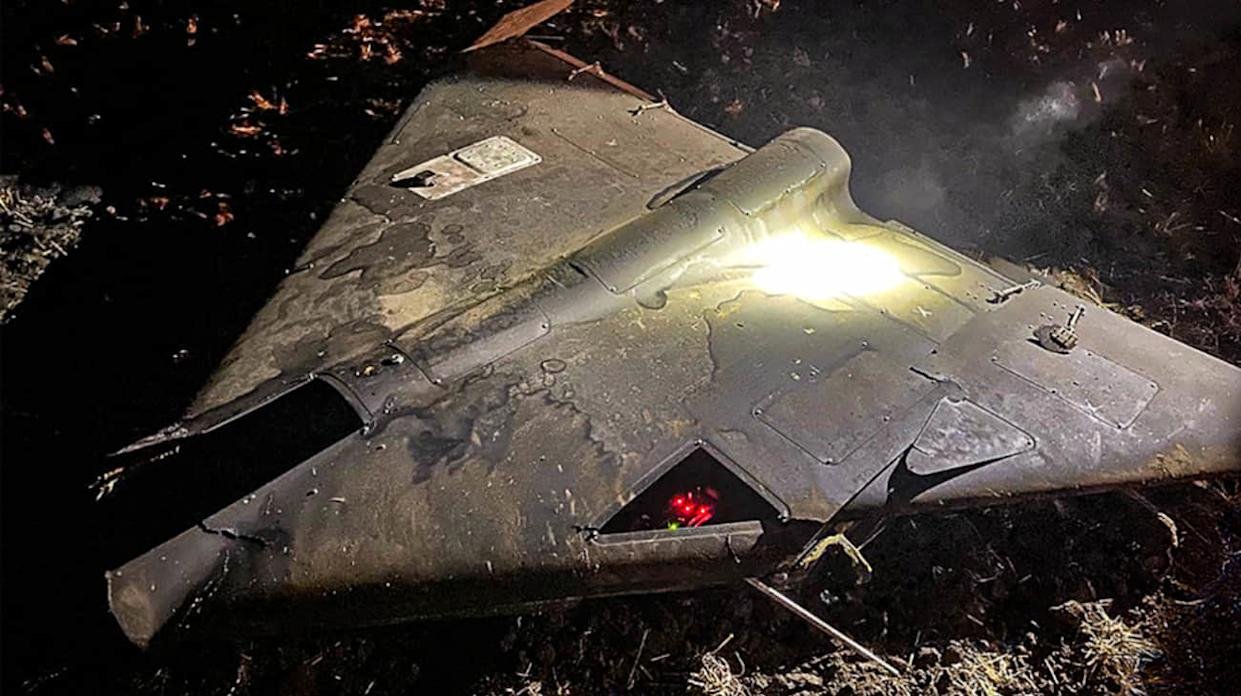
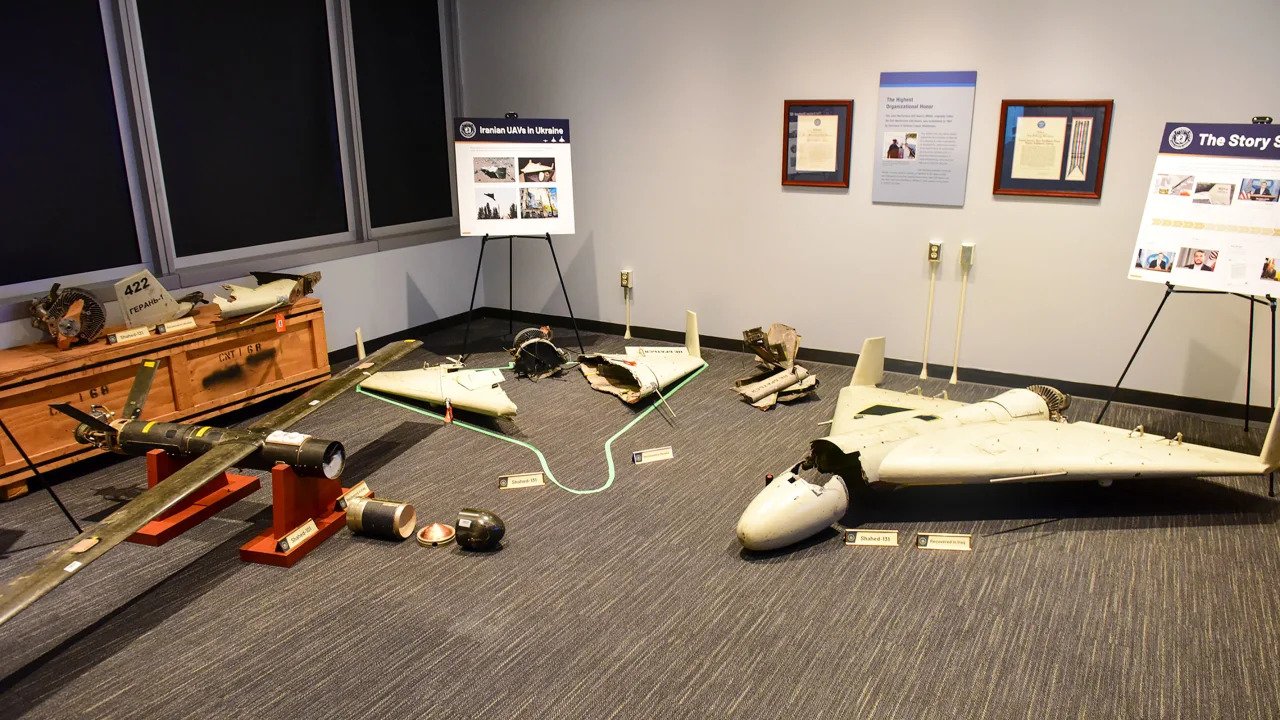
Iran is the system’s first operator. Russia is the second, with examples used against Ukraine reported from early 2024; Ukrainian air force statements have referenced recoveries of jet-powered Shahed wreckage with components consistent with the 238 designation. Russia’s licensed production of the Shahed-136 as the Geran-2 at the Alabuga special economic zone in Tatarstan, scaled to thousands of airframes per year, gives Moscow an obvious path to integrate or domestically copy the jet variant if Tehran transfers the design, as it did with the original.
The Shahed-238 sits at the upper end of a product line that began as a cheap, slow loitering munition and has progressively traded unit cost for speed and survivability against contested airspace. It competes less with Western loitering munitions — which prioritise smaller warheads and tactical ranges — than with subsonic cruise missiles like Russia’s Kh-101, while remaining substantially cheaper per unit. Its appearance signals that Iran’s drone industry is iterating quickly on combat lessons fed back from the Ukraine war.