Products Shahed Aviation Industries
Shahed-131
Smaller, shorter-range predecessor to the Shahed-136, launched from truck-mounted racks against Ukrainian and Saudi targets.
Missile / loitering munitionAdversary capabilityby Shahed Aviation IndustriesIntroduced 2020
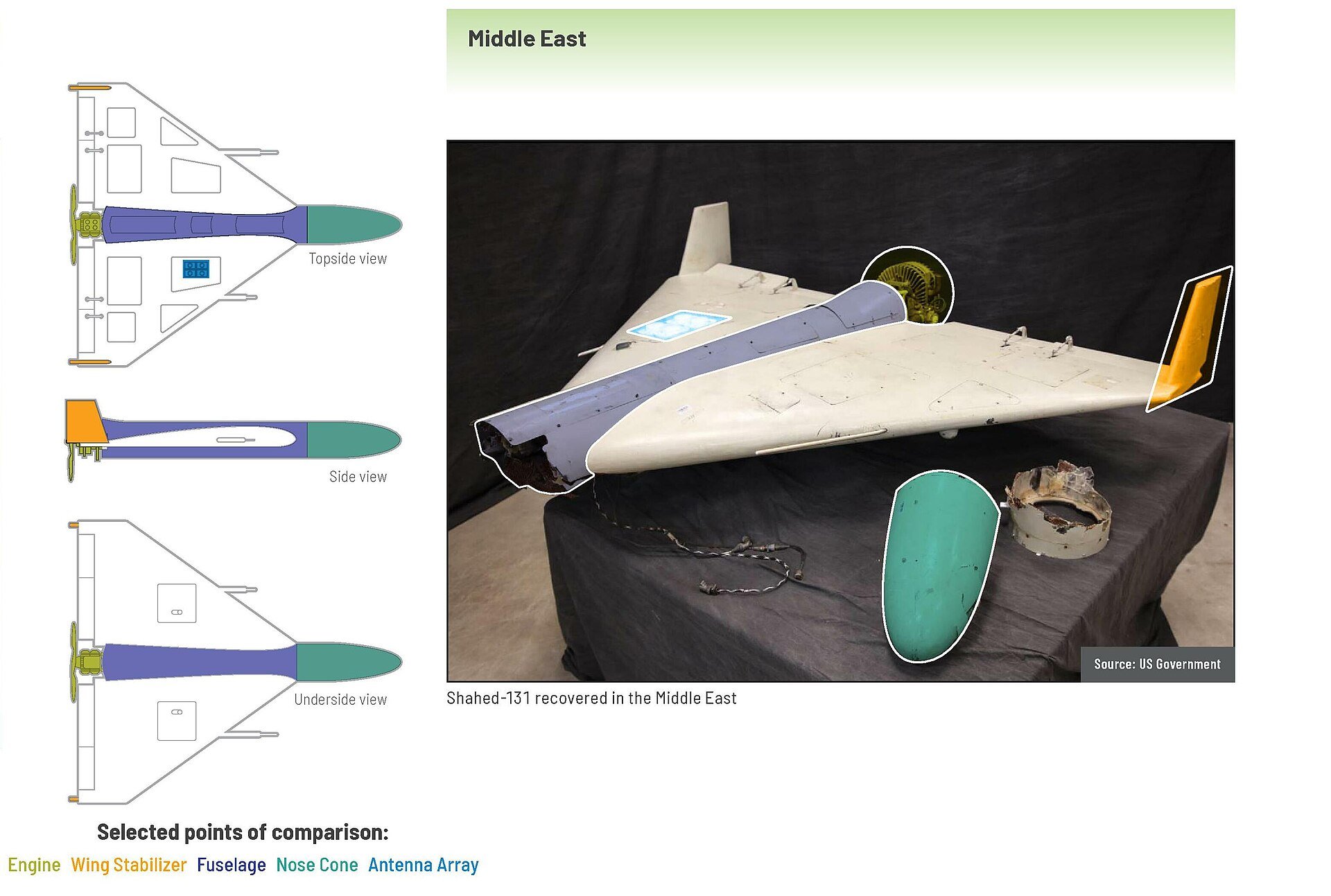
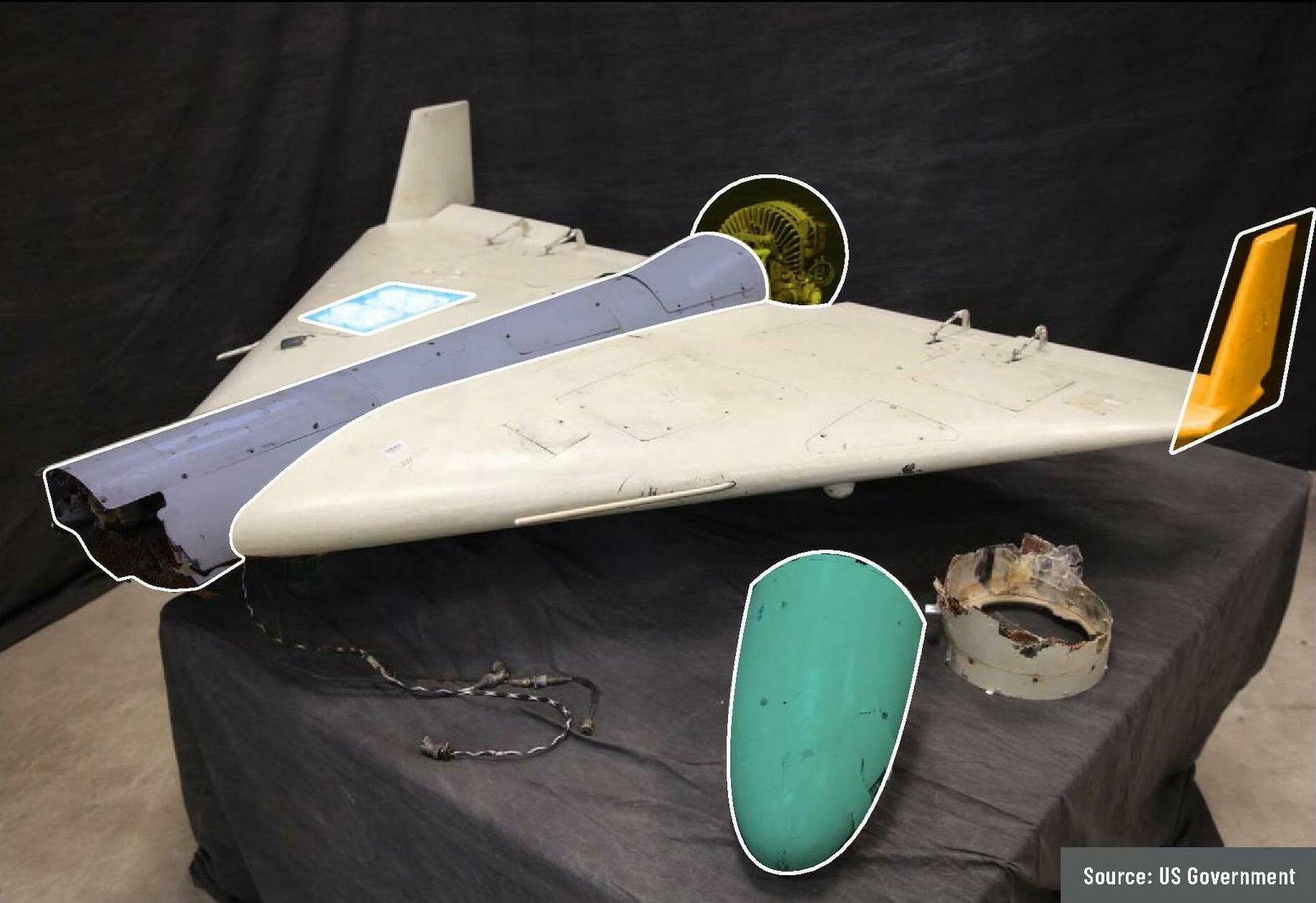
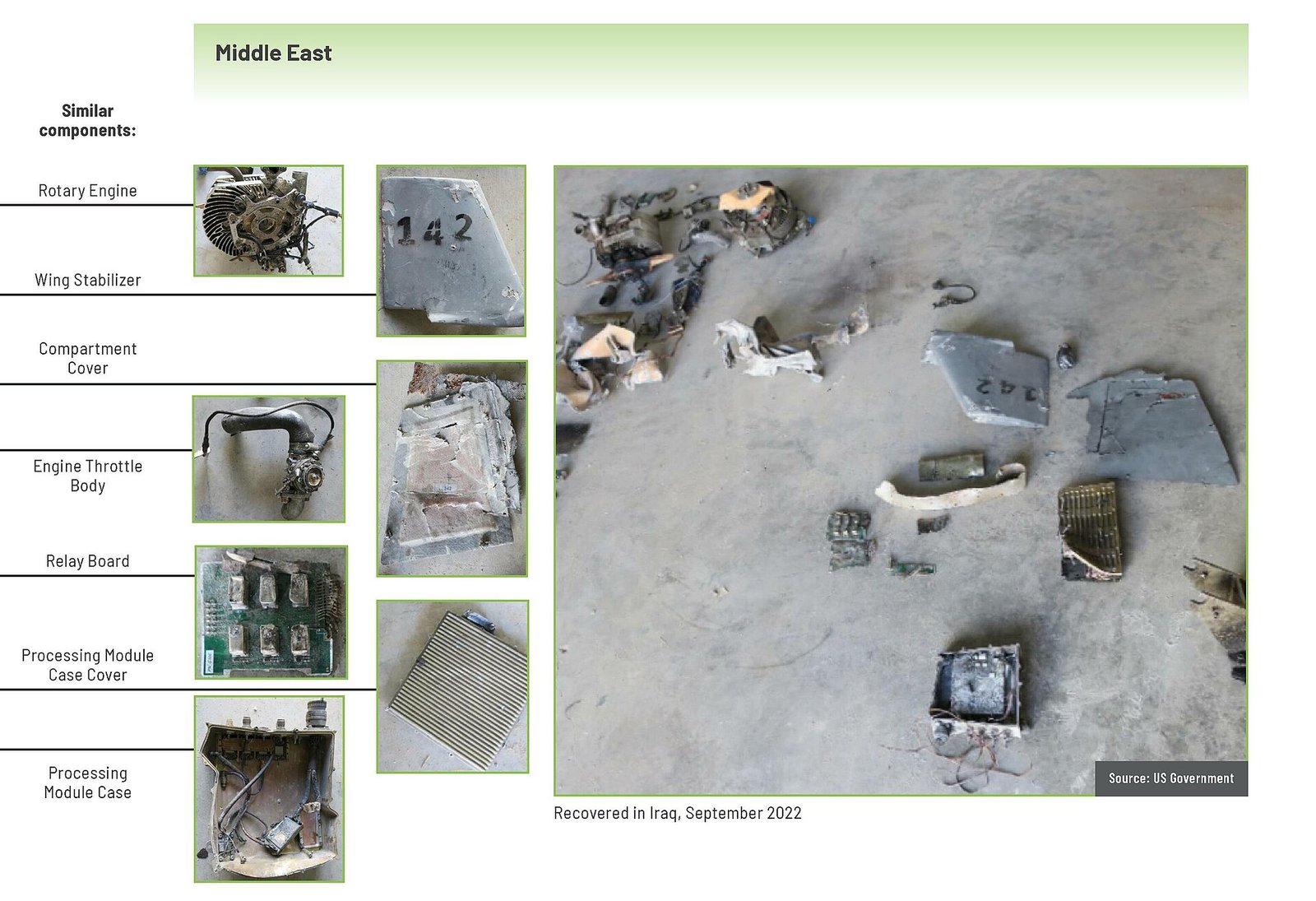
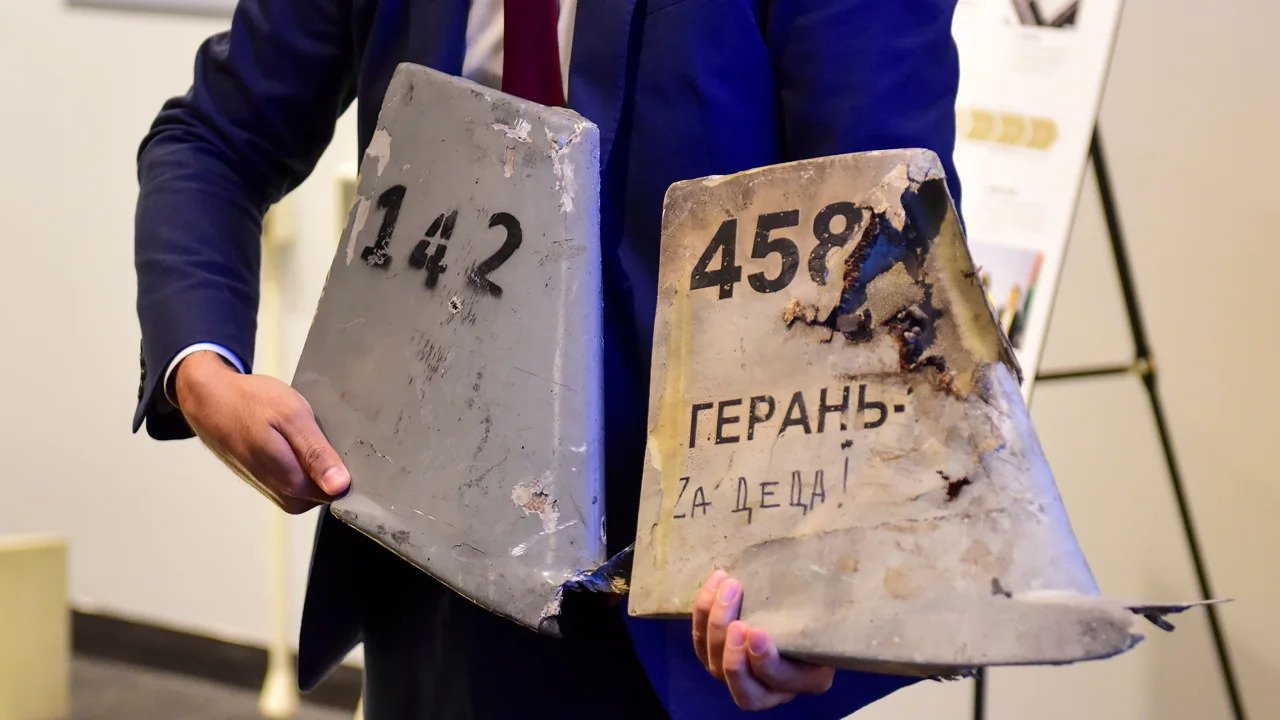
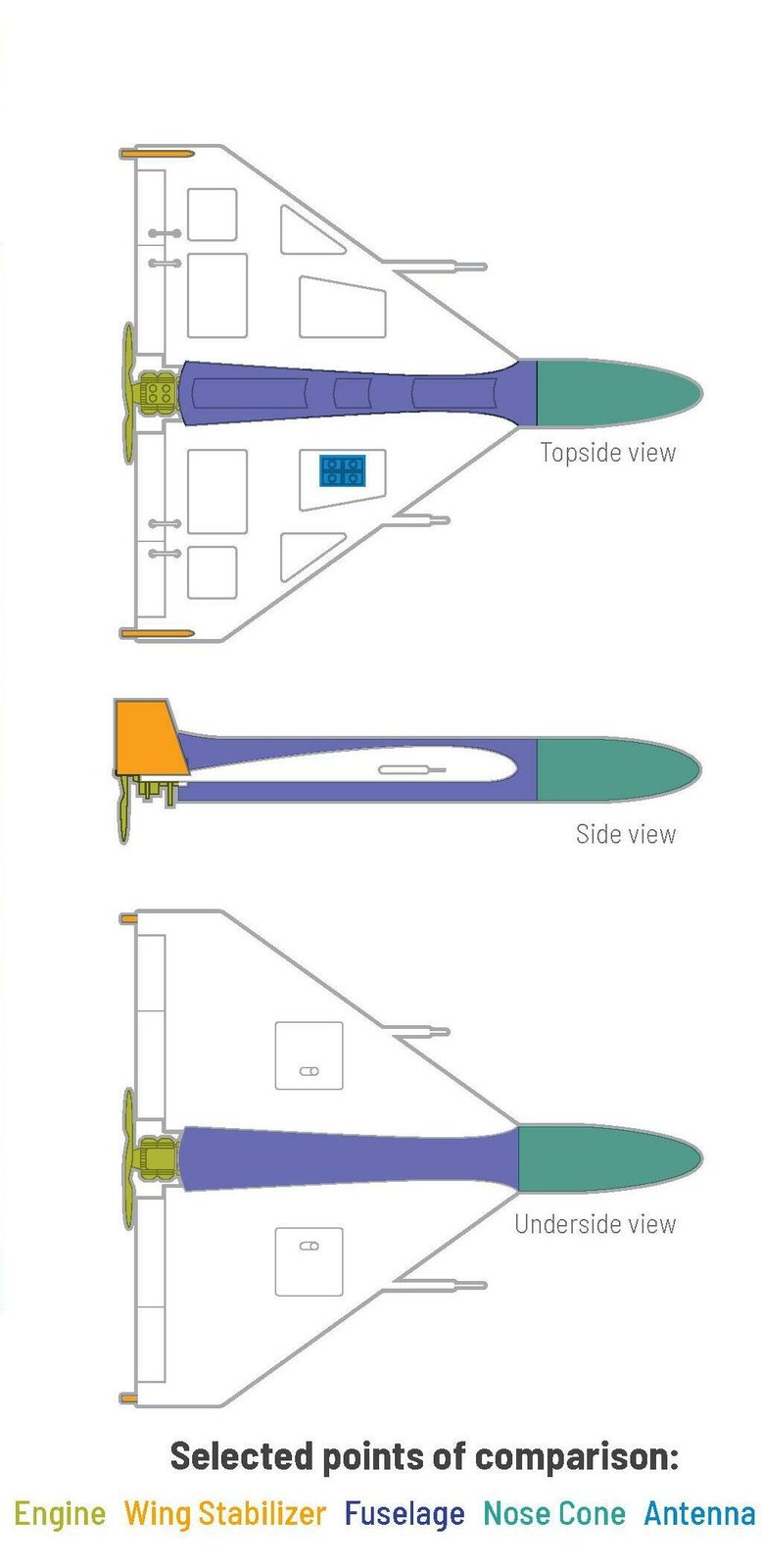
Photo: U.S. Defense Intelligence Agency
The Shahed-131 is an Iranian one-way attack drone built by Shahed Aviation Industries, a smaller and shorter-ranged forerunner to the now-infamous Shahed-136. Entering service around 2020, it carries roughly a 15-kilogram warhead out to about 900 kilometres, launched in volleys from truck-mounted rails and flown to a pre-programmed set of coordinates. It fills the bottom rung of Iran’s loitering-munition family: cheaper to build, easier to ship in disassembled form to allied militias, and survivable enough to saturate air defences when fired in numbers.
Mechanically the airframe is a flying-wing delta with twin vertical fins, a small pusher propeller driven by a piston engine, and a fuselage-mounted warhead in the nose. Guidance is austere — commercial-grade GNSS receivers (GPS and GLONASS) aligned to an inertial unit, with no terminal seeker and no datalink to a human operator once airborne. The drone climbs from a rocket-assisted takeoff, transitions to engine-driven cruise at low altitude, and follows waypoints to its target. Anti-jam upgrades to the satellite-navigation antenna, including the chaff-style “ear” arrays now common on the type, were retrofitted after Ukrainian electronic-warfare units began spoofing earlier units off course. Iran has shown variants with additional waypoint memory and small payload changes, but the autonomy stack remains deliberately simple — closer to a cruise missile on the cheap than to anything resembling AI-driven targeting.
Operationally the Shahed-131 first drew Western attention through Houthi forces in Yemen, who fielded a near-identical copy as the Qasef-2K and used it in the September 2019 strikes against Saudi Aramco’s Abqaiq and Khurais facilities. Russia then began launching Shahed-131s against Ukraine in autumn 2022 alongside the larger -136, designating both under the Geran family — the -131 reportedly entering Russian service as the Geran-1. Ukrainian air-defence summaries through 2023 logged the type alongside the -136 in mass-launch packages of twenty to forty drones, aimed primarily at energy infrastructure in Kyiv, Odesa, and Kharkiv oblasts. Iran has also supplied the design to proxy forces in Iraq and Syria.
The -131 has since been overshadowed by its larger sibling in the Russia–Ukraine theatre, where the longer-range -136 and its Russian-built Geran-2 derivative now dominate the strike packages. It remains in production and in use, however, and serves as the template most often copied by other state and non-state programmes seeking a low-cost, long-range OWA UAV — the cheap end of a category that has redrawn the economics of long-range strike since 2022.