Robin Radar Systems
Bird-detection radar pivoted into the leading European counter-UAS sensor — IRIS deployed in Ukraine and across NATO airspace.
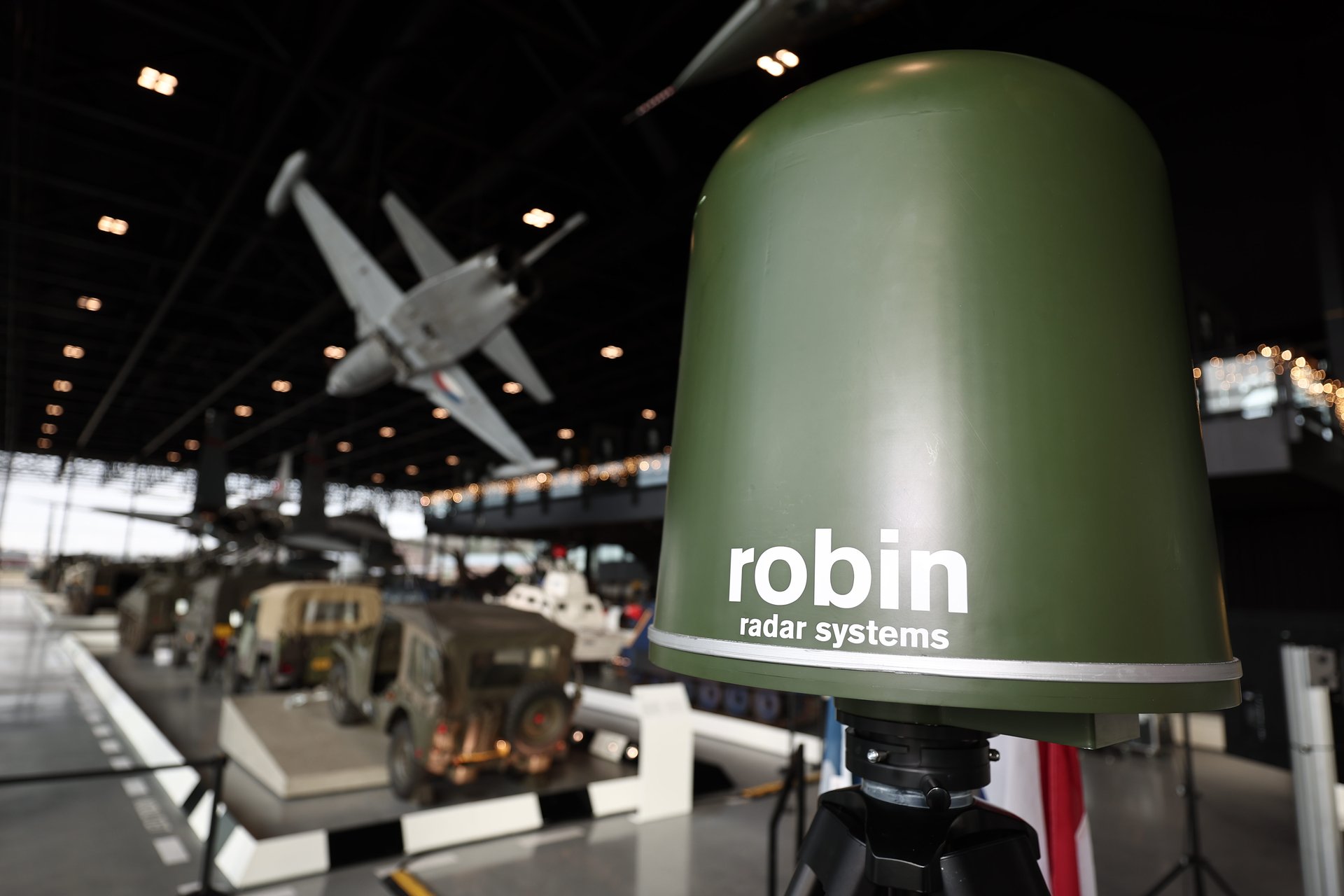
Robin Radar Systems started life as a spin-off from Dutch radar specialist Thales Nederland in The Hague, focused on a niche almost no one else was solving at scale: telling birds apart from aircraft using micro-Doppler signatures. For the first decade of its existence the company sold MAX, an avian-detection radar bought by airports and wind-farm operators worried about bird strikes and turbine collisions. That bird-tracking expertise — distinguishing wing-beat patterns from rotor signatures — turned out to be exactly the engineering problem the counter-drone era would demand.
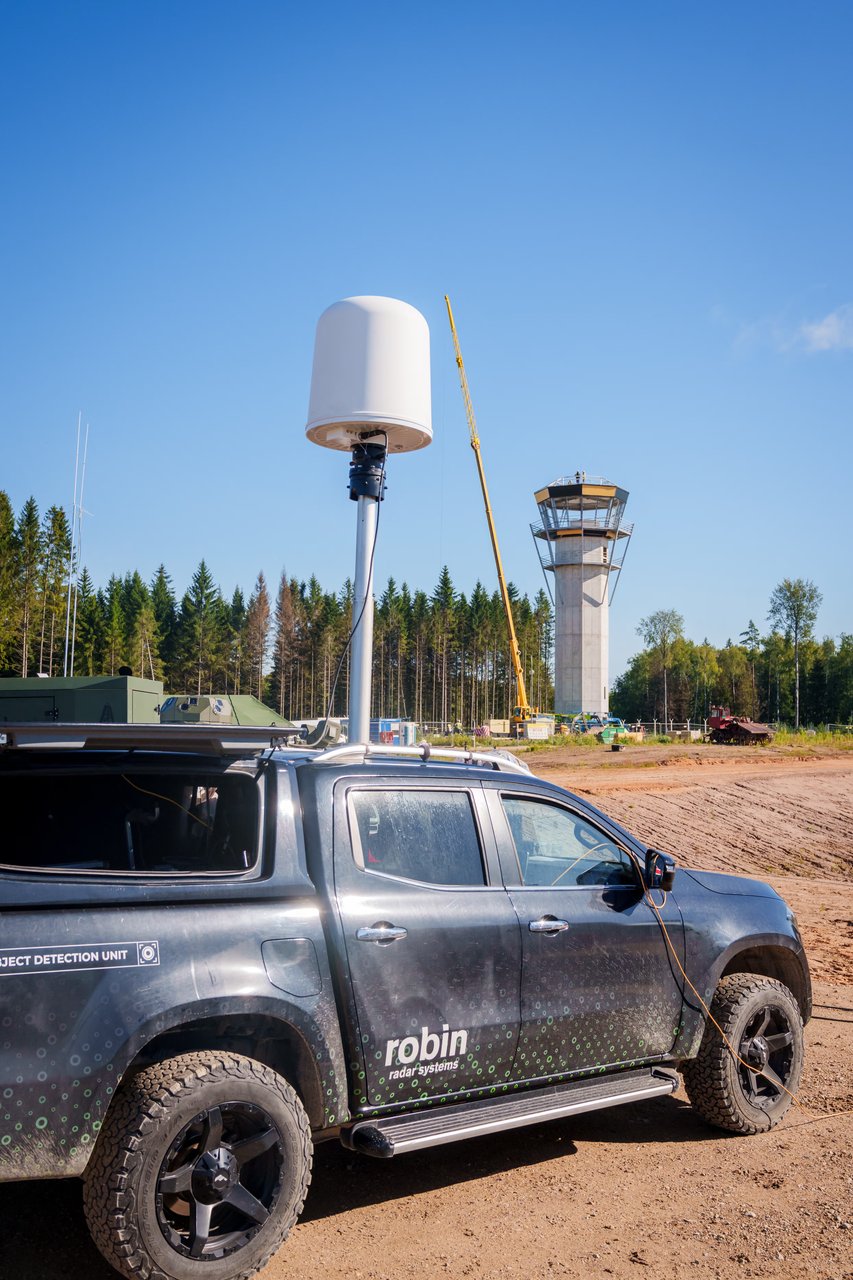
The pivot came through ELVIRA, a compact radar that used the same micro-Doppler classification trained on birds to discriminate small unmanned aircraft from clutter. ELVIRA found its way onto perimeter-protection deployments at NATO bases and high-value civilian sites, and seeded a customer list that the firm has been scaling on ever since. The current flagship, IRIS, is a step-change product: a 360° 3D radar combining micro-Doppler with a deep-neural-network classifier, deployable in under fifteen minutes by a two-person crew and rated to operate vehicle-mounted at speeds up to 100 km/h. A Long Range Mode added in 2025 stretches detection of Shahed-class one-way attack drones and fixed-wing UAVs out to between five and twelve kilometres, depending on target size.
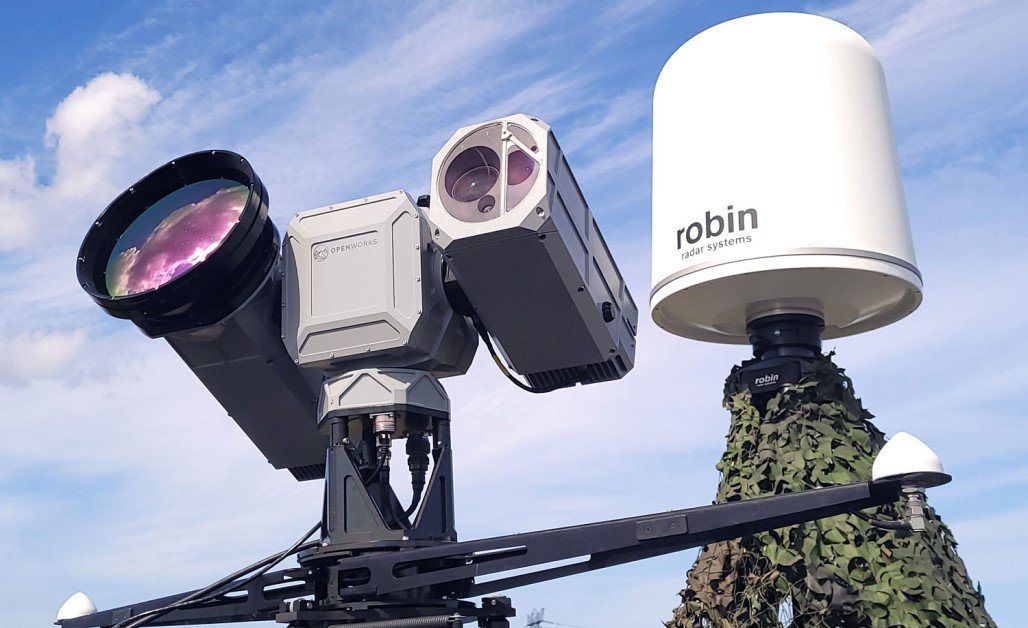
IRIS has become one of the more visible European sensors of the Ukraine war. The Dutch Ministry of Defence has supplied units to Kyiv as part of successive aid packages, and IRIS appears in the sensor stacks of several European counter-UAS platforms exported into the country. At home, the system has been procured by the Dutch armed forces and by a growing list of NATO allies, with the company citing operators across more than thirty countries. It also feeds into integrated air-defence demonstrators that pair its radar feed with effectors from third parties — the Smart Shooter SMASH fire-control optic and various jammer and net-launcher systems among them.
Robin Radar remains privately held and headquartered in The Hague, with a workforce in the low hundreds and majority ownership by Dutch investment firm Solid Ventures since a 2018 buyout. The company has resisted the temptation to bolt on its own effectors, positioning itself as the sensor of choice for integrators rather than a vertically integrated counter-drone vendor — a deliberately narrower scope than competitors like DroneShield or Anduril, and one that has helped it land inside otherwise rival systems. Production is concentrated in the Netherlands, and the firm has flagged capacity expansion repeatedly through 2024 and 2025 to keep up with European and Ukrainian demand.
The drone war over Ukraine has done for Robin Radar what no marketing campaign could: validated micro-Doppler-plus-neural-network classification as the dominant approach to small-UAS detection, against a target set that ranges from quadcopters to Shahed-136s to fixed-wing reconnaissance drones. Where the company goes next will be shaped by whether NATO members fund the layered short-range air-defence networks they have been promising — networks in which a sensor like IRIS is meant to sit at the front edge.
Products
Hardware
IRIS
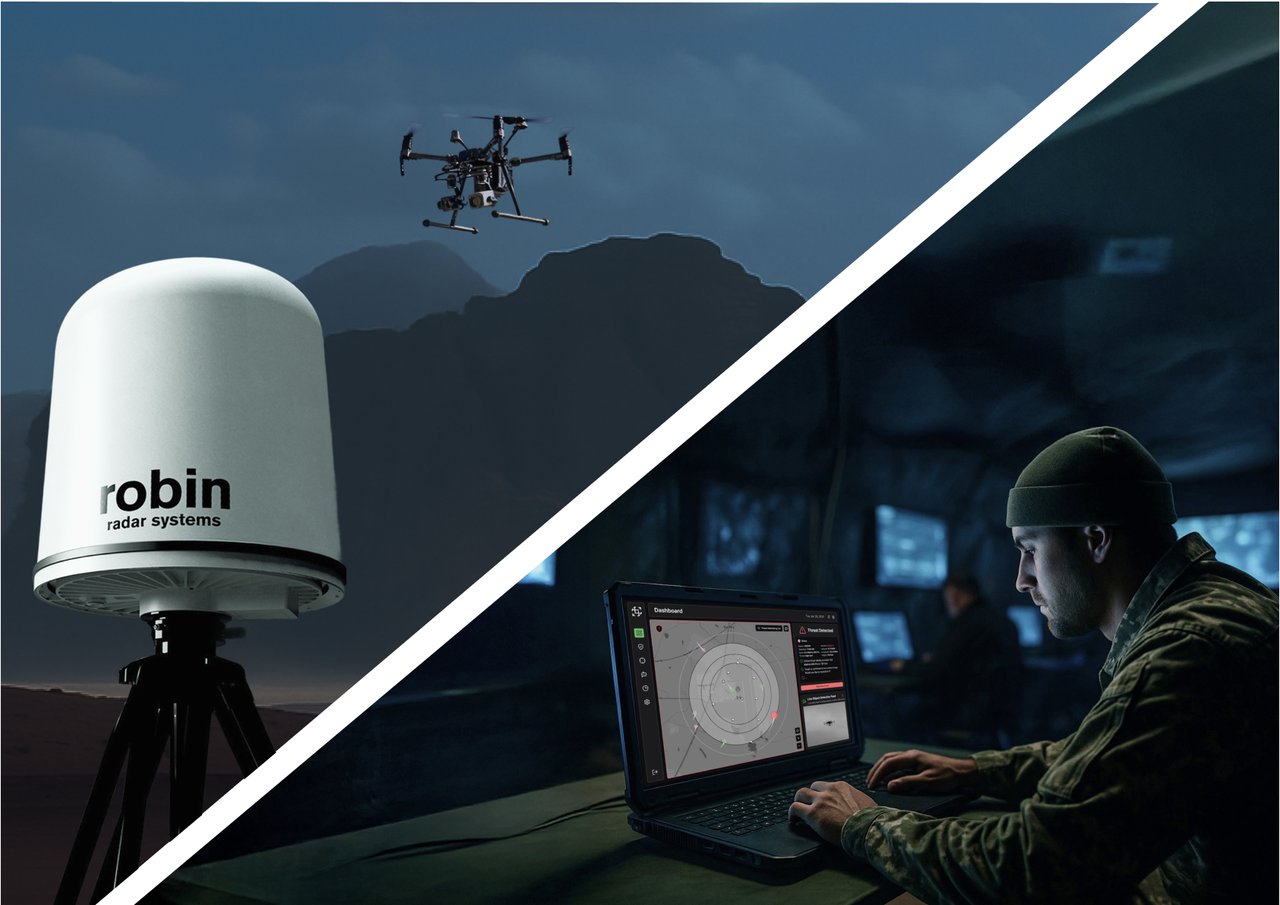
Flagship counter-UAS radar — micro-Doppler classification + deep-neural-network discrimination + on-the-move 360° 3D coverage. Deployable in under 15 minutes; vehicle-mountable up to 100 km/h. Long Range Mode (2025) extends Shahed and fixed-wing drone detection to 5-12 km.
Updated 2025
ELVIRA
Earlier-generation drone-detection radar — distinguishes birds from drones via micro-Doppler. Forerunner to IRIS.
MAX
Bird-detection radar for airfields and wind farms; the company's original product line that funded the counter-UAS pivot.
ELVIRA
Compact ground-based drone-detection radar using micro-Doppler signatures to distinguish drones from birds.
Introduced 2015
IRIS
3D X-band staring radar that detects, tracks, and classifies micro-drones in real time using neural-network classification.
Introduced 2018
MAX
Bird-detection radar for airports and wind farms — civil ancestor of the company's counter-UAS line.
Introduced 2010
Gallery
Sources
- www.robinradar.com/products/iris-radar (2026-05-02) — Official IRIS product page.
- www.asdnews.com/news/defense/2025/12/12/robin-radar-commemorates-milestone-dutch-mod-contract-supply-100-iris-radars-protect-domestic-airspace (2026-05-02) — ASD News coverage of the December 2025 100-unit Dutch MoD contract.
- www.edrmagazine.eu/dsei-2025-robin-radar-systems-deploys-the-lrm-module-for-iris-radar (2026-05-02) — EDR Magazine on the LRM module and Shahed detection range.
- www.unmannedairspace.info/counter-uas-systems-and-policies/robin-radar-announces-major-c-uas-radar-system-contract-with-the-dutch-mod/ (2026-05-02) — Unmanned Airspace coverage of the Dutch MoD contract.
- dronelife.com/2026/03/05/from-birds-to-drones-robin-radar-technology-joins-world-cup-security-effort/ (2026-05-02) — DroneLife — IRIS used for FIFA World Cup security.