X10
Flagship enterprise quadcopter with onboard AI navigation, obstacle avoidance and night-vision payloads.
Droneby SkydioIntroduced 2023

Photos: droneservicescanadainc.com · thedefensepost.com · www.defensedaily.com · Skydio · Ed Westcott / US Army / Manhattan Engineer District
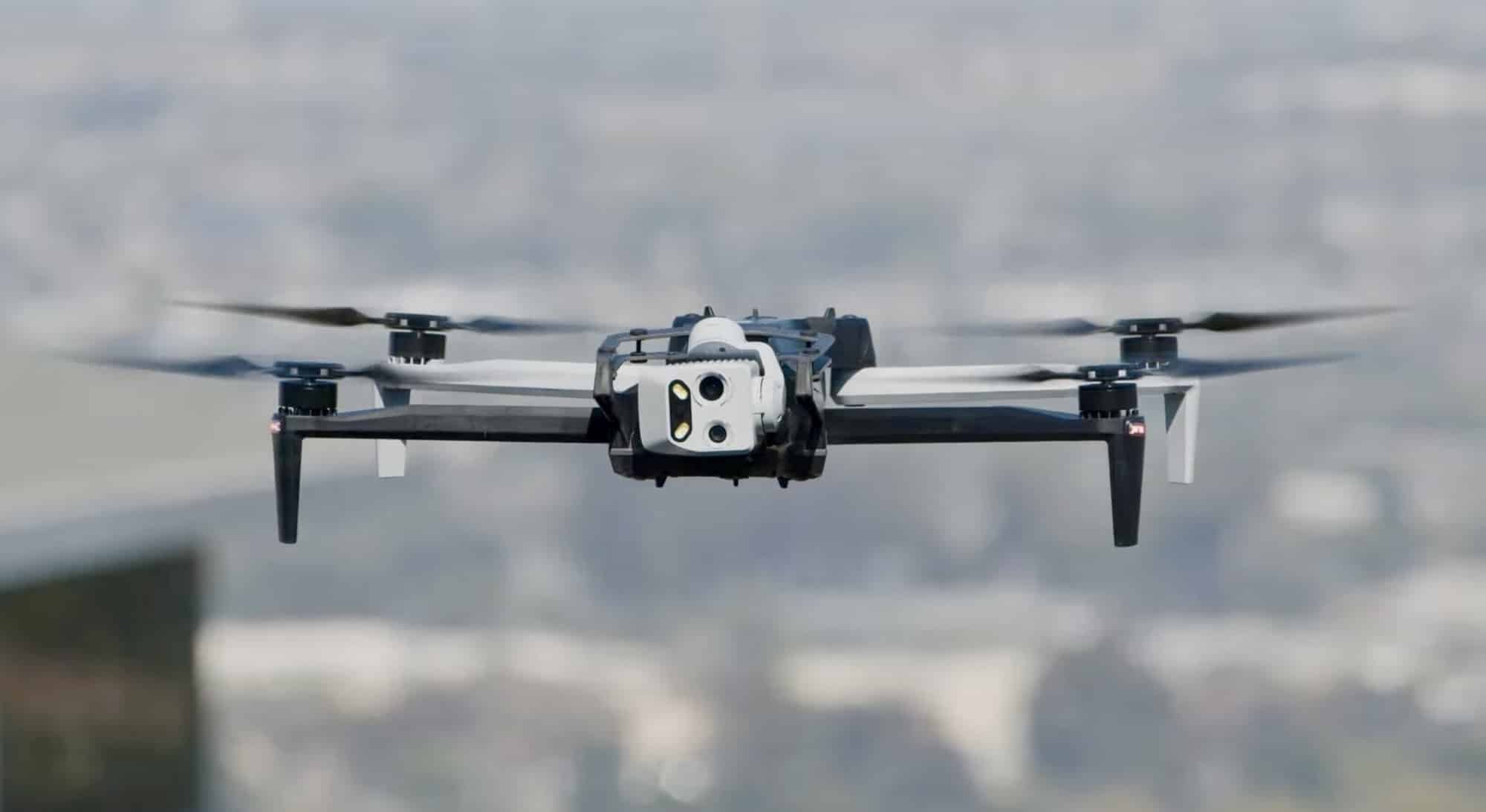
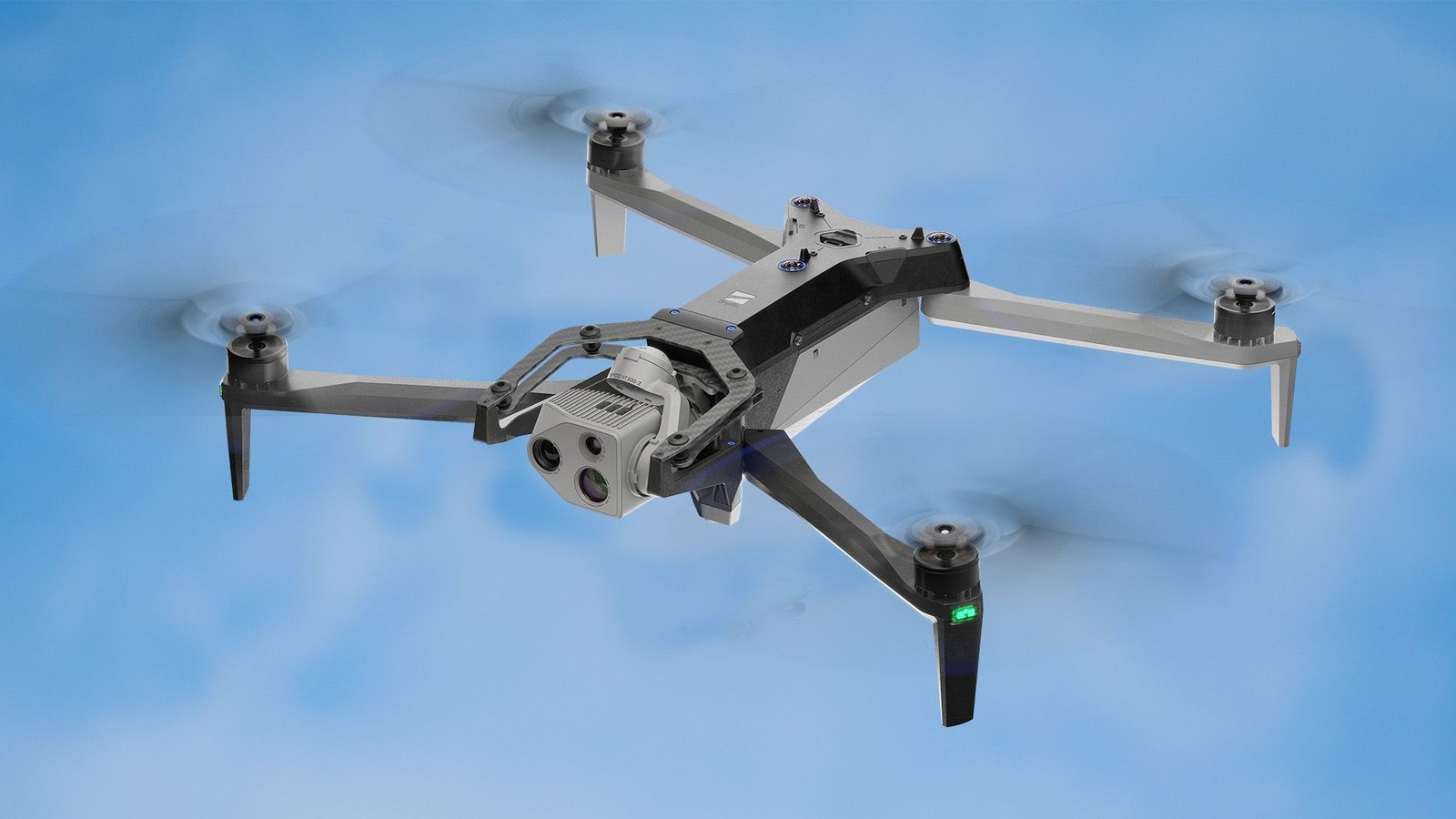
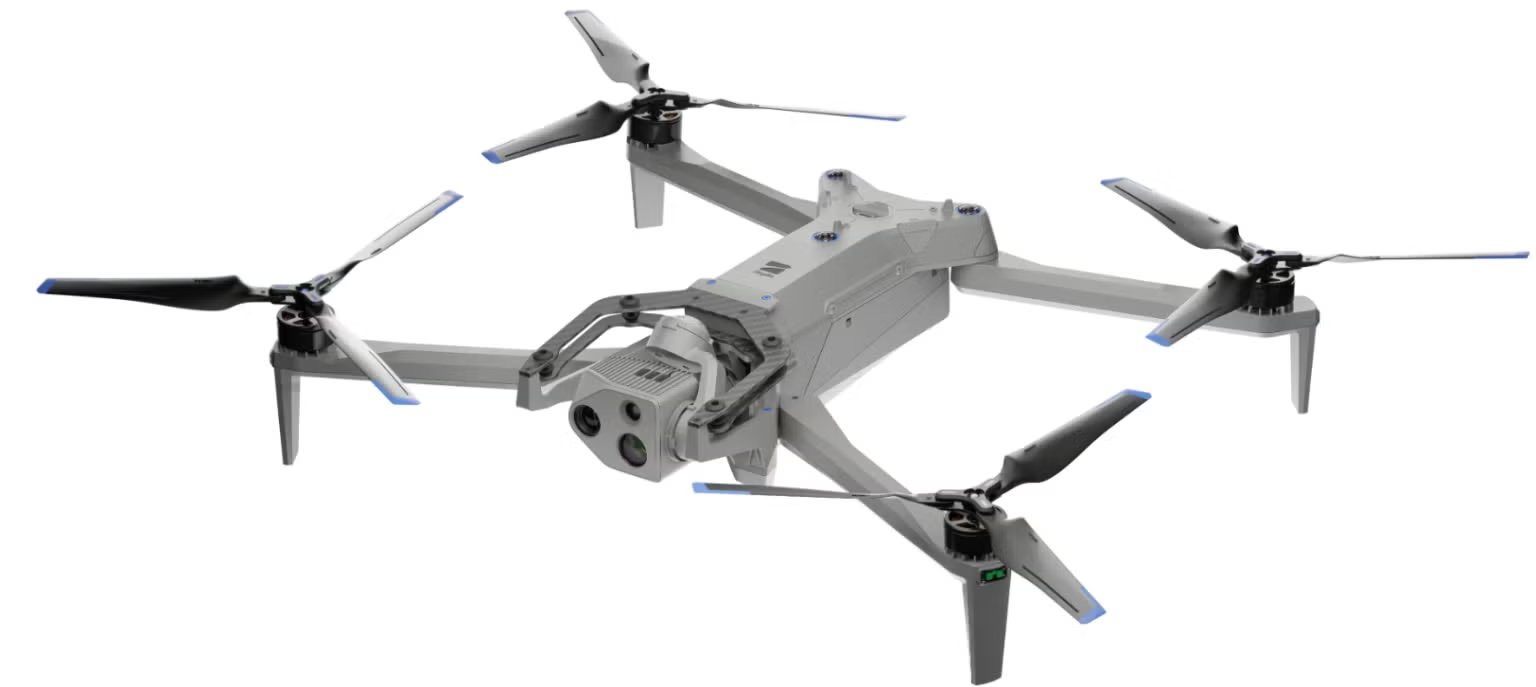
Skydio’s X10 is an enterprise-grade autonomous quadcopter that the company unveiled in September 2023 as the successor to the X2. Built by Skydio, the California firm that has anchored its identity around onboard AI flight, the X10 is the platform the company is pushing into police, utility-inspection, and military reconnaissance roles, with a hardened defence variant called the X10D fielded in parallel.
The aircraft’s central claim is autonomy under poor conditions. Six navigation cameras feed an NVIDIA Jetson Orin module that runs Skydio’s obstacle-avoidance and trajectory-planning stack onboard, allowing the drone to fly through buildings, around foliage, and through structural inspections without operator stick inputs and without a GPS lock. The main payload is a Sony-derived 6K colour sensor paired with a FLIR Boson+ thermal camera, both stabilised on a modular gimbal that the operator can swap for other sensor packages. A separate “VT300” telephoto module with optical zoom and laser rangefinder gives the platform a longer-range observation role. Endurance is around 35–40 minutes depending on payload and wind, and the aircraft is rated to operate in light rain and at high altitude — an explicit design response to feedback from US Army units that found earlier Skydio airframes weather-limited.
In the United States the X10 has been adopted broadly by police departments and by federal agencies, and the X10D is one of the platforms competing in the Army’s Short Range Reconnaissance Tranche 2 programme. Skydio has stated that around 22,000 of its drones are already in US military service across earlier generations, and the X10D is the model it is pitching as the upgrade path. Outside North America, the system has been supplied to the Ukrainian armed forces, where it joined a long list of Western quadcopters tested under live electronic-warfare conditions; Skydio has publicly acknowledged that some of those drones were jammed, and has cited that experience as a driver of the X10’s GPS-denied autonomy work.
Development since launch has focused on the defence configuration and on third-party payload integration: encrypted radios, a NDAA-compliant supply chain, and software updates that fold in lessons from Ukraine. The X10 sits in an unusual market position — more expensive and more autonomous than a DJI Mavic 3, smaller and cheaper than a Group 2 fixed-wing system — and Skydio is betting that the combination of onboard AI and an explicitly non-Chinese supply chain is what keeps Western operators buying it.