ZALA Lancet-3
Russia's mainline loitering munition; the most-fielded one-way attack drone in the war on Ukraine.
Missile / loitering munitionAdversary capabilityby ZALA Aero GroupIntroduced 2019 · Updated 2023
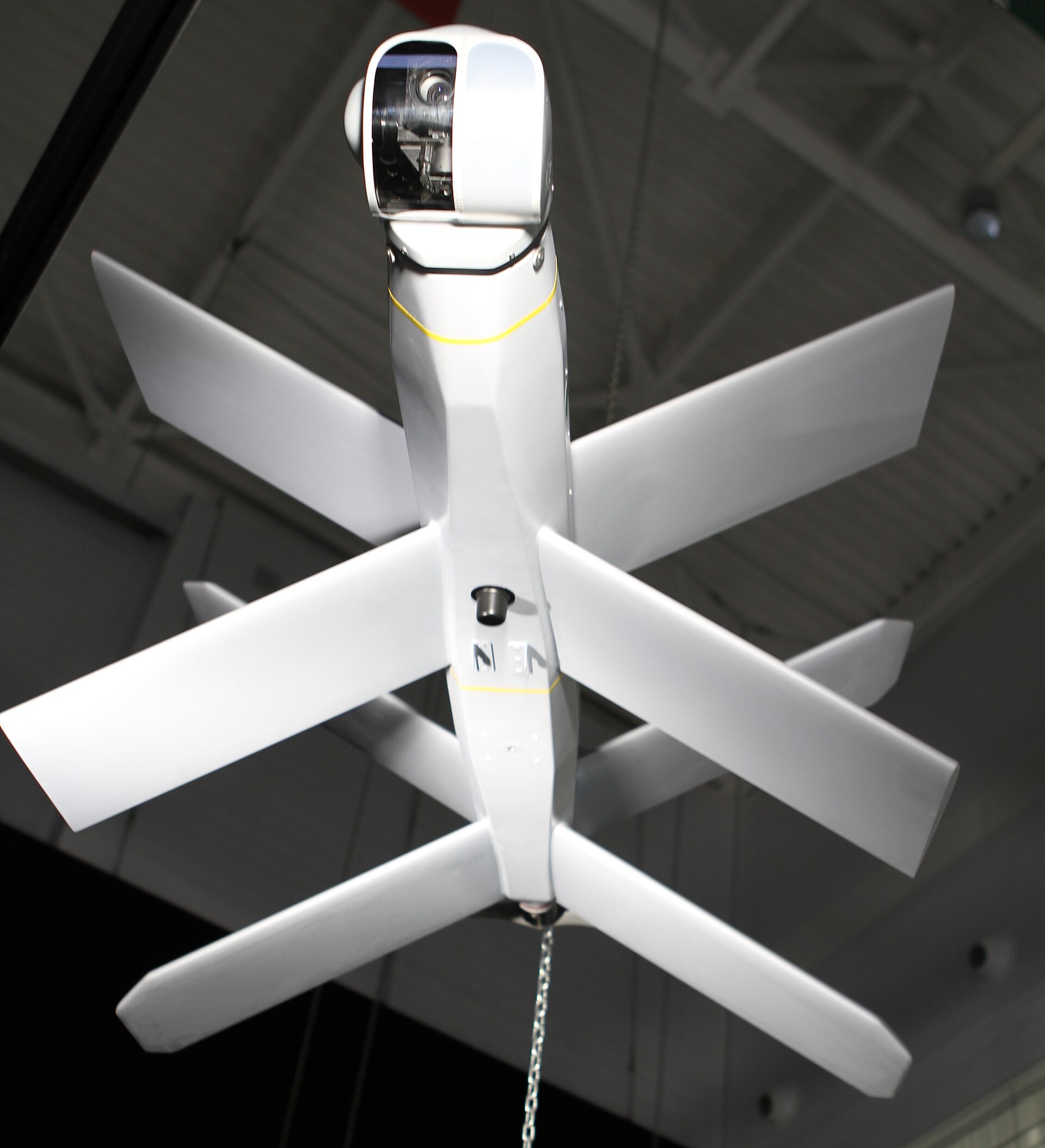 ZALA Lancet-3 loitering munition.
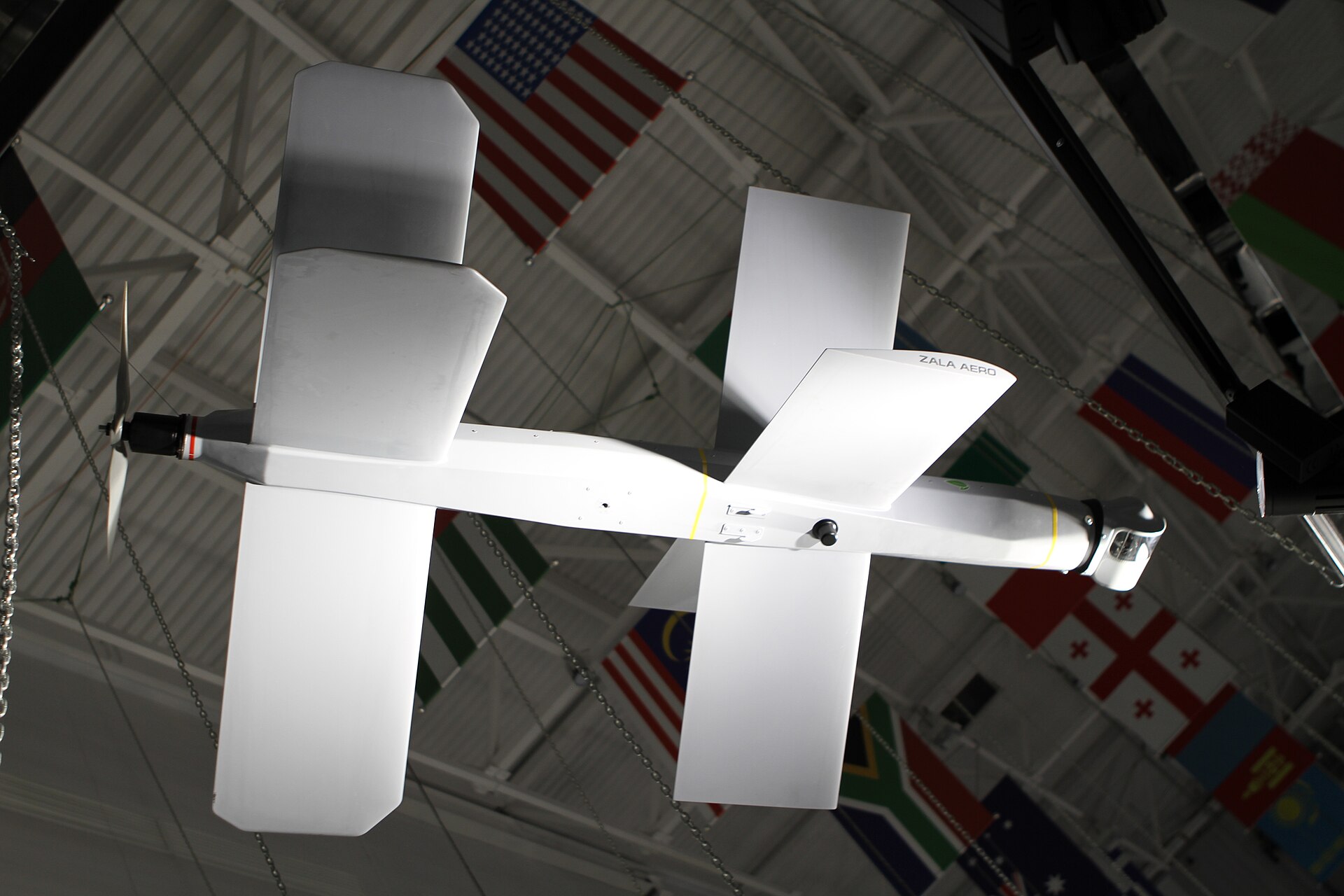 Lancet on display at the Army-2020 expo, Russia.
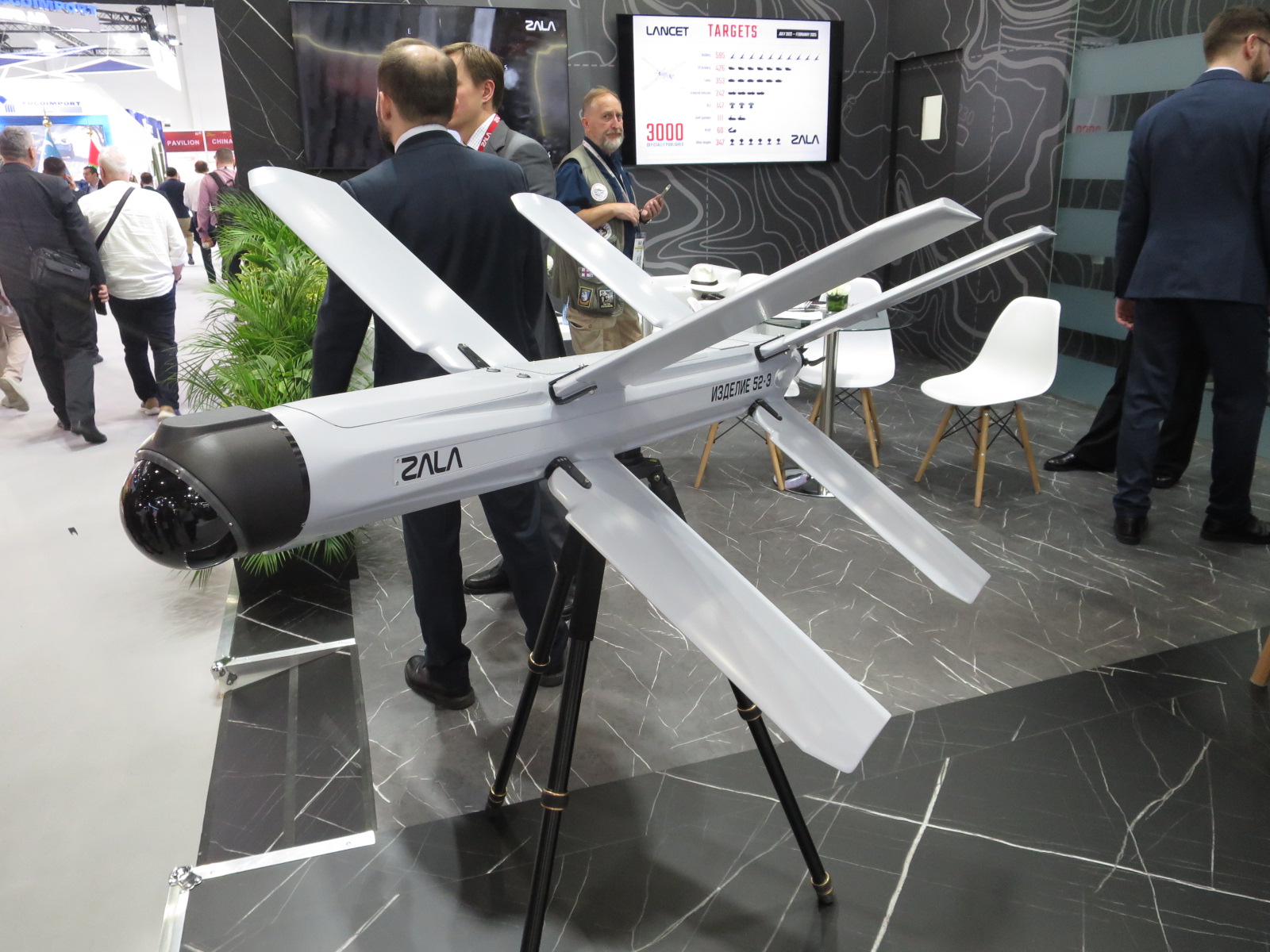 Lancet at IDEX 2025, Abu Dhabi.
Photo: Wikimedia Commons (CC BY-SA).
The ZALA Lancet-3 is a Russian loitering munition first unveiled at the ARMY-2019 expo in Moscow and built by ZALA Aero Group, a subsidiary of Kalashnikov Concern. It is the larger of two principal Lancet variants (the smaller Lancet-1 has a 1 kg warhead and 30 minutes of endurance).
The platform is a single-use kamikaze drone with a 12 kg maximum take-off weight, a 3 kg warhead in the original Lancet-3 and 5 kg-plus in the Izdeliye-53 upgrade, an electric pusher-prop, a 40 km nominal range, 40 minutes of loiter, and a 300 km/h terminal-dive speed. Guidance is optical-electronic with a TV terminal-guidance unit; the Izdeliye-53 adds an autonomous swarm-coordination capability and can attack targets from pre-set classes without an operator in the loop.
Lancet has become Russia’s signature precision-strike drone in Ukraine — both for what it kills (Ukrainian artillery, air-defence, armour) and for the supply-chain story behind it: Western and Chinese components keep flowing into Russian production despite the November 2023 first US Treasury / Commerce / State sanctions package targeting the Lancet network.
Combat experience
Lancet was a mainstay of the Russian drone arsenal in Ukraine from mid-2022 onward. The open-source LostArmour project logged 1,163 confirmed Lancet strikes between July 2022 and 28 February 2024 — 363 targets (31.2%) destroyed and 615 (52.9%) substantially damaged. The target mix is roughly half artillery, a quarter tanks and armoured vehicles, ten per cent soft-skinned vehicles, and 14 per cent air-defence systems. May 2024 alone saw 285 logged strikes — more than any prior month.
The Izdeliye-53 upgrade entered operational deployment in October 2023 with a heavier 5-kg-plus warhead, an hour of endurance, and an autonomous-targeting mode in which Lancets can relay information about armoured-vehicle concentrations to one another and select targets from pre-set categories without operator input.
Effectiveness
The British Ministry of Defence assessed in November 2023 that the Lancet “was highly likely to be one of the most effective new capabilities deployed by Russia in Ukraine over the previous 12 months”. The system’s combination of standoff range, satellite-imagery-cued hunt patterns, and dive-attack precision has reshaped Ukrainian artillery survivability — gun crews now operate from camouflaged dispersal points and rotate position aggressively.
Ukrainian counter-measures have evolved: chain-link fencing, wire-mesh “cope cages” and wooden logs around howitzers reduce warhead penetration; inflatable and wooden decoys absorb strikes; and from 2024, FPV-drone interceptors have been used to physically dive on incoming Lancets in flight. Russian production reportedly tripled through 2023 even under sanctions, sustained by Western-component diversion (NVIDIA Jetson TX2 boards, AMD/Xilinx Zynq SoCs).
Sources
- en.wikipedia.org/wiki/ZALA_Lancet (2026-05-02) — Encyclopedic entry on the Lancet — confirms June 2019 ARMY-2019 unveiling, the Lancet-3 / Izdeliye-52 / Izdeliye-53 progression, the 12 kg MTOW / 3 kg payload / 40 km / 300 km/h dive specs, the 1,163 LostArmour-logged strikes by February 2024 with target-class breakdown, the May 2024 285-strike monthly peak, the Izdeliye-53 autonomous-targeting capability deployed October 2023, the November 2023 UK MoD effectiveness assessment, the chain-link / decoy / FPV-interceptor counter-measures, and the November 2023 first US sanctions package.