Bayraktar TB2
Medium-altitude long-endurance armed UAV — the export combat drone that re-defined the market.
Droneby BaykarIntroduced 2014 · Updated 2025
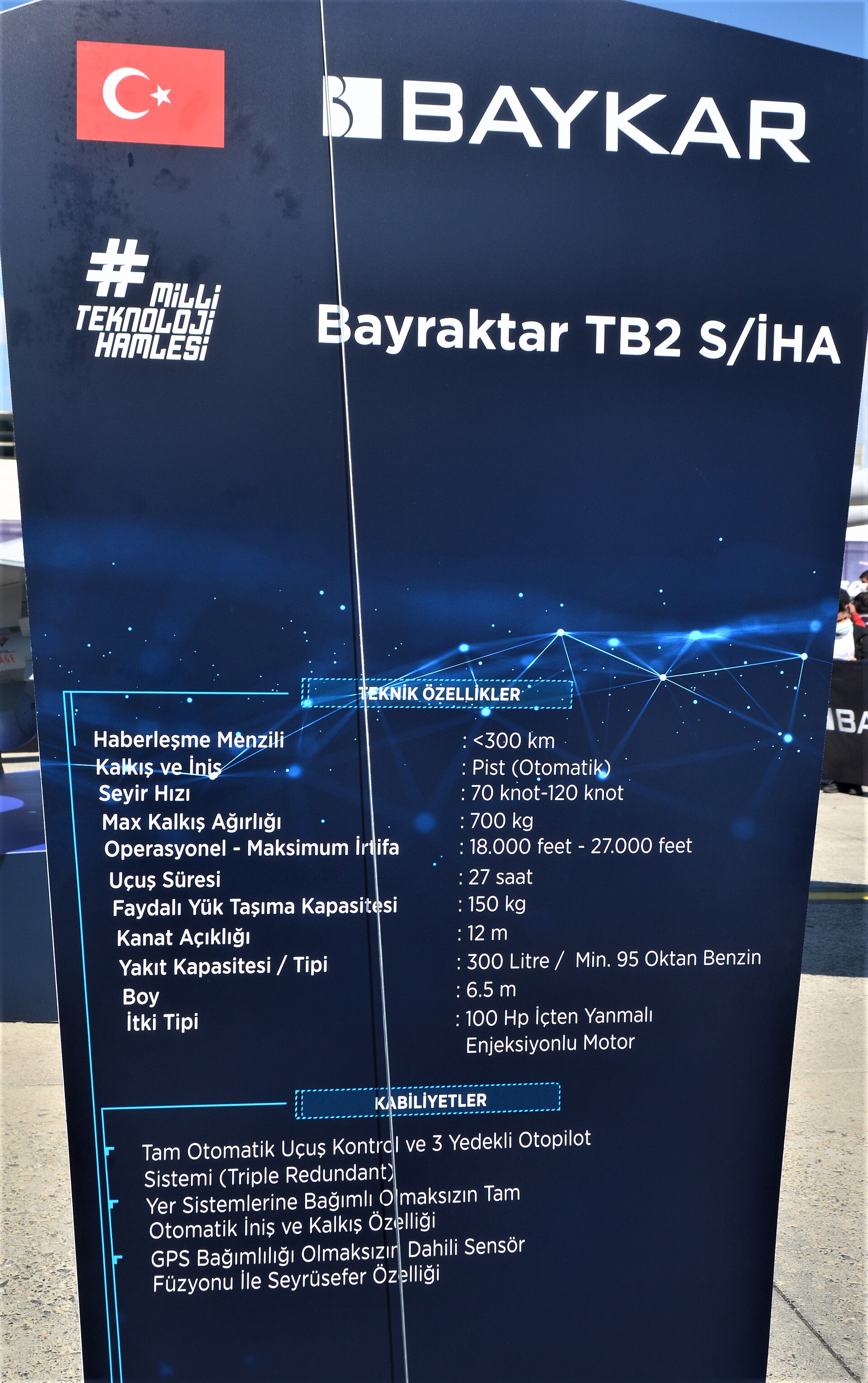 Bayraktar TB2 (S-İHA), Turkish Army, Teknofest 2021.
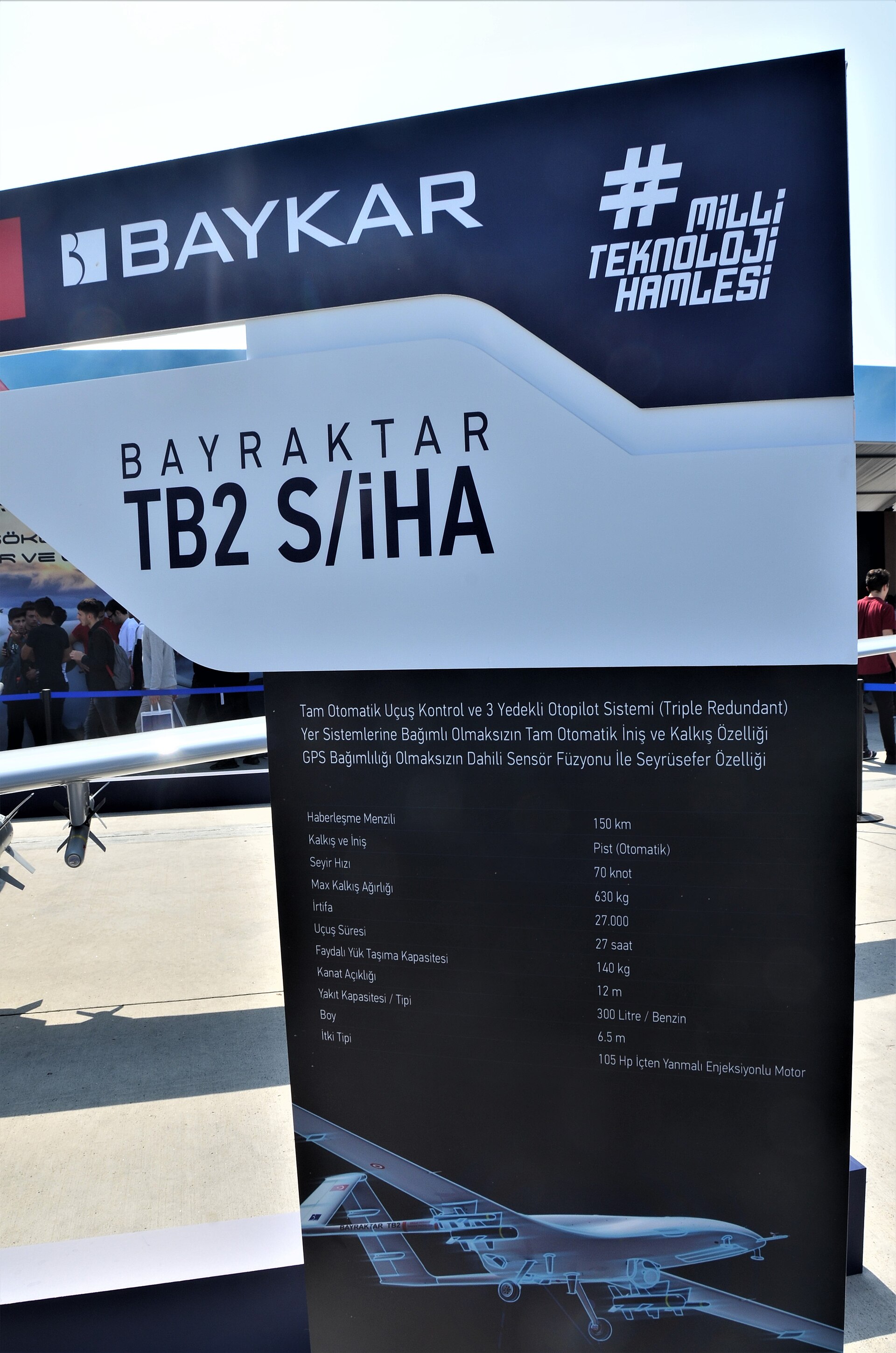 Bayraktar TB2 displayed at Teknofest 2019.
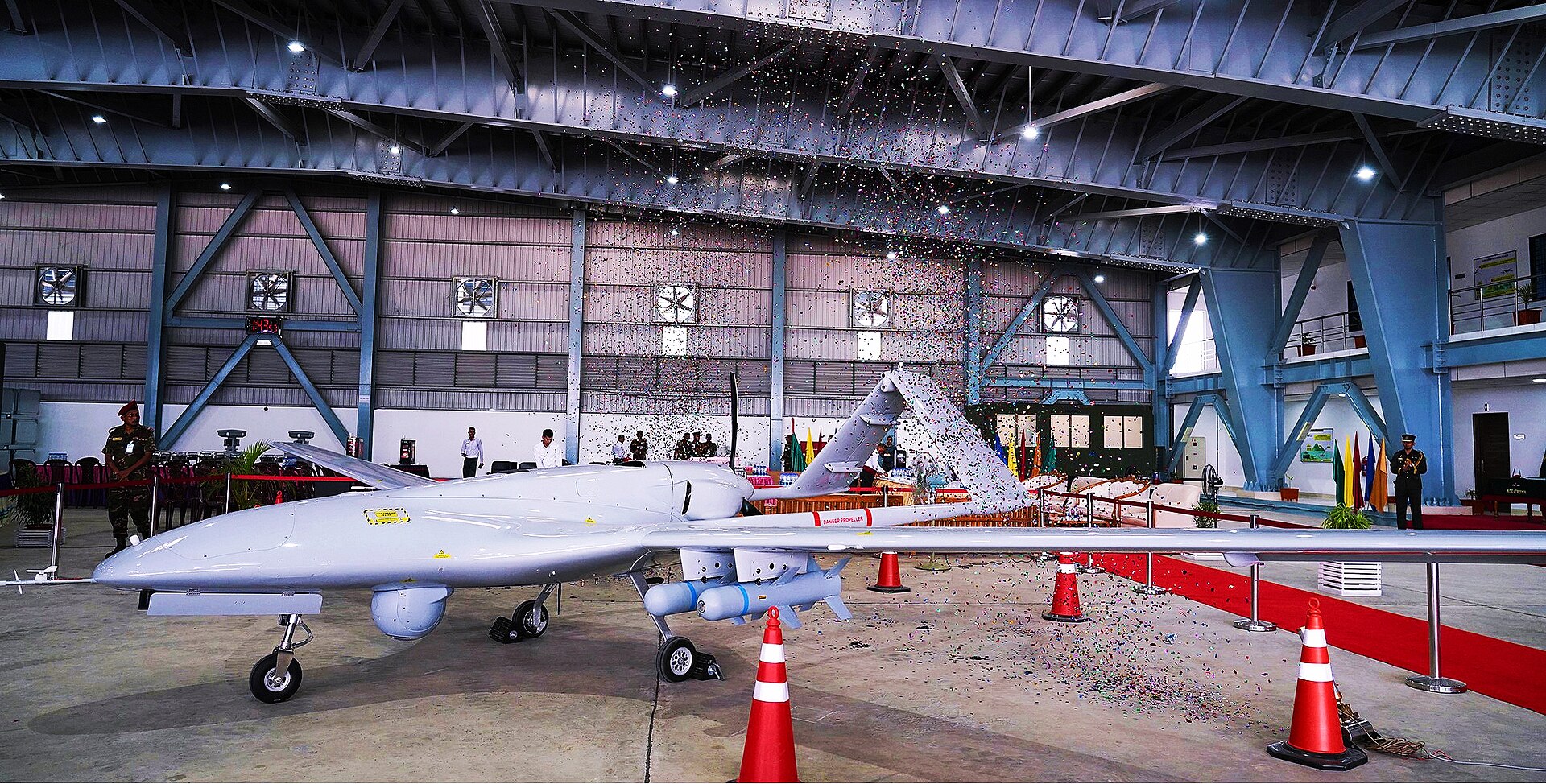 Bayraktar TB2 of the Bangladesh Army.
Photo: Wikimedia Commons (CC BY-SA).
The Bayraktar TB2 is a Turkish medium-altitude long-endurance armed unmanned aerial vehicle, manufactured by Baykar in Istanbul. The platform first flew in August 2014 and entered Turkish service in 2015 after a successful missile-firing test in December of that year. Over 800 airframes have been built, completing over one million cumulative flight hours by December 2024.
The TB2 is best known for its breakout role in the 2020 Second Nagorno-Karabakh War, the early phase of Russia’s full-scale invasion of Ukraine in 2022, and as the export combat drone that opened the market — Türkiye has shipped TB2s to 31 customer countries.
The latest variant, the TB2T-AI, was unveiled in February 2025 with a turbo engine, an onboard AI compute stack, and a service ceiling above 30,000 ft — Baykar’s answer to the maturing short-range air-defence environment that closed the original TB2’s window in Ukraine.
Combat experience
The Bayraktar TB2 first saw heavy combat in 2019-2020 over Syria and Libya, where Turkish operators used it to suppress short-range air defences (Pantsir and Buk systems) during Operation Spring Shield and to grind Haftar’s mechanised columns down outside Tripoli. The Azerbaijani campaign in the 2020 Second Nagorno-Karabakh War was the breakout — TB2s destroyed Armenian artillery, tanks, and air-defence batteries on broadcast video and shifted the war’s balance.
In Ukraine the TB2 entered the war in spring 2022 as a “life-giver”, in the words of the Ukrainian air force, picking off Russian command posts, armoured columns, helicopter assembly areas, surface-to-air systems, and even the patrol boats blockading Snake Island. The window closed by mid-2022. As Russian short-range air defences (Tor-M2, Pantsir-S1) and electronic warfare were pushed forward into the front line, TB2 attrition climbed. By April 2023 a Russian air-defence commander claimed more than 100 TB2s had been shot down across all operators since the invasion; by February 2025, Ukrainian-side accounting put confirmed Ukrainian losses at 26. Since mid-2023, Ukraine has used surviving TB2s primarily for reconnaissance over the Black Sea and rear areas rather than direct strike.
Effectiveness
The TB2’s effectiveness profile is uneven by adversary. Against Syrian, Armenian, and Libyan forces — operating older Soviet-era short-range air defence with limited integration and electronic warfare — the platform was decisive. Francis Fukuyama and other strategists credited it with initiating a new doctrinal era of cheap, long-loitering precision-strike drones replacing manned ground-attack aircraft for many roles.
Against modern Russian air defence in Ukraine, the same platform proved attritable. A Ukrainian commander told reporters in October 2023 that “it is hard to find situations where to use them,” citing more sophisticated Russian air defence and electronic warfare. The TB2T-AI variant unveiled in February 2025 — turbo-engined, with onboard AI compute and a 30,000-ft-plus ceiling — is Baykar’s response to that environment, lifting the platform above most short-range air-defence engagement envelopes.
Sources
- en.wikipedia.org/wiki/Baykar_Bayraktar_TB2 (2026-05-02) — Encyclopedic entry citing primary reporting — confirms August 2014 first flight, 2015 service entry, the >800-airframe production run, the operator list, the Operation Spring Shield / Libya / Nagorno-Karabakh / Ukraine combat record, the April 2023 Russian air-defence "100+ shot down" claim, the 26 confirmed Ukrainian losses by February 2025, the role-shift to reconnaissance from mid-2023, and the February 2025 TB2T-AI variant.