IRIS UAS
Airspace-awareness and BVLOS situational-awareness platform for unmanned aircraft operations, fusing radar, ADS-B and sensor feeds.
Softwareby Kongsberg GeospatialIntroduced 2018
Photos: www.unmannedsystemstechnology.com · www.suasnews.com · www.vision-systems.com
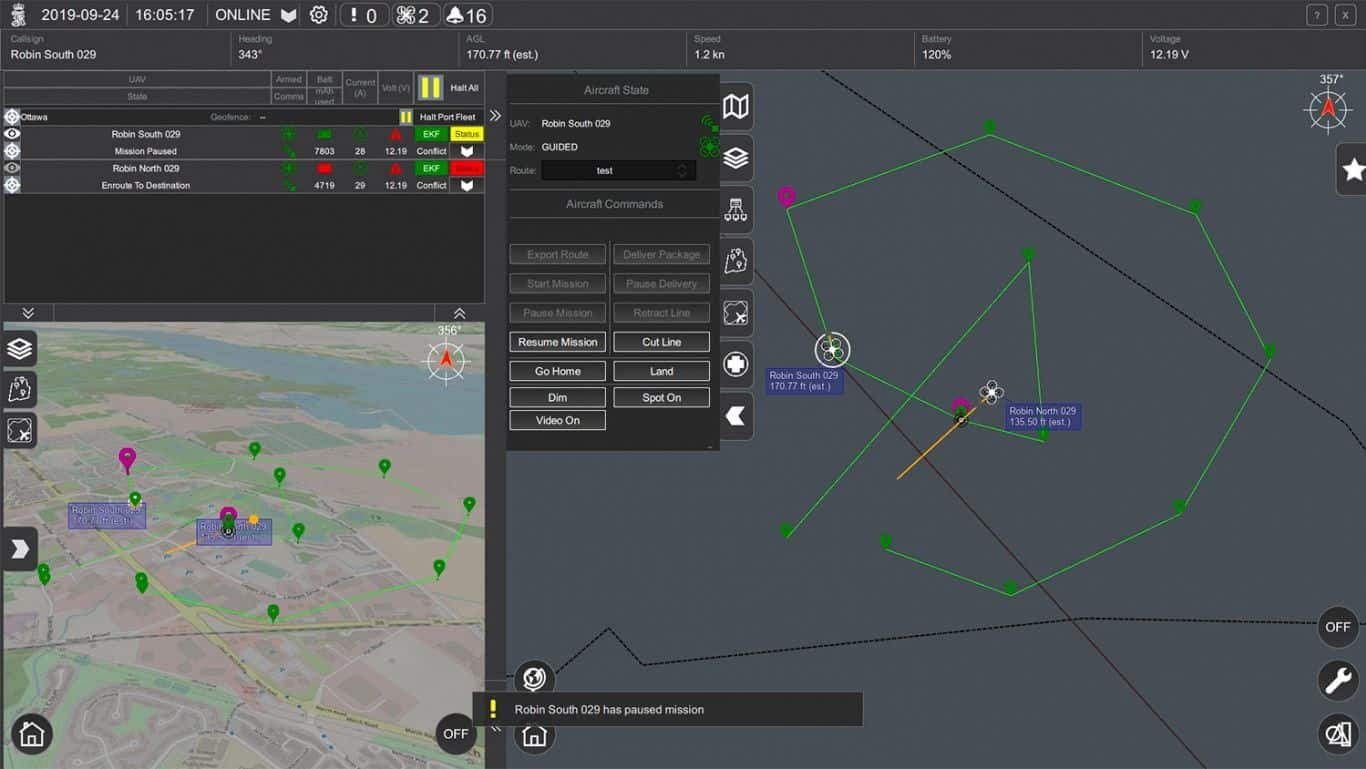
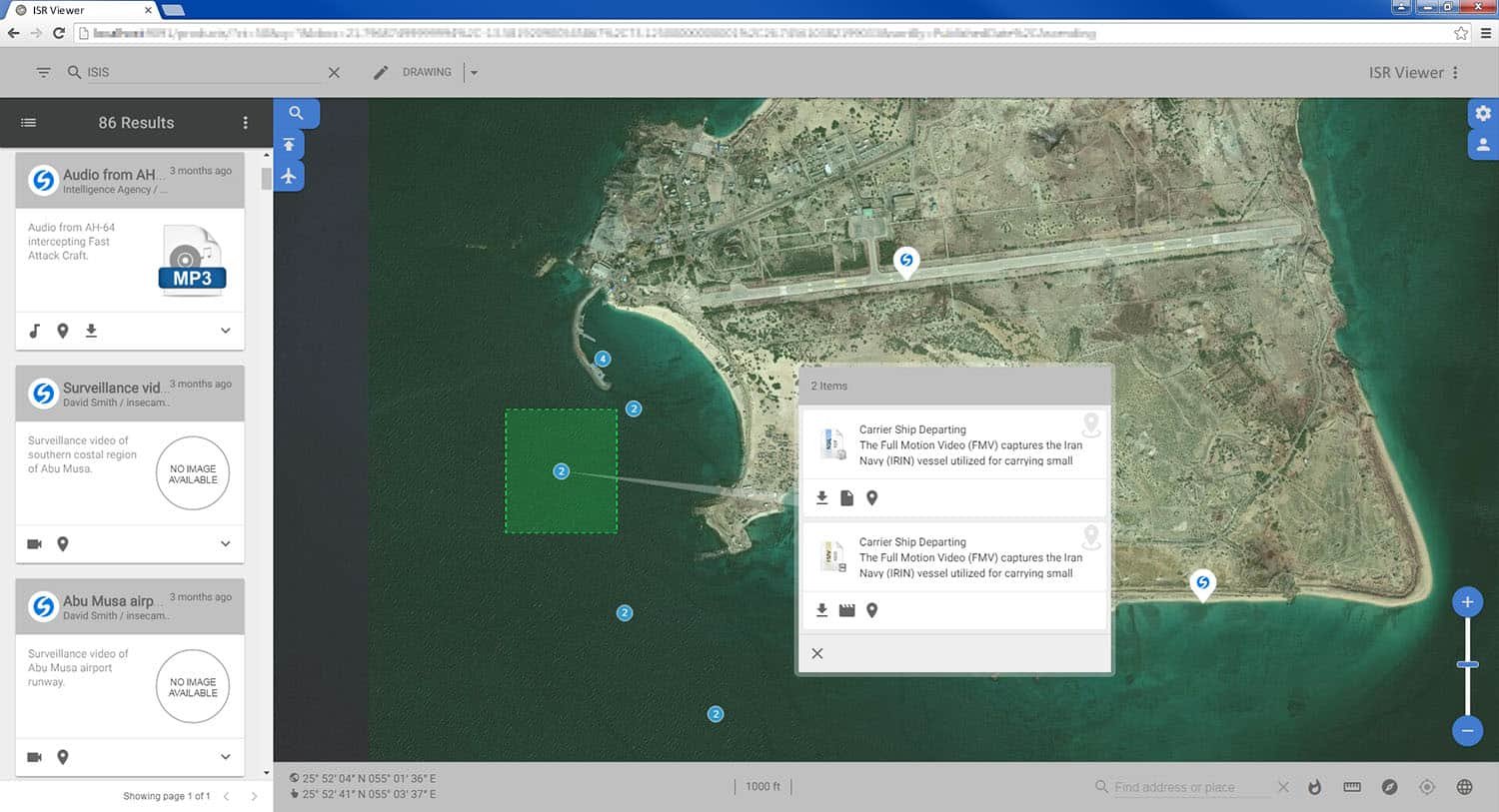
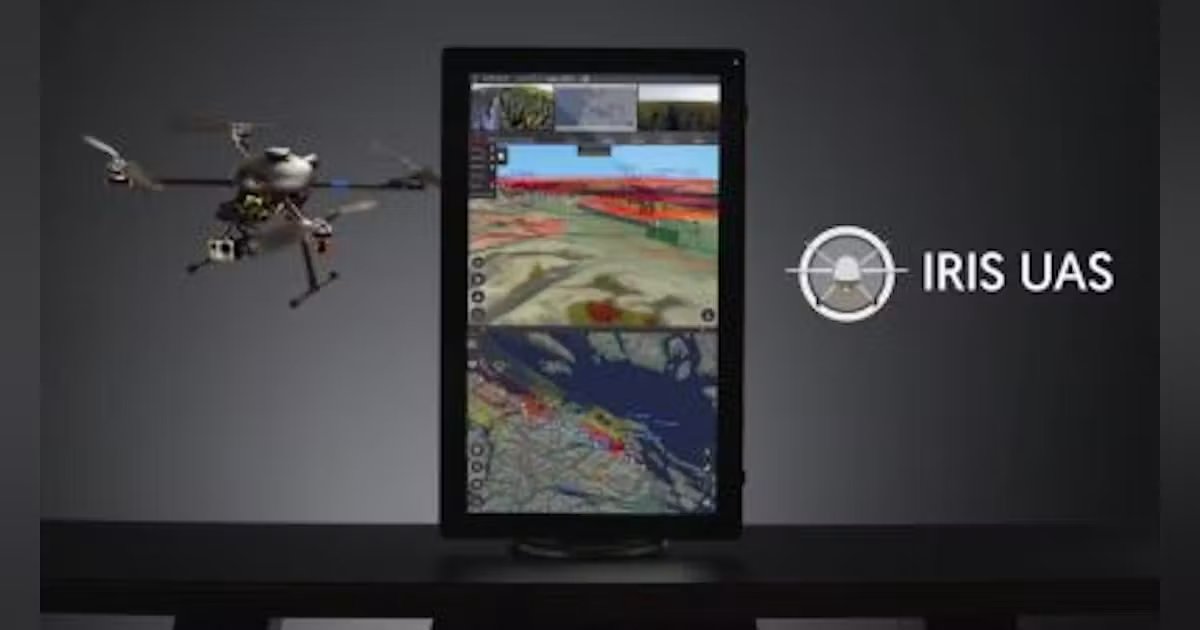
IRIS UAS is the airspace-awareness software that Kongsberg Geospatial built to make beyond-visual-line-of-sight drone flight tractable for civil and military operators. First fielded in 2018 and developed at the company’s Ottawa headquarters, it sits between the radars, transponders and other surveillance feeds an operator has access to and the ground-control station the pilot actually looks at. The product is not an autopilot or a counter-drone weapon; it is the situational-awareness layer that tells a remote pilot what else is in the sky around their aircraft and whether anything is on a collision course.
Under the hood IRIS is a fusion engine built on Kongsberg Geospatial’s TerraLens visualisation stack. It ingests primary radar tracks, ADS-B and Mode-S transponder returns, FLARM, remote-ID broadcasts and operator-supplied flight plans, then reconciles them into a single track picture with conflict prediction and detect-and-avoid alerting. Operators can plug in different sensor sets — Echodyne’s electronically scanned radars and a range of perimeter and air-surveillance radars are commonly paired with it — and the software handles the geometry, deconfliction and 3D presentation. The same engine is used to render the airspace picture on a mission console and to drive automated alerts back to the autopilot or to an air-traffic services display.
The clearest reference site is the Foremost UAS Test Range in Alberta, where the National Research Council of Canada and Transport Canada have used IRIS as the airspace surveillance layer for repeated BVLOS trials, including long-range medevac and infrastructure-inspection profiles. NAV CANADA has worked with the company on integrating uncrewed traffic into its services. In the United States the platform has been picked up by Department of Defense and DHS test programmes evaluating large UAS in shared airspace, and Kongsberg Geospatial has publicised work with Northrop Grumman’s Triton maritime patrol effort and with US Navy ground-control deployments.
Development has tracked the slow opening of civil airspace to uncrewed traffic. Recent iterations have added support for Remote ID, tighter integration with UTM (uncrewed traffic management) services, and more autonomy in the conflict-resolution logic so that an operator monitoring several aircraft is not the one calculating each avoidance manoeuvre.
In a market crowded with detect-and-avoid point solutions and counter-drone radars, IRIS occupies the integrator’s slot — the software that lets a programme office combine whichever sensors it has into one airspace picture certifiable enough for routine BVLOS operations. That positioning, rather than any single sensor breakthrough, is why it keeps appearing in test ranges and in the ground stations of larger unmanned platforms.