V-BAT
Single-engine ducted-fan VTOL UAV used for ISR and increasingly as a Hivemind-piloted autonomous platform.
Droneby Shield AIIntroduced 2016
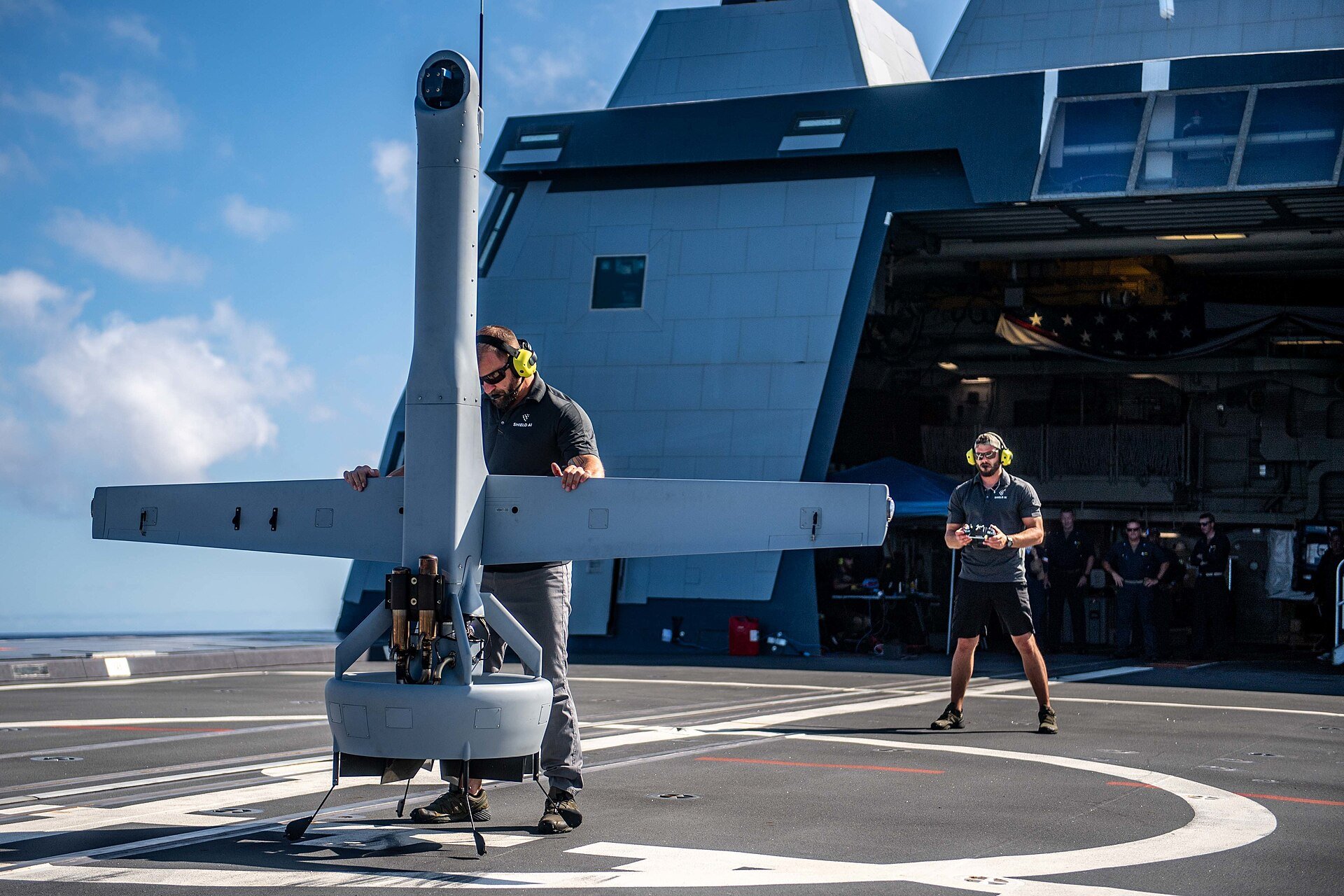
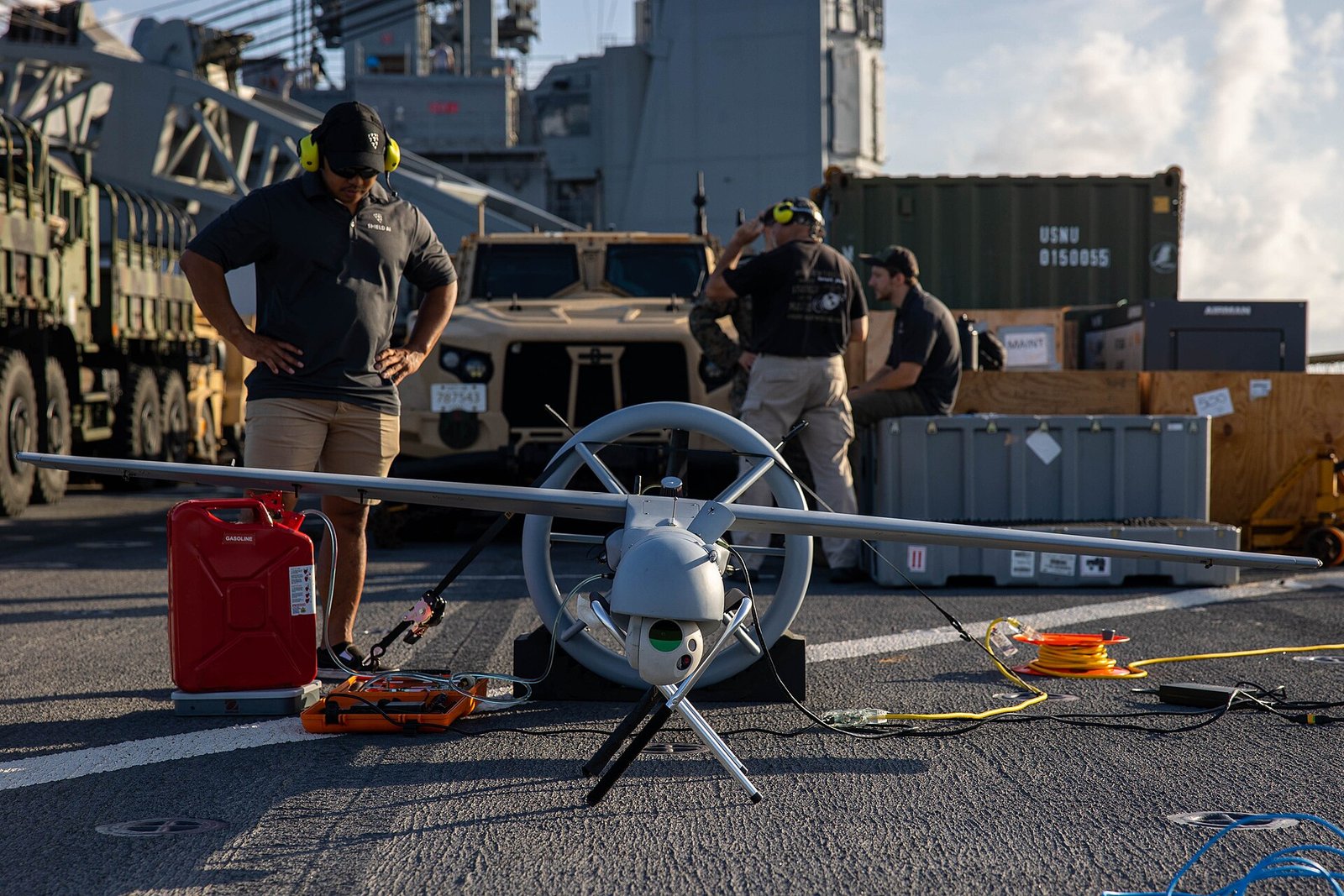
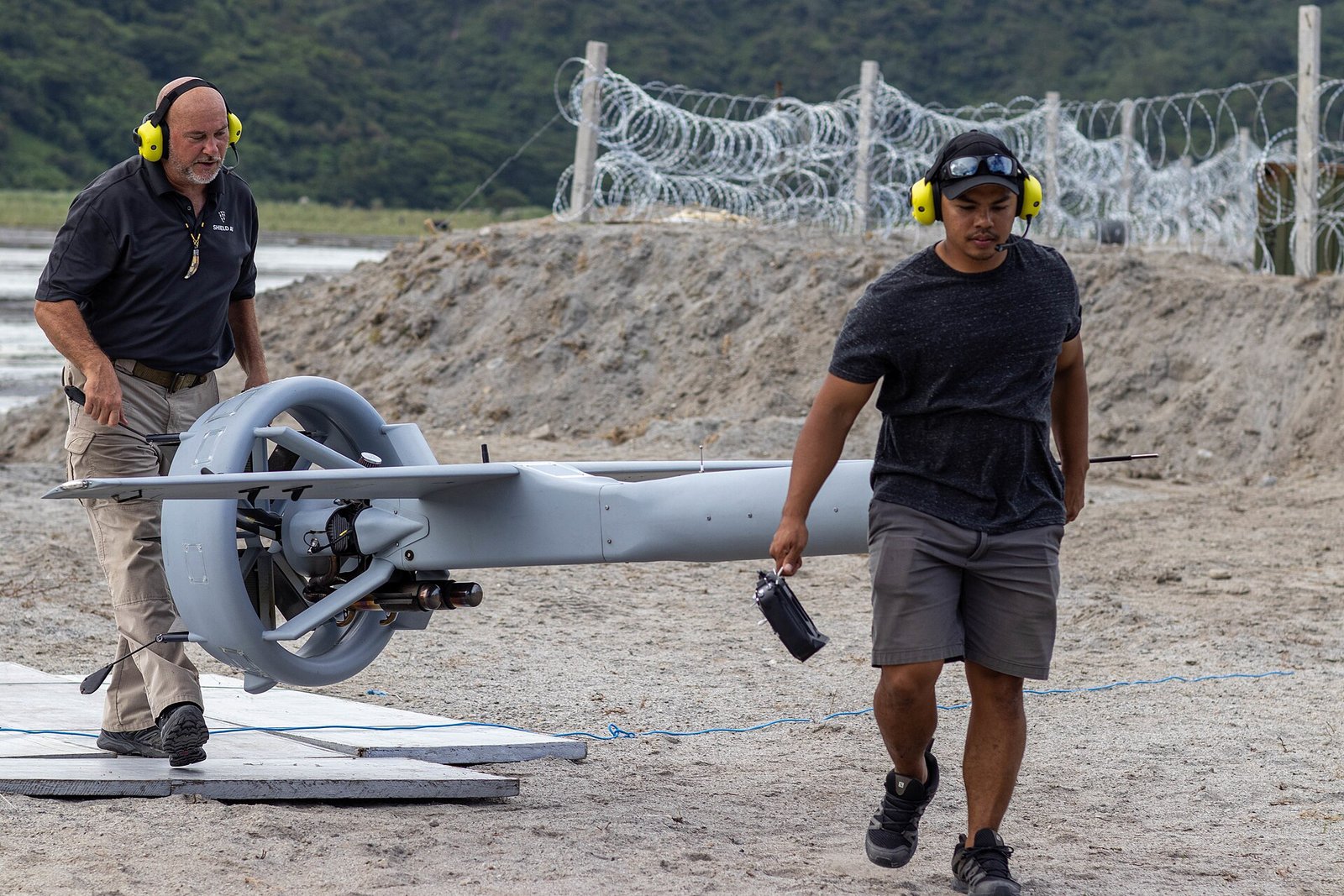
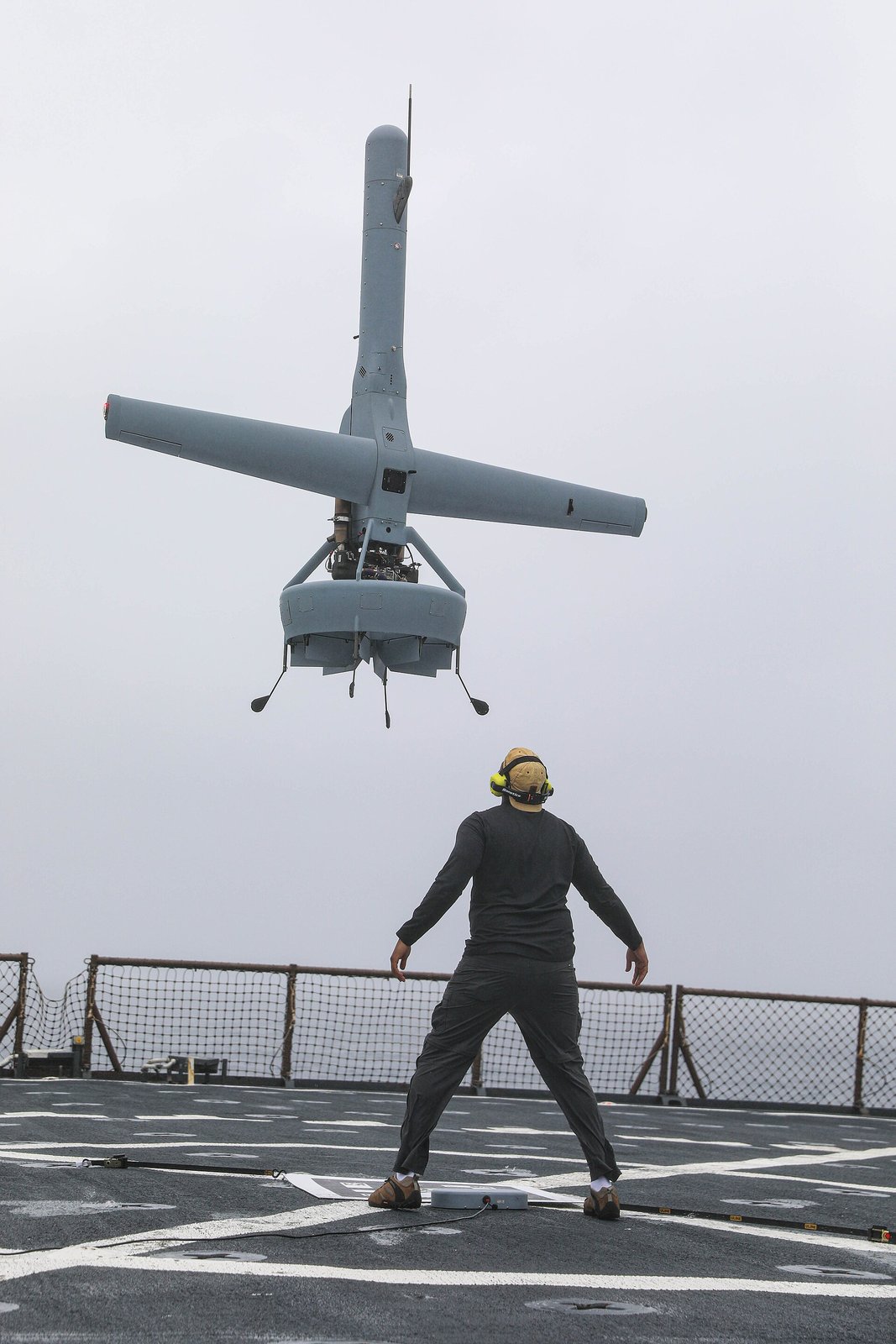
Photos: U.S. Navy photo by Mass Communication Specialist 3rd Class Megan Alexander · U.S. Marine Corps photo by Lance Cpl. Manuel Alvarado · U.S. Navy photo by Mass Communication Specialist 3rd Class Moises Sandoval · Shield AI
V-BAT is a single-engine, ducted-fan vertical-takeoff-and-landing unmanned aircraft built by Shield AI, the San Diego firm that absorbed the airframe’s original developer, Martin UAV, in 2021. The design dates to the mid-2010s and entered US military service for intelligence, surveillance and reconnaissance work around 2016. Its defining trait is operational independence from runways or catapults: the aircraft sits on its tail, lifts off vertically, and transitions into horizontal flight, which lets a small ground team operate it from a ship’s deck, a clearing, or a contested forward position.
The airframe is built around a single ducted fan in the tail, driven by a heavy-fuel engine, with the fuselage doubling as the tail boom. Endurance runs to roughly ten hours with a ceiling near twelve thousand feet, and the modular nose accepts EO/IR turrets, signals-intelligence packages, and laser designators. What distinguishes the current generation is software rather than airframe: Shield AI has integrated its Hivemind autonomy stack onto V-BAT to allow the aircraft to plan, navigate and coordinate without GPS or continuous radio links — the company’s pitch for operations against jamming-heavy adversaries. Multi-ship teaming, where several V-BATs share a mission and reassign tasks among themselves, is the headline capability of the Hivemind-equipped variant.
Operators include the United States Navy, Marine Corps and Coast Guard, with the Marines having selected V-BAT for the Long Range Reconnaissance contract awarded in 2024. The system has also been delivered to Ukraine, where it has been used to feed targeting data for long-range fires against Russian forces — one of the few Western VTOL ISR aircraft fielded in that conflict at any scale. Allied evaluations and trials have been reported with Japan, the United Kingdom and Israel, though procurement decisions in those markets remain in flux.
Shield AI continues to iterate on the platform. The Block 30 variant introduced a higher payload allowance and longer endurance, and the company has demonstrated three- and four-ship Hivemind-controlled flights over the past two years, framing V-BAT less as a single ISR drone and more as a node in a coordinated autonomous formation. That direction sets it apart from peer systems such as the Insitu ScanEagle and AeroVironment Jump 20, which compete for similar shipboard and expeditionary niches but rely more heavily on operator-in-the-loop control. Whether autonomous teaming becomes a routine field capability or remains a demonstration milestone is the open question that V-BAT’s next few years will answer.