V-BAT Teams
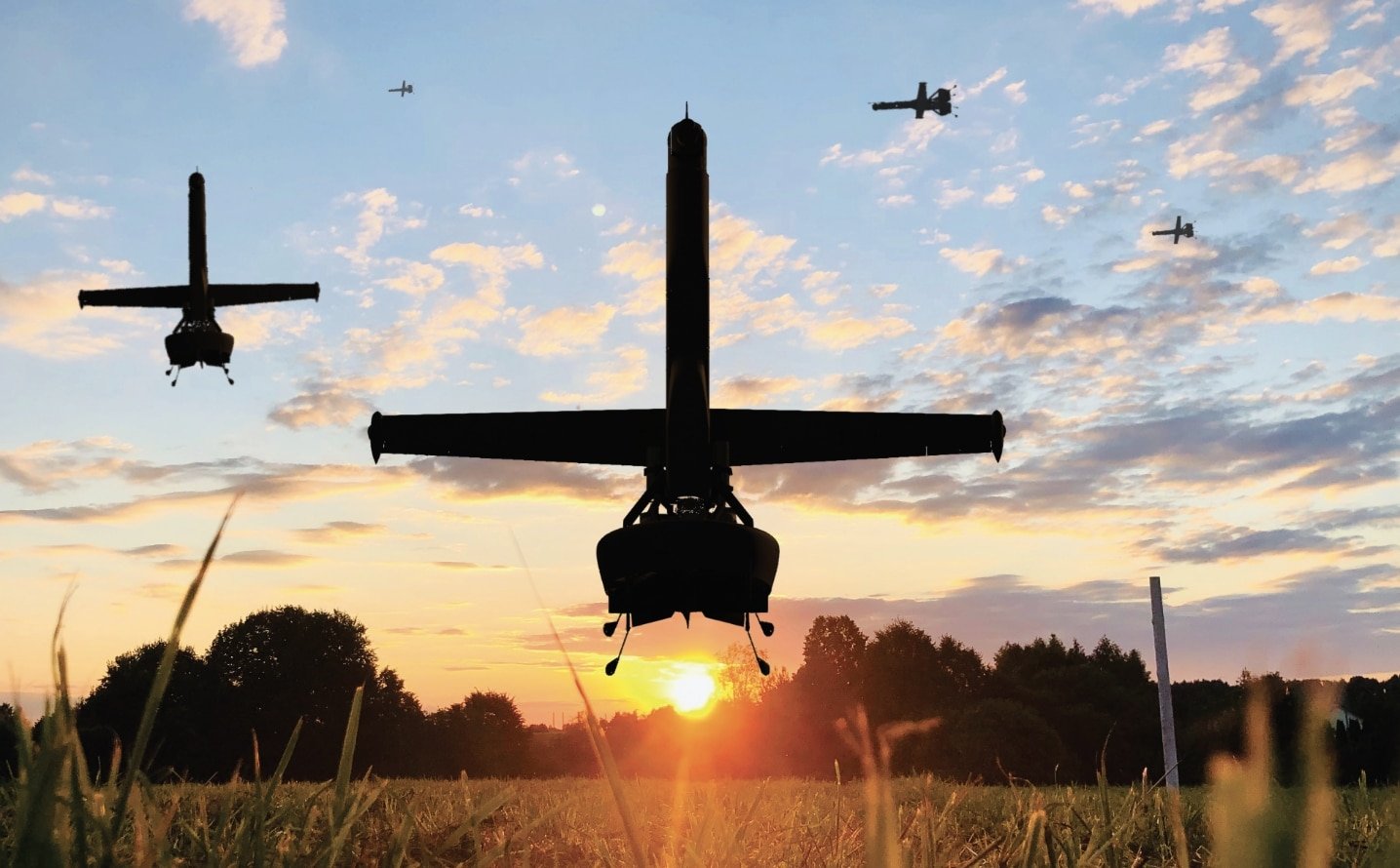
Multi-aircraft V-BAT swarming capability where Hivemind coordinates several UAVs as a single autonomous team.
Droneby Shield AIIntroduced 2023
Photos: shield.ai · gagadget.com · thedefensepost.com · gbp.com.sg · Shield AI
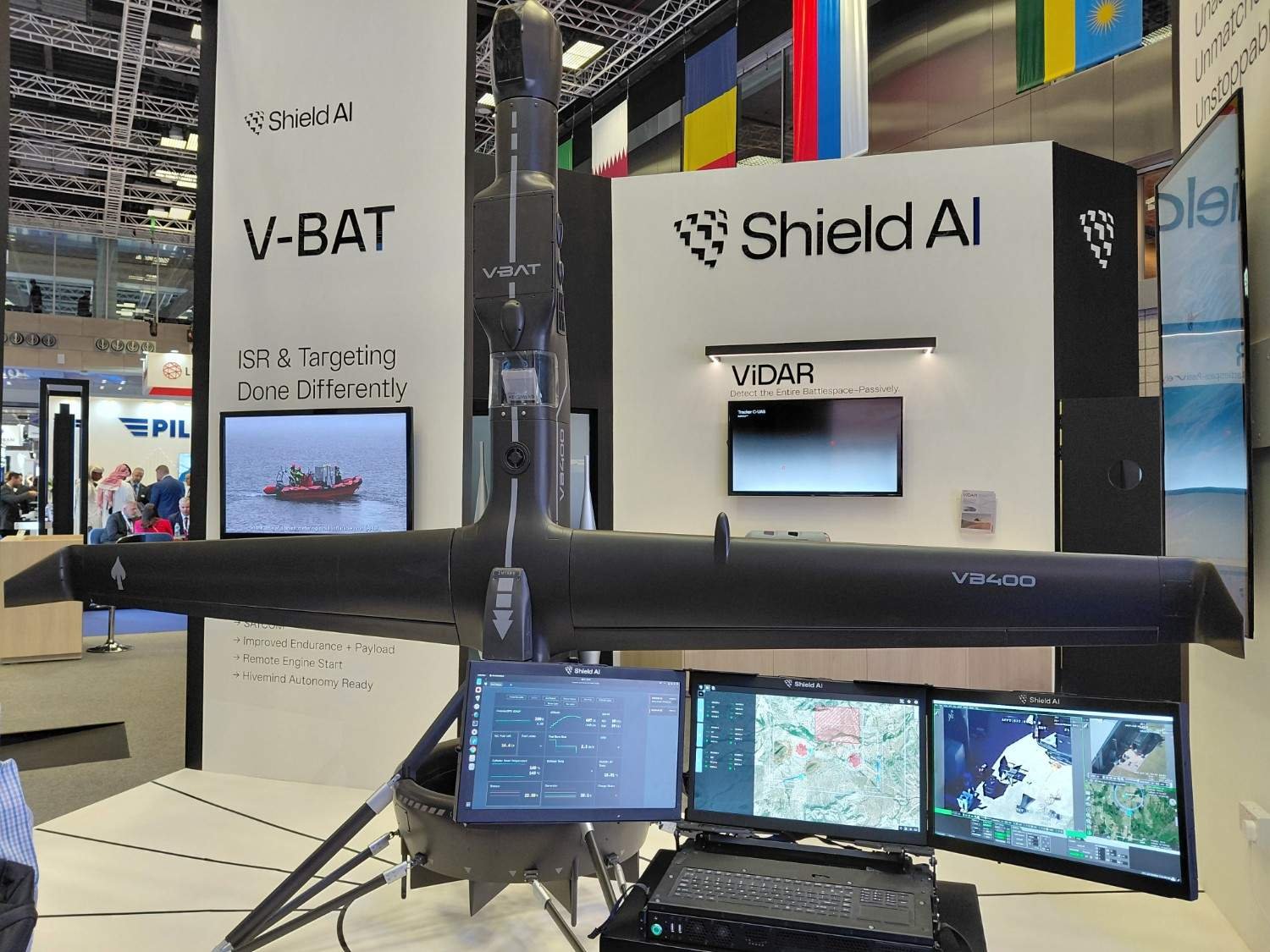
V-BAT Teams is Shield AI’s multi-aircraft autonomy capability, pairing the company’s single-engine V-BAT vertical-take-off-and-landing drone with its Hivemind software stack so that several airframes operate as a coordinated, self-directing group. The system was demonstrated publicly in 2023 and is positioned as an answer to a specific operational problem: flying uncrewed aircraft inside contested airspace where GPS signals and command links cannot be assumed to be available.
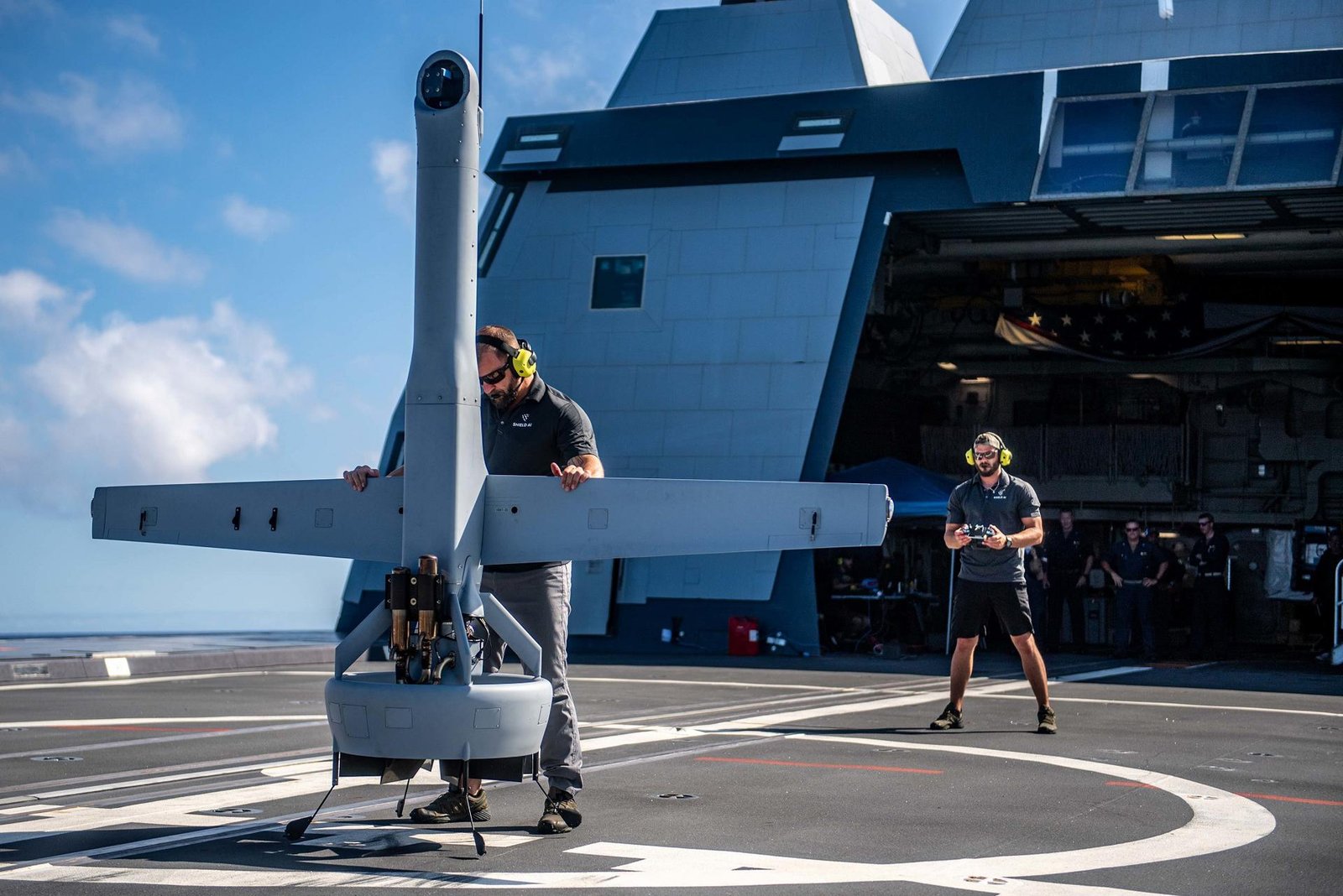
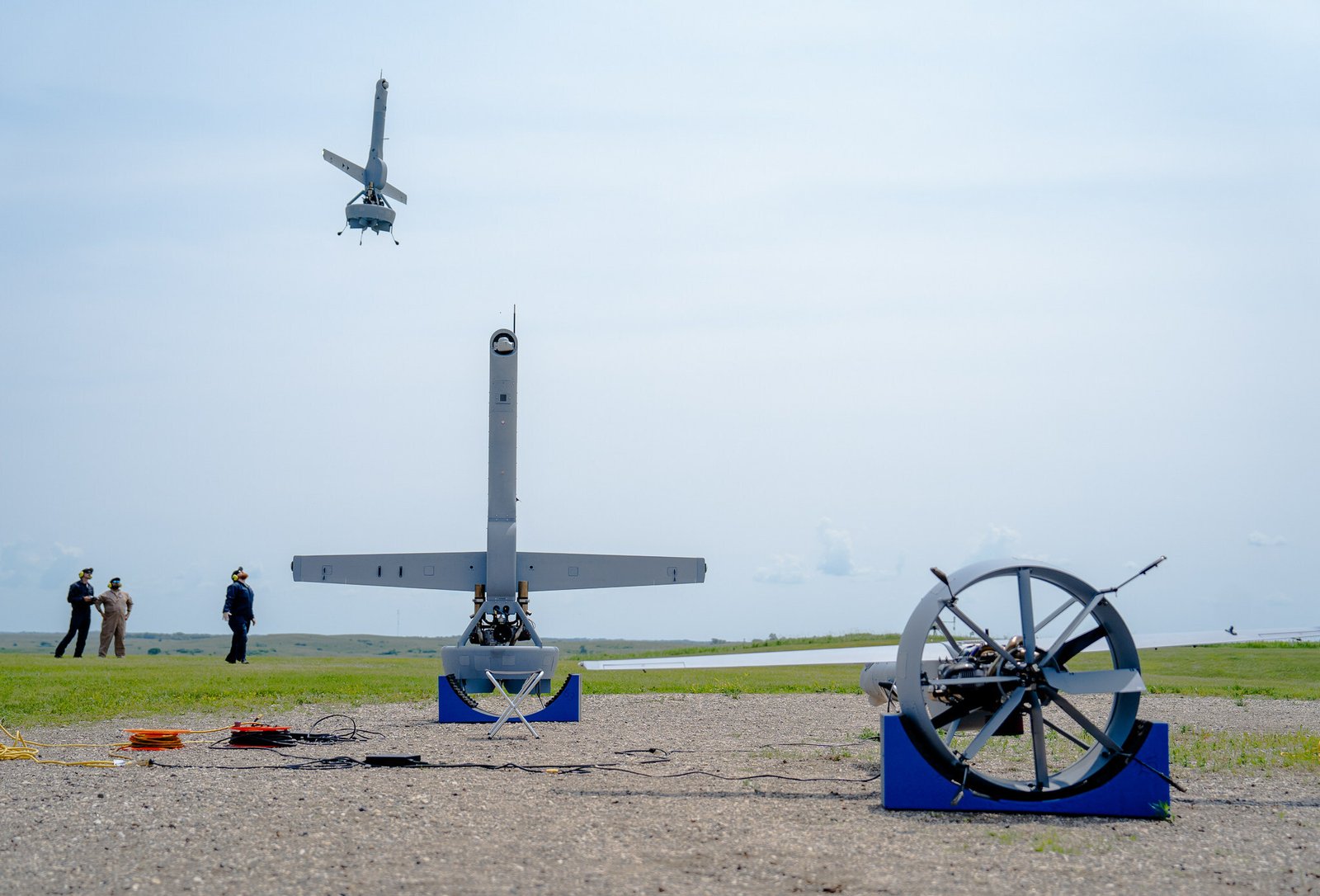
The technical core is Hivemind, the same autonomy stack Shield AI originally developed for indoor building-clearing quadcopters and later ported to fixed-wing platforms. Each V-BAT runs Hivemind on board and shares low-bandwidth state with the rest of the team over mesh links. Operators issue mission-level intent — search this corridor, watch this stretch of coast, locate a particular emitter — and the team divides the task, deconflicts flight paths, and re-tasks itself when an aircraft is lost or finds something worth investigating. The V-BAT itself is unusual: a ducted-fan single-engine design that lifts off and lands vertically from a roughly two-metre footprint, then transitions to wing-borne flight for endurance close to ten hours. It does not need a runway, a launcher, or a recovery net, which is what makes shipboard and small-unit use plausible.
Primary operator interest comes from the United States. The US Marine Corps and the US Coast Guard already field individual V-BATs, and Shield AI has positioned the teaming capability as the next step for both services and for special operations users. The company has also pitched V-BAT Teams to allied buyers in the Indo-Pacific, where dispersal across small islands and ships favours systems that do not depend on a fixed ground station. Multi-aircraft demonstrations have been flown for US Department of Defense audiences, with three V-BATs flying as a single autonomously coordinated group without a human dynamically tasking the individual airframes.
Development is active. Shield AI has talked publicly about scaling team sizes beyond the three-to-four-aircraft demonstrations, integrating signals-intelligence and electronic-warfare payloads, and using V-BAT as a hardware host for the same autonomy stack the company is putting on its forthcoming jet-class platforms. Hivemind is intended to be platform-agnostic, so the V-BAT lineage functions as a proving ground rather than as the final form.
In a field where most “drone swarm” announcements remain laboratory demonstrations, V-BAT Teams stands out for using a fielded production aircraft and for emphasising autonomy that survives loss of GPS and loss of comms — the two conditions a near-peer adversary is expected to impose first.