Bayraktar TB2
Medium-altitude armed reconnaissance UAV that re-shaped the export combat-drone market and saw heavy use in Karabakh, Syria, Libya and Ukraine.
Droneby BaykarIntroduced 2014
Photos: baykartech.com · www.middleeasteye.net · www.newsweek.com · www.defensenews.com
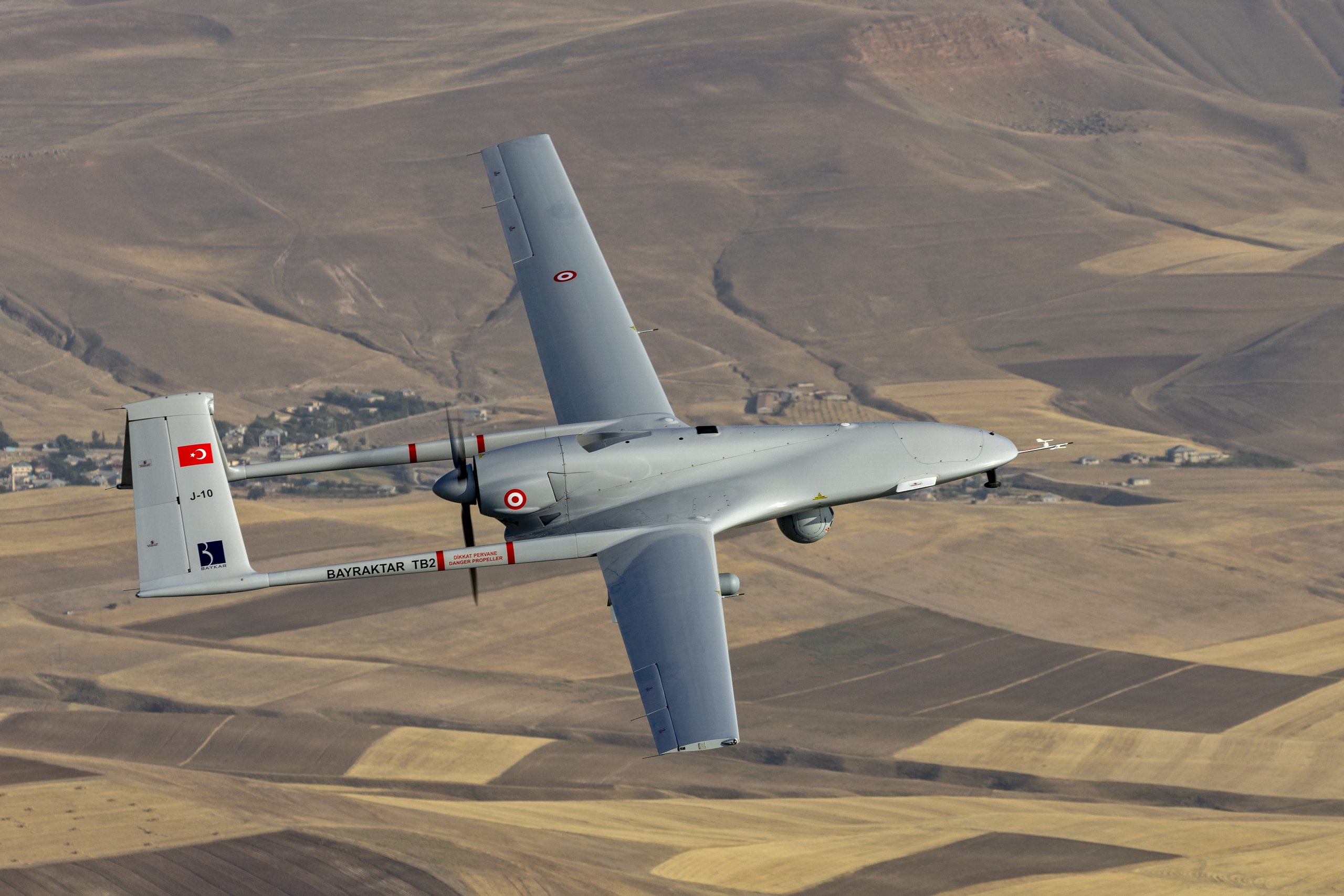
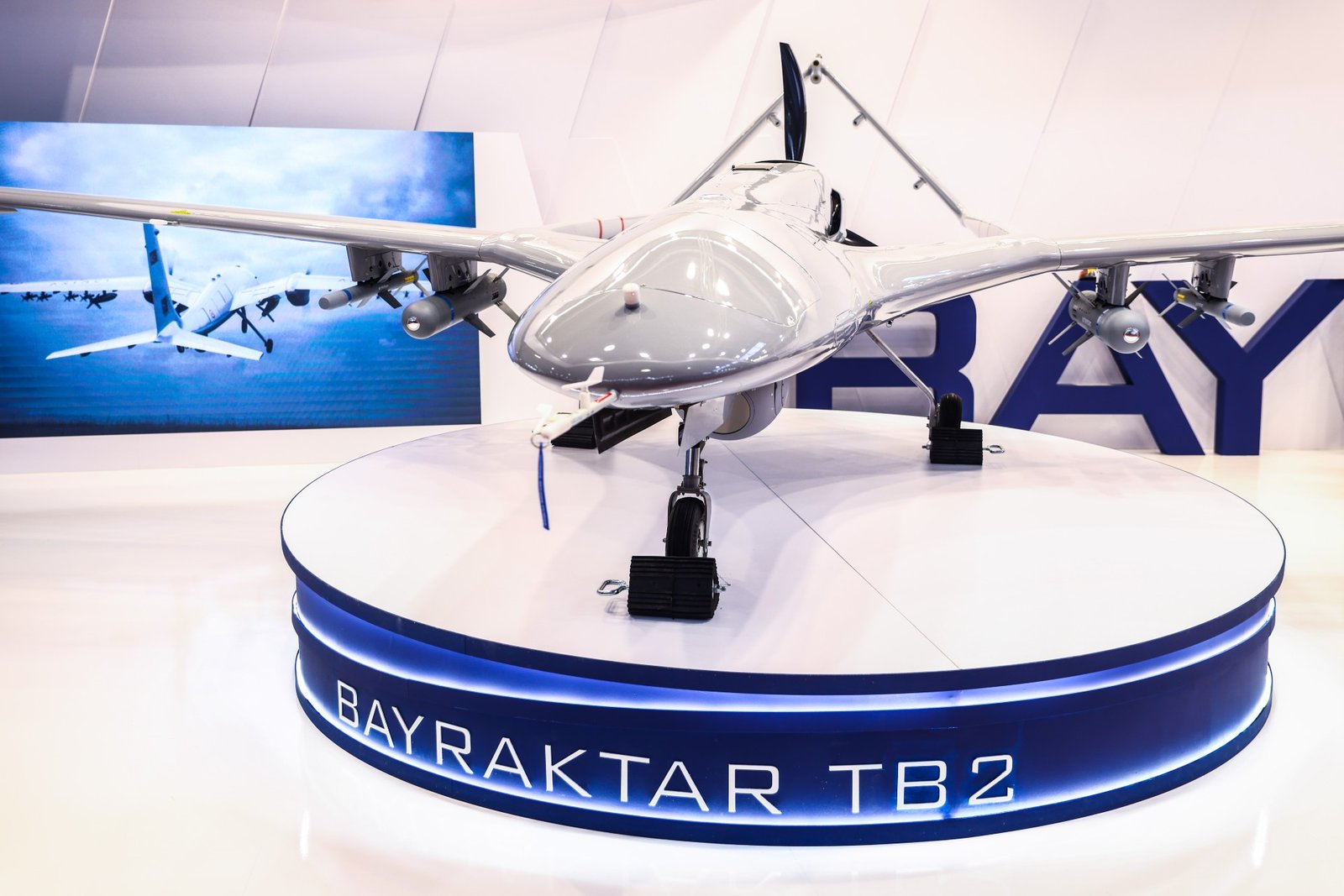
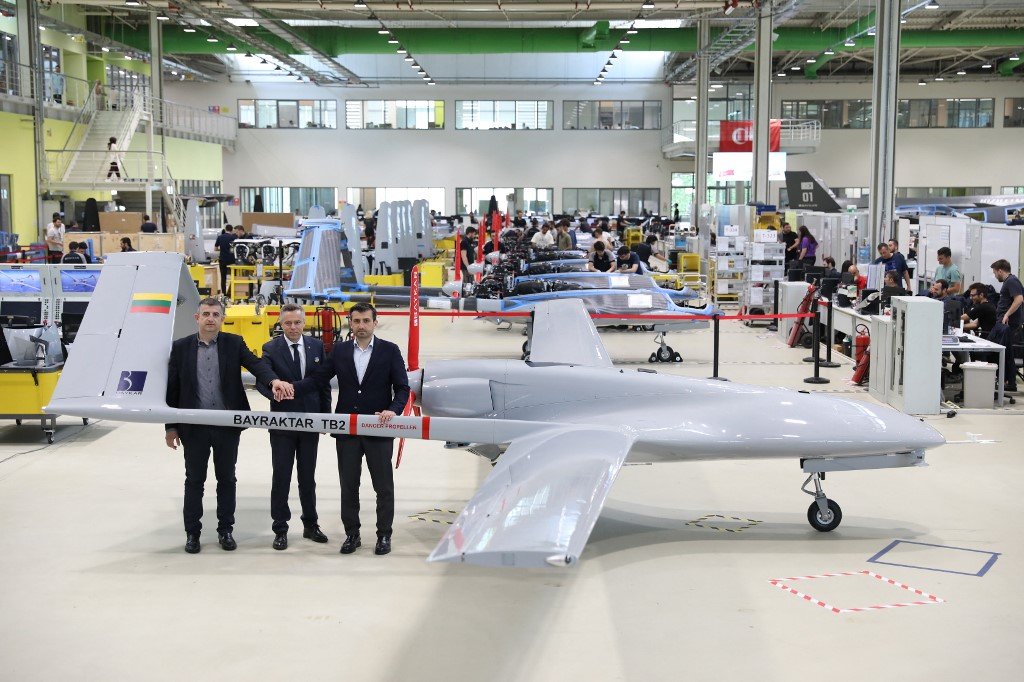
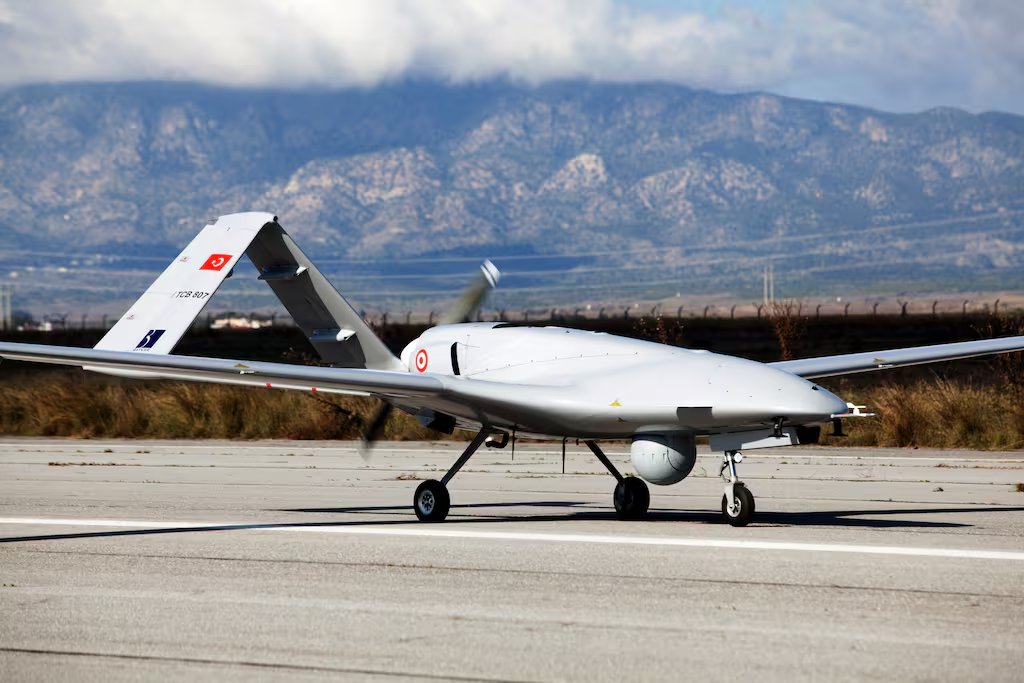
Designed and built by Baykar, the Bayraktar TB2 is a medium-altitude, long-endurance armed reconnaissance drone that entered service with the Turkish Armed Forces in 2014. The airframe is a twin-boom, pusher-prop monoplane with a roughly 12-metre wingspan, capable of staying aloft for around 27 hours at altitudes up to 25,000 feet. Modest by the standards of larger MALE platforms such as the MQ-9 Reaper, the TB2 was deliberately built to a lower price point and a lighter logistical footprint, and it became the system that pushed armed unmanned aviation out of a small club of operators and into the export market.
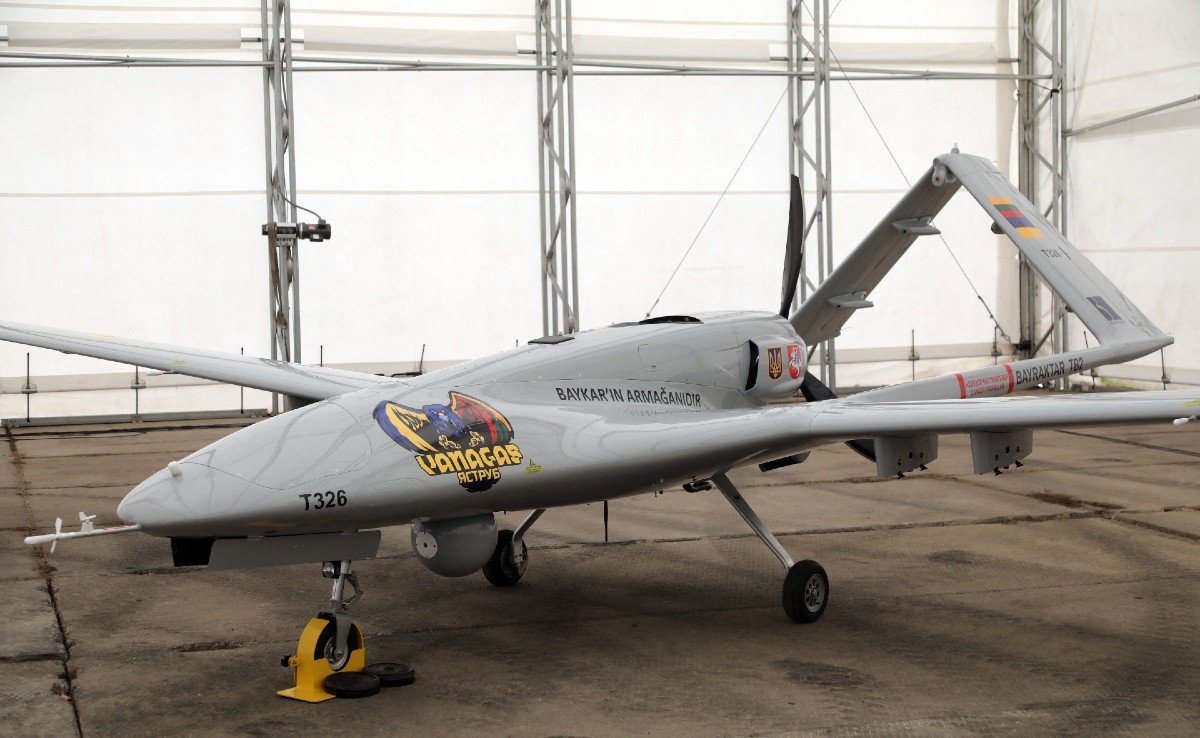
The aircraft carries an electro-optical and infrared turret with laser designation and laser rangefinding under the nose, feeding imagery back to a mobile ground control station via a line-of-sight datalink with a range of around 150 kilometres. Under the wings it carries up to four Roketsan MAM-L or MAM-C smart micro munitions — small precision-guided bombs developed specifically for light UAVs, with semi-active laser homing and, in later variants, GPS/INS guidance. Avionics, flight control software and the ground station are all developed in-house by Baykar, which keeps the platform out of reach of US ITAR controls and has been central to its export appeal.
Operationally the TB2 first drew attention over Syria and Libya in 2019 and 2020, where Turkish-operated and Turkish-supplied drones struck Syrian armour and air defences during Operation Spring Shield and supported the Government of National Accord against Haftar’s forces. Azerbaijan’s use of the type during the 2020 Nagorno-Karabakh war, against Armenian armour and S-300 batteries, was widely studied and is credited with having materially shaped the war’s outcome. From 2022 onward, Ukraine has operated TB2s against Russian columns, naval targets including the Moskva’s escorts, and logistics nodes. Poland in 2021 became the first NATO and EU member to order the system, signing for 24 aircraft; Qatar, Morocco, Turkmenistan, Ethiopia, Kyrgyzstan, Albania and others have followed.
Development has continued in parallel with the larger Akıncı and the jet-powered Kızılelma. A TB2S variant adds a satellite communications link to extend operating range beyond line-of-sight, and Baykar has flown the carrier-capable TB3 from the TCG Anadolu. The TB2’s place in the field is now less about technical primacy than market position: it is the system that demonstrated what a mid-tier industrial base can field, and against which most new export combat drones are still measured.