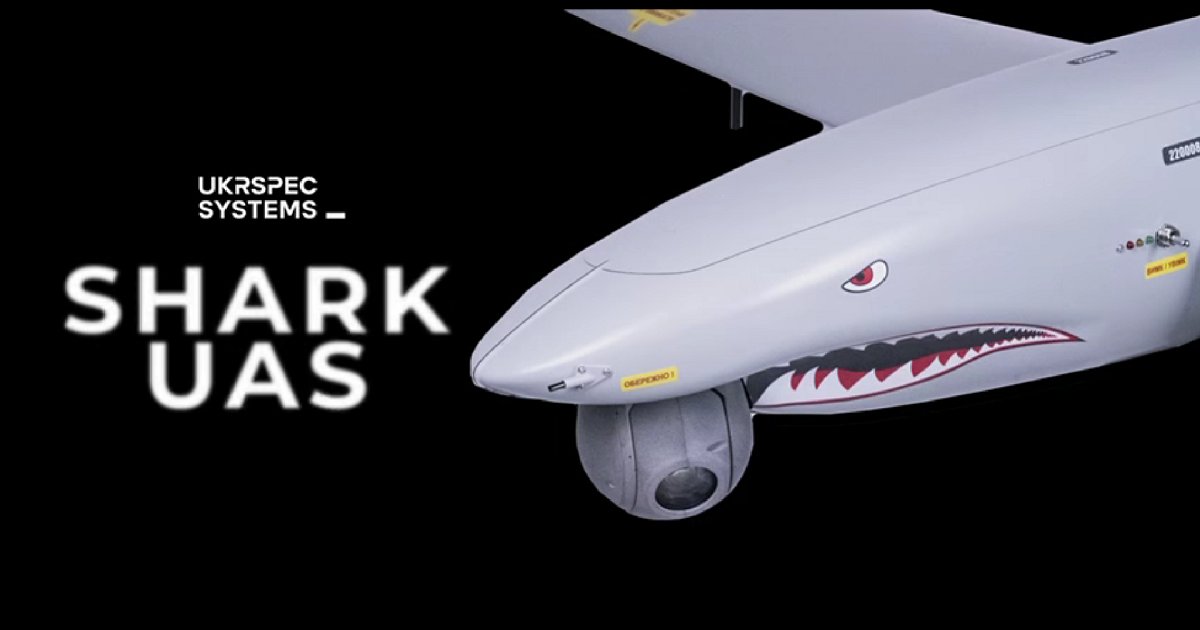
Shark
Tactical ISR drone designed for HIMARS and artillery targeting at operational depth.
Droneby UkrSpecSystemsIntroduced 2022
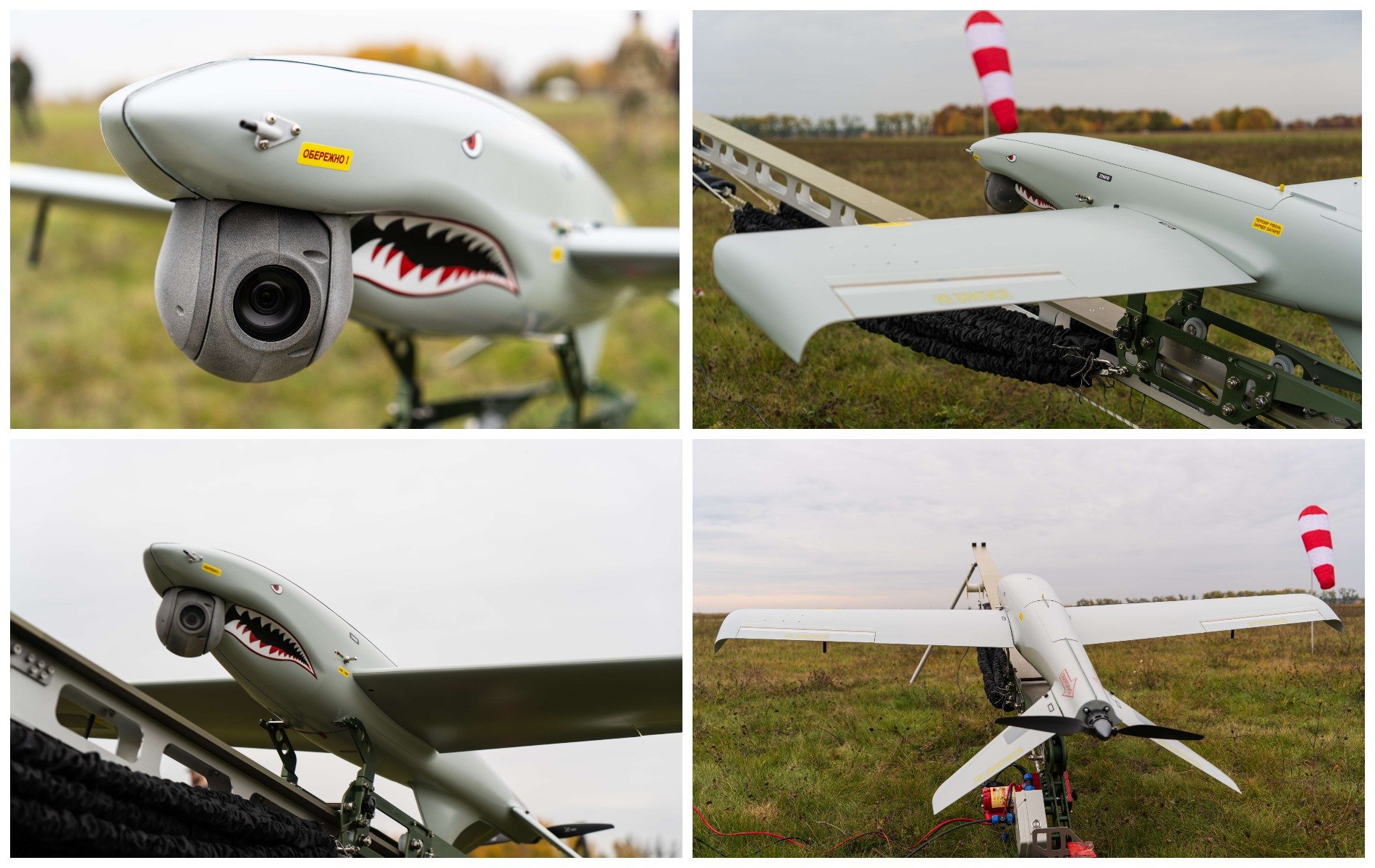
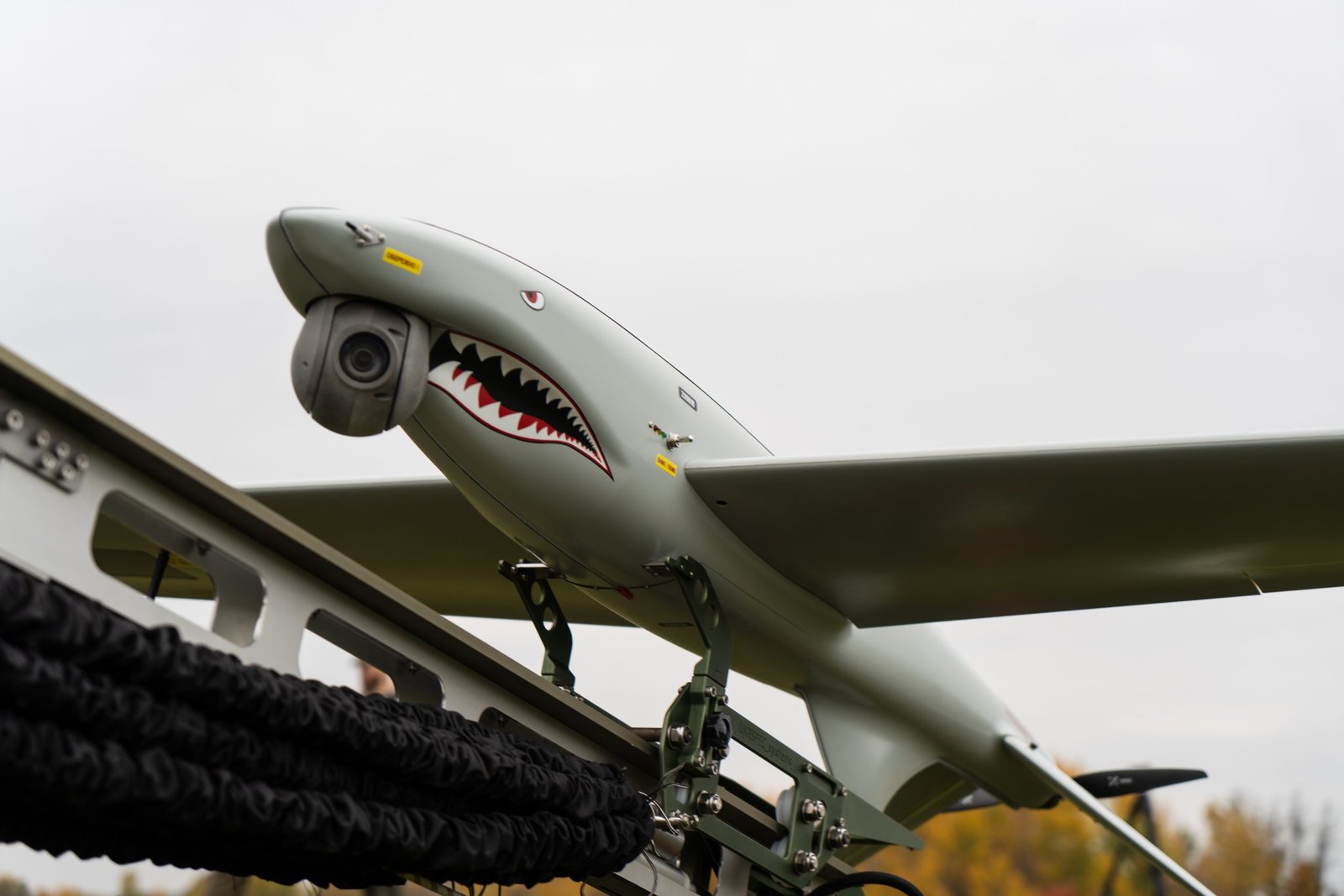
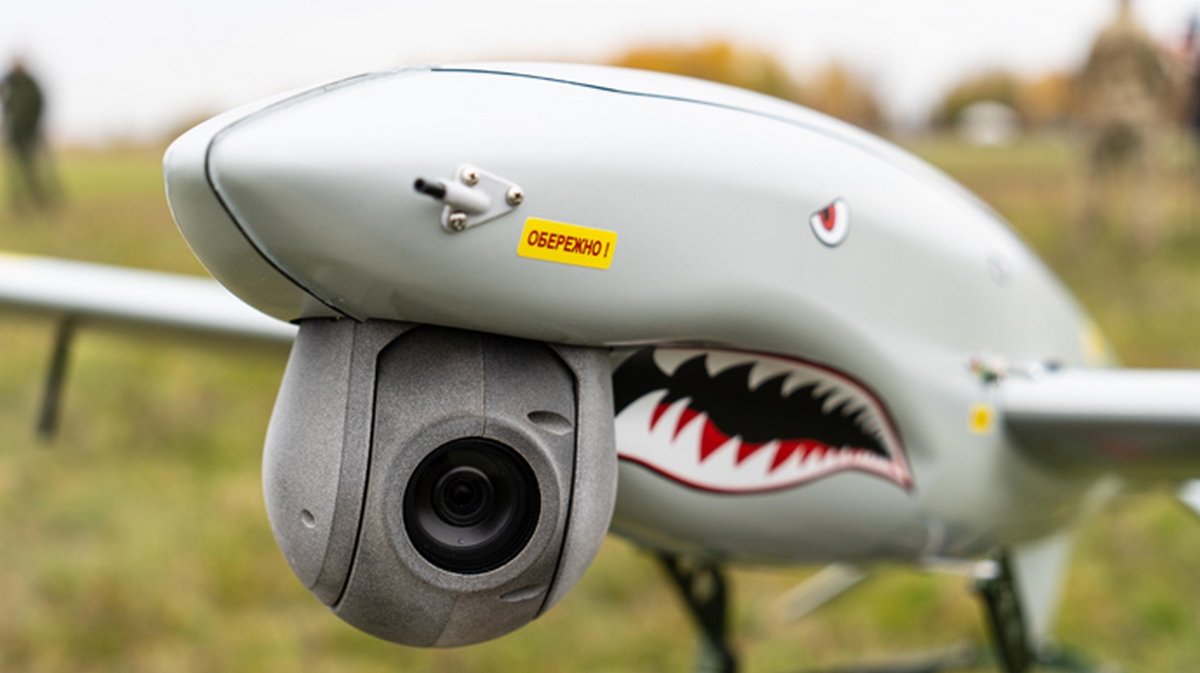
Photos: defenceredefined.com.cy · mil.in.ua · UkrSpecSystems · gagadget.com · gwaramedia.com
Shark is a fixed-wing tactical reconnaissance drone built by Ukrainian manufacturer UkrSpecSystems, introduced in 2022 and rapidly adopted by the Armed Forces of Ukraine during the full-scale Russian invasion. Designed for deep-battlefield intelligence, surveillance and reconnaissance, it has become one of the country’s most prominent indigenous platforms for spotting and correcting fires at operational depth — most visibly for HIMARS and tube artillery strikes.
The airframe is a compact, catapult-launched, propeller-driven monoplane with a wingspan around three metres. Its core sensor is a stabilised electro-optical gimbal carrying a high-zoom day camera, with a thermal channel offered for night work. Published figures put the operational radius at roughly 80 kilometres from the ground control station and endurance at about four hours, enough for a single sortie to cover a meaningful slice of an opposing force’s rear. The drone runs on encrypted datalinks and is built around the assumption it will operate inside contested electromagnetic environments — a design point that has been refined repeatedly under the pressure of Russian electronic warfare and GNSS jamming.
In service, Shark has become closely identified with HIMARS targeting. Ukrainian rocket and artillery units have routinely used its imagery to locate Russian command posts, ammunition depots, air-defence batteries and concentrations of armour, then walked guided munitions onto them. The system has been fielded across multiple fronts in eastern and southern Ukraine, and senior Ukrainian officials have publicly credited it with contributing to a number of high-profile strikes deep behind the line of contact. Production has scaled along with front-line demand, with additional units funded for Ukrainian brigades by European partners and private donors.
UkrSpecSystems also markets Shark internationally as a counterpart to its earlier PD-1 and PD-2 reconnaissance UAVs, and has iterated the design steadily through the war. Improvements to optics, datalink robustness, anti-jamming and frequency-hopping have all been reported as the platform absorbed combat lessons; longer-endurance derivatives and naval variants have been shown at defence exhibitions. The company has also paired Shark with its Sirko ground control software so that imagery and target coordinates can be passed directly into Ukrainian artillery fire-control loops.
Within the Ukrainian fleet, Shark sits between cheaper short-range quadcopters used for trench-level observation and the larger Bayraktar TB2 strike drone, occupying the operational-depth ISR niche where persistence, range and high-fidelity optics matter more than weapons carriage. Its emergence is part of a wider pattern in which Ukrainian manufacturers have moved from supplying a small domestic market to fielding combat-proven systems at scale — a shift studied closely by Western armies now hunting for cheaper, attritable surveillance assets of their own.