LRASM
Long Range Anti-Ship Missile with autonomous routing, multi-mode seeker, and AI-aided terminal target discrimination.
Missile / loitering munitionby Lockheed MartinIntroduced 2019
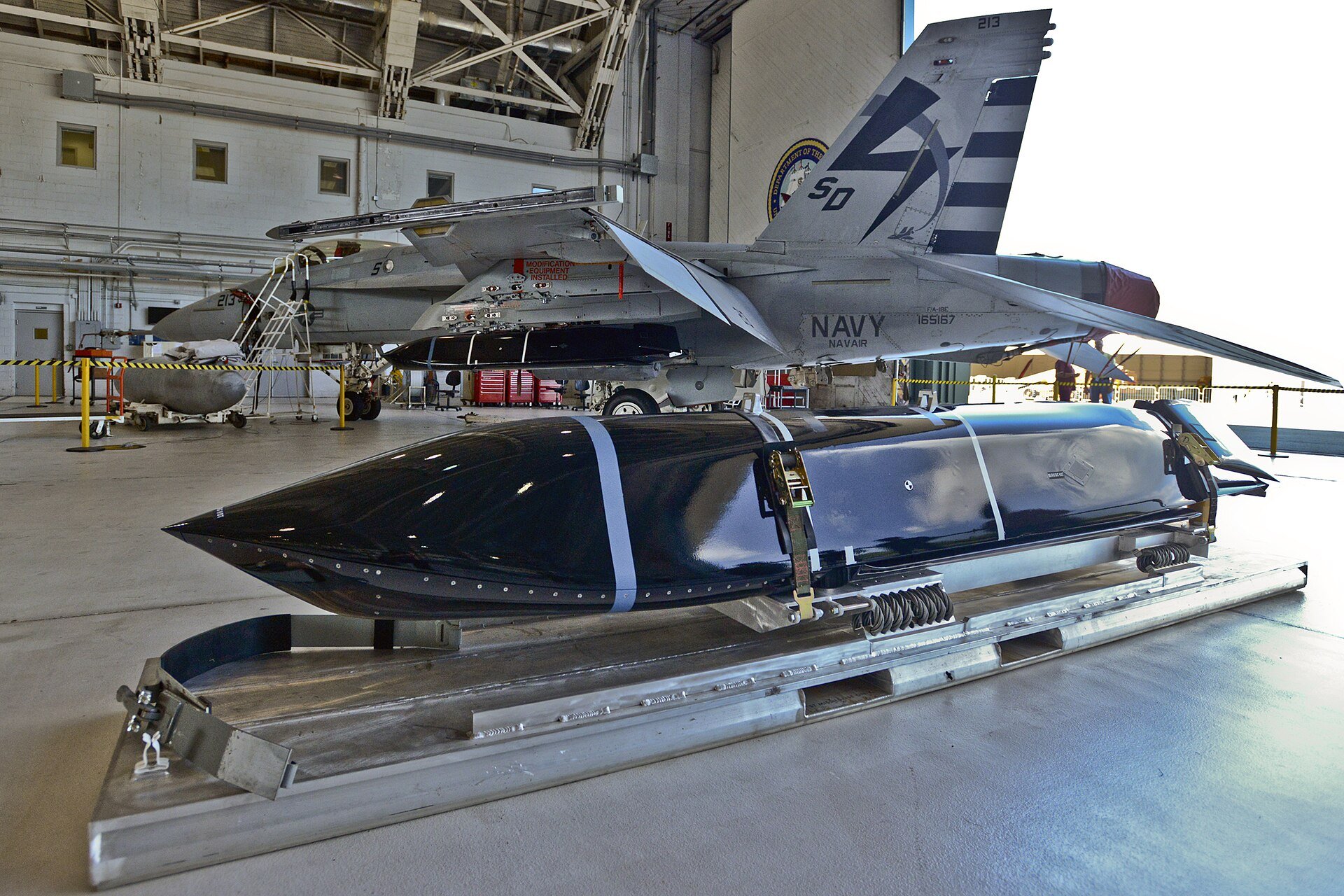
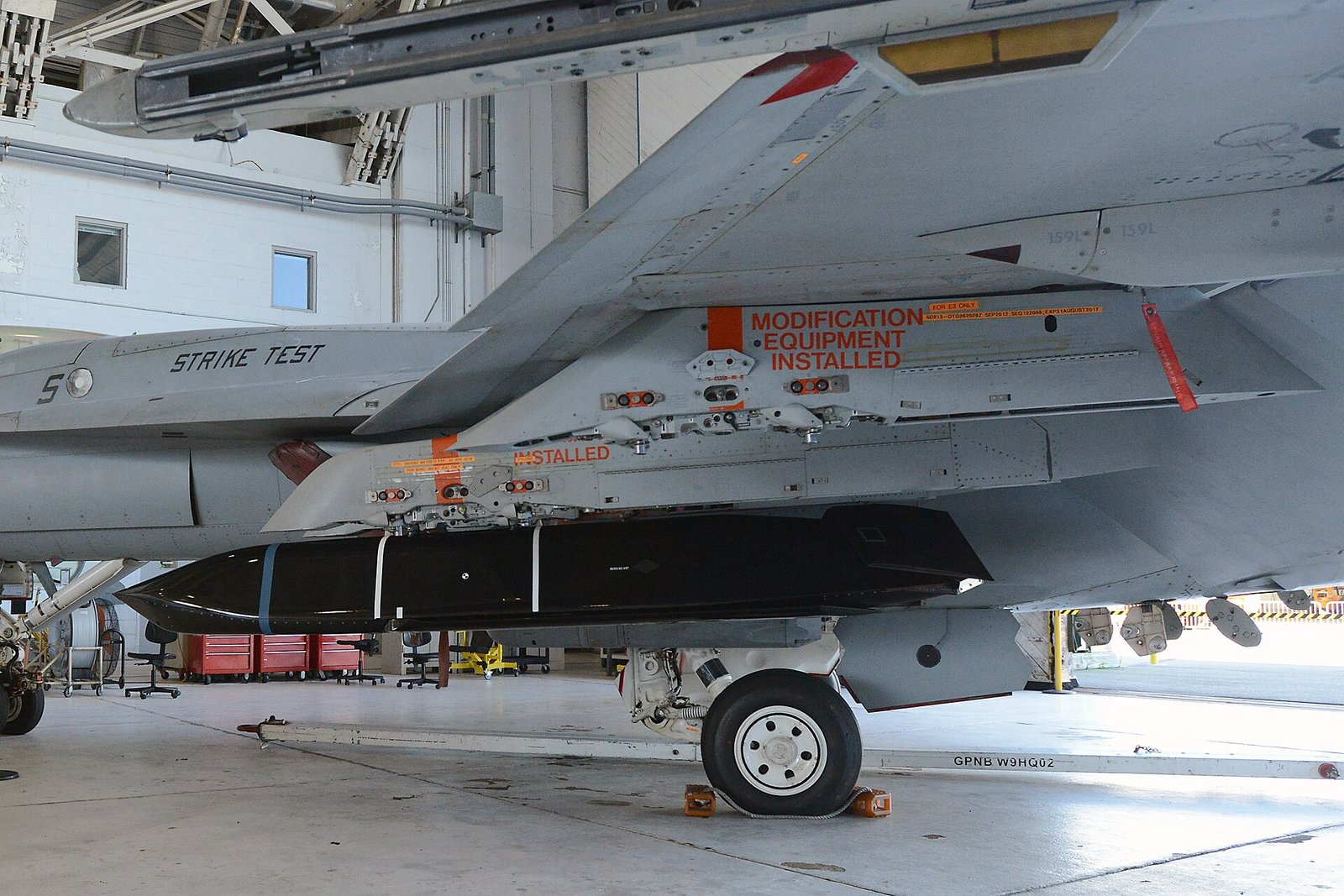
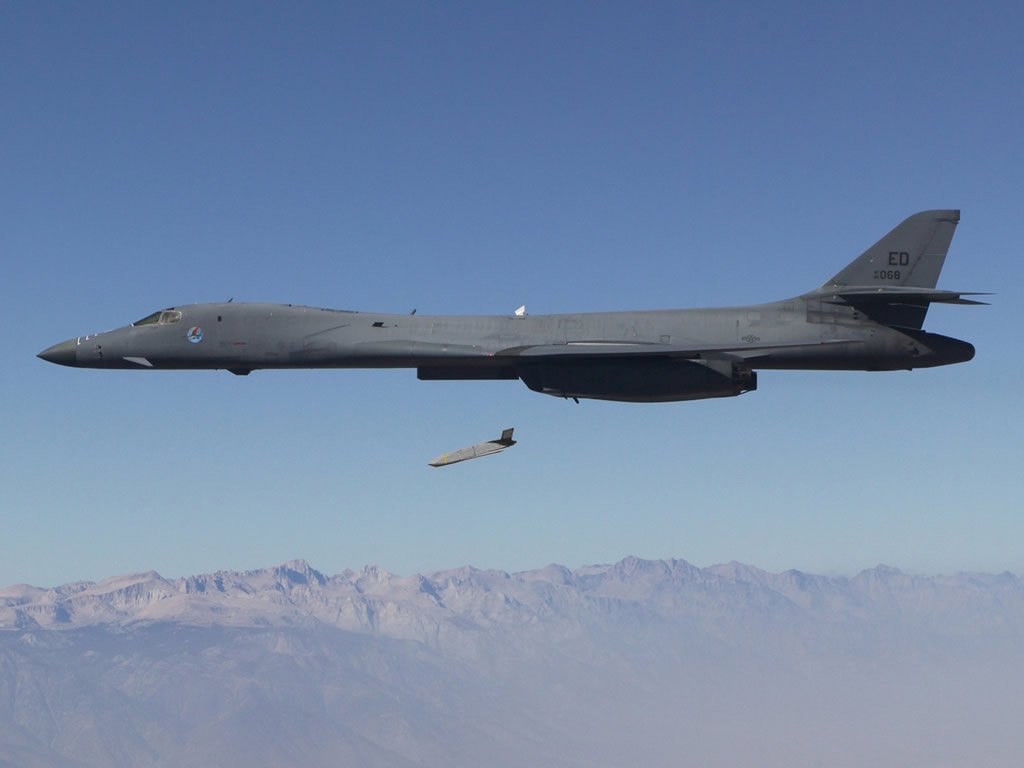
Photos: U.S Navy · U.S. Navy · DARPA photo
LRASM, the Long Range Anti-Ship Missile, is an air-launched cruise missile built by Lockheed Martin to give US and allied strike aircraft a stand-off shot at warships in contested waters. Designated AGM-158C, it derives from the JASSM-ER family and entered initial operational capability on the US Air Force B-1B Lancer in late 2018, followed by the US Navy F/A-18E/F Super Hornet in 2019. The programme began as a DARPA effort in 2009 — a response to the obsolescence of the Harpoon against modern integrated air defences — and transitioned to the US Navy as a programme of record over the following decade.
The airframe is stealth-shaped and powered by a Williams F107 turbofan, giving it a subsonic profile that trades dash speed for a low radar cross-section and a long, low-altitude approach. Lockheed Martin quotes a range in excess of 200 nautical miles; export documentation and follow-on variants point to figures closer to 900 kilometres. What sets LRASM apart from its predecessors is the seeker and the autonomy layer: a multi-mode package combining passive radio-frequency detection, an imaging infrared seeker, GPS/INS with anti-jam aiding, and a weapon-data-link. The missile is designed to operate in a denied environment where the launching platform cannot maintain a precise track. Onboard processing handles route planning around known threats, ship-class discrimination inside a group of contacts, and aimpoint selection on the chosen hull. The warhead is a roughly 1,000-pound penetrator-blast fragmentation section.
The United States is the primary operator. The US Navy fields LRASM from its Super Hornet squadrons and is integrating it onto the P-8A Poseidon; the US Air Force carries up to 24 rounds per B-1B. Australia is the first export customer, with an approved Foreign Military Sale of around 200 missiles announced in 2020 and a follow-on for the extended-range variant in 2023, valued together at well over a billion US dollars. The Royal Australian Air Force is integrating the weapon on its F/A-18F and F-35A fleets. The missile has not been used in combat as of mid-2026, and the Pentagon treats employment doctrine as classified.
Development is ongoing. The AGM-158C-3 variant, announced in 2021, extends range and updates the seeker and datalink; Lockheed Martin and the Navy are also working on a surface-launched derivative for vertical-launch cells. LRASM sits in a crowded anti-ship field alongside the Kongsberg Naval Strike Missile and the Joint Strike Missile, but its combination of stand-off range, low observability and autonomous target sorting is aimed squarely at the Pacific scenario its sponsors rarely name aloud.