Kongsberg Gruppen
Norwegian defence prime; Protector RWS, NSM/JSM missiles, and the HUGIN family of autonomous underwater vehicles.

Kongsberg Gruppen traces its origins to 1814, when the Norwegian government established a small arms factory in the town of Kongsberg, southwest of Oslo. The firm grew across two centuries from a state armoury into a diversified industrial group spanning maritime, aerospace, offshore energy, and defence. Today it is a publicly listed company on the Oslo Stock Exchange, with the Norwegian state retaining a majority stake. Geir Håøy has served as president and chief executive since 2016, having joined Kongsberg in the 1990s and previously run the maritime division.
The defence business — operated through Kongsberg Defence & Aerospace — is the part of the group most relevant to autonomous warfare. Its best-known product is the Protector remote weapon station, a roof-mounted, stabilised gun mount operated from inside an armoured vehicle. More than 20,000 Protector units have been delivered, with the United States Army adopting it as the Common Remotely Operated Weapon Station (CROWS) on Stryker, MRAP, and Humvee platforms. Kongsberg also produces the Naval Strike Missile (NSM), a sea-skimming anti-ship weapon now in service with Norway, Poland, Malaysia, Germany, the United States Navy and Marine Corps, and a growing list of NATO buyers. The air-launched variant, the Joint Strike Missile (JSM), is integrated into the F-35’s internal weapons bay and has been ordered by Norway, Japan, and Australia.
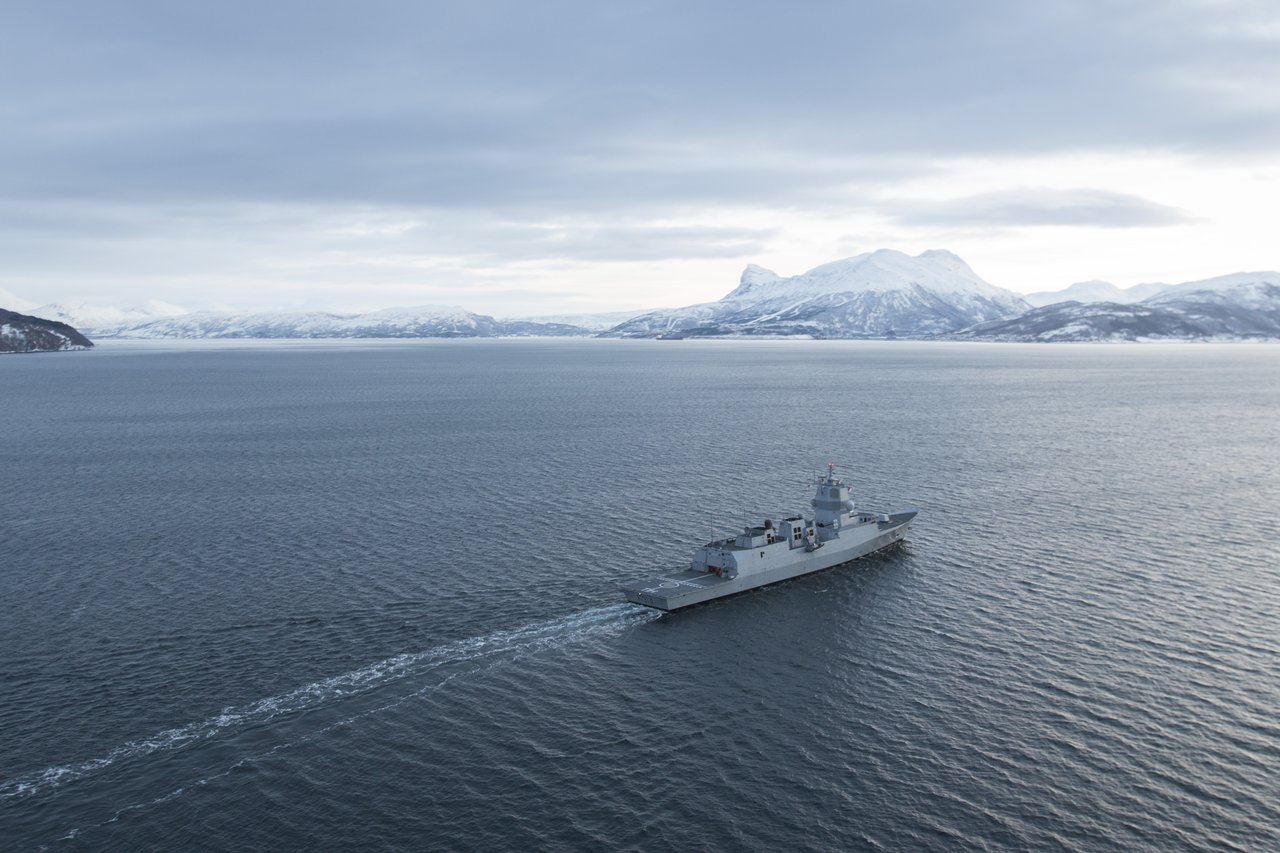
In the underwater domain, Kongsberg builds the HUGIN family of autonomous underwater vehicles, used for seabed mapping, mine countermeasures, and intelligence collection by navies including those of Norway, the United Kingdom, and the United States. The company also supplies the integrated combat system on the Royal Norwegian Navy’s Fridtjof Nansen-class frigates and a wide range of sonar, fire-control, and command-and-control products. A space arm, Kongsberg Satellite Services (KSAT), runs the global ground-station network used by Earth-observation and reconnaissance satellites.
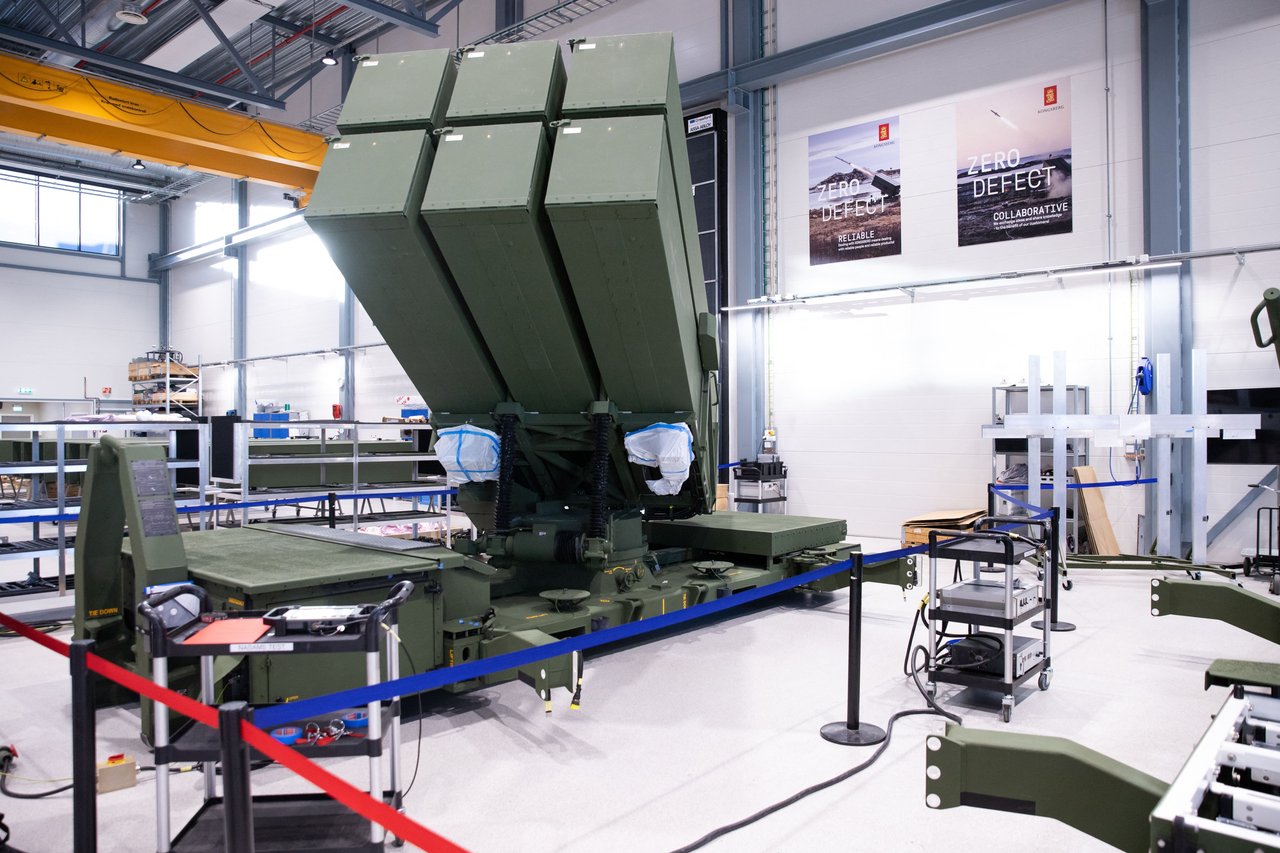
Demand has surged since Russia’s full-scale invasion of Ukraine in 2022. Kongsberg’s order backlog reached record highs through 2023 and 2024, driven by NSM purchases from Germany and other European states, expanded CROWS orders, and joint air defence work with Raytheon on the NASAMS system — itself a Norwegian-American design that has been delivered to Ukraine and used to defend Kyiv. To meet the volume, Kongsberg has opened new missile-production facilities at its Kongsberg site and announced a second NSM line in the United States with partner companies.
Controversies have largely been industrial rather than ethical. The 2014 Yantai Raffles ship-deal corruption case implicated a Kongsberg subsidiary, leading to a long Økokrim investigation that ended without conviction in 2017. More recent scrutiny has focused on the export-control implications of selling weapon stations and missiles to a widening customer base, and on the strain that record orders have placed on the Norwegian defence supply chain.
Kongsberg occupies an unusual position in the Western defence industry: a mid-sized European prime whose niche products — remote weapon stations, anti-ship missiles, AUVs — have become standard equipment across NATO. Its current expansion is built less on new platforms than on scaling production of designs the company has refined over twenty years.