Products Palantir Technologies
Foundry
Enterprise data integration and operations platform that underpins logistics, readiness, and analytics workflows across defence ministries and large industrial operators.
Softwareby Palantir TechnologiesIntroduced 2016
Photos: fity.club · diystockpicker.com · www.mcsquared.ai · www.palantir.com
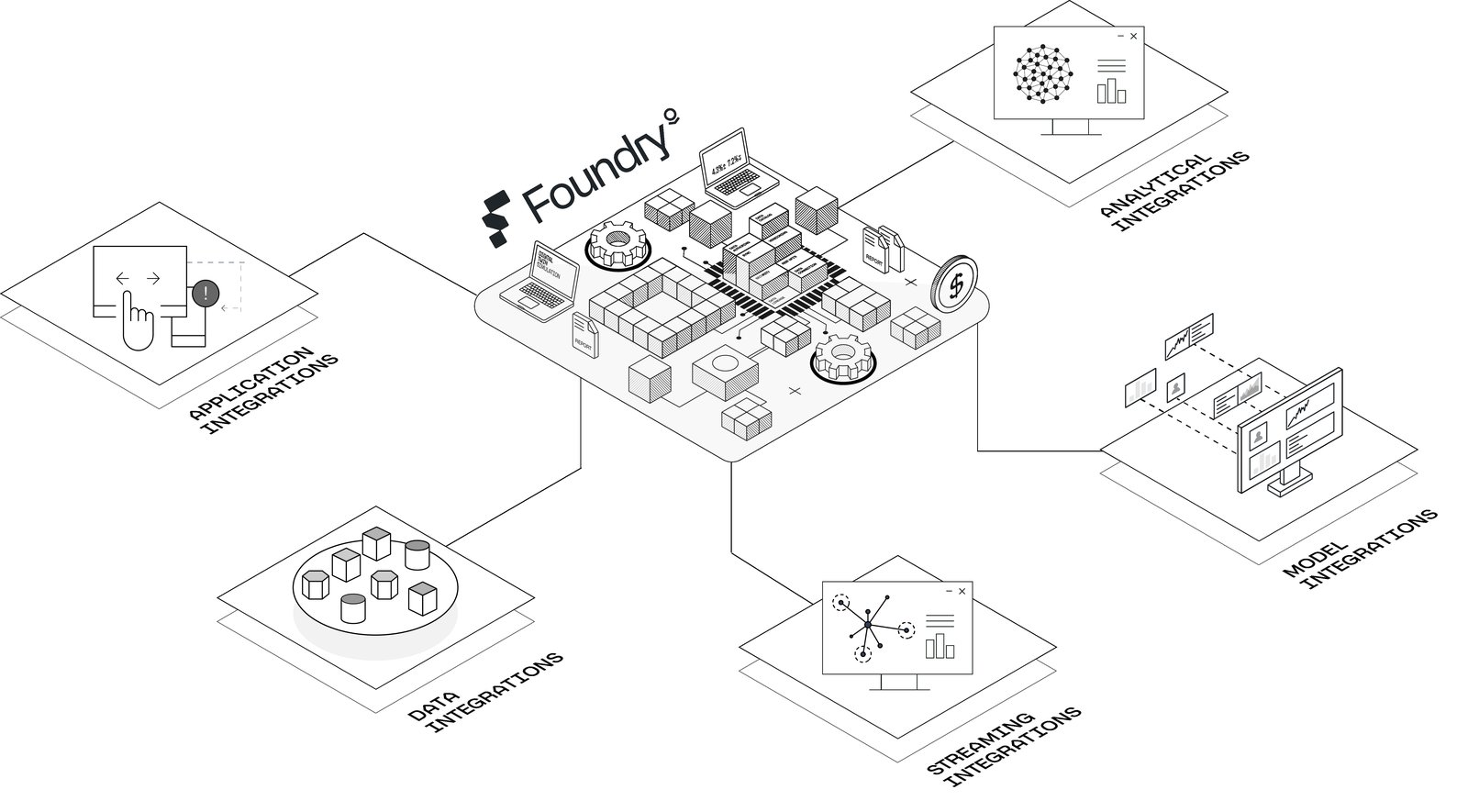
Foundry is Palantir Technologies’ commercial data integration and operations platform, launched in 2016 as the enterprise sibling to the company’s older Gotham product. Where Gotham grew out of counterterrorism analysis work, Foundry was built to take the same approach — modelling messy real-world data into a coherent picture an organisation can act on — and apply it to logistics, manufacturing, healthcare, and the back office of large defence ministries.
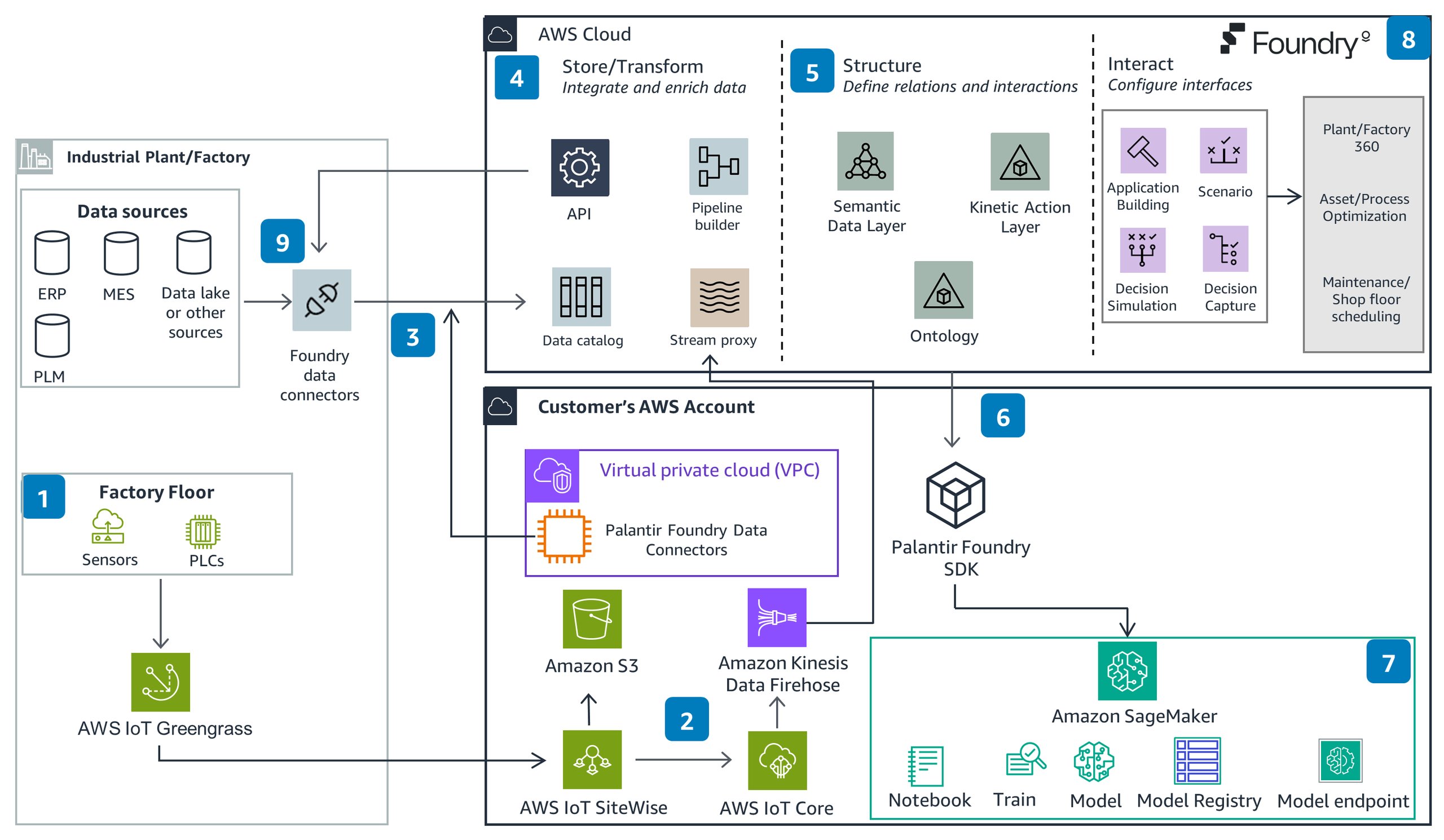
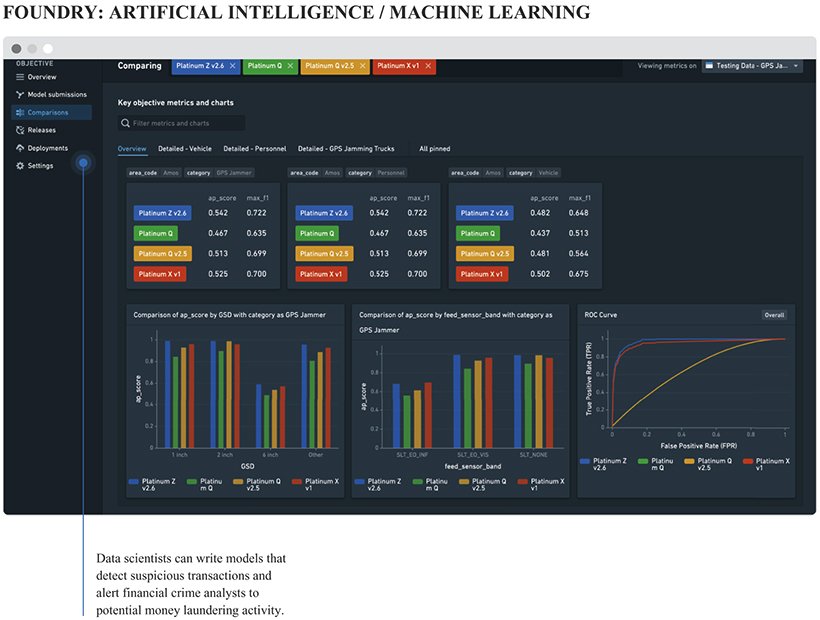
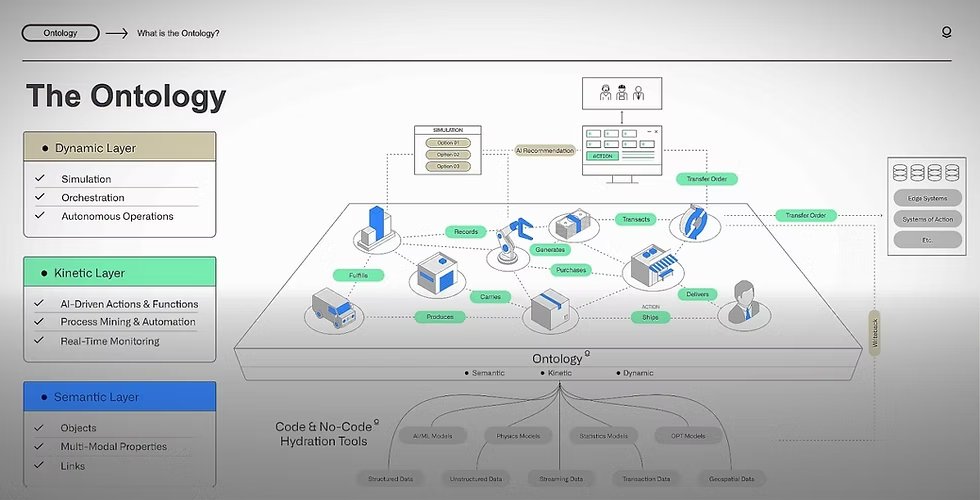
The technical heart of Foundry is its ontology: a layer that maps entities such as units, vehicles, sensors, contracts, or patients onto the underlying tables they actually live in across dozens of source systems. Pipelines built in Code Workbook or Code Repositories ingest, clean, and join those sources; Workshop, Slate, and Quiver give analysts low-code surfaces for building decision-support applications. Models trained inside the platform are deployed back against the same ontology, so a forecasting or prioritisation model speaks the same language as the operators using it. Since 2023 the AIP layer has put large-language-model interfaces on top of that stack, letting analysts query the ontology and trigger workflows in natural language while the platform enforces what data and actions a given user is permitted to touch.
The US Army’s Vantage programme runs on Foundry, giving commanders a single readiness picture across personnel, equipment, and maintenance data; Palantir expanded that partnership in December 2024 with a contract worth $400.7 million and a ceiling of $618.9 million. In the United Kingdom, NHS England awarded Palantir a £330 million Federated Data Platform contract in late 2023 — a civilian deployment that sits adjacent to defence use. In Ukraine, Foundry has anchored the non-targeting side of Palantir’s wartime work since 2022: economic management, refugee tracking, demining, and war-crimes evidence, while the kill-chain work runs on Gotham.
What sets Foundry apart from traditional system integrators is that it ships as software rather than as a consultancy engagement. The platform is opinionated about how data should be modelled, and that opinion — the ontology — is what customers buy into.
Sources
- www.palantir.com/platforms/foundry/ (2026-06-21) — Palantir's official Foundry platform page — ontology, pipelines, low-code apps.
- www.businesswire.com/news/home/20241218946739/en/Palantir-Expands-Army-Vantage-Partnership-with-$618.9M-Contract (2026-06-21) — Palantir/BusinessWire (18 Dec 2024) — Army Vantage extension, $400.7M base / $618.9M ceiling.
- www.defensenews.com/land/2024/12/18/us-army-extends-palantirs-contract-for-its-data-harnessing-platform/ (2026-06-21) — Defense News (18 Dec 2024) — independent confirmation of the Dec 2024 Vantage figures.
- www.digitalhealth.net/2023/11/mixed-reaction-as-palantir-lands-330m-nhs-federated-data-platform-deal/ (2026-06-21) — Digital Health (Nov 2023) — UK NHS Federated Data Platform, £330M, 7-year Palantir-led consortium.
- united24media.com/war-in-ukraine/palantir-the-secretive-tech-giant-shaping-ukraines-war-effort-5519 (2026-06-21) — United24 Media (2025) — Foundry-side Ukraine use (economy, refugees, demining, war-crimes evidence).