Skydio Dock
Remote-operations docking station enabling autonomous, scheduled drone missions without an operator on site.
Hardwareby SkydioIntroduced 2022
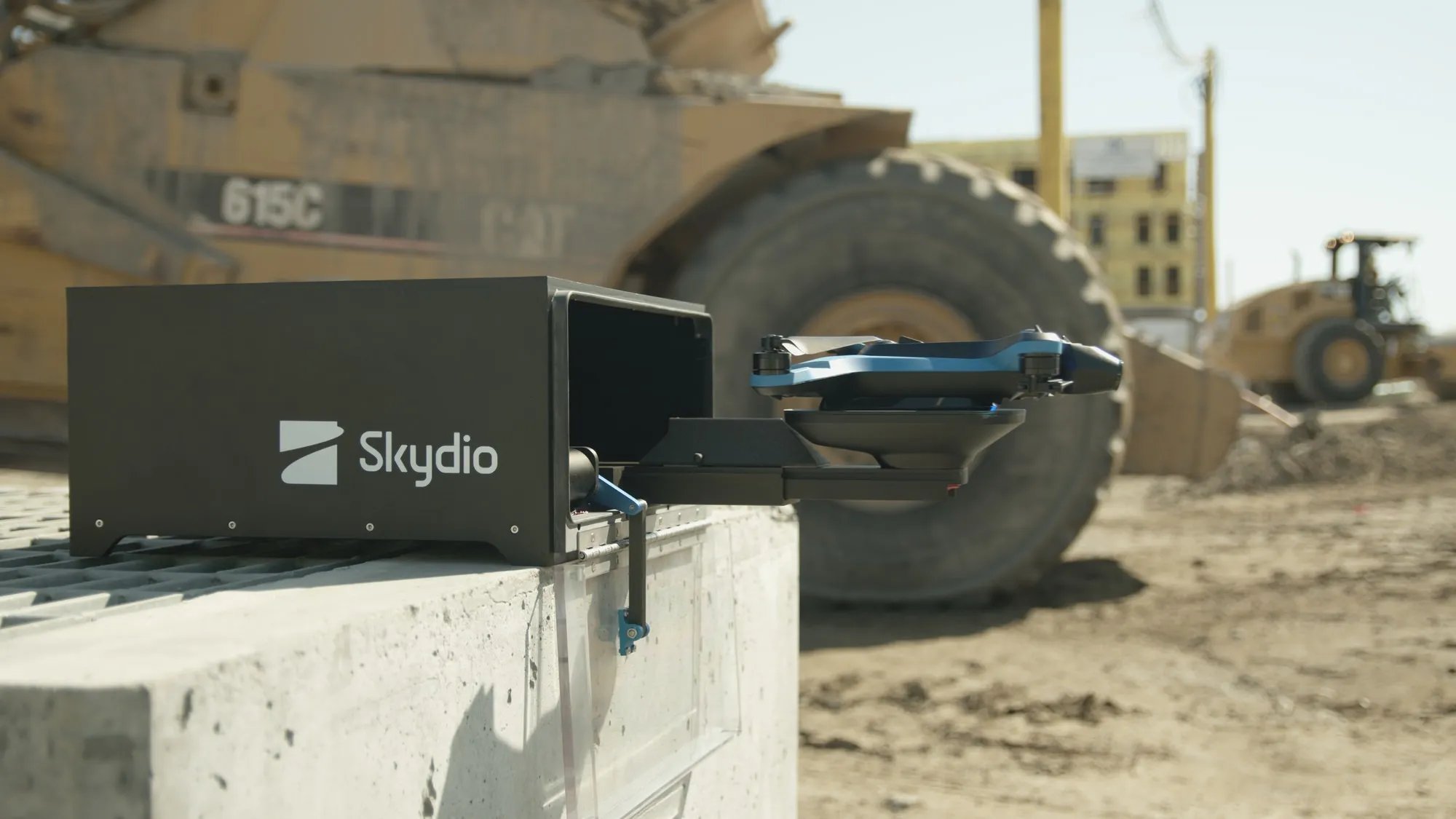
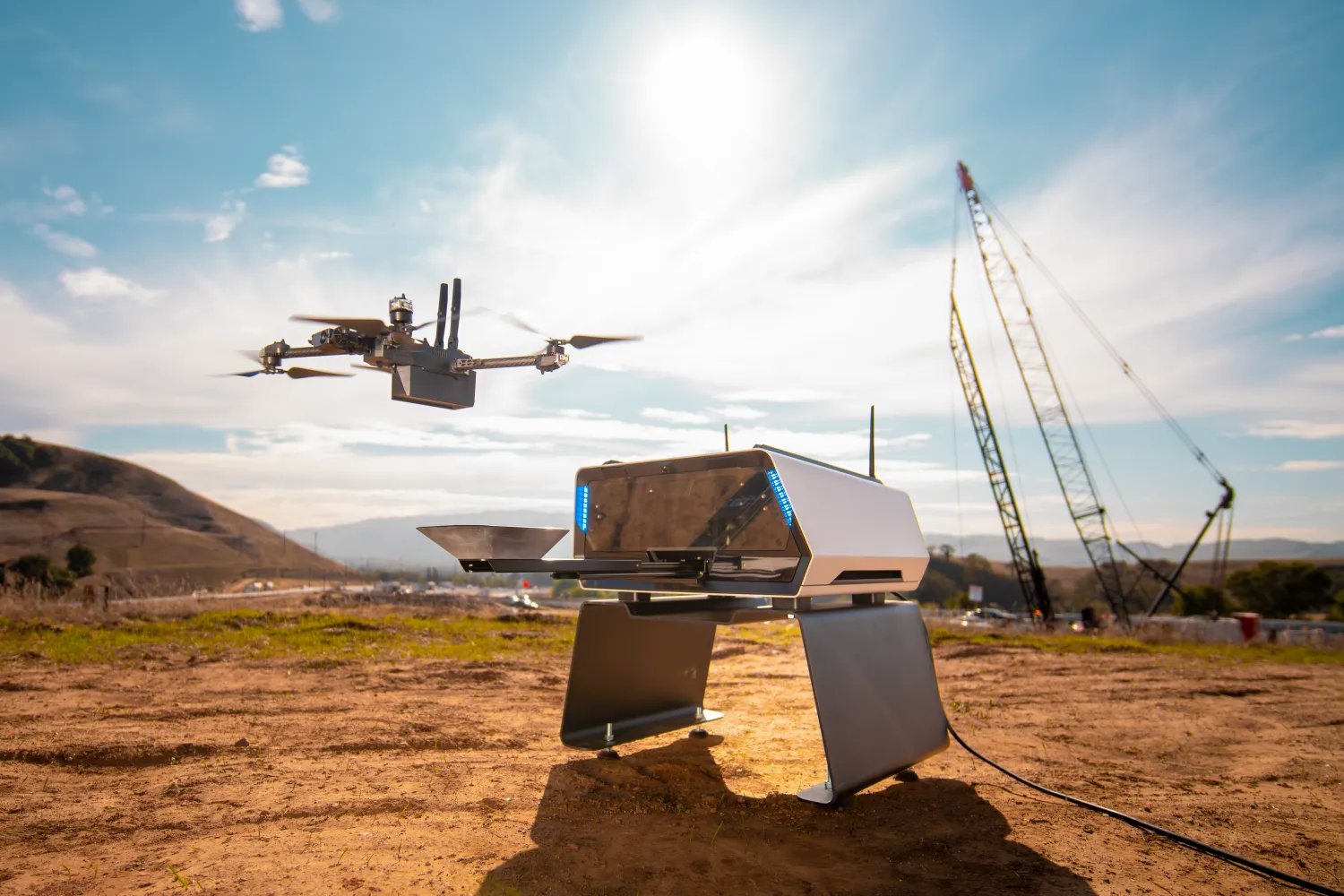
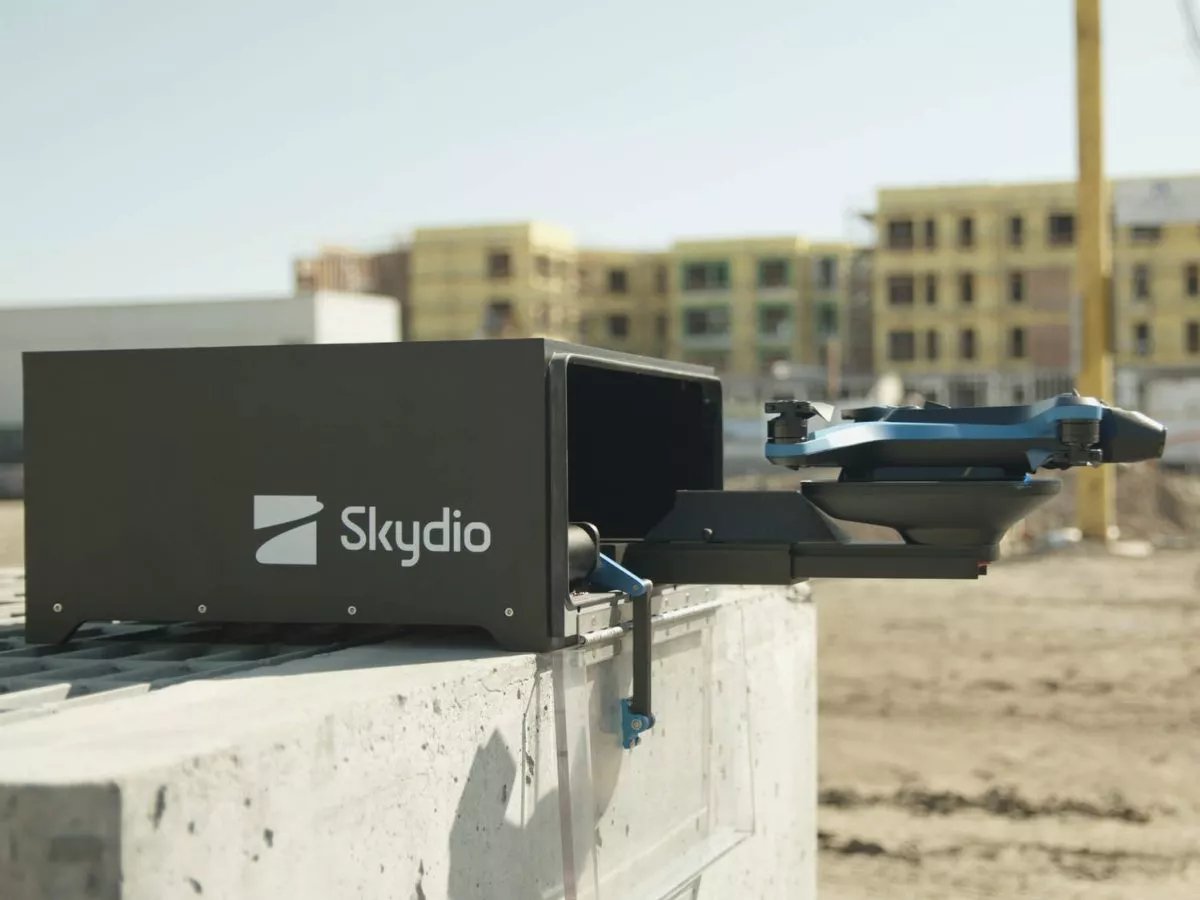
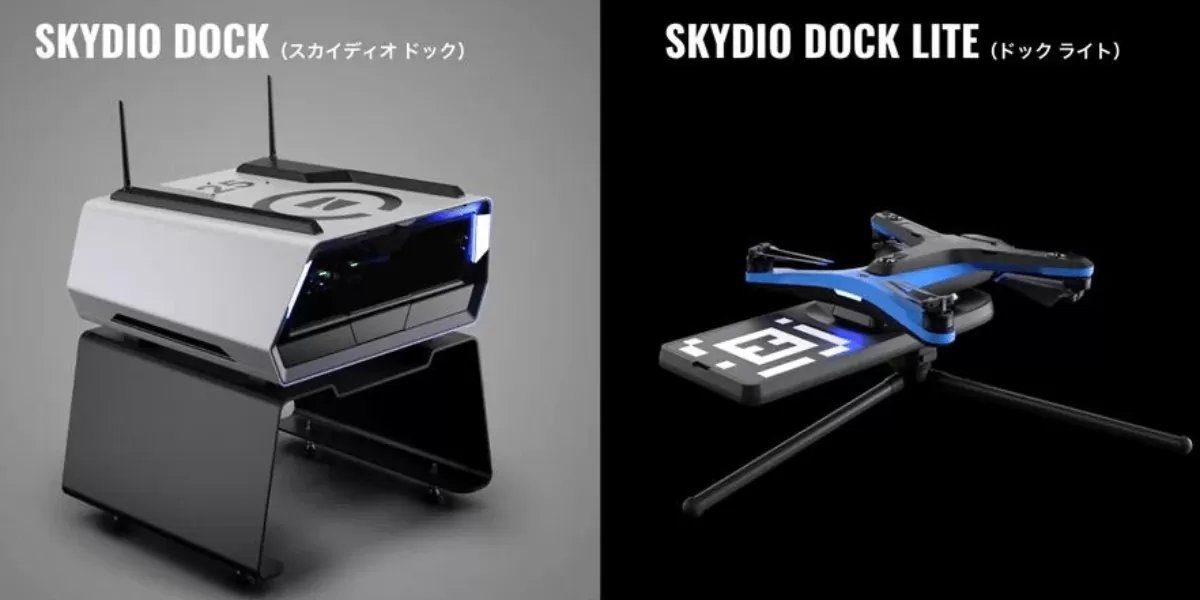
Photos: dronedj.com · www.drone-zone.de · drone-wiki.net · www.skydio.com
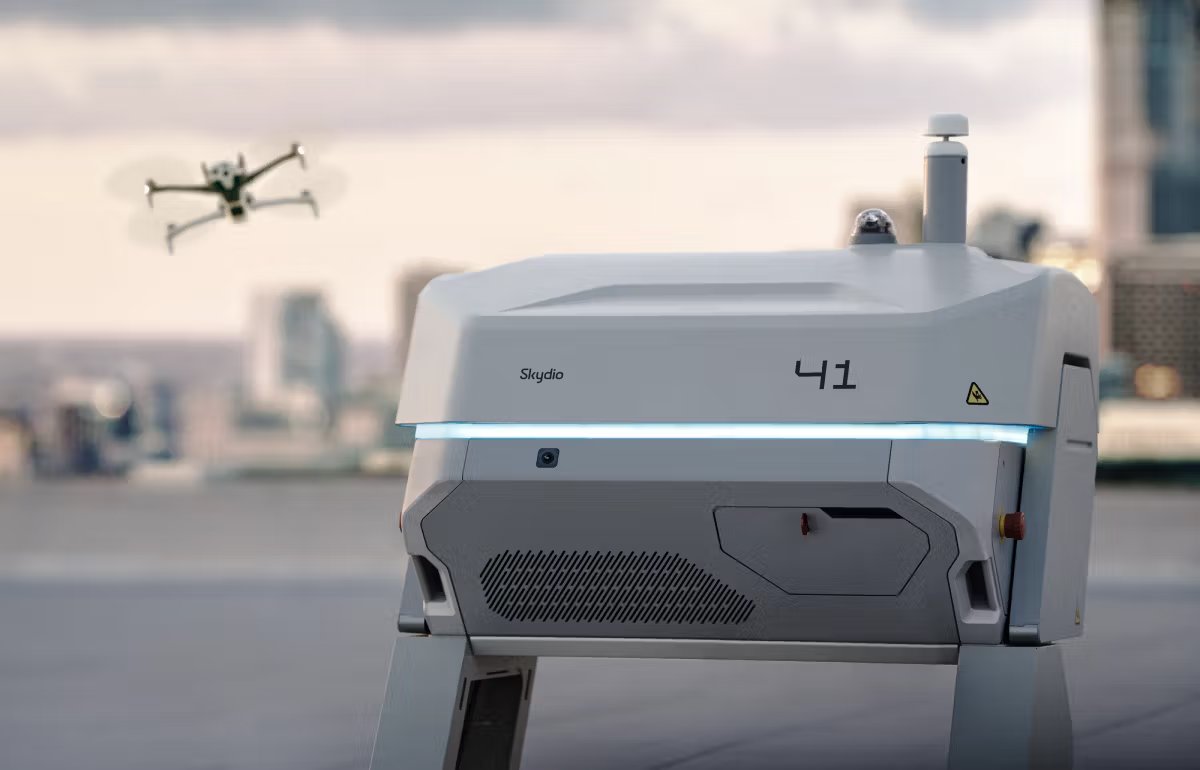
Skydio Dock is a weatherised docking station that turns the company’s quadcopters into remotely operated, persistent assets. Made by Skydio, the California autonomy specialist that has shipped tens of thousands of drones to US government and military customers, the system entered the market in 2022 as part of a broader shift inside Skydio away from the consumer market and toward enterprise inspection, public safety, and defence. The premise is straightforward: an aircraft sitting in a sealed enclosure on a rooftop or perimeter pole can launch on a schedule, fly a pre-planned route or a live-tasked mission, and return to recharge, all without a pilot on site.
The dock combines a hardened shell, contact-based charging pads, and connectivity hardware that ties the drone into the Skydio Cloud back end. Missions are authored, scheduled, and supervised through a browser; an operator hundreds of kilometres away can watch the live feed, retask the aircraft mid-flight, or hand control to a colleague. The aircraft itself does the hard part. Skydio’s onboard autonomy stack — the same vision-based obstacle avoidance and subject-tracking that defines the X2 and the newer X10 platforms — handles take-off, navigation, and landing without GPS dependence, which matters when the drone is operating between buildings or under cover. Beyond-visual-line-of-sight (BVLOS) approvals from the FAA have been a recurring theme of dock deployments, because the economic case for a fixed dock collapses if a human still has to stand within sight of it.
Operators have concentrated in two communities. US public safety agencies have used the dock to underpin Drone as First Responder programmes, in which a drone arrives over an incident before patrol officers do; the city of Chula Vista’s DFR programme is the most-cited reference customer, although it predates the dock itself. On the defence side, the US Air Force has tested docked Skydio aircraft for base perimeter security and flightline inspection, and the dock is part of the package that Skydio markets alongside the X10D, the militarised variant of the X10 the company has been pushing into Pentagon and Ukrainian hands.
A second-generation dock for the X10 followed the airframe’s launch in late 2023, with a larger enclosure and faster charging tuned to the heavier aircraft. Skydio has positioned the combination as its answer to the tethered-and-fixed surveillance niche occupied by Brinc, Sunflower Labs, and a growing field of autonomous-pod competitors.