Aerorozvidka
Volunteer-rooted drone R&D collective that developed the R-18 heavy octocopter for night precision strikes on armoured vehicles.
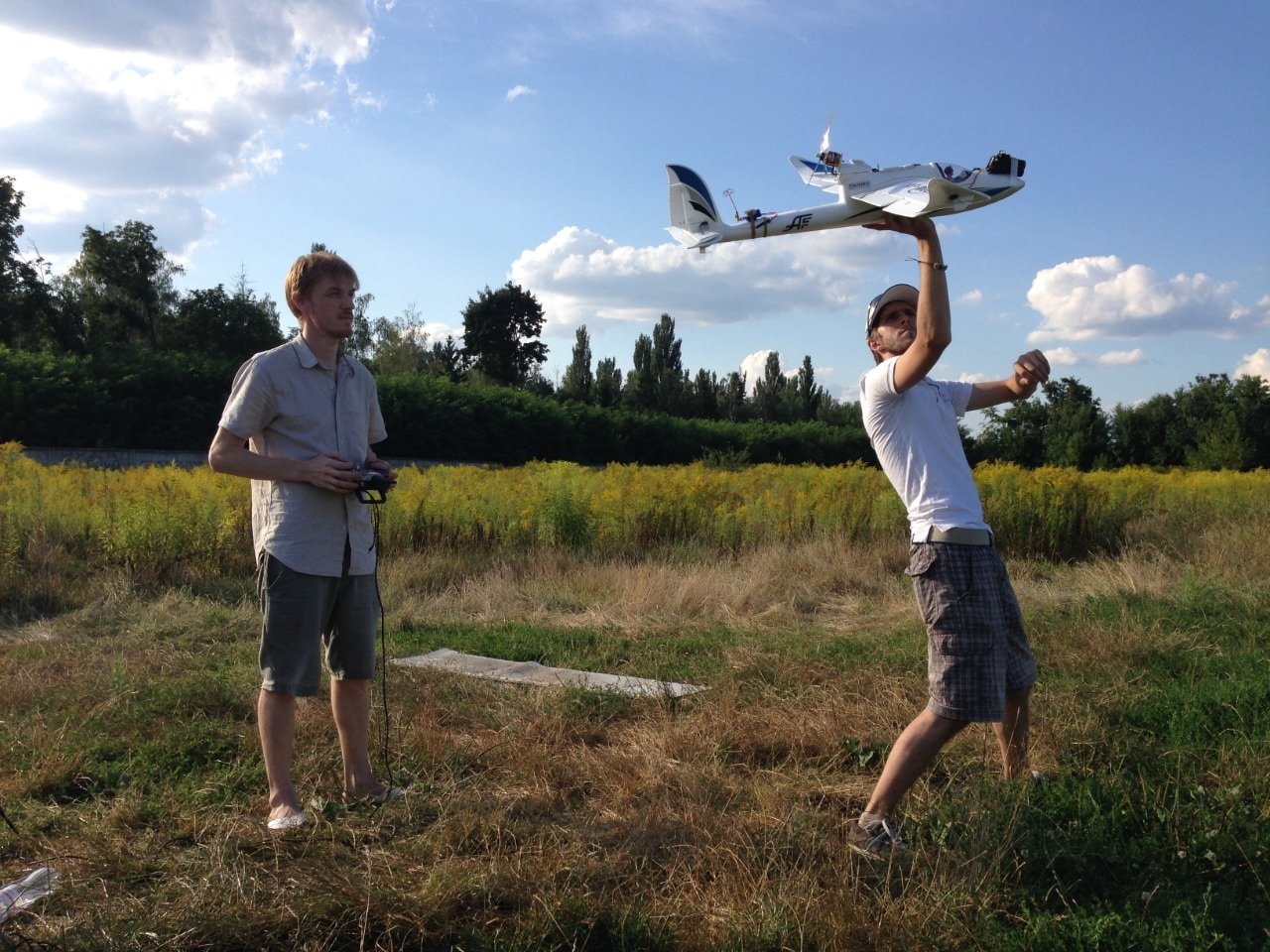
Aerorozvidka began in 2014 as a volunteer collective of IT specialists, hobbyist drone builders, and reservists who came together after Russia’s annexation of Crimea and the outbreak of fighting in Donbas. The group operated initially as a non-governmental project, building reconnaissance drones and battlefield software in apartments and small workshops in Kyiv while embedding members alongside front-line units. One of its early figures, Volodymyr Kochetkov-Sukach, was killed in action in 2015. Yaroslav Honchar emerged as the public face of the unit and has remained closely associated with it. After years operating in a grey zone between civil society and the armed forces, Aerorozvidka was formally integrated into Ukraine’s military structure and now functions as a specialised unmanned-aviation unit.
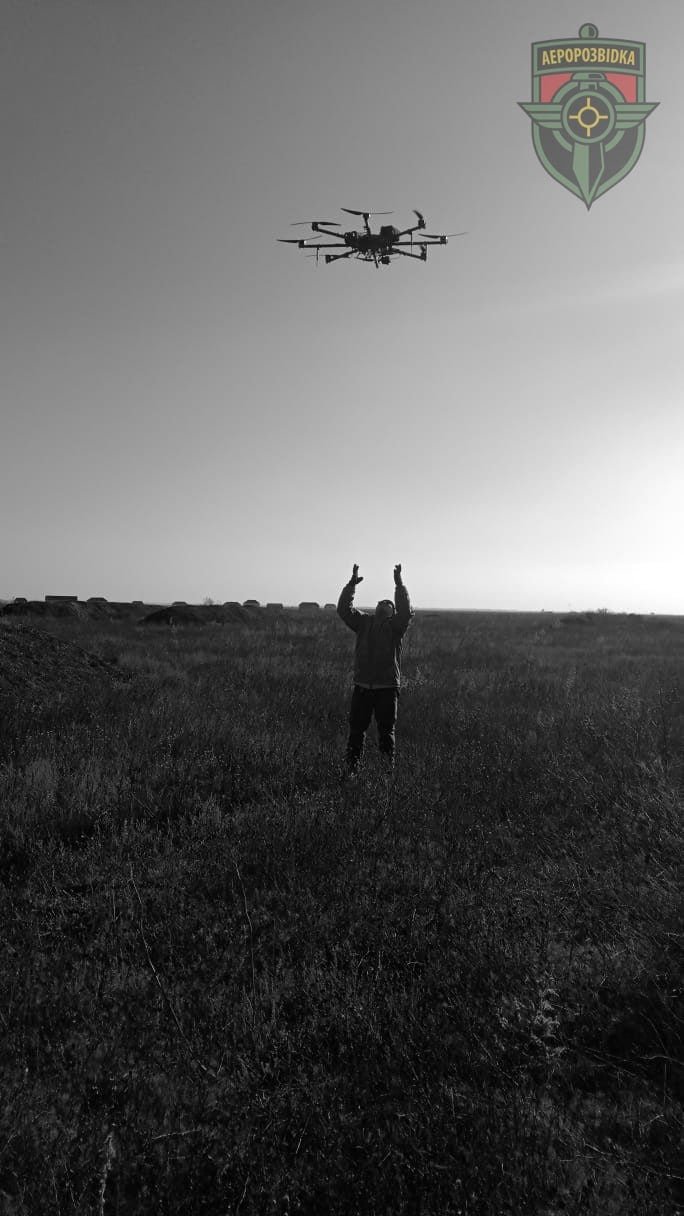
Its best-known product is the R-18, a heavy octocopter designed and refined by the group’s own engineers. The R-18 carries up to three modified RKG-3 anti-tank grenades, flies at night using thermal imaging, and is used for precision strikes on parked armour, fuel trucks, command posts, and electronic-warfare vehicles. The platform is hand-built in small batches, partly from commercial off-the-shelf components and partly from custom parts, with a unit cost reported in the low tens of thousands of dollars — cheap compared with the vehicles it disables. Alongside the R-18 the unit has worked on the Delta situational-awareness system, a cloud-based battlefield-management platform that aggregates feeds from drones, satellites, and ground spotters and pushes them to commanders’ tablets and phones.
Aerorozvidka came to wide public attention in the opening weeks of the full-scale Russian invasion in February and March 2022, when small teams using R-18s and other quadcopters were credited with breaking up a stalled Russian armoured column north of Kyiv near Hostomel and Ivankiv. Operators flew at night, identified vehicles parked nose-to-tail along forest roads, and dropped munitions through open hatches. Subsequent reporting by Reuters, the Financial Times, and The Times of London described the unit as one of the more effective improvised counter-armour formations of that phase of the war. The group has since taken part in operations across the Donbas, the south, and in deep-strike campaigns against Russian logistics.
The unit’s funding model has remained unusual. Much of its early hardware was paid for by donations from the Ukrainian diaspora, technology companies, and crowdfunding platforms such as the Come Back Alive foundation. Workshops produce drones in small numbers rather than at industrial scale, and the unit has at times publicly appealed for components, batteries, and thermal cameras that Western export controls or supply shortages have made hard to obtain. Connectivity for some of its operations has relied on Starlink terminals supplied to Ukrainian forces.
Aerorozvidka sits at the centre of a broader Ukrainian drone-industry ecosystem that has grown up around the war, sharing personnel, tactics, and lessons with the newer Unmanned Systems Forces command and with private manufacturers building scaled-up versions of the bomber-drone concept the unit helped popularise.
Products
Drones
A1-C Archangel
Early Aerorozvidka fixed-wing UAV for tactical ISR and target acquisition over the front line.
Introduced 2015
Aerorozvidka ISR Drone
Small ISR UAV for reconnaissance and target acquisition in contested airspace.
Introduced 2014
A1-CM Furia
Fixed-wing tactical ISR drone for artillery spotting and battlefield reconnaissance.
Introduced 2014
R-10
Lighter predecessor octocopter used for reconnaissance and early strike-drop experiments before the R-18.
Introduced 2016
R-12
Lighter predecessor octocopter used for reconnaissance and early precision-drop missions in the Donbas conflict.
Introduced 2016
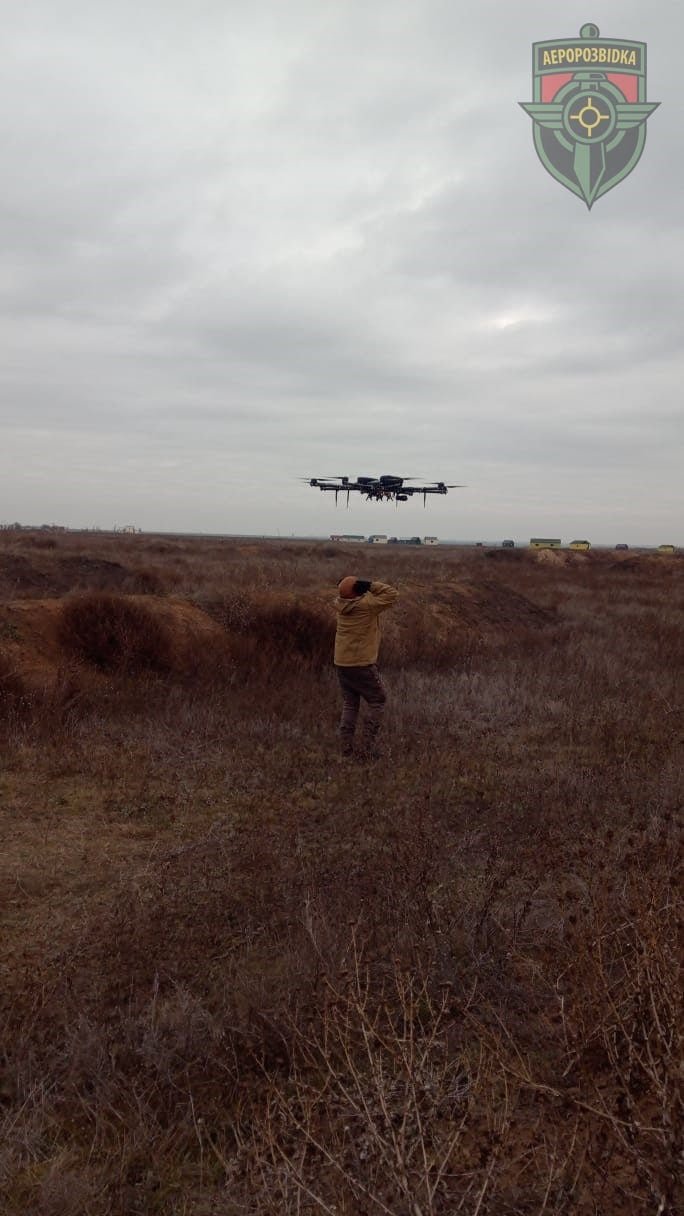
R-18
Heavy octocopter designed for night precision strikes on armoured vehicles using thermal imaging and gravity-dropped munitions.
Introduced 2017
R-18E
Enhanced variant of the R-18 octocopter with extended payload capacity and improved electronics for standoff munition delivery.
Introduced 2023
RQ-35 Heidrun
Fixed-wing ISR UAV developed for reconnaissance and target acquisition missions.
Introduced 2021
Spectator-M1
Fixed-wing reconnaissance UAV developed for persistent ISR over contested front lines.
Introduced 2018
Software
Aerorozvidka C2 Software
Drone coordination and targeting software developed alongside the R-18 for integrating ISR feeds with strike coordination.
Introduced 2020
Babylon
Tablet-based battle-management and drone-coordination platform linking aerial reconnaissance feeds to strike crews in near-real-time.
Introduced 2015