Aerobavovna
Maker of tethered aerostats for SIGINT, electronic warfare and drone relay, developing an aerostat-launched interceptor against Shahed-type drones.
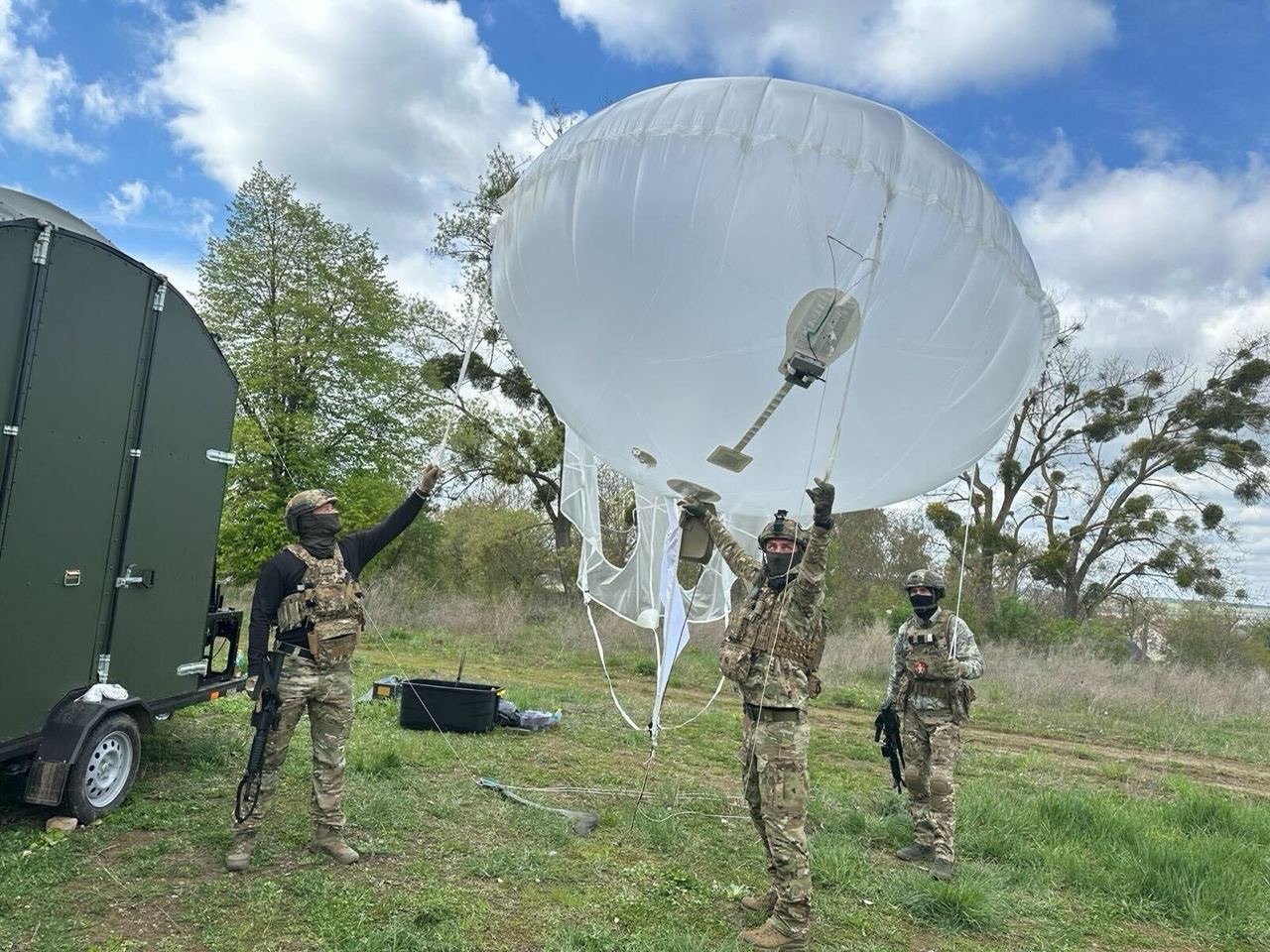
Aerobavovna is a Ukrainian startup building tethered aerostats — small, helium-filled balloons winched up on a cable — for battlefield use against Russia. The company’s name nods to wartime internet slang: “bavovna,” the Ukrainian word for cotton, became shorthand for explosions inside Russia, riffing on how Russian-language outlets used the homonym “khlopok” — cotton, or a soft bang — to downplay strikes on their own territory. Aerobavovna emerged from the volunteer defence-tech scene that grew up around the full-scale invasion in 2022, joining a wave of small Ukrainian firms that have pushed product into trench-level use far faster than the traditional procurement cycle allows.
Its catalogue runs to two aerostats, distinguished by payload class. The smaller platform lifts about six kilograms and is sold mainly as a long-range radio repeater and drone-control relay; the company says it can be set up in roughly seven minutes, a meaningful figure when the airframe has to come down again before a Lancet or artillery strike arrives. The larger model carries twenty-five to thirty kilograms — heavy enough to host signals-intelligence receivers or jammer payloads at altitude, where line-of-sight reach grows dramatically with even a few hundred metres of cable. Both are tethered, which gives continuous power up the line and sidesteps the airspace-clearance constraints that limit free-flying ISR balloons.
The relay role is the one Ukrainian operators tend to highlight. FPV-drone range is bounded by radio horizon and ground clutter; an aerostat at altitude gives a quadcopter or fixed-wing strike drone a clear sight-line several kilometres deeper into Russian rear areas than a ground antenna can reach. Several Ukrainian units have publicly demonstrated the technique. Aerobavovna is also developing an aerostat-launched interceptor designed to engage Shahed-136 one-way attack drones — the Iranian-designed loitering munitions Russia now manufactures at scale in Tatarstan and launches in nightly waves against Ukrainian cities. Whether the interceptor reaches the field in meaningful numbers, and at what cost per shot, is the open question; aerostat-based defences against Shaheds have been pursued by other Ukrainian and Western teams with mixed results so far.
The company sits inside a thicket of related Ukrainian work — electronic-warfare houses such as Kvertus and motor specialists like Maxon Systems — and is among the entrants the Ukrainian military has been encouraging via the BRAVE1 cluster and the Defence Ministry’s codification route for new domestic equipment. Public funding figures, headcount and ownership are not disclosed; the firm has kept a low marketing profile, which is typical of suppliers whose customer is a wartime general staff rather than an export market.
Products
Integrated systems
Aerobavovna Tethered Aerostat
Tethered aerostat platform providing persistent SIGINT collection, electronic warfare, and drone relay at altitude over contested frontlines.
Introduced 2023
Gallery
Sources
- militarnyi.com/en/news/aerobavovna-develops-aerostat-capable-of-lifting-30-kg-payloads/ (2026-06-19) — Militarnyi — Aerobavovna develops aerostat lifting 30 kg payloads; ~50 in operation, co-founder Yurii Vysoven.
- www.twz.com/air/balloon-launched-drone-to-intercept-long-range-kamikaze-drones-emerges-in-ukraine (2026-06-19) — The War Zone — balloon-launched interceptor drone concept; confirms website aerobavovna.com.
- techukraine.org/2025/05/19/sky-high-advantage-aerobavovna-launches-beefed-up-aerostat-for-advanced-sigint-and-ew-payloads/ (2026-06-19) — TechUkraine — heavier aerostat for SIGINT and EW payloads, co-founder quote.
- militarnyi.com/en/news/balloon-launched-interceptor-drones-ukraine-developing-new-system-to-counter-shahed-drones/ (2026-06-19) — Militarnyi — balloon-launched interceptor drones to counter Shahed UAVs.