Kvertus
Maker of portable and vehicle-mounted electronic-warfare systems for jamming Russian UAVs.
Kvertus is a Ukrainian electronic-warfare manufacturer headquartered in Kyiv, founded in 2014 in the wake of Russia’s first incursion into eastern Ukraine. The firm spent its early years as a small specialist supplier of jamming and counter-radio systems to Ukrainian forces and security services, working at a scale measured in dozens of units a year. After the full-scale Russian invasion in February 2022, demand collapsed that constraint: Kvertus expanded production to thousands of units a month and became one of the country’s most visible counter-drone equipment makers.
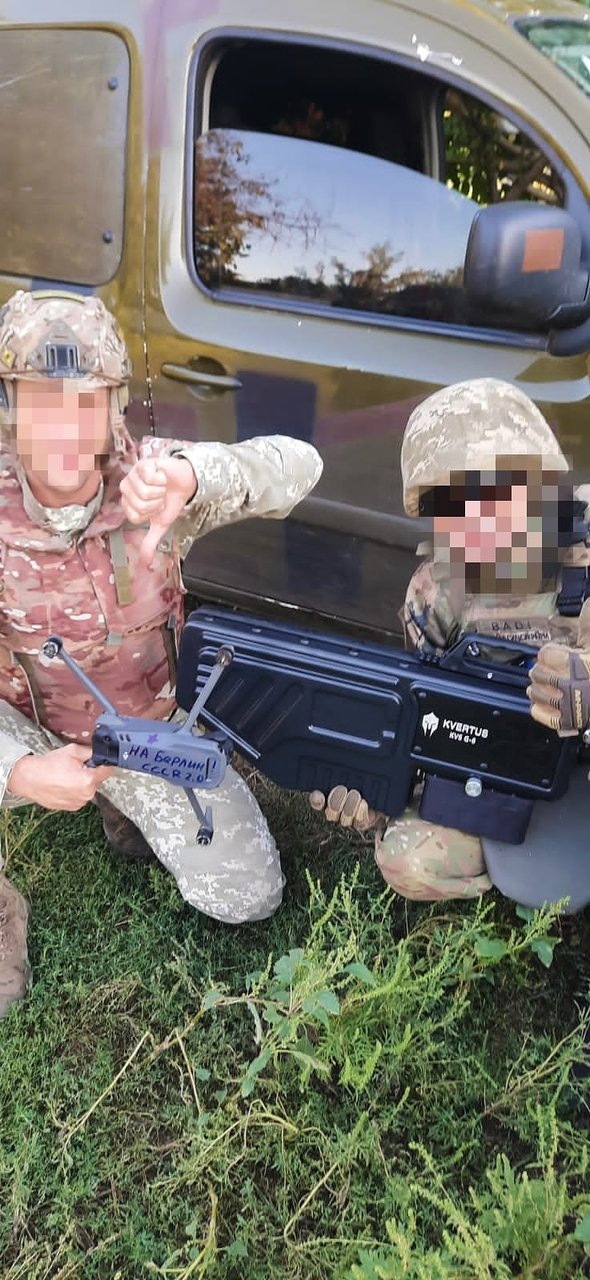
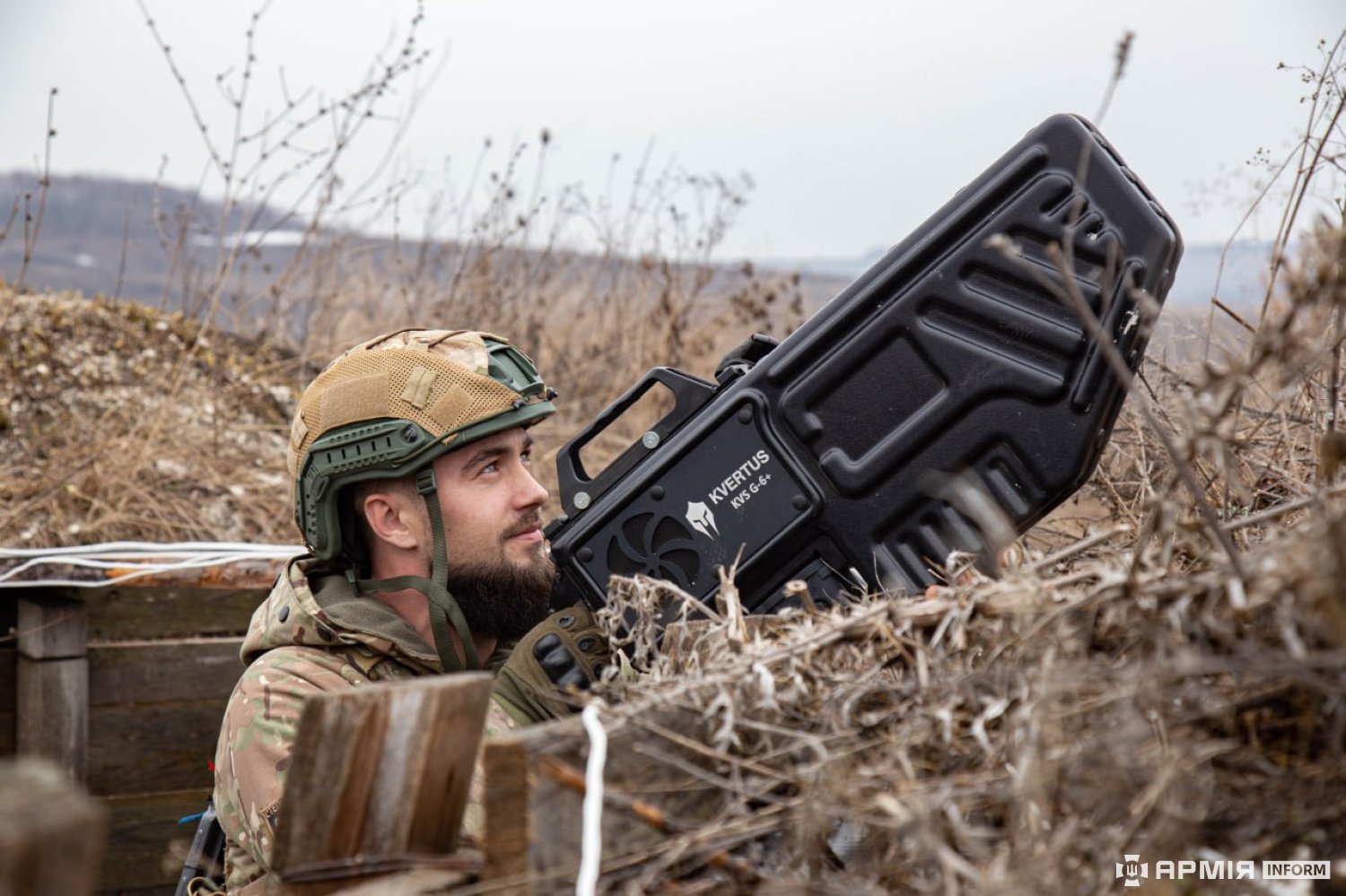
The company’s product line is built around radio-frequency jamming of small unmanned aircraft — the cheap reconnaissance and FPV strike drones that have come to define the war on both sides of the contact line. Its best-known platform is the KVS G-6, a portable rifle-style jammer that operators sweep across the sky to break the control or video link of an inbound drone. Sister products extend the same approach to other form factors: backpack-carried jammers for dismounted infantry, vehicle-mounted domes that protect a moving column, and fixed installations that shield trench positions, command posts and supply depots from FPV attack. The systems are tuned to the specific bands used by Russian-operated Mavics, Autel quadcopters and the proliferating family of FPV racing-drone derivatives that ferry RPG warheads onto armour and infantry.
Production runs almost entirely for the Ukrainian Armed Forces, Territorial Defence brigades, the State Border Guard Service and the National Guard, with units distributed through volunteer fundraisers as well as direct contracts. Civilian charities such as the Serhiy Prytula Foundation and Come Back Alive have purchased Kvertus equipment in batch lots and handed it to frontline units, a route that accounts for a meaningful share of overall deliveries. Foreign interest has grown alongside domestic volume; the firm has shown its hardware at international defence exhibitions and discussed export to NATO and partner customers, though the bulk of output stays in Ukraine.
Kvertus is privately held and does not publish detailed financials. Public statements from its leadership have described scaling from a handful of staff before the invasion to several hundred employees across engineering, manufacturing and field-support roles. Iteration cycles are short — designs are revised in response to feedback from operators who return from the front with notes on which Russian frequencies have shifted and which jamming patterns are no longer working. That feedback loop, more than any single piece of hardware, is what Ukrainian commentators tend to point to when they describe what distinguishes Kvertus’s catalogue from imported counter-drone gear.
The company operates in a crowded domestic field that includes Infozahyst, Piranha-Tech and a long tail of smaller workshops, but its volume and visibility in the dismounted-jammer category have made it a reference point for how a wartime electronic-warfare industry can grow from cottage scale to serial production in under three years.

Products
Hardware
Kvertus Portable Anti-Drone Jammer
Soldier-portable shoulder-carried jammer for suppressing FPV and commercial-off-the-shelf drones at squad level.
Introduced 2022
KVS G-6
Handheld multi-band anti-drone jamming rifle used by Ukrainian troops to disrupt Russian quadcopters and FPV strike drones.
Introduced 2022
Pokrova
Stationary electronic-warfare complex for protecting fixed positions and logistics hubs from UAV attack.
Introduced 2023