A treatise of human nature
by David Hume1739J.M. Dent & Sons
David Hume was twenty-eight when A Treatise of Human Nature appeared in three volumes between 1739 and 1740, an anonymous and largely unsold first attempt at what he called a science of man. Working in La Flèche, the same French town where Descartes had been schooled a century earlier, Hume set out to do for the mind what Newton had done for the heavens — to find the simple principles from which more complex mental phenomena could be explained.
The central argument is that the entire furniture of thought derives from experience. Hume divides perceptions into impressions, the lively original sensations and feelings, and ideas, the fainter copies the mind retains afterward. Every legitimate idea, he insists, must be traceable back to an impression; concepts with no such ancestor are empty. From this copy principle he derives a method for dissolving traditional metaphysical disputes by asking, of any contested term, from which impression it is derived.
Book One examines the understanding. Hume’s treatment of causation argues that we never perceive a necessary connection between events, only their constant conjunction, and that the feeling of inevitability attached to cause and effect is a habit of mind rather than a feature of the world. This becomes the famous problem of induction: there is no non-circular argument from past regularities to future ones. He proceeds to dismantle the substantial self, replacing it with a bundle of perceptions in perpetual flux, and closes the book in a celebrated passage of scepticism that he can escape only by returning to backgammon and ordinary life.
Book Two treats the passions, mapping pride and humility, love and hatred, and the indirect passions onto a mechanical scheme of association between ideas and impressions. Book Three turns to morals, arguing that moral distinctions are not derived from reason but from sentiment — approval and disapproval as felt by an impartial spectator. Here Hume articulates the is-ought gap, noting that writers slide imperceptibly from descriptive claims to prescriptive ones without justification, and develops justice as an artificial virtue grounded in convention and human interest rather than in nature.
The Treatise sold poorly in Hume’s lifetime, and he later recast much of its material into the more accessible Enquiries concerning Human Understanding and concerning the Principles of Morals. The original remains the fuller statement, and the one that continues to set the agenda for empiricist philosophy of mind, moral psychology, and contemporary debates on causation, induction, and personal identity. Readers new to it often find Book One the most demanding; those drawn by ethics tend to begin with Book Three, where Hume’s account of moral sentiment laid the groundwork for later sentimentalists and, by reaction, for Kant.
Read the longer summary
David Hume was twenty-six when he began drafting A Treatise of Human Nature in the small French town of La Flèche, where Descartes had been schooled a century earlier. He had retreated there in 1734 after a nervous collapse he later described as the disease of the learned, supported by a small inheritance and the conviction that he could do for the mind what Isaac Newton had done for the heavens. The first two volumes appeared anonymously in London in January 1739, published by John Noon; the third followed in November 1740 from Thomas Longman. Hume was twenty-eight, the book had cost him five years of intense and isolated labour, and, in his own famously rueful phrase from My Own Life, it fell dead-born from the press, without reaching such distinction as even to excite a murmur among the zealots. The judgment was overstated — there were reviews, including a long hostile one in the Bibliothèque raisonnée — but the work sold barely at all, and Hume spent the rest of his career trying to recast its arguments in forms the reading public would accept.
The conversation the Treatise joined was the one that had begun with John Locke’s Essay concerning Human Understanding in 1689 and continued through George Berkeley’s Principles of Human Knowledge of 1710. Locke had argued that the mind starts as a blank sheet on which experience writes; Berkeley had pushed the empiricist programme to the point of denying matter altogether, leaving only minds and the ideas in them. Hume’s ambition was to push further still and to do so with a method modelled on the new natural philosophy. The book’s full title — A Treatise of Human Nature: Being an Attempt to introduce the experimental Method of Reasoning into Moral Subjects — names that ambition plainly. The science of man, Hume writes in his introduction, is the only solid foundation for the other sciences, since every enquiry whatever ultimately runs back through the human understanding that conducts it. The promise is a systematic empirical psychology that will ground logic, the passions, morals, politics and criticism on the same observational footing as Newton’s optics.
The central thesis is austere. All the contents of the mind, Hume argues, are perceptions, and perceptions divide into two kinds distinguished by their force and vivacity. Impressions are the lively originals — sensations as they strike us, and the feelings and passions that arise within us. Ideas are the fainter copies the mind retains and recombines afterwards. The decisive move is the copy principle: every simple idea is a copy of a simple impression that preceded it, so any term that cannot be traced back to an impression is empty noise. From this rule Hume derives a corrosive method for handling disputed concepts. Confronted with any contested word — substance, self, necessary connexion, moral goodness — the philosopher is to ask from what impression it is derived. If no impression can be produced, the supposed idea is a confused fiction and the dispute that turns on it is unreal. This single procedure does most of the demolition work in the book and explains why the Treatise became, two centuries later, the founding text for the logical empiricists who took up something close to the same principle under the name of the verification criterion.
Book One, Of the Understanding, is the longest and the most technically demanding of the three. Its early parts establish the apparatus — impressions and ideas, the three principles of association by which ideas connect to one another, namely resemblance, contiguity in time or place, and cause and effect, and the troubled status of abstract general ideas, which Hume treats in a nominalist key inherited from Berkeley. The book then opens out into a sequence of celebrated discussions: of space and time, where Hume defends a finite divisibility against Bayle’s paradoxes; of knowledge and probability; and at the centre of the volume, the treatment of causation that became, more than anything else in the work, the source of its philosophical afterlife. We never perceive a necessary connexion between one event and another, Hume argues. What we observe is constant conjunction — the regular succession of one kind of event upon another — together with the felt expectation, after many such repetitions, that the second will follow the first. The idea of necessary connexion is a copy not of anything in the world but of an impression of reflection in the mind that has been habituated. From this comes what Kant would later call Hume’s problem and what is now known as the problem of induction: no demonstrative argument can establish that the future will resemble the past, and any probable argument for that conclusion already presupposes it. Custom, not reason, is the great guide of life.
The treatment of the self in the same book is no less radical. When Hume turns inward, looking for the simple, continuing thing that philosophers call the soul or the self, he reports finding nothing but a bundle or collection of different perceptions, succeeding each other with an inconceivable rapidity, and in a perpetual flux and movement. The mind is a kind of theatre where several perceptions successively make their appearance, except that the theatre, on inspection, dissolves into the performances. The book closes in a famous passage of vertigo, with Hume confessing that his sceptical conclusions leave him in the most deplorable condition imaginable, environed with the deepest darkness, until nature herself, in the form of dinner, a game of backgammon and conversation with friends, restores him to the cheerful belief that scepticism cannot in practice sustain.
Book Two, Of the Passions, is the volume modern readers most often skip and the one Hume himself thought essential to the larger design. It is an attempt to do for the affective life what Book One did for cognition, mapping pride and humility, love and hatred, hope, fear, joy, grief and the will onto a systematic scheme of association. The direct passions arise immediately from pleasure or pain; the indirect passions — pride, humility, love, hatred — require a double relation, between an idea and an impression, that Hume sets out in almost diagrammatic detail. The treatment of sympathy in this book is doing some of the most important work in the whole Treatise. Sympathy, for Hume, is the mechanism by which the felt experience of one person is communicated to and partly reproduced in another, and it is what makes possible both the social bond and, in Book Three, the moral life. It is also in Book Two that Hume drops the line that scandalised his early readers and continues to be quoted out of every available context: Reason is, and ought only to be the slave of the passions, and can never pretend to any other office than to serve and obey them. Reason discovers truths and falsehoods; only passion moves the will. A passion cannot be contrary to reason, only to another passion. The point is not a brief for irrationalism but a refusal to allow reason the motivating role that earlier moralists, especially the rationalists, had assigned to it.
Book Three, Of Morals, draws the consequences. If reason is inert with respect to action, moral distinctions cannot be the discoveries of reason; they must be felt. The vice and virtue we attribute to actions and characters are not qualities discovered in objects by demonstration but sentiments of approval and disapproval that arise in spectators, especially when they take up what Hume calls a general or steady point of view. The book contains the four-paragraph remark in Section One of Part One that became, two centuries later, the most quoted passage in moral philosophy — the observation that writers slide imperceptibly from is to ought without any explanation of how a new relation could be deduced from those that have nothing to do with it. The is-ought gap, as it is now called, is set out almost in passing, as a small thing he could not help observing, and the rest of the book proceeds to ground morality in sentiment rather than in deduction.
The longest sections of Book Three concern justice, which Hume classifies as an artificial virtue. Property, contract, allegiance to government, the obligation of promises — none of these, Hume argues, can be explained by spontaneous benevolence or by self-interest narrowly conceived. They are conventions, invented to remedy the inconveniences that follow from human selfishness and limited generosity in a world of moderately scarce goods. The natural virtues, by contrast, such as benevolence, gratitude, and a good temper, are approved directly because of their tendency to please the person who possesses them or others around them. The same machinery of sympathy that organised the passions in Book Two now does the moral work: an action is virtuous if a disinterested spectator, sympathising with all those affected, would feel approval on contemplating it. The state, the magistrate, even the rules of chastity, are explained in the same sociological key, as artificial supports for arrangements that no naked individual could be relied on to maintain unaided.
The Treatise was reviewed, refuted and largely ignored. Hume blamed the failure on his presentation rather than on his arguments, and within a few years he had broken the work apart and recast its main contents into more readable form. The first Enquiry, published in 1748 as Philosophical Essays concerning Human Understanding, retells Book One without the technical apparatus on space, time and abstract ideas, and adds the essays Of Miracles and Of a Particular Providence and a Future State that Hume had originally cut for fear of Bishop Joseph Butler. The Dissertation on the Passions of 1757 is the slimmer descendant of Book Two. The Enquiry concerning the Principles of Morals, which Hume regarded as incomparably the best of all his works, recasts Book Three. By the time of his death in 1776, Hume was begging readers to take the later works as definitive and to treat the Treatise as a juvenile production. The reading public obliged: the Treatise was barely reissued until the nineteenth century. Kant read it, at least in part, through the German translation of an essay Beattie had attacked, and credited it with the famous interruption of his dogmatic slumber. The bundle theory of the self, the regularity account of causation, the sentimentalist meta-ethics and the is-ought gap are all Treatise doctrines, but it was through the Enquiries that they entered the standard curriculum.
The book has been read in different ways by different generations. The Victorian editors T. H. Green and T. H. Grose treated it in 1874 as a great failure whose collapse made room for Kant. The early twentieth century, through Norman Kemp Smith’s 1941 The Philosophy of David Hume, reversed that judgment and recovered the Treatise as a constructive naturalism rather than a merely destructive scepticism. The logical positivists of the Vienna Circle, especially A. J. Ayer in Language, Truth and Logic, took the copy principle as a forerunner of their own verification criterion. The new Humeans of the late twentieth century, such as Galen Strawson, have argued that Hume was less an anti-realist about causation than a sceptical realist who held that there must be powers in nature even though we can form no contentful idea of them. P. F. Strawson, Barry Stroud, Annette Baier and Don Garrett have each written substantial books on the Treatise; Baier’s A Progress of Sentiments in particular shifted attention from Book One to Books Two and Three and from Hume the cool sceptic to Hume the theorist of the passions and the social bond.
For a reader coming to AI in war from the philosophical side, the Treatise is less directly relevant than the moral philosophy of Kant or the more recent literature on autonomous systems, but it remains the foundational text behind much of what is now said about reasons, motivation, and the limits of reasoning machines. Hume’s claim that reason cannot itself move the will, that it only ever serves ends supplied by sentiment, is the background to most contemporary discussion of value alignment, just as his treatment of causation is the background to most contemporary discussion of inference under uncertainty. The book pairs naturally with Locke’s Essay, with Adam Smith’s Theory of Moral Sentiments — Smith was Hume’s closest friend and intellectual heir — and with the contemporary commentaries by Baier, Garrett and Stroud. It does not contain a political philosophy in the manner of Hobbes or Locke; Hume’s politics emerge in his Essays and the History of England, not in the Treatise.
What ages well is the method and the questions. Hume’s habit of dissolving a problem by asking from which impression a contested idea is derived, his refusal to let reason do the work of feeling, his account of the self as a bundle in flux, and the unresolved sharpness of the induction problem all continue to set agendas in philosophy of mind, epistemology and moral psychology. What has dated is the associationist psychology in Book Two, the confidence that all of mental life could be reduced to three simple principles of connexion, and a number of incidental positions — on race, on the place of women, on the rationality of suicide — that belong to the eighteenth century and not to ours. The Treatise still rewards the reader who is willing to follow Hume into the technical thickets of Book One and to take Books Two and Three as seriously as he did himself. It is, as he came to call it many years later in a moment of partial reconciliation, the work in which he first arrived at the principles on which everything else he wrote was built.
Publisher's description
- Knowledge, Theory of
Related books

Watch & listen

Podcasts
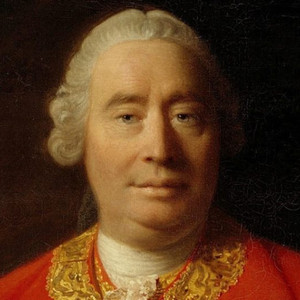
On David Hume's "A Treatise of Human Nature"
Writ Large · apple · 2022-09-30
1a. Hume's Theory of Ideas and the Faculties
Introduction to David Hume's Treatise of Human Nature Book One · apple · 2012-08-01
3a. Hume's Theory of General (or Abstract) Ideas
Introduction to David Hume's Treatise of Human Nature Book One · apple · 2012-08-01
4a. Relations, and a Detour to the Causal Maxim
Introduction to David Hume's Treatise of Human Nature Book One · apple · 2012-08-01
1a. Hume's Theory of Ideas and the Faculties
Introduction to David Hume's Treatise of Human Nature Book One · apple · 2012-08-01
Last researched .