Products General Atomics Aeronautical Systems
YFQ-42A
Air-to-air Collaborative Combat Aircraft prototype selected for USAF CCA Increment 1.
Droneby General Atomics Aeronautical SystemsIntroduced 2024
Photos: euro-sd.com · www.twz.com · www.youtube.com · www.finanznachrichten.de · General Atomics Aeronautical Systems
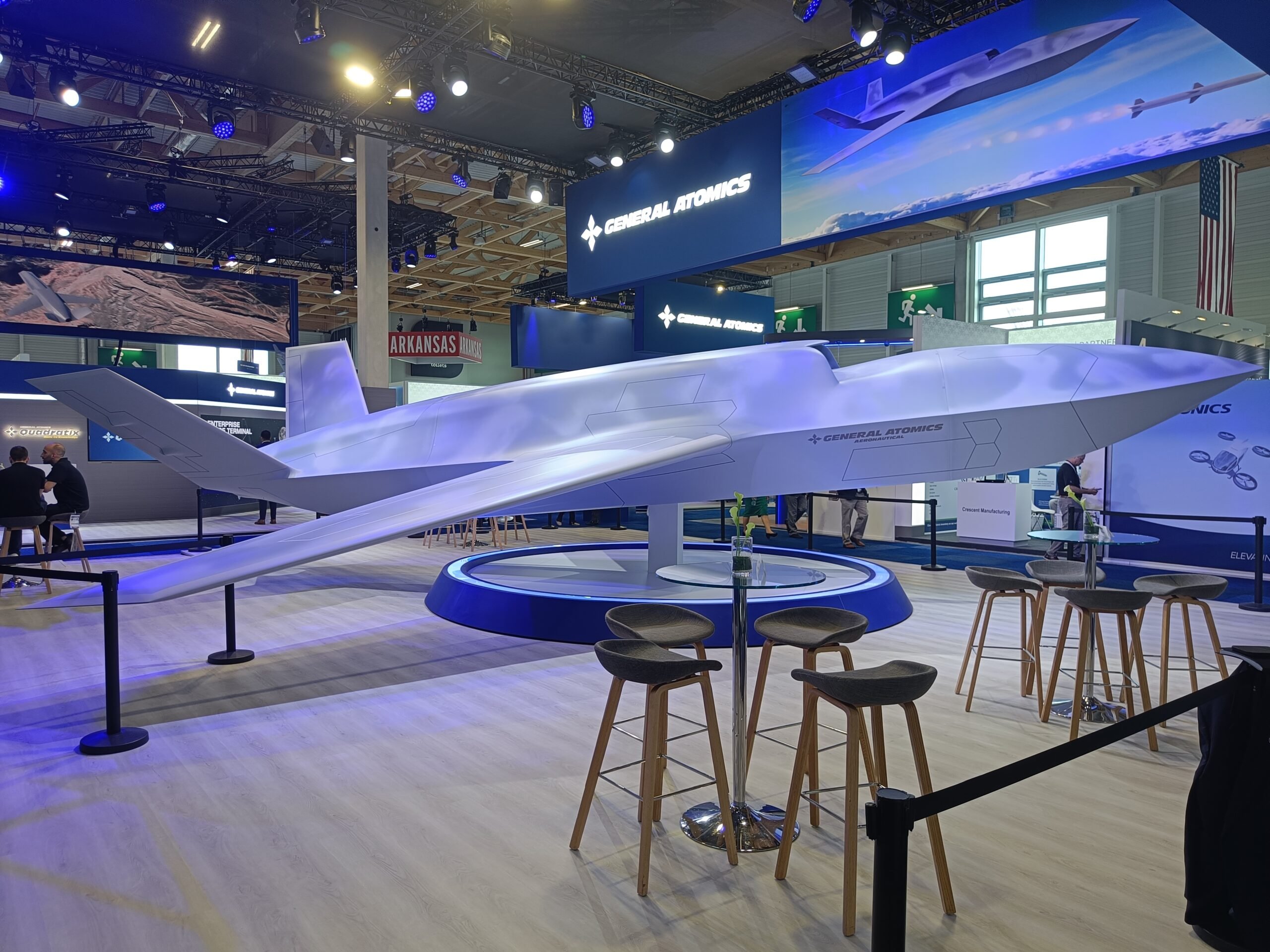
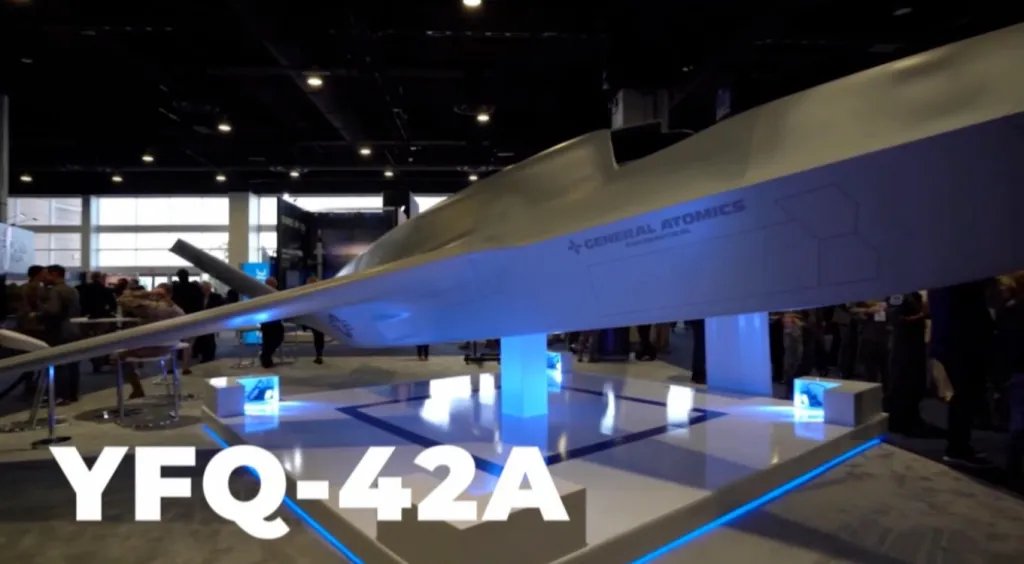
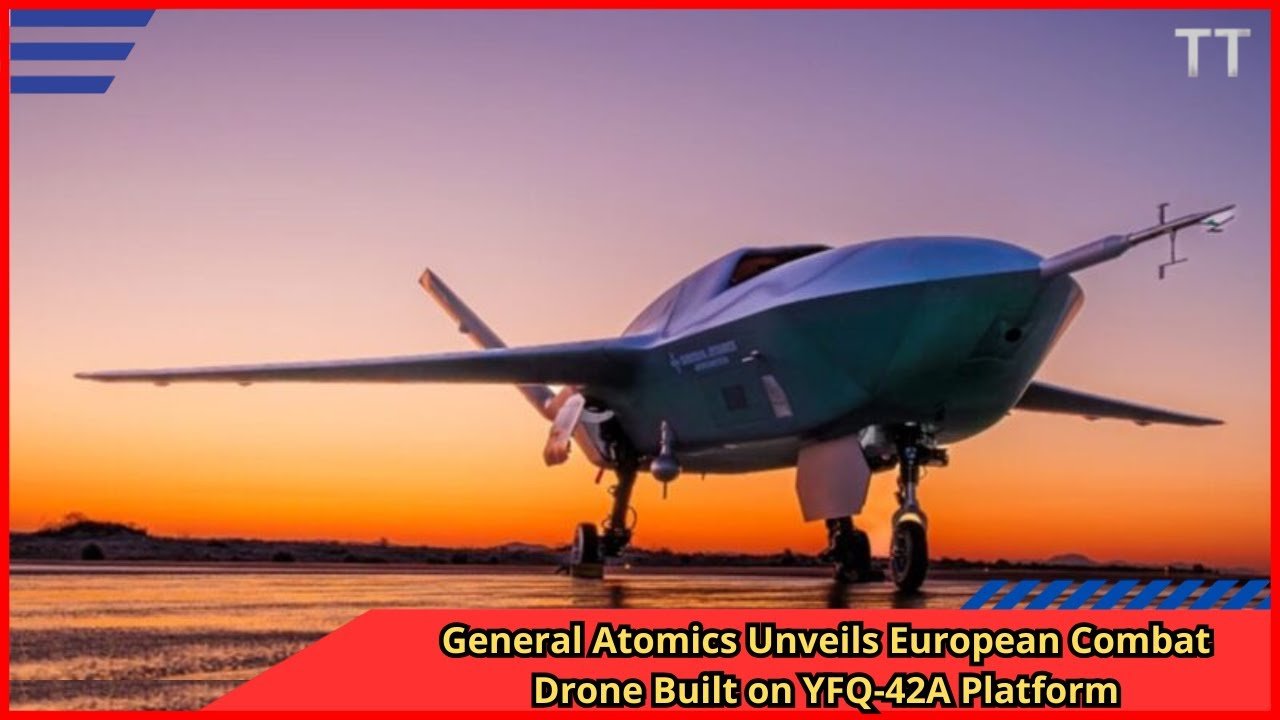
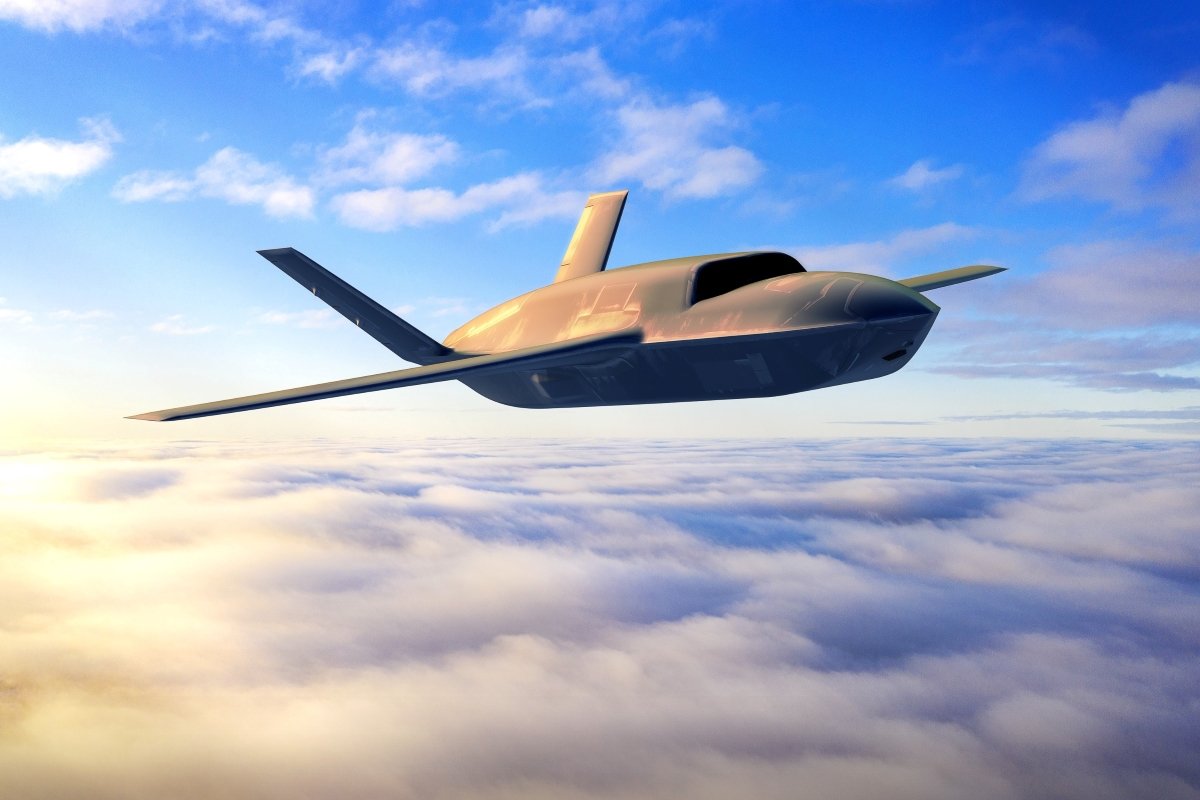
The YFQ-42A is General Atomics Aeronautical Systems’ prototype for the U.S. Air Force’s Collaborative Combat Aircraft programme, the service’s bid to put autonomous fighter-class drones alongside its crewed front-line jets. It entered the public record in April 2024, when the Air Force named General Atomics and Anduril Industries as the two surviving primes for CCA Increment 1, knocking out Boeing, Lockheed Martin and Northrop Grumman. The “YFQ” designation — prototype, fighter, uncrewed — was formalised in March 2025 and is the first of its kind in the U.S. military system, the moment the Air Force began treating a drone as an air-to-air combatant rather than a strike or surveillance platform.
The aircraft is built on General Atomics’ Gambit family, a modular jet-drone architecture in which a common core — chassis, landing gear, mission computer, and avionics — is paired with mission-specific outer mouldings and payloads. The lineage runs through the XQ-67A “Off-Board Sensing Station”, a 2024 demonstrator built for the Air Force Research Laboratory that validated the core and its autonomy stack. The YFQ-42A inherits that core and adds an air-to-air outer geometry: low-observable shaping, an internal weapons bay sized for a pair of AIM-120 AMRAAMs, and a single commercial-derivative turbofan. It is intended to fly as a loyal wingman to the F-22, F-35, and the future NGAD platform, taking cues from a pilot in another aircraft and prosecuting targets with on-board autonomy whose specifics the Air Force has not made public.
The first prototype rolled out in mid-2025, with first flight following at General Atomics’ Gray Butte facility in California’s Mojave desert. The Air Force has stated its intent to buy roughly 100 aircraft across Increment 1 between the two competing designs, and has cited a long-term ambition of fielding more than a thousand CCAs across multiple increments. Per-unit targets in trade press reporting sit at roughly a quarter of an F-35’s flyaway cost — the headline argument for the programme, alongside the operational case for putting more sensors and shooters into contested airspace than crewed inventories alone can sustain.
Whichever combination of airframe and autonomy software the Air Force ultimately fields from Increment 1, the YFQ-42A sits at the centre of the service’s near-term thinking on how to fight a peer air war. General Atomics brings to the contest two decades of operational experience with the MQ-9 Reaper and a continuous run of jet-drone prototypes — the Avenger, the XQ-67A, the broader Gambit line — that give the company a depth of unmanned-aircraft experience few competitors can match.