Trinity Pro
Long-endurance eVTOL mapping and reconnaissance drone for survey, intelligence and inspection missions.
Droneby Quantum SystemsIntroduced 2022

Photos: 1updrones.com · fity.club · www.linkedin.com · www.dominiondrones.com
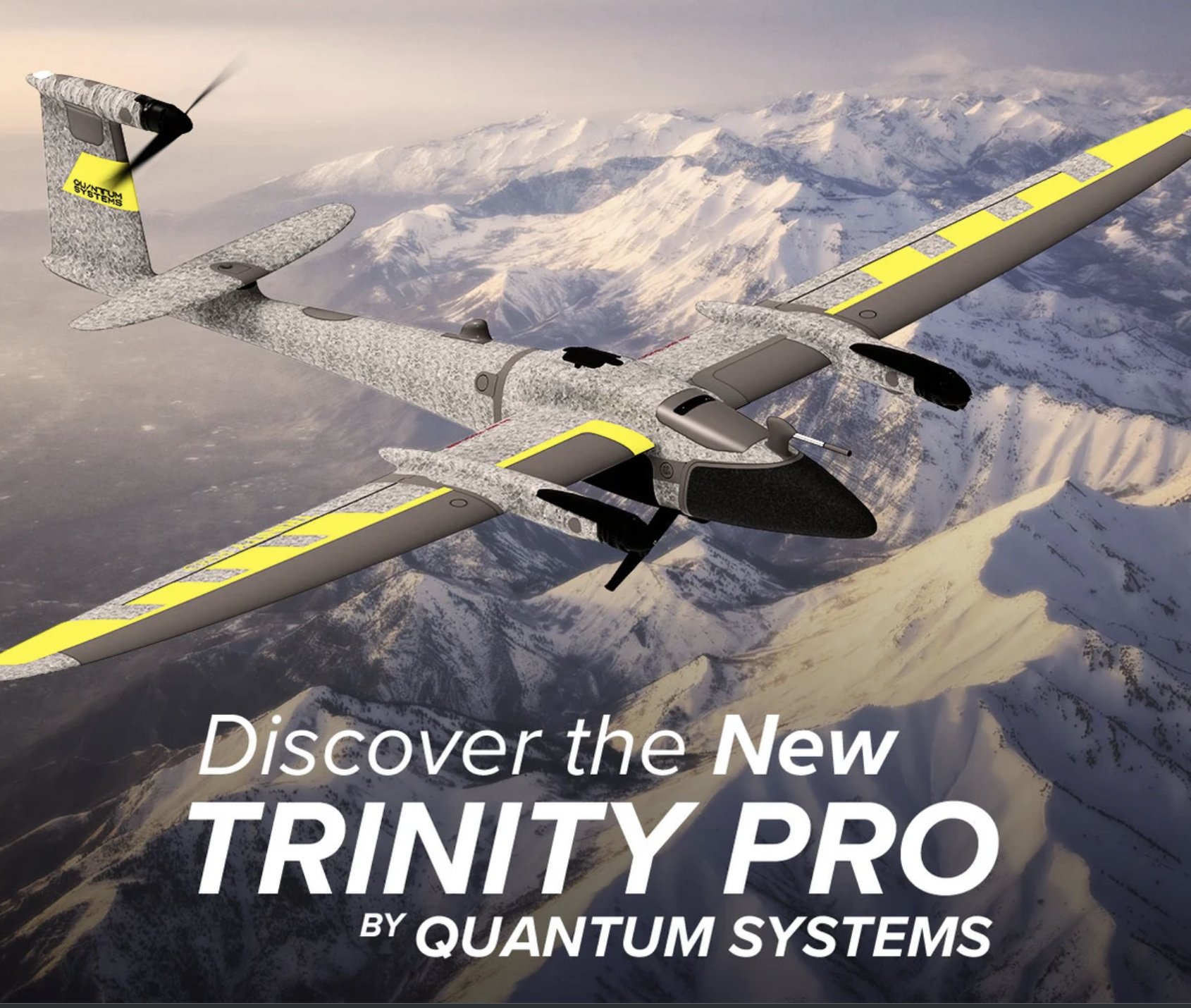
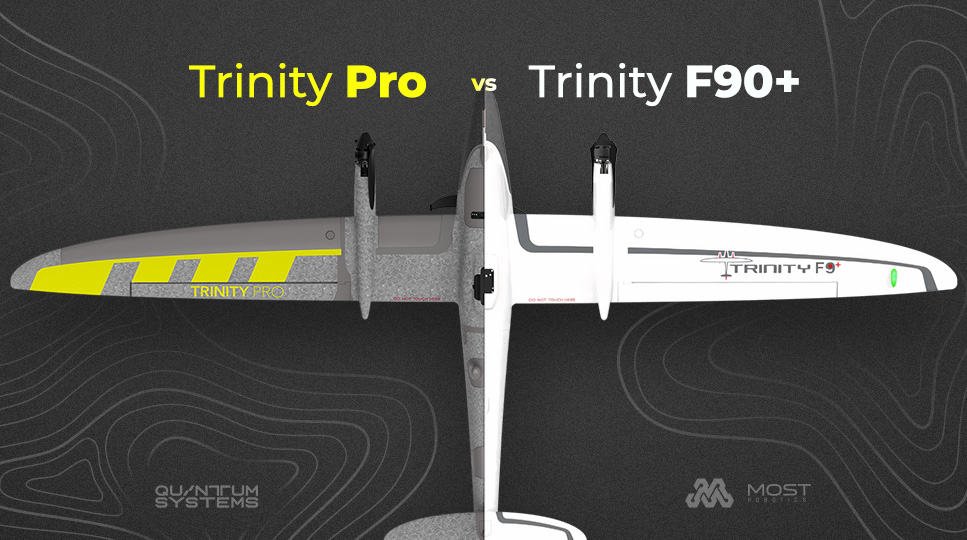
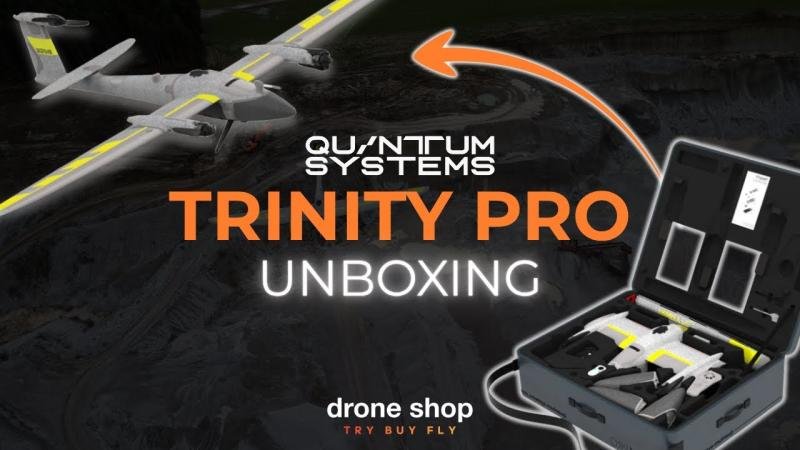
Trinity Pro is a small eVTOL fixed-wing reconnaissance drone built by Quantum Systems, the Gilching, Bavaria manufacturer that has become one of Europe’s most visible dual-use UAV makers. Introduced in 2022 as the successor to the Trinity F90+, it carries forward the same vertical-takeoff-then-horizontal-cruise concept that defines the family — three rotors stand the aircraft up off the ground, and it pitches forward into fixed-wing flight once airborne. The result is a hand-launchable mapping and ISR platform that needs no runway and no catapult, with roughly 90 minutes of endurance per battery swap.
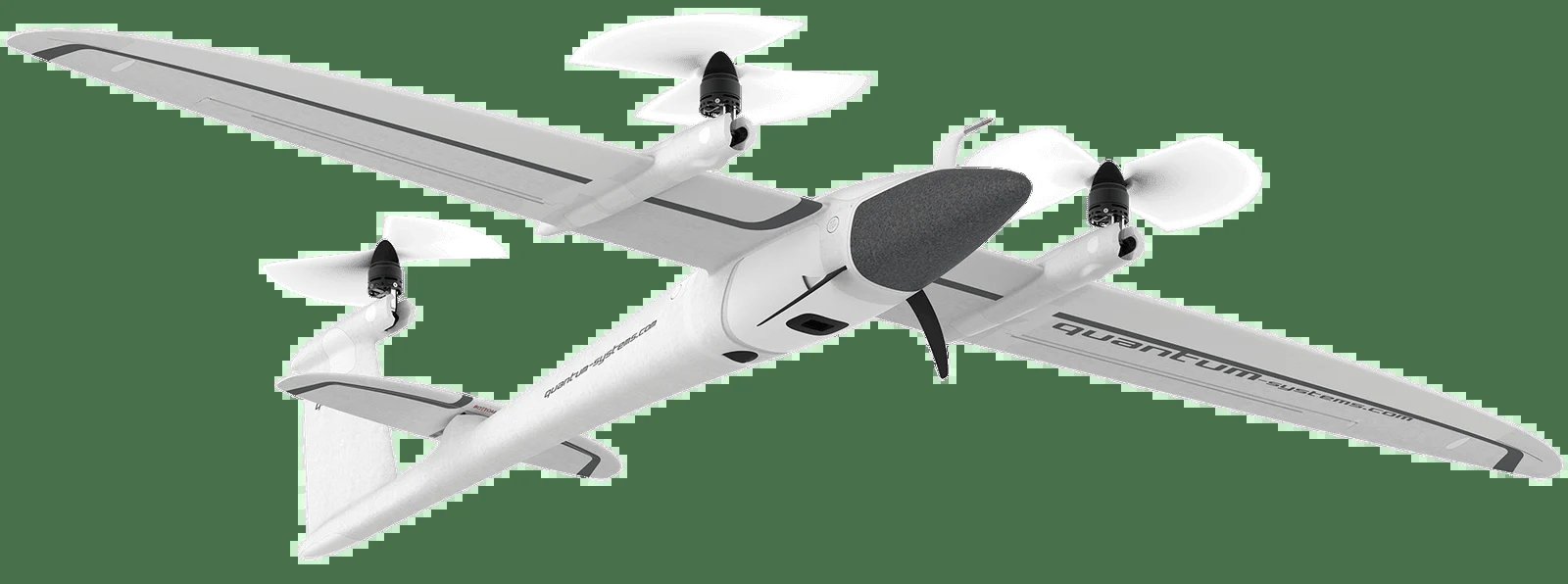
Mechanically the airframe is a foam-composite flying wing with a centre fuselage that houses the payload bay, a swappable battery, and the autopilot. Three electric motors handle takeoff and landing; a single pusher motor handles cruise. The payload bay is the system’s distinguishing feature: operators can field a Sony RX1R II 42-megapixel full-frame camera for orthomosaic mapping, an oblique camera for 3D reconstruction, MicaSense multispectral sensors for agricultural and vegetation work, or — increasingly — gimballed EO/IR payloads for military reconnaissance. Mission planning and post-processing run through the QBase 3D ground station, with the aircraft flying pre-loaded waypoint patterns autonomously and returning to a programmed landing point. Quantum has been progressively layering more autonomy into the stack, including AI-assisted target detection on the imagery side.
The principal operators today are Germany and Ukraine. The Bundeswehr selected Trinity Pro for short-range reconnaissance at the squad and company level, ordering hundreds of airframes across multiple tranches; the type also equips German police and federal agencies. Ukraine has received Trinity Pro and the closely related Vector in very large numbers — over a thousand aircraft, by Quantum’s own public count — through a combination of German government aid, EU procurement, direct sales and donor purchases. Ukrainian units use them for artillery spotting, battle damage assessment and deep reconnaissance behind the line of contact, where the platform’s quiet electric propulsion and small radar signature give it usable survivability in a contested electromagnetic environment.
Quantum has continued to iterate. The company has fielded resilience upgrades for jamming and GNSS denial, expanded the payload menu, and pushed harder on the military variants in parallel with the civilian mapping line. Trinity Pro sits in the same competitive space as Israel’s Aeronautics Orbiter family and a number of US and Chinese small VTOL fixed-wings, but its combination of European production, civilian-survey heritage and large Ukrainian combat sample has made it one of the more battle-tested platforms in its weight class.